

IDO LEKOTA
The election is over. Votes have been counted, new councils are taking shape, and coalition negotiations are beginning in municipalities where no party has secured an outright majority. These negotiations will determine who becomes mayor, speaker, chief whip, and committee chairperson. But behind this political arithmetic lies a more important question: will the new arrangements enable municipalities to deliver the services residents expect?
Residents did not vote merely to produce coalitions or allocate political offices. They voted for functioning water systems, reliable electricity, working sanitation, regular refuse collection, maintained roads, safer public spaces, and councillors who respond when things go wrong. These expectations extend far beyond political affiliation. Whoever has been elected into office has inherited the same public obligation: to make government work where people live.
The Capability to Live Well

CAPTION: AMARTYA SEN
Amartya Sen’s capability approach offers a useful way of understanding the post-election mandate. Democracy should not be judged only by the existence of elections, procedures, or formal rights, but by whether institutions expand people’s real ability to live with dignity and pursue opportunities.
For local government, this means asking whether residents can actually access clean water, move safely through their communities, attend school, run businesses, and live in healthy environments. A municipality may comply with procedural requirements and still fail if people remain without reliable services.
The new councils should therefore measure success through lived outcomes rather than administrative activity. The question is not simply whether a meeting was held or a budget approved, but whether that budget produced a tangible improvement in people’s daily lives.
The Public Realm
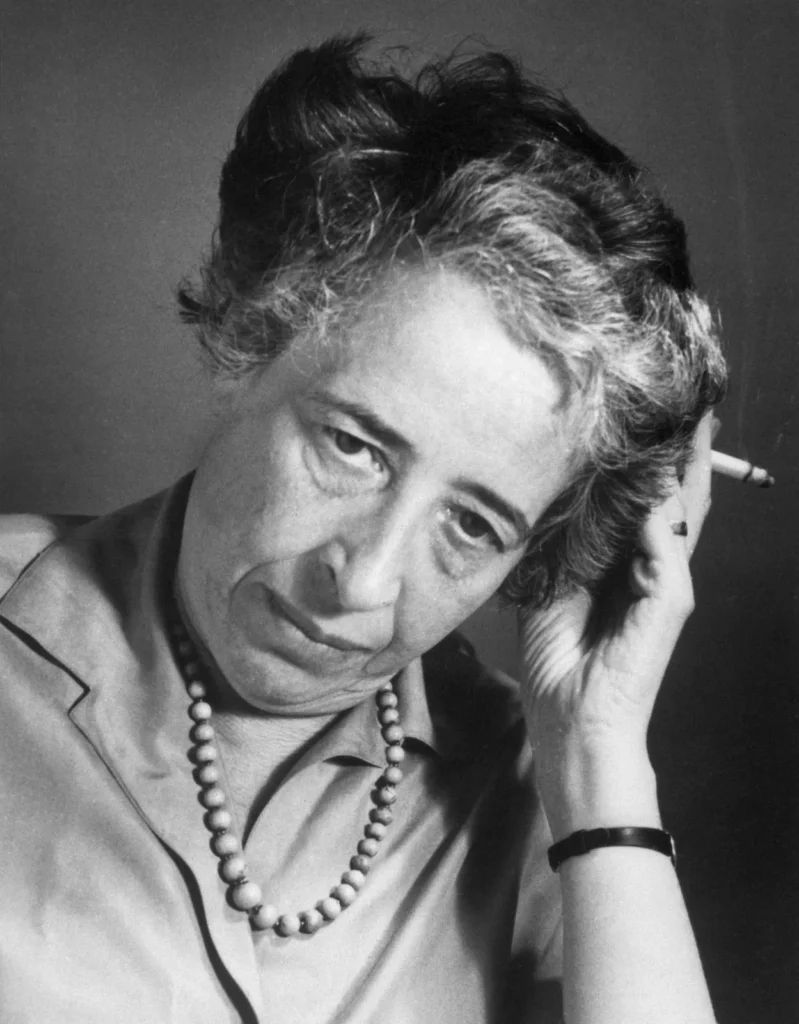
CAPTION: HANNAH ARENDT
Hannah Arendt’s idea of the public realm helps illuminate the democratic role of the councillor. Politics is not only the management of infrastructure; it is also the space in which citizens come together, deliberate about common concerns, and act collectively.
This has important implications for ward governance. Residents should not be treated as passive recipients of services or as voters who matter only during an election.
They should be able to participate in shaping priorities, questioning decisions, and monitoring implementation.
Ward meetings should therefore become places of genuine deliberation. Councillors should explain choices, listen to competing needs, and help communities move from individual complaints towards shared solutions.
Dialogue and Human Agency
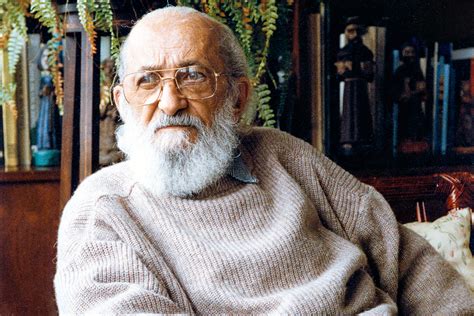
CAPTION: PAULO FREIRE
Paulo Freire’s emphasis on dialogue provides another critical insight. People are not empowered when officials simply speak to them; they are empowered when they participate in naming their problems and shaping the responses.
This is especially relevant during coalition negotiations. Political parties may be negotiating the composition of councils, but residents should not be absent from the conversation about what those councils must deliver. The new political arrangements should be tested against community-defined priorities rather than party interests alone.
A meaningful local government process would ask residents what the most urgent problems are, which groups are most affected, what solutions are possible, and how progress should be measured. Councillors would then act not as messengers who merely forward complaints, but as facilitators of collective problem-solving.
Power and Institutional Weakness
Michel Foucault’s understanding of power reminds us that power does not exist only in formal offices. It also operates through procedures, information, institutions, professional expertise, and the ability to decide what receives attention.
This helps explain why councillors can be elected representatives yet remain institutionally weak. A councillor may have a democratic mandate but lack access to information, technical expertise, budgetary influence, or authority over administrative officials. Meanwhile, administrative systems may determine which problems are recognized, delayed, escalated, or ignored.
The new councils must therefore examine where power actually sits. Empowering councillors means more than giving them ceremonial titles; it requires access to information, technical support, meaningful participation in planning and budgeting, and formal mechanisms through which unresolved matters can be escalated.
The Postcolonial State

CAPTION: ACHILLE MBEMBE
Achille Mbembe’s postcolonial critique draws attention to the ways formal democratic institutions can coexist with deep material inequality. A municipality may provide different communities with unequal access to infrastructure, administrative attention, land, safety, and economic opportunity.
This is why the new councils must look beyond aggregate performance figures. A municipality may report improvement overall while particular wards remain trapped in long-term neglect. The question must be not only whether the municipality is functioning, but for whom it is functioning.
Coalition agreements and municipal plans should therefore address spatial inequality directly. Infrastructure, maintenance, staffing, and investment should be directed toward communities with the greatest unmet needs, rather than being distributed according to political influence alone.
Governing Shared Resources
Elinor Ostrom’s work on the governance of common resources offers a practical lesson: communities can manage shared resources when rules are clear, participation is meaningful, monitoring is credible, and consequences are proportionate.
Local government should apply this insight to water points, waste management, public spaces, community facilities, and local infrastructure. Residents, civic organizations, businesses, traditional leaders, and municipal officials can help monitor services and identify failures.
This does not mean transferring the state’s responsibilities to communities. Rather, it means recognizing that public services are more likely to succeed when residents are involved in protecting, monitoring, and improving them. Participation must, however, be supported by clear roles, transparency, and safeguards against capture by local elites.
Trust Through Public Reasoning
Jürgen Habermas’s emphasis on communicative action suggests that legitimacy depends partly on whether public decisions can be explained, questioned, and justified. This principle is essential during coalition formation. Residents should be able to understand why a coalition has been formed, what priorities it has adopted, how responsibilities are divided, and how disputes will be resolved.
Coalition agreements should not be treated as private contracts between political parties when they determine the direction of public governance.
The same principle must apply to service delivery. When a road cannot be repaired, officials should explain why. When a water project is delayed, residents should know what caused the delay, who is responsible, and what the revised timetable is. Honest explanation cannot replace delivery, but secrecy and blame-shifting destroy trust even more quickly.
Networks and Information
Manuel Castells’s work on the network society points to the importance of information and connected institutions. Local government needs stronger networks linking councillors, municipal officials, residents, community organizations, provincial departments, national government, utilities, and businesses.
A resident’s complaint should not disappear into an administrative void. It should be recorded, assigned to a responsible institution, tracked against a deadline, and escalated when necessary. Digital platforms can assist, but they must be combined with ward offices, community radio, SMS, public notice boards, and face-to-face engagement so that people without internet access are not excluded.
Information is not a technical luxury; it is a source of democratic power. Councillors cannot exercise oversight if they do not receive reliable and timely information, and residents cannot hold anyone accountable if they cannot see what has been promised or implemented.
From Vulnerability to Collective Agency
Rebecca Solnit’s writing on hope and collective action offers a useful corrective to the despair that often accompanies municipal failure. Hope should not mean ignoring corruption, broken infrastructure, or institutional decay. Instead, it should mean recognizing that organized collective action can still produce change. The new councils should seek early, visible improvements while pursuing deeper reforms.
Repairing a broken water network, restoring street lighting, clearing a dangerous drainage channel, reopening a public facility, or stabilizing refuse collection will not solve every structural problem. However, credible improvements can demonstrate that institutions remain capable of responding.
Hope in local government is created through delivery, participation, and trust—not through slogans announced during coalition negotiations.
A New Settlement for Councillors
These thinkers collectively point toward a new settlement for local government. Councillors must be judged by whether they expand people’s capabilities, deepen public participation, confront inequality, communicate honestly, and build practical networks of cooperation.
To achieve this, councillors need defined responsibilities, access to municipal information, technical and administrative support, training in finance and oversight, and formal mechanisms for escalating matters that lie beyond their direct authority. They should be empowered without being allowed to bypass procurement rules, interfere unlawfully in administration, or distribute public resources as political patronage.
The aim is not to turn councillors into unaccountable local executives. It is to make them capable democratic agents: representatives who can understand the system, influence priorities, monitor implementation, and ensure that residents receive answers.
The Coalition Test
The first test of the new councils will not be the elegance of their coalition agreements or the number of positions distributed among political parties. It will be whether they can agree on a credible service-delivery compact.
That compact should identify the most urgent failures in each municipality, assign responsibility, align budgets, establish timelines, provide for public reporting, and explain how political disputes will be prevented from paralyzing administration—as witnessed in the past.
The new councils must recognize that the election has ended the competition for votes, but begun the obligation to govern. Party affiliation may determine political outlook, but it does not alter the resident’s need for water, sanitation, electricity, roads, safety, or dignity. Local councillors should no longer be left as the orphans of government—close enough to carry public anger, but too weak to act.
They should become supported, informed, and accountable agents of a democratic state that is present in the ordinary places where citizens experience its promises and failures. The post-election question is ultimately simple: can the new political arrangements convert electoral authority into public capability? That is the measure by which residents will judge every party, every coalition, and every councillor.