By Sisanda Nkoala
How does a medium once branded “the devil’s own box” become the fireplace around which a nation tries to rekindle its broken identity?
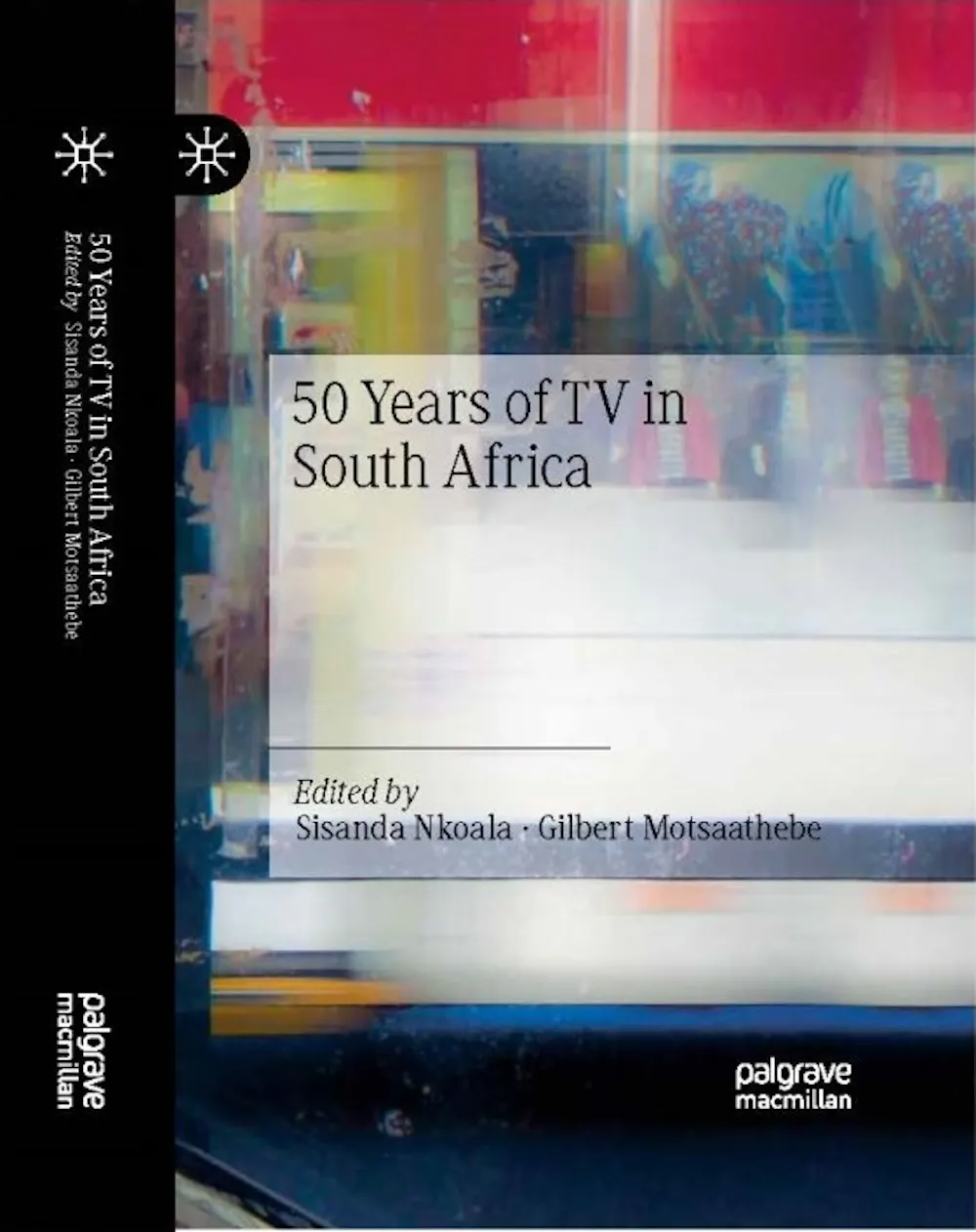
This question lies at the heart of our recently published book that marks 50 years since the flicker of the first official TV broadcast in South Africa in 1976. The volume takes stock of television’s journey from a tool of state propaganda to a contested site of democratic expression.
Today, this fireplace has expanded beyond the state-owned public broadcaster to incorporate private TV channels and platforms. It has evolved into the digital frontier of streaming services like Netflix, SABC+ and the now defunct Showmax.
These have begun to globalise local stories. At the same time, they raise new questions about who truly owns and has access to the South African story in an on-demand age.
A Radical Shift
TV in South Africa has always been more than just a source of entertainment; it’s a powerful symbol of the society it reflects: unsettled (1976-1992), in transition (1992-2010), and deeply complex (2010-present).
With democracy in 1994, the country’s broadcasting landscape underwent a radical shift as a state-controlled monopoly evolved into a competitive, privatised industry. This expansion was led by the launch of the free-to-air private channel e.tv and pay services like MultiChoice (now Canal+). Nevertheless, the public broadcaster, the South African Broadcasting Corporation (SABC), continues to command a dominant audience share, reportedly attracting over 17 million viewers a day in 2024. South Africa’s overall TV viewers are expected to number 9.5 million by 2029, driven by a surge in streaming.
The Early Years
The vibrancy of today’s market is in stark contrast to a history of deprivation and political paranoia. Until 1976, South Africa was a global anomaly: Africa’s most industrialised country had no television service.
During apartheid, the white minority government used tools of state power, including broadcasting, to enforce its policies. The TV screen was a battlefield of exclusion. Formal suggestions to introduce television were made as early as the 1950s, but the regime stalled its arrival to control information and avoid disrupting a social order kept in a state of self-imposed isolation.
It wasn’t a political shift that forced its hand, but a day etched in history: 20 July 1969. As the world held its breath watching US astronaut Neil Armstrong take humanity’s first steps on the moon, South Africans were left in the dark. This sense of exclusion sparked public dissatisfaction that became increasingly difficult to contain. On 5 January 1976, South Africa finally joined the television age.
At first, programming was limited to five hours an evening, with extra weekend slots devoted mainly to sports. The single SABC channel broadcast equally in Afrikaans and English. African languages and viewers were an afterthought; it was only in 1982 that services aimed at Black South Africans were introduced, with TV2 broadcasting in isiZulu and isiXhosa, and TV3 in Sesotho and Setswana.
A Golden Season
Our book tracks the often-contested role of TV in South Africa as it transformed into a platform for diverse voices and cultural expression.
This shift in focus toward the 1990s marks what one media scholar calls South African TV’s “golden season”. A period defined by the transition to a new democratic dispensation.
As the industry sought to redefine itself, local content production and experimentation flourished. A tool for propaganda was reimagined as a tool for peace. The SABC became a public broadcaster with a mandate to “inform, educate and entertain, while reflecting national culture and serving audiences across languages and communities”.
A good example of a transforming SABC was the 1992 launch of Contemporary Community Values Television (CCV-TV). This daring channel operated from 1994 to 1998 with the specific goal of ridding the SABC of the shackles of a racially polarised broadcasting system. It became a vital channel of transition by focusing on nation building through its programming.
Between the scholarly analysis, our book includes reflections from practitioners who were at the coalface of these transformative changes. This includes Felicia Mabuza-Suttle on using the talk show format for racial reconciliation, Keith Pfeiffer on the “Simunye” (We are one) rebranding that mainstreamed Black celebrity culture, and Manko Buffle on the ideological shift toward inclusive children’s programming.
Another downhill
But the post-apartheid optimism was to be tempered by gradual institutional decline and a period of “state capture” from about 2011 until 2018.
Successive government administrations were criticised for undermining the public broadcaster through financial mismanagement and editorial interference. An era of political patronage hurt the SABC, while independent and private channels began to increase their local content offerings.
Battle of the box
Between South African TV’s transition and the modern era of globalised streaming, we identify a period of “reclaiming the gaze”. This period represents a deliberate move by Black scholars to centre marginalised voices and critique the industry from an Afrocentric perspective.
They interrogate how television has been used to either reinforce or challenge social and political power structures by analysing representations of Blackness and content created by Black producers.
Some argue that, today, South African TV has become a force for cultural expression and communication across communities. However, the legacy of exclusion and ongoing struggles for representation continue to shape debates about access, ownership, and the role of media in a democratic South Africa.
In our book we include arguments for an inclusive and equitable media landscape for all South Africans. This is particularly relevant in an age of streaming services, where local stories reach global audiences. Even as the industry moves toward an on-demand future, the struggles remain familiar, with issues like token depictions of disability, languages being marginalised, or Black identities on newer channels being given a tabloid treatment.
Why this matters
As we confront the new era of social media influencers and algorithmic streaming, reflecting on this history reminds us of television’s power to shape public opinion and promote social cohesion.
Whether through a 1970s living room set or a modern smartphone screen, the core of this journey is not just a history of technology, but a history of the South African people: their ongoing fight to be heard and accurately represented in the mirror of a screen that is now both local and global.
This article is republished from The Conversation under a Creative Commons license. Read the original article written by Sisanda Nkoala, Associate Professor at the University of the Western Cape.