

By Dr Eng Martin Manuhwa
Zimbabwe has formally launched its National Artificial Intelligence Strategy (2026–2030) at a national event held on Friday, 13 March 2026 at the New Parliament Building. The ceremony brought together government leaders, academics, industry representatives, development partners and members of the technology community in what many view as a milestone in the country’s digital transformation journey.
Located in Mount Hampden, the new Parliament complex has quickly become a symbol of Zimbabwe’s modernization ambitions, making it a fitting venue for the launch of a strategy designed to position the country within the emerging global artificial intelligence landscape.
The strategy frames artificial intelligence not merely as a technology initiative, but as a national development project linking economic transformation, sovereignty, innovation and cultural identity. It outlines a comprehensive framework built around six pillars: talent development, digital infrastructure, sector adoption, governance and ethics, research and innovation, and international cooperation.
At its core, the strategy seeks to position Zimbabwe as a regional hub for inclusive and sustainable “AI for Development” in Southern Africa. It also embeds African philosophical values—particularly Ubuntu, indigenous knowledge systems and local-language technologies—within the country’s approach to artificial intelligence.
In his keynote address, His Excellency Dr Emmerson Dambudzo Mnangagwa, President of the Republic of Zimbabwe, described the strategy as a critical pillar of Zimbabwe’s modernization agenda. He said artificial intelligence would play a decisive role in achieving the country’s economic transformation objectives and strengthening national technological sovereignty.
“Artificial intelligence will reshape economies, societies and the nature of work. Zimbabwe must not be a passive consumer of these technologies. We must be creators, innovators and leaders in applying AI to solve our own development challenges,” the President said.
He noted that the strategy aligns with the Government’s Vision 2030 development agenda, which seeks to transform Zimbabwe into an upper-middle-income economy. Artificial intelligence, he said, could help improve productivity and efficiency across key sectors including agriculture, mining, healthcare, education, energy management and public service delivery.
The President also emphasized the importance of safeguarding national data and ensuring that technological development reflects Zimbabwe’s social values.
“Our approach is guided by Ubuntu. Technology must enhance human dignity, strengthen communities and advance shared prosperity,” he said.
Presenting the technical framework of the strategy, the Minister of ICT, Postal and Courier Services, Hon. Tatenda Annastacia Mavetera, outlined the institutional mechanisms intended to guide implementation over the next five years.
The strategy proposes the establishment of a National Artificial Intelligence Council (NAIC) to provide strategic oversight and an AI Strategy Implementation Office (AISIO) to coordinate delivery across government. It also calls for the creation of AI Centres of Excellence in universities and regulatory sandboxes to support responsible experimentation with emerging technologies.
Hon. Mavetera also highlighted plans to strengthen Zimbabwe’s national computing infrastructure, including high-performance computing capabilities, sovereign data platforms and expanded digital infrastructure to support artificial intelligence development.
“Artificial intelligence must serve Zimbabwe’s development priorities. Our strategy places strong emphasis on building local talent, empowering startups and ensuring that our data and computational resources benefit the people of Zimbabwe,” the Minister said.
Industry stakeholders broadly welcomed the strategy’s ambition and its emphasis on national sovereignty, local innovation and sectoral transformation. Technology leaders noted that the strategy stands out within the Southern African region for its clear articulation of artificial intelligence as a tool for economic development, particularly in areas such as agriculture, mining optimisation, financial services and digital public services.
However, many in the private sector cautioned that implementation will be the ultimate test. Key challenges include reliable electricity supply, access to computing infrastructure, availability of venture capital and the need for procurement systems that allow startups and local technology firms to participate in government projects.
“The strategy provides a compelling vision,” one technology entrepreneur observed during discussions surrounding the launch. “The real challenge will be translating that vision into operational systems and commercially viable solutions.”
Zimbabwe’s academic community has also responded positively, particularly to the strategy’s emphasis on research, ethical governance and culturally grounded AI development. Scholars have highlighted the document’s distinctive integration of Ubuntu philosophy, indigenous knowledge systems and local-language technologies—elements that are often absent in many national AI strategies.
Universities have welcomed proposals to establish research hubs and centres of excellence that could strengthen postgraduate training, research collaboration and industry partnerships. At the same time, academics stress that sustained investment in research infrastructure and international collaboration will be essential if Zimbabwe is to build a competitive AI research ecosystem.
From a regional perspective, Zimbabwe’s strategy is among the more comprehensive AI policy frameworks within the Southern African Development Community (SADC). While several countries in the region are still developing their AI policies, Zimbabwe’s document attempts something broader: a full national agenda linking infrastructure development, governance structures, talent formation, research capacity and sector-wide deployment.
In terms of vision and narrative coherence, the strategy compares well internationally. It is unusually explicit about national identity, sovereignty and inclusion. Its emphasis on Ubuntu ethics, indigenous knowledge and local-language technologies also gives Zimbabwe a distinctive voice in emerging global debates about AI governance.
Yet the strategy’s greatest challenge lies not in vision but in execution. Compared with more mature frameworks in Europe, the United States, China or India, Zimbabwe’s strategy is less detailed on financing mechanisms, implementation sequencing and the scale of incentives needed to stimulate private-sector investment.
Many of the initiatives outlined in the document—including high-performance computing expansion, sovereign data platforms, innovation funds and sector-wide AI deployments—will require significant resources, institutional coordination and sustained political commitment.
Zimbabwe’s most realistic path to success may therefore lie not in competing directly with global AI superpowers, but in developing specialized strengths in development-focused applications. Opportunities exist in areas such as agriculture in drought-prone environments, mining optimisation, digital public services and local-language technologies.
Ultimately, Zimbabwe’s National Artificial Intelligence Strategy is ambitious, visionary and philosophically distinctive. It places technological sovereignty, ethical governance and inclusive development at the centre of the country’s AI agenda.
But as with many national technology strategies, the decisive factor will be implementation.
Delivering on the strategy’s ambitions will require disciplined execution, sustained investment and strong partnerships between government, academia and the private sector.
The launch at the New Parliament Building in Mount Hampden on Friday, 13 March 2026 marks an important beginning. The real measure of success will be whether Zimbabwe can translate its vision for artificial intelligence into practical systems, thriving industries and meaningful opportunities for its citizens.
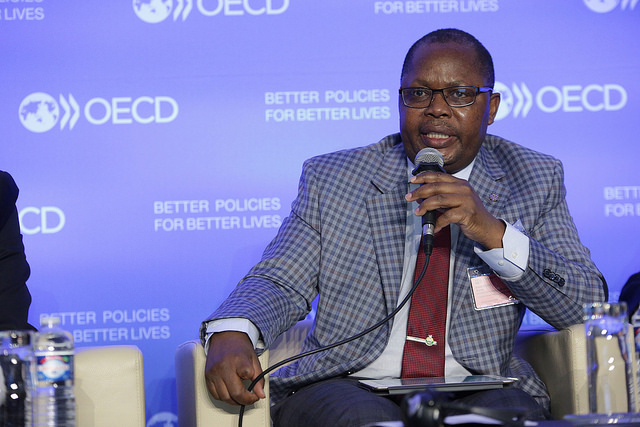
Dr. Eng. Martin Manuhwa is a MUNJANI Afrika Investment founding member and Managing Director. He also serves as the Managing Director of the Zimbabwe Africa Infrastructure Development Group (ZAIDG). Dr. Manuhwa has held significant international leadership roles, including positions within the World Federation of Engineering Organisations (WFEO) and chairing the WFEO Awards Committee.


