
‘
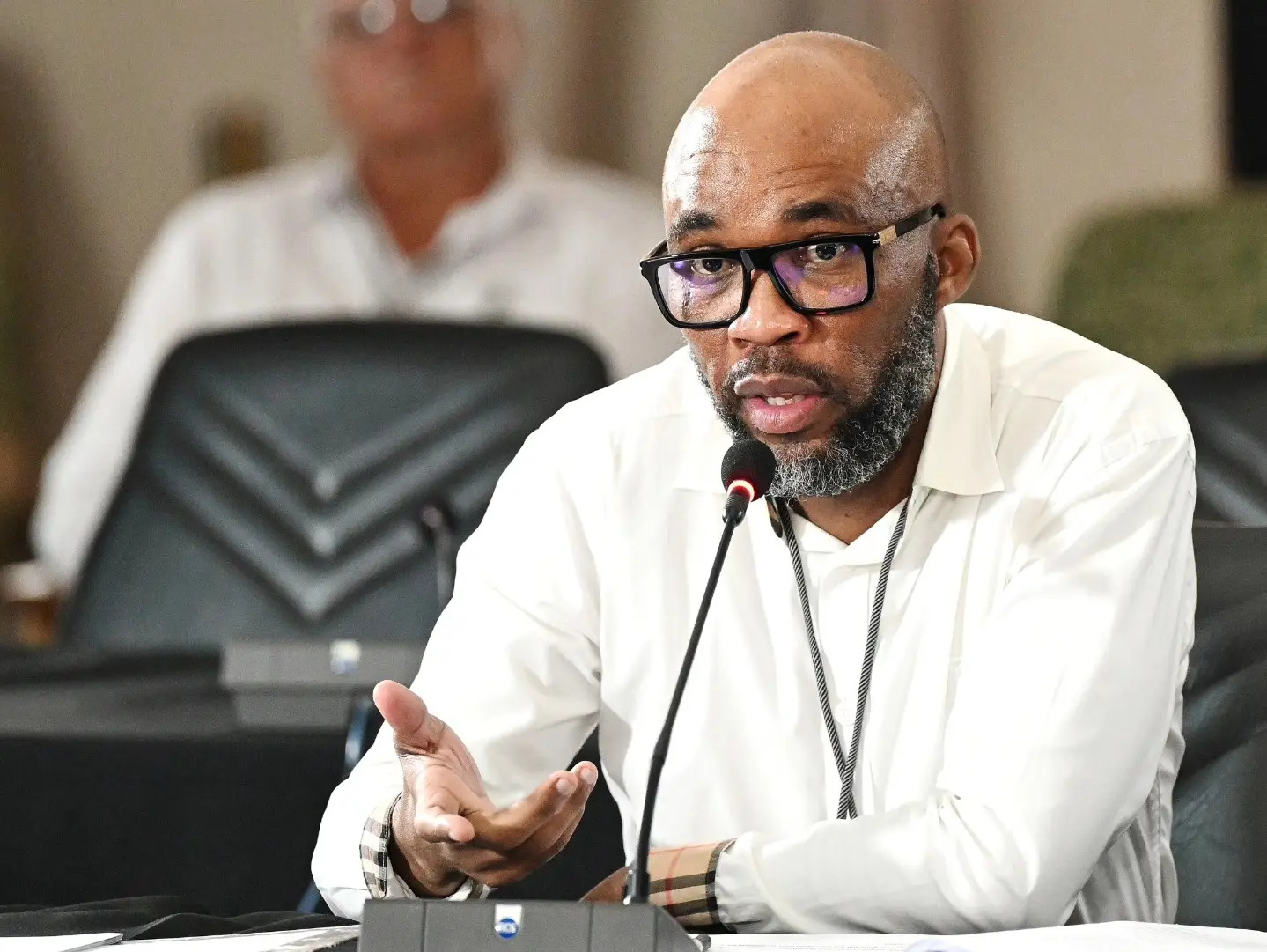
PRETORIA — Wednesday, 15 July 2026 – PHOTO SUPPLIED BY MAIL&GUARDIAN
COMPILED BY: LEN KALANE
NOTE: ALSO SEE THE MATLALA ANALYSIS PIECE IN THE PIE NATIVE SECTION
Vusimuzi ‘Cat’ Matlala’s long-awaited appearance before the Madlanga Commission of Inquiry has been pushed back once more, after the commission granted an application on Wednesday to postpone his testimony to a sitting on 1 September 2026.
The application was brought shortly after 10:00 by Matlala’s lawyer, Annelene van den Heever, who told the commission in Pretoria that her client is due in the Gauteng High Court in Johannesburg on Monday to stand trial over the 2023 attempted murder of his former girlfriend, Tebogo Thobejane. Van den Heever argued that Matlala’s constitutional rights as an accused person — including the presumption of innocence and the right to a fair trial — should take precedence over his compelled appearance before the commission, and that he needed the intervening period to prepare his defence rather than his commission testimony. Evidence leaders indicated they did not oppose the request, and the new date was agreed between the parties before being formally granted.
The businessman has already been implicated repeatedly in commission testimony over the R228 million Medicare24 Tshwane District SAPS tender, the alleged disbandment of the Political Killings Task Team, and the Ekurhuleni ‘blue lights’ saga involving unlawfully fitted emergency lights on his private vehicles.
A hearing repeatedly delayed
Wednesday’s application is only the latest setback in what has become a saga of its own. Matlala was first subpoenaed on 2 July to appear on 7 July, but evidence leaders themselves asked for that date to be postponed, citing the intense media and public interest surrounding his testimony. When Matlala appeared briefly by video link from Kgosi Mampuru II Correctional Centre on 7 July, commission chairperson and retired Constitutional Court justice Mbuyiseli Madlanga ordered his written statement filed by 8 July and set 15 July as the new date — deliberately two days after Matlala’s plea-and-sentence matter was due back in the Pretoria Specialised Commercial Crimes Court.
That court appearance did not go as the state had hoped. On 13 July, Magistrate Ignatius Du Preez recorded that Matlala had withdrawn from his plea and sentence agreement, declining the court’s recommended 12-year sentence for corruption, fraud and money laundering. With the deal nullified, Matlala and his companies, Medicare24 and Luxo Africa Brand Investments, now face a full trial on those charges, with the matter postponed to 11 September for the state and defence to determine a way forward.
Why the commission is under pressure
The renewed delay adds to strain on an inquiry already racing against the clock. The Presidency granted the commission a fresh extension on 9 July, pushing the deadline for it to finish hearing evidence to 2 October 2026 — the third time its timeline has moved since it was established in July 2025. President Cyril Ramaphosa has publicly praised the commission’s work and said he was open to granting further time if commissioners requested it.
Matlala remains in custody and is described by the commission as a central figure in its investigation into corruption, political interference and organised-crime influence within South African law enforcement. He has been linked in testimony to senior police officials, the R228 million SAPS tender, and, separately, the so-called ‘Big Five’ cartel, though the commission stresses that none of the cartel or attempted-murder allegations against him have been tested in court, and he is presumed innocent of them.
With the postponement granted by consent, Matlala’s testimony is now expected to resume at the commission’s 1 September sitting, once his attempted-murder trial and the 11 September tender-fraud matter have had time to progress. It remains to be seen whether either of those court processes prompts a further delay before he finally takes the stand.
Commission spokesperson Jeremy Michaels has repeatedly described Matlala as a “central figure” in the inquiry into criminality, political interference and organised-crime infiltration of law enforcement. His name has surfaced constantly in testimony since the commission began: Crime Intelligence boss Lieutenant-General Dumisani Khumalo has identified him as a leading figure in the so-called “Big Five” organised crime syndicate, linked in evidence to cocaine trafficking, kidnapping, cross-border vehicle hijackings and tender-related corruption.
Matlala was originally subpoenaed to appear on 7 July, but that date was postponed at the request of the commission’s own evidence leaders, who cited “heightened media and public interest.” Chairperson Justice Mbuyiseli Madlanga rescheduled him to 15 July and ordered a written statement be filed in advance, which his legal team duly submitted.
The plea deal that just fell apart
Matlala’s path to the witness stand has been entangled with a separate criminal case: he pleaded guilty in June to seven counts of fraud, corruption and money laundering linked to the R228 million (advertised at R360 million) SAPS Medicare24 tender, agreeing to become a Section 204 state witness against 12 co-accused, including suspended National Police Commissioner General Fannie Masemola, in exchange for an effective eight-year sentence.
Magistrate Ignatius du Preez rejected that deal on 1 July as too lenient, proposing 12 years instead and remarking that the offences were “committed out of greed, and for no other reason.” Matlala had until 13 July to accept the harsher term. On Monday, his legal team told the Pretoria Specialised Commercial Crimes Court he would not accept it. The magistrate declared the agreement “null and void,” and NPA spokesperson Kaizer Kganyago confirmed the affidavit in which Matlala implicated his co-accused can no longer be used: “Nothing that was in that plea can be used and therefore we have to continue with our own investigation.”
The case now returns to the ordinary court roll, with Matlala expected to rejoin Masemola and the other accused; his guilty plea itself still stands.
The condition attached to his testimony
It is understood Matlala agreed to appear before the commission on one condition: he will not be cross-examined on the Medicare24 tender itself, since that matter remains before the criminal courts. His lawyer, Advocate van den Heever, has argued that extensive questioning on the tender could prejudice the ongoing case.
What’s likely to come up
Based on evidence already before the commission, several threads are expected to feature:
- His alleged role as a leader of the “Big Five” cartel, an organised crime network witnesses say cultivated relationships with senior police officers and politically connected figures to influence investigations and secure state contracts.
- The 2018 assassination of Transnet whistleblower Armand Swart, which Matlala has been implicated in — it is alleged he hired a Johannesburg Metro Police officer, Pule Tau, as one of the gunmen.
- Allegations that senior officers, including suspended Deputy National Police Commissioner Shadrack Sibiya and Major-General Lesetja Senona, leaked classified information or accepted benefits to protect his interests.
- WhatsApp communications allegedly linking Matlala to political fixer Brown Mogotsi, including discussions of state matters and funding requests for political activity.
- The names of former Police Ministers Bheki Cele and Senzo Mchunu, which have surfaced in testimony concerning Matlala’s alleged network of influence — neither has been found to have done anything wrong.
- Cat VIP Protection’s irregular memorandum of understanding with Ekurhuleni Metro Police, which allegedly saw private vehicles fitted with law-enforcement blue lights.
- His 11 counts of attempted murder relating to three Johannesburg shootings, a separate criminal matter due for trial from 20 July.
What to watch for
A few open questions will shape how it all plays out when Matlala returns in September:
- Will he cooperate fully, or lean on the narrower scope the tender exclusion affords him? With the plea deal dead, Matlala has less obvious incentive to volunteer information beyond what he’s legally compelled to answer, though the subpoena itself compels his appearance regardless.
- Self-incrimination and legal pushback: other witnesses — including “Witness F” earlier this year — have tried, unsuccessfully, to resist testifying on self-incrimination grounds. Matlala’s legal team, led by Van den Heever, may test similar limits given his now-precarious legal position on the tender matter.
- How commissioners handle the tension between his admitted guilt (fraud, corruption, money laundering) and the untested cartel and assassination allegations, which he has not commented on publicly and is presumed innocent of.
- Any reference to his earlier testimony before Parliament’s Ad Hoc Committee last year, where he denied personally knowing senior police officers and politicians — a claim evidence leaders may test against the volume of testimony now linking him to senior figures.
A fair-assessment caveat
It’s worth being precise about what this is all about and isn’t. Matlala has pleaded guilty to fraud, corruption and money laundering over the SAPS tender — that plea stands regardless of the collapsed sentencing deal. But the far more serious cartel leadership, drug-trafficking, assassination and police-corruption-network allegations that have dominated his coverage remain untested allegations from other witnesses and evidence leaders, not findings of fact. Matlala is presumed innocent of all charges and allegations that have not resulted in a conviction, and commission evidence — however dramatic — does not itself establish guilt.