
IMAGE: HOW GOOD IS A SONG? – CREDIT: SKODONNELL
LEN KALANE
Some songs don’t need an introduction. Two bars in, you know exactly who it is, and, more importantly, you remember where you were when you first heard it: a Sunday afternoon with the radio on, a township street party, a dusty LP slid out of its sleeve.
This week, PiE’s tribute to people who excelled at their craft turns to the South African musicians who made that feeling possible. Some are still performing. Many have passed on. All of them left a mark so distinctive that their sound, and the loyal following that grew around it, outlived the era that produced them. This is a Sunday-read for the nostalgic, the curious and the proudly South African.
Where it all began: from the village to the slumyard
South African black music began in the rural areas, rooted in ethnic traditions: think mbaqanga and maskandi. It travelled to the cities with the people who carried it. As black urbanisation reached its height in the mid-1950s and earlier, workers brought their home sounds into the townships and hostels, where those sounds met the grit of city life and evolved into marabi: the vibrant music and dance style that emerged in the 1920s in the slumyards, shebeens and mining areas, mixing traditional African rhythms with American jazz, blues and ragtime.
Weekend cultural events on the mines, known as uMchongolo, once showcased ethnic song and dance from many regions and kept city and village connected. Sadly, they appear to have all but ceased, severing a link between home and the city that music once kept alive.
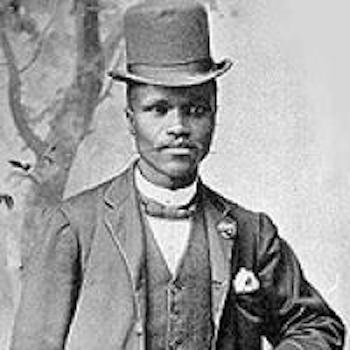
CAPTION: ENOCH SONTONGA
Then came colonialism and its Christianity, and with it a new tradition of hymn-like songs. The most celebrated is Enoch Sontonga’s Nkosi Sikelel’ iAfrika, a prayer that grew into the anthem of a struggle and, eventually, of a nation. But even in the hymn era the African beat and soul refused to be silenced, and one song proved it to the whole world.
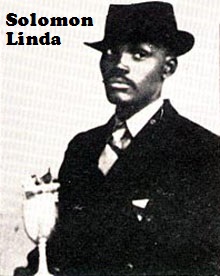
The lion that roared around the world: Solomon Linda
Mbube, 1939
In 1939, in a Johannesburg studio, a Zulu singer from rural KwaZulu-Natal named Solomon Linda and his group, the Evening Birds, recorded a song called Mbube (Zulu for “lion”). Linda, born in Pomeroy around 1909, was reportedly working for Gallo Records as a record packer at the time. The song, with his soaring falsetto floating above a wall of deep voices, is said to have sold more than 100,000 copies by 1949, a staggering figure for an African record of its day.
What followed is one of the most extraordinary, and most painful, stories in popular music. Folk singer Pete Seeger and The Weavers turned the song into Wimoweh in 1952, a mishearing of the chorus uyimbube (“you are a lion”). In 1961 The Tokens made it a worldwide hit as The Lion Sleeps Tonight. Dozens of covers, films and, ultimately, Disney’s The Lion King followed.
Linda died on 8 October 1962, poor, his widow unable even to afford a headstone. Journalist Rian Malan’s investigation estimated that the song had earned upwards of US$15 million over the decades. In 2004 Linda’s daughters took legal action; in February 2006 a settlement was reached that gave the family back-payments and future royalties, and formally acknowledged Solomon Linda as a co-composer of The Lion Sleeps Tonight. Justice came late, but it came.
The mbaqanga wave: roar of the lion, rise of the brothers
The mbaqanga wave dominated South African popular music for a very long time. At its heart stood a voice like no other.
Simon “Mahlathini” Nkabinde, the Lion of Soweto
Born 30 November 1937, Newcastle, KwaZulu-Natal · Died 27 July 1999
Mahlathini was the acknowledged master of the deep, growling basso profundo “groaning” style that came to symbolise mbaqanga in the 1960s. Paired by producer Rufus Bopape with the Makgona Tsohle Band (the name means roughly “jack-of-all-trades”, or the “can-do” band) and the glamorous harmonies of the Mahotella Queens, he scored hit after hit through the 1960s and into the early 1970s.
“A singer whose voice had not been heard anywhere else. That’s why it was so impactful.” — Sipho “Hotstix” Mabuse on Mahlathini
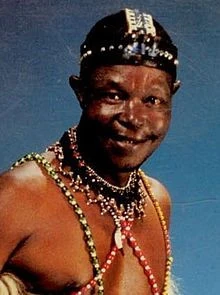
CAPTION: SIMON “MAHLATHINI” NKABINDE
The disco years were unkind to the sound, but the lion was not finished. A reunion with the Mahotella Queens and the Makgona Tsohle Band in the mid-1970s, and later the worldwide appetite for South African music sparked by the 1985 compilation The Indestructible Beat of Soweto, carried him to international audiences. The 1988 album Paris–Soweto took the sound to the world. Mahlathini died of a diabetes-related illness in July 1999. The Mahotella Queens carry on to this day.
ESSENTIAL LISTENING Thokozile, Paris–Soweto, and anything from the Mahotella Queens’ early catalogue.
The Soul Brothers: mbaqanga with a soul-music heartbeat
Formed in the mid-1970s · KwaZulu-Natal to Johannesburg
If Mahlathini was the traditional roar, the Soul Brothers were mbaqanga modernised. The group grew out of a KwaZulu-Natal trio (drummer-turned-singer David Masondo, bassist Zenzele “Zakes” Mchunu and guitarist Tuza Mthethwa) who moved to Johannesburg and joined forces with keyboardist Moses “Black Moses” Ngwenya. In Soweto they discovered township soul and fused it with the mbaqanga they had grown up on. Masondo’s quavering, soaring voice and Ngwenya’s percussive Hammond organ made them instantly recognisable.
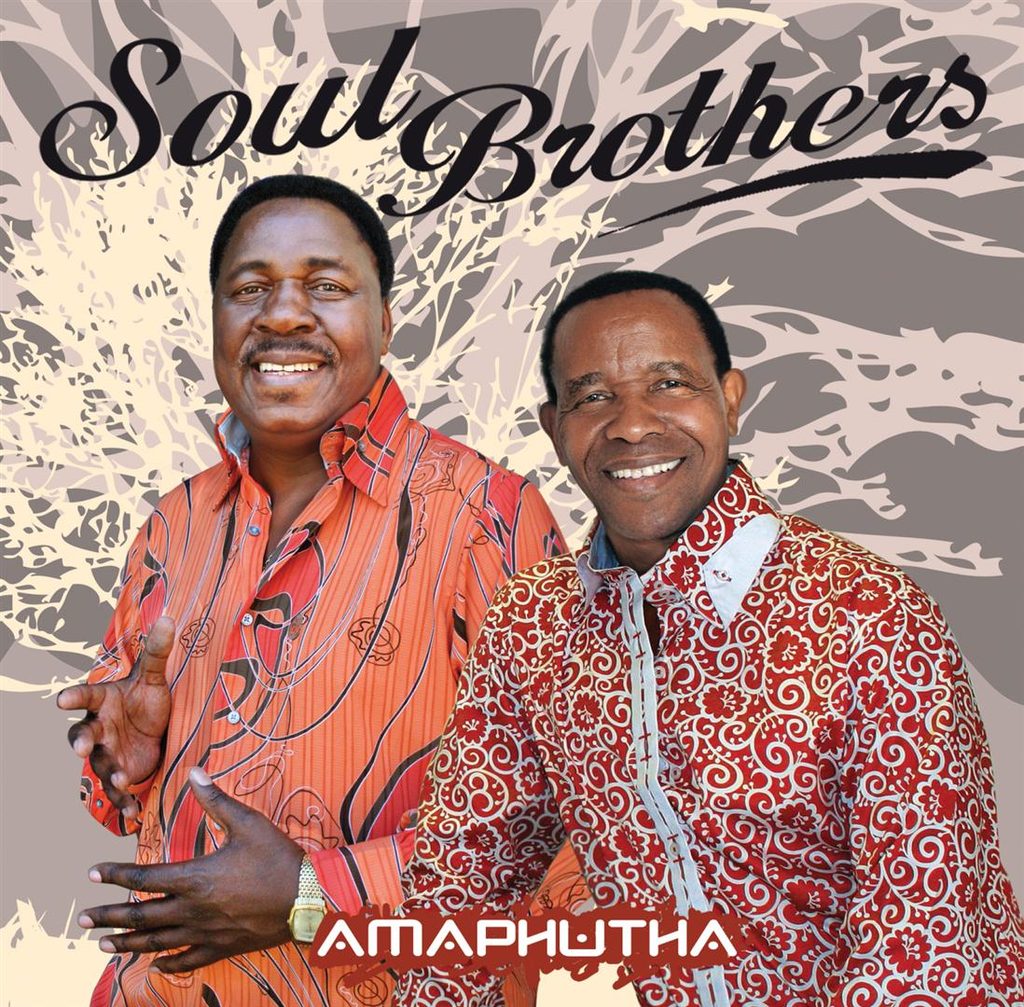
CAPTION: Soul Brothers MOSES NGWENYA AND DAVID MASONDO (RIGHT)
The hit that defined them, Mama kaSibongile, reportedly sold around 175,000 units, enormous numbers for the era. Over the decades the Soul Brothers recorded more than 45 albums and are said to have sold upwards of five million copies. They toured the UK and Europe in 1990 and were invited to play in Oslo in 1993 when Nelson Mandela and F.W. de Klerk received the Nobel Peace Prize.
The road was marked by loss: Mthethwa in a car crash in 1979, Mchunu in 1984, and Masondo himself in July 2015. Ngwenya has kept the flame burning and the music playing, celebrating the group’s fifty-year milestone with a new album.
ESSENTIAL LISTENING Mama kaSibongile, Mshoza Wam, Nilindeni, Hamba Phepha Lami.
When the township went to America (without leaving home)
This PiE feature focuses on urbanised music, which, alongside its rural roots, drank deeply from America. At the height of apartheid, urbanised black South Africans mimicked everything Black America offered: hairstyles, fashion and, above all, the music. American jazz and soul took centre stage in the townships.
The jazz scene produced giants: Kippie Moeketsi, Dollar Brand (the late Abdullah Ibrahim), Victor Ndlazilwana and the Jazz Ministers, Winston Mankunku Ngozi, and Zacks Nkosi with his Our Kind of Jazz. Alongside them, groups like Malombo (more on them below) introduced a genuinely African feel to the form. In the 1980s the African Jazz Pioneers, led by Ntemi Piliso, set out to revive the tunes of the 1950s and ’60s and recapture the fun of Sophiatown’s live performances.
Then, from the early 1960s into the late ’60s, things went quiet. We can only speculate on the reasons. One theory points to the departure of musical stalwarts such as Miriam Makeba, Letta Mbulu, Hugh Masekela, Caiphus Semenya and Jonas Gwangwa after the staging of the musical King Kong, all of whom had emerged from Dorkay House in Eloff Street, Johannesburg, then the hub of urban music and theatre creation. Historians would add the heavy hand of apartheid: the demolition of Sophiatown and the crackdowns that followed Sharpeville (1960 anti-Pass massacre) scattered the vibrant scene.
What happened next is the heart of our story: a generation of bands that created a real, unmistakable African identity.
The ones who created identity and impact
1 Malombo: the sound of the ancestors
Pretoria and Soweto · 1960s onwards
Guitarist Philip Tabane, flautist Abbey Cindi and drummer Julian Bahula came together around the malombo drums, ritual instruments associated with ancestral spirits (malombo means “spirits” in Venda) and used in healing ceremonies. Their idea was radical: take the drums of ancestral spirituality and put them in a jazz band. The Malombo Jazzmen, as the media called them, sounded like nothing else in the country.
In September 1964 they walked off with first prize at the Castle Lager Jazz Festival in Soweto, the biggest jazz event of its time, surprising a scene that thought it knew what jazz sounded like. The prize included a recording opportunity, and their debut album captured the festival’s spirit and its name.
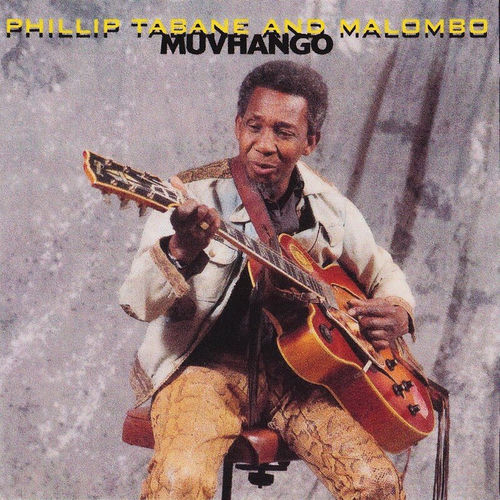
CAPTION: PHILIP TABANE
Success was followed by change. Within a year Bahula and Cindi had left to form the Malombo Jazz Makers (with guitarist Lucky Ranku); Bahula later went into exile in London in 1973 and founded the band Jabula. Tabane rebuilt the Malombo sound with his nephew Gabriel “Mabi” Thobejane on malombo drums, mbira and percussion, a partnership documented on the 1969 album The Indigenous Jazz Sounds of Philip Tabane. (Thobejane would later become a key member of Sakhile, below.)
Tabane remained the spiritual centre of Malombo for decades, producing albums such as Ke a Bereka, writing the music for the TV soap Muvhango, and playing to packed jazz clubs well into his later years. By one obituary’s account, he even turned down chances to stay in the US and play with the likes of Miles Davis, preferring to come home. He died in 2018, leaving behind a sound that, as one writer put it, is the aural equivalent of ancient stone sculpture.
ESSENTIAL LISTENING The 1964 Castle Lager Jazz Festival recordings, The Indigenous Jazz Sounds of Philip Tabane, Ke a Bereka, and the Strut compilation Spirit of Malombo.
2 The Beaters / Harari: soul, Afro-rock and a wardrobe revolution
Soweto · late 1960s onwards
When the Beaters emerged in the late 1960s, the townships were in the grip of “soul”. The band, schoolmates Selby Ntuli, Alec “Oom” Khaoli, Monty “Saitana” Ndimande and drummer Sipho “Hotstix” Mabuse, were among its stars, borrowing the polish of Stax and Motown. They backed and opened for American visitors including Percy Sledge, Timmy Thomas, Brook Benton and Wilson Pickett.
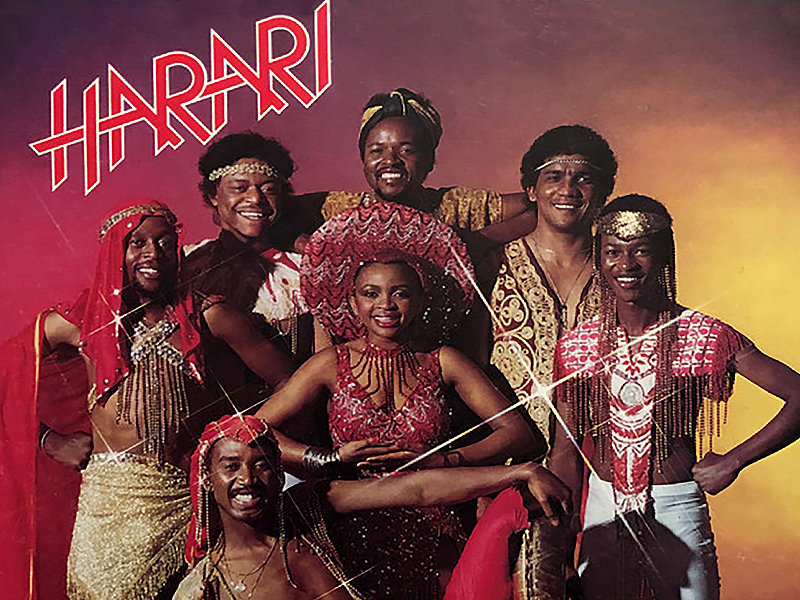
CAPTION: THE AFRO-ROCK GROUP HARARI
Mabuse is candid about the influences. “As the Beaters before Harari, our music was influenced by American soul artists such as Booker T and the M.G.’s,” he told PiE this week. Their township contemporaries in the soul wave included The Flaming Souls; The All Rounders (of the recently departed blind musician Babsy Mlangeni); The Anchors; The In-Laws; Teenage Lovers (of the soulful hit single Botany 500, from Potchefstroom and led by the late Michael “Rex” Rabanye); and, a little later, The Movers, featuring Blondie Makhene.
A tour of Rhodesia (today’s Zimbabwe) changed everything. A trip planned for weeks stretched into months, and the band returned home inspired, shedding their colonial-sounding name (Beaters) for Harari and pivoting to Afro-rock and Pan-Africanism. Many written histories link the name to the Harare township outside Salisbury (now the Zimbabwe capital after Salisbury was ditched). But when PiE put the question to Mabuse, one we believe few journalists have asked him before, he was firm that the intention was linguistic (Harari and not Harare):
“We were making a language statement. Harari comes from the Shona ‘munu uyu harari’: ‘He who doesn’t sleep’.” — Sipho “Hotstix” Mabuse
The look evolved along with the sound, and it is one reason people still remember them. Mabuse explains: “We always evolved our costumes in line with the evolution of our music. Our music was not static.”
| Era | The look | What it said |
| The Beaters years | Clean-cut, neat Nehru jackets | Polished, formal pop-group respectability |
| Afro-rock & Pan-African era | Vibrant dashikis, natural Afro haircuts, expressive cultural garments | African pride and defiance |
| Stage & album attire | Festival red-and-gold ensembles with detailed embellishment; colourful performance wear | High-energy shows built for festival crowds |
Harari’s fortunes changed with the death of leader Selby Ntuli in 1978. The band carried on with Mabuse at the helm before breaking up in the early 1980s, leaving a lull. Then came what some called “bubble-gum” music, a label Mabuse doesn’t subscribe to: “Whoever coined the term must have been mischievous, although one understands it might simply have meant ‘quick music’, just like pop.”
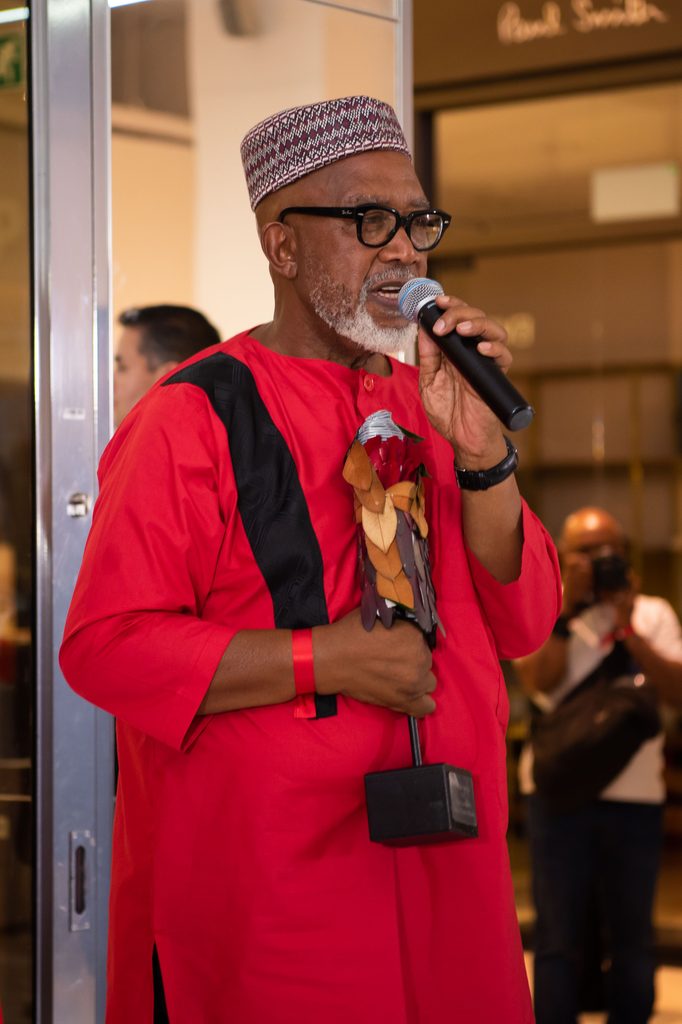
CAPTION: SIPHO “HOTSTIX” MABUSE
Mabuse, one of the two surviving members of the original group (the other is Alec Khaoli), went on to a celebrated solo career with crossover hits such as Burn Out and Jive Soweto, and later became a producer, educator and elder statesman of South African music.
ESSENTIAL LISTENING Harari (1975), Rufaro (1976), and Hotstix’s Burn Out.
3 Sakhile: “we have built”
Founded 1981 · Johannesburg and Durban
Sakhile (“we have built”) was a super-band in every sense. It emerged in early 1981 when two kindred spirits, Durban-born bassist Sipho Gumede and Soweto-raised saxophonist Khaya Mahlangu, broke away from the jazz-fusion collective Spirits Rejoice (founded by drummer Gilbert Matthews and saxophonist Duku Makasi) because they were “hearing something else”. They were joined by Menyatso Mathole, drummer Gabriel “Mabi” Thobejane (of Malombo fame), keyboardist Don Laka and later Themba Mkhize on keyboards. Pianist Jabu Nkosi, son of jazz man Zacks Nkosi, eventually joined as well: quite a line-up.
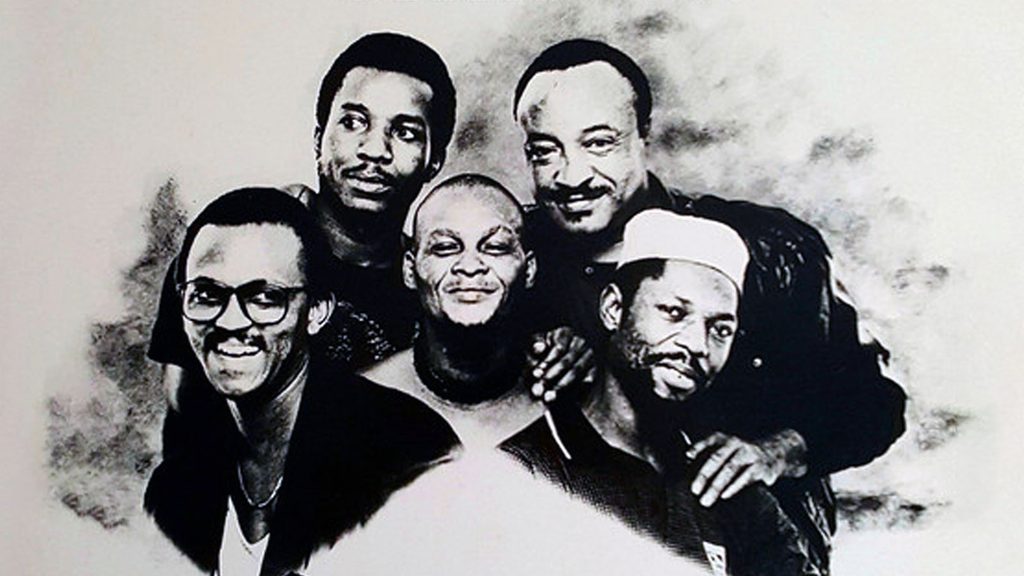
CAPTION: SAKHILE ALBUM PHOTO
They honed their sound as a house band at a nightclub in Umlazi, composed collectively, and made their name by touring. They arrived in the shadow of the 1976 Soweto uprising, and the mood showed in the music: Isililo (“the lament”) was a mournful composition written for Soweto ’76. But apartheid broadcasting restrictions meant a progressive band like Sakhile struggled for radio airplay, and the group split. It reunited in 1987 and took off internationally: Switzerland, Italy, Finland and the Soviet Union, with exiled composer Caiphus Semenya as music director on some of the anti-apartheid concerts, and a 1990 appearance at Wembley Stadium in London for Nelson Mandela.
Sipho Gumede, who also gave us the beautiful Mantombi, written for his first child, died on 26 July 2004, aged 52. Khaya Mahlangu is still with us, and still playing.
ESSENTIAL LISTENING Isililo, Gumede’s Mantombi, and the albums Unity and Down Freedom Avenue.
4 Stimela: the people’s band
Founded by Ray Phiri · early 1980s
You could not mistake a Stimela song for anyone else’s. Afro-fusion at its finest, Stimela blended jazz, R&B, funk and Afro-beat with the township heartbeat of mbaqanga, and carved a niche far from the prevailing “bubble-gum” era.
The band’s story starts with Ray Phiri, born near Nelspruit (Mbombela) in 1947, and his bandmates in the Cannibals, the backing band of soul star Jacob “Mpharanyana” Radebe. After Radebe’s death in 1978, the group regrouped. The name Stimela (“steam train”) reportedly came after the band found themselves stranded in Maputo, Mozambique, and returned home by train.
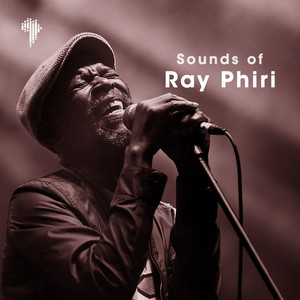
The 1980s belonged to “the people’s band”. Albums such as Fire, Passion and Ecstasy, Shadows, Fear and Pain, Look, Listen and Decide and Trouble in the Land of Plenty sold in huge numbers, with songs like Whispers in the Deep (Phinda Mzala) acting as a balm in a violent time. The SABC restricted that very track for broadcast, which, as so often happens, only made listeners love it more. Other favourites include Zwakala and Where Did We Go Wrong.
Then came Graceland. In 1985 Paul Simon invited Phiri to join the project that became Graceland, the album that won the 1987 Grammy for Album of the Year. Phiri, Stimela drummer Isaac Mtshali and bassist Bakithi Khumalo helped give it its sound and energy, and Phiri toured with Simon from 1987 to 1990. Back home he nurtured young talent through the Ray Phiri Artists Institute in Mpumalanga, and in 2011 received the Order of Ikhamanga in Silver. He died of lung cancer on 12 July 2017, aged 70.
ESSENTIAL LISTENING Whispers in the Deep (Phinda Mzala), Zwakala, Where Did We Go Wrong.
5 Jabu Khanyile and Bayete: Pan-Africa in a Maasai-inspired cloak
Soweto · 1980s and 1990s
Born in Mofolo, Soweto, on 28 February 1957, Jabu Khanyile learned his craft in bands such as The Daffodils, The Editions and The Movers before joining Bayete, first as drummer and then as lead vocalist. Bayete’s brass-driven Afro-jazz, with songs such as Mbombela, Hareyeng Haye and (yes) Mbube, struck a chord with township listeners.
After Bayete split in 1992 Khanyile went solo, still billed as “Jabu Khanyile and Bayete”. The result, 1993’s Mmalo-We, was a phenomenon: gold-certified and a sweeping success at the South African Music Awards, where Khanyile was named best male performer and the title track best song. Chris Blackwell’s Mango label took the album abroad.
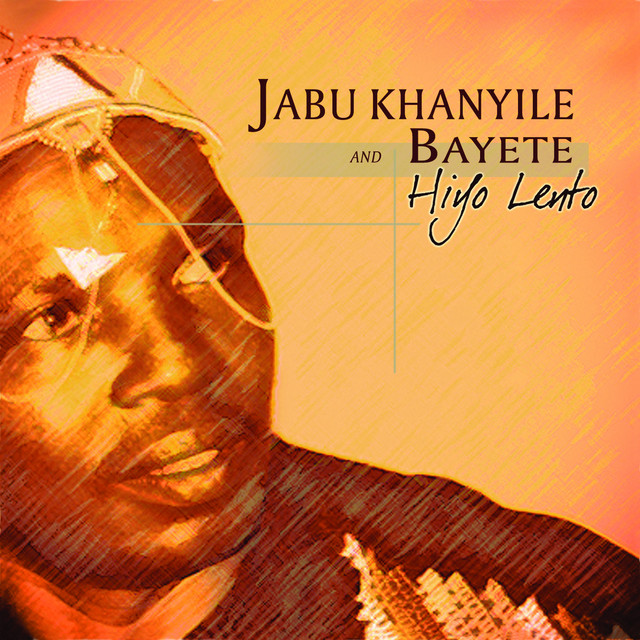
CAPTION: JABU KHANYILE ALBUM PHOTO
A pan-Africanist to his core, Khanyile shared stages with Youssou N’Dour, Angélique Kidjo and Papa Wemba, wore traditional Maasai-style attire, and won the prestigious Kora Award. At a 1996 gala at London’s Royal Albert Hall in honour of Nelson Mandela, his fiery set had the guest of honour on his feet, a moment that, by one obituary’s account, nearly breached royal protocol. His final public performance was at the World Cup handover ceremony in Berlin in July 2006. He died on 12 November 2006 at 49, after battling diabetes and prostate cancer.
ESSENTIAL LISTENING Mmalo-We, Mbombela, Africa Unite.
6 Sankomota: the mountain kingdom’s gift
Maseru, Lesotho · mid-1970s onwards
Strictly speaking they were from Lesotho, but South Africans claimed Sankomota as their own, and the band returned the love. Guitarist-composer Frank “The Captain” Leepa formed the band in his school days (first as Anti-Antiques, then Uhuru, before settling on Sankomota, the name of a warrior from Basotho and Bapedi folklore), and recruited the honey-and-gravel voice of Tshepo Tshola, born in Teyateyaneng in 1953.
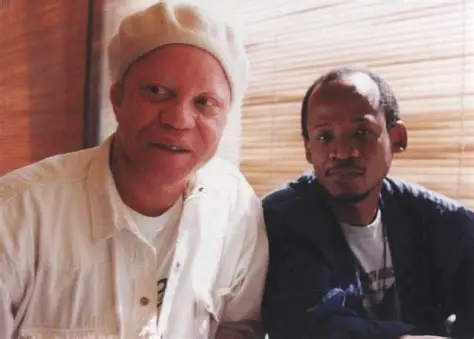
CAPTION: FRANK LEEPA (RIGHT) PICTURED WITH MALIAN SINGER SALIF KEITA
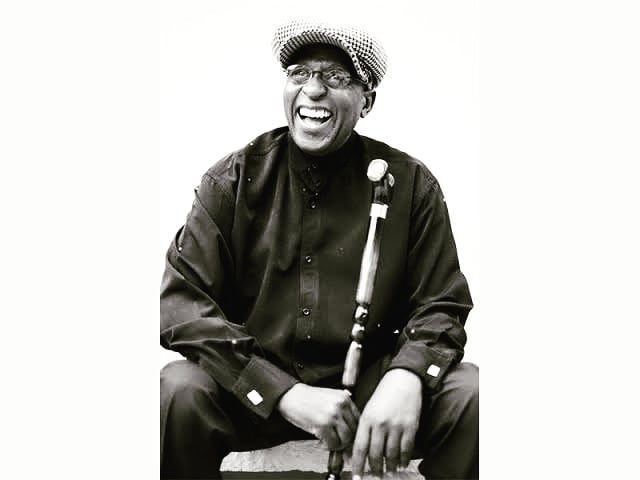
CAPTION: TSHEPO TSHOLA – SANKOMOTA’S FRONTMAN
Sankomota is credited as the first band to record an LP in Lesotho. Their self-titled debut album, recorded in 1983 with South African producer Lloyd Ross of Shifty Records, brought Leepa’s hit It’s Raining and an international release followed. Dreams Do Come True (1987) and The Writing’s on the Wall (1989) built the reputation, while Tshola also recorded with Hugh Masekela in Botswana. Their sound carried that unmistakable African touch, in the same spirit as Sakhile and Stimela.
Leepa died in November 2003. Tshola, affectionately known as “The Village Pope”, died on 15 July 2021, in the very week South Africa was reeling from unrest. His song Stop the War was played on radio stations across the country that day, a message worth remembering.
ESSENTIAL LISTENING It’s Raining, Stop the War, and the Dreams Do Come True album.
7 Sello Galane: the father of Free Kiba
Polokwane, Limpopo · 1990s onwards
He is one of the most underrated composers of this genre, and one of its most important. Dr Sello Galane is best known for reviving and reshaping kiba (also called dinaka), the indigenous dance music of the Bapedi, once a rural-only sound. His Free Kiba takes that traditional foundation, freed from its strictly tribal definition, and sets it in modern instrumentation, so that a village idiom speaks to a city audience. It is the same Bapedi and Venda well that Philip Tabane drew from with Malombo.
Music was in his blood. Galane grew up in a family where everyone listened to jazz on the radio, but his father and uncle were also instrument-makers and kiba ensemble leaders in their home village near the Mokopane Caves, before it was forcibly cleared. After a BA at the University of the North in 1986, he spent 1996 to 1999 researching kiba for a master’s at the University of Cape Town, including a stint at the Smithsonian in Washington. It was there, he has recalled, that a chance encounter set him asking what South Africans have to offer the world that is truly their own. Music was one answer.
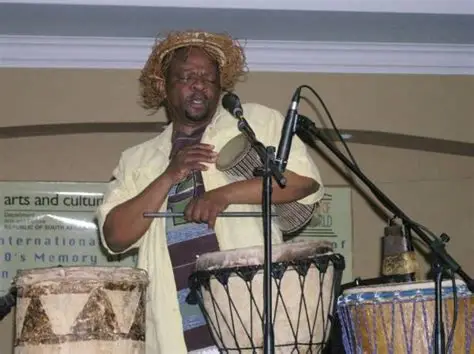
CAPTION: SELLO GALANE ON STAGE
On stage he is a showman and a poet: multi-instrumentalist, percussion master, with one of the great dintlhwantlhwadi drums strapped to his waist and audiences chanting his name. His first album used young girls to relay Pedi stories; the second, Free Kiba in Concert (2001), confirmed him as practically the only artist then championing kiba’s revival. His annual Pula concerts at Johannesburg’s Market Theatre became a fixture, marking a decade of Free Kiba there in 2010, and he has played the North Sea Jazz Festival. He also runs the Kgapana African Theatre in Polokwane.
Galane the scholar mattered to Malombo, too: it was his submission of Philip Tabane’s profile to the University of Venda that led to Tabane receiving an honorary doctorate in 1998. Critic Gwen Ansell has described Free Kiba as rooted in social commentary, mediation and healing, built on cross-rhythms and call-and-response vocals. If you have never heard it, you are missing a master.
ESSENTIAL LISTENING Free Kiba in Concert (2001) and his Pula concert recordings.
8 Moses Taiwa Molelekwa: the sound of possibility
Tembisa, Gauteng · born 17 April 1973 · died 13 February 2001
This PiE feature, we repeat, is about honouring those who came and made an impact. Molelekwa arrived when jazz was “dying”: Kippie Moeketsi, Mankunku and Ndlazilwana had made way. Soweto intellectual and socialite Pule Mokoena, who shared his thoughts with us, captured why he mattered. His brilliance, Mokoena says, arrived as a breath of fresh air at a pivotal moment in the country’s history.
Born in Tembisa into a family of jazz musicians, Pule Mokoena tells us in his write up, he was first taught by his father, nicknamed “Monk” for his love of Thelonious Monk (another American jazz influence at home). Moses grew up on John Coltrane, Miles Davis and Abdullah Ibrahim. Poverty and the disruptions of apartheid made his formal schooling patchy, but his talent was undeniable: he studied piano at the Federated Union of Black Artists Academy (FUBA) and graduated with honours in 1987.
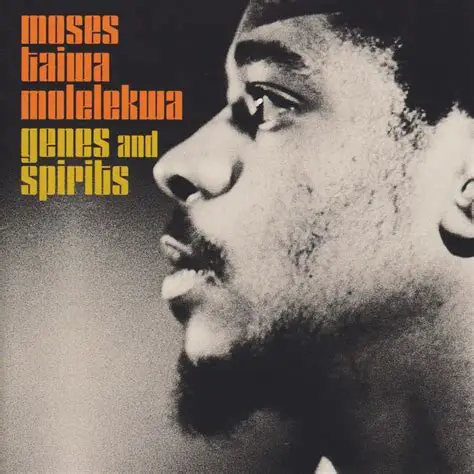
CAPTION: MOSES MOLELEKWA ALBUM PHOTO
The breakthrough came early, Pule Mokena tells us. As a teenager he accompanied legends such as Miriam Makeba and Jonas Gwangwa, and in 1988 Hugh Masekela invited him to join his band. He toured internationally as a sideman and as leader of his award-winning groups, Brotherhood and Umbongo. His 1994 debut Finding Oneself won two FNB South African Music Awards and announced him as heir to the marabi piano tradition of Abdullah Ibrahim. He performed at the North Sea Jazz Festival and London’s Queen Elizabeth Hall, collaborated with Brazilian vocalist Flora Purim and Cuban pianist Chucho Valdés on Genes and Spirits (1998), and produced for kwaito super-group TKZee and vocalist Sibongile Khumalo. Herbie Hancock, Bheki Mseleku and Abdullah Ibrahim were among his influences, but the voice was entirely his own: township soul, classical technique and fearless improvisation.
If music was the sound of resistance, Molelekwa’s music became the sound of possibility. — Pule Mokoena
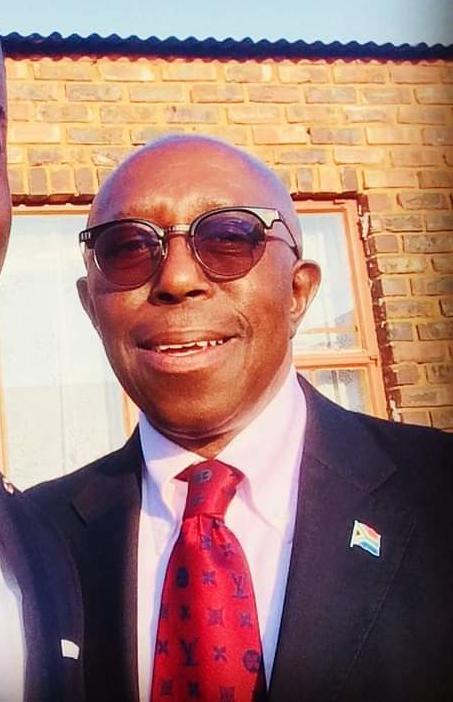
CAPTION: MUSIC FOLLOWER PULE MOKOENA
Moses Molelekwa and his wife, Florence “Flo” Mtoba, died tragically on 13 February 2001 in Johannesburg. He was 27. His third album, Wa Mpona, was released posthumously in 2002.
More than two decades on, his echo is still heard in the jazz corners of Soweto and Tembisa. He told young Black pianists from the kasi that they could be rooted in marabi and kwaito and still converse with Herbie Hancock and Coltrane on the world stage, Pule Mokoena reminds us. As jazz finds a new home in Soweto’s backrooms, cultural hubs and Sunday sessions, every young keyboardist who blends ancestral rhythm with modern improvisation walks a path he helped clear. Freedom, his music reminds us, also needs its own soundtrack: soothing, refreshing and unapologetically African.
ESSENTIAL LISTENING Finding Oneself (1994), Genes and Spirits (1998), Wa Mpona (2002).
Why they still matter
Every era and every country produce its master acts. America gave the world Marvin Gaye, Quincy Jones, Aretha Franklin, the High Priestess of Soul Nina Simone, Whitney Houston (to many, the greatest voice of them all) and Michael Jackson, a once-in-a-century talent and an entertainer of note. Our township musicians studied them, learned from them, and made something of their own.
It is fair to say South Africa has been the musical version of the United States on the African continent, with an extra measure of the indigenous and the traditional. The acts in this PiE feature took the American jazz and soul that rolled into the townships and fused it with Venda drums, Zulu harmony, Sotho guitar lines and Pedi rhythms. They played through apartheid, censorship and exile. Some died poor; some were robbed of royalties; some left too soon. But the sound survived, and the listeners and followers never left.
So this Sunday, put one of them on. Turn it up. And if someone in the room hums along before you can name the song, you will know exactly what we mean.
The Sunday playlist
Twelve places to start, in roughly the order we met them
| Track / album | Artist | Why start here |
| Mbube (1939) | Solomon Linda & the Evening Birds | Where it all began |
| Mama kaSibongile | Soul Brothers | Mbaqanga with a soul heartbeat |
| Thokozile / Paris–Soweto | Mahlathini & the Mahotella Queens | The groan that conquered the world |
| 1964 Castle Lager Jazz Festival set | Malombo Jazzmen | The night ancestral drums won a jazz contest |
| Rufaro (1976) | Harari | Afro-rock in dashikis |
| Burn Out | Sipho “Hotstix” Mabuse | A township crossover classic |
| Isililo | Sakhile | A lament for 1976 |
| Whispers in the Deep | Stimela | The song the SABC tried to restrict |
| Mmalo-We | Jabu Khanyile & Bayete | A gold-selling pan-African anthem |
| It’s Raining / Stop the War | Sankomota / Tshepo Tshola | Lesotho’s gift to the region |
| Free Kiba in Concert (2001) | Sello Galane | Kiba drums for the modern ear |
| Finding Oneself (1994) | Moses Taiwa Molelekwa | The sound of possibility |
Remembered, and still with us
| Name | Act | Passed on |
| Solomon Linda | The Evening Birds (Mbube) | 1962 |
| Selby Ntuli | Harari | 1978 |
| Simon “Mahlathini” Nkabinde | Mahlathini & the Mahotella Queens | 1999 |
| Moses Taiwa Molelekwa | Pianist and composer | 2001 |
| Frank Leepa | Sankomota | 2003 |
| Sipho Gumede | Sakhile | 2004 |
| Jabu Khanyile | Bayete | 2006 |
| David Masondo | Soul Brothers | 2015 |
| Ray Phiri | Stimela | 2017 |
| Philip Tabane | Malombo | 2018 |
| Tshepo Tshola | Sankomota | 2021 |
Still with us: Sipho “Hotstix” Mabuse and Alec Khaoli of Harari, Khaya Mahlangu of Sakhile, and Moses “Black Moses” Ngwenya of the Soul Brothers. Once a musician, always a musician.
PiE thanks Sipho “Hotstix” Mabuse and Pule Mokoena for their recollections and insights. Biographical details compiled from South African History Online, Music In Africa, the Mail & Guardian, Daily Maverick, Sowetan, New Frame and other published sources.