
VIEWPOINT: IDO LEKOTA
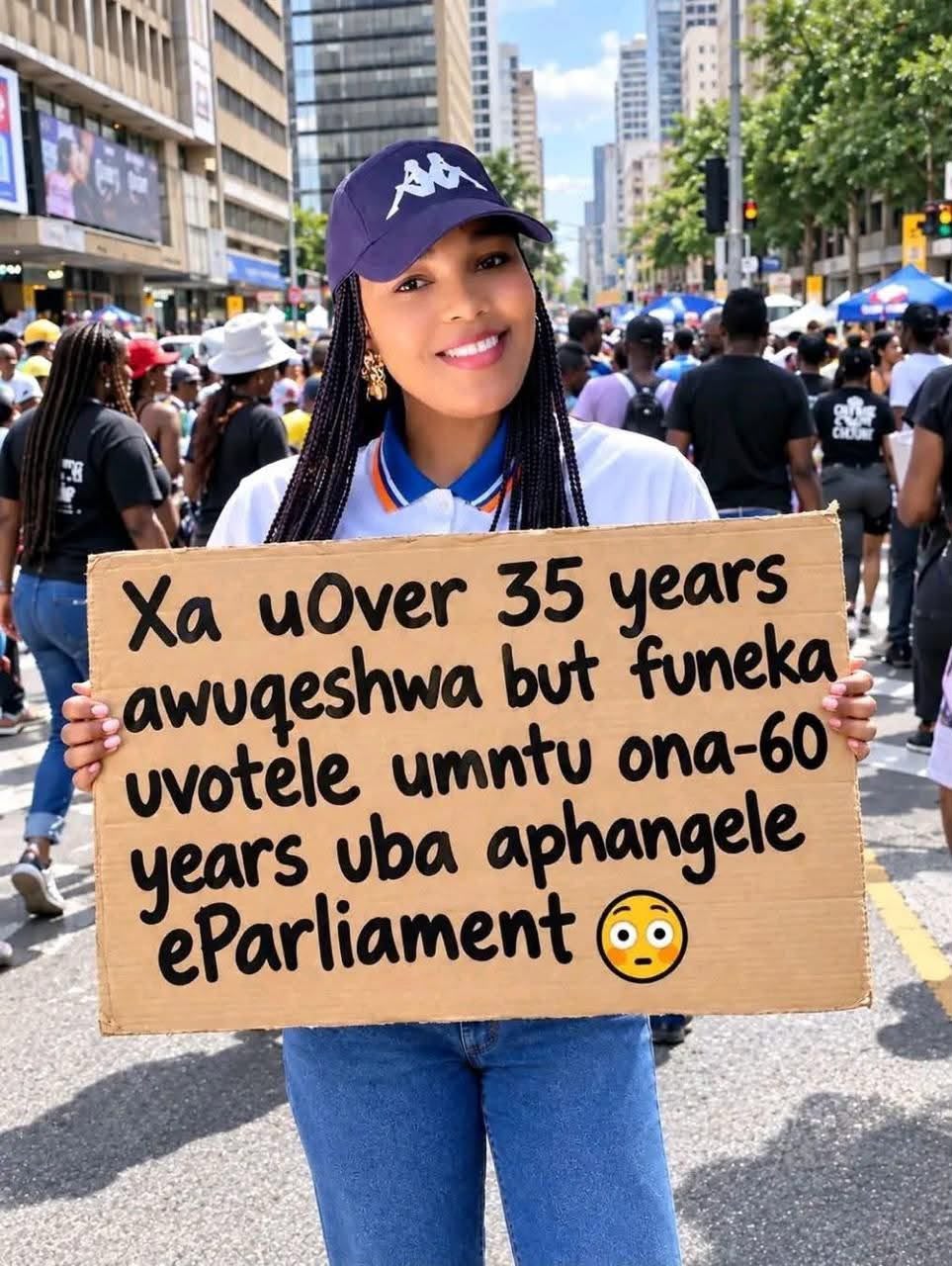
South Africans have long used political satire to name what formal political language tries to conceal. A placard carried – apparently by an unemployed graduate – captures this tradition with particular force: “You are 35 years and unemployed but you are expected to vote for a 60-year-old to remain in Parliament.”
It is a short sentence, but it contains an entire political argument. It turns a personal misfortune into a public indictment, a generational contrast into a question of accountability and a democratic ritual into an uncomfortable joke. The humour is not light-hearted. It is the humour of a society attempting to make sense of an untenable situation: citizens are repeatedly asked to renew their faith in political institutions while many see little improvement in the material conditions of their lives.
The placard is satire because it exposes a contradiction through juxtaposition. Thirty-five is presented as the age of frustrated potential – old enough to have completed an education, acquired experience and assumed adult responsibilities, but still unable to secure stable employment. Sixty is presented as a symbol of political longevity, accumulated influence and a career that appears to continue while younger citizens remain economically stranded.
The point is not that older people should be excluded from public life, or that a younger politician would automatically govern more effectively. Nor does the placard establish that the particular parliamentarian being referenced is incompetent or undeserving. Its target is broader and more serious: a political system in which seniority, historical association and party loyalty may continue to command respect even when the material performance of the system becomes increasingly difficult to defend.
The placard asks why a person who has been failed by the economy should be expected to provide legitimacy to those who have presided over it. It asks whether the vote is still an instrument of democratic power or whether it has become a periodic ritual through which citizens are invited to renew the authority of political elites without receiving a corresponding improvement in their own lives.
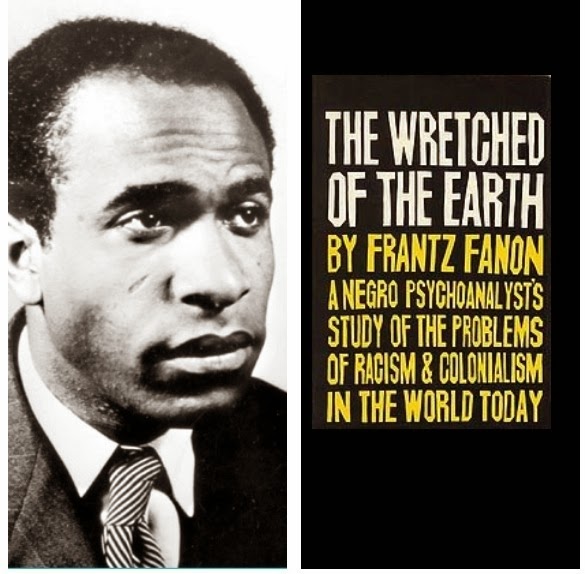
This is where Frantz Fanon gives the placard its postcolonial charge. Fanon warned in The Wretched of the Earth that “the people must be warned not to put their confidence in the bourgeoisie”. His warning cannot be applied mechanically to every older politician, party leader or public representative. But it is useful in understanding the danger of a political elite that occupies the state while failing to transform the economic and social conditions of the majority.
In South Africa, the question is not simply whether political power changed hands after apartheid. The more difficult question is whether political liberation has been matched by economic liberation. A citizen may possess formal political rights while remaining excluded from secure employment, meaningful wealth ownership, quality public services and influence over the decisions that shape everyday life.
The unemployed graduate represented by the placard stands at the centre of that contradiction. They are not excluded from democracy in the formal sense. They can vote, protest, speak to the media and place a message in the public square. Yet their democratic inclusion does not necessarily translate into economic security or political influence. Their degree may have fulfilled the promise of education but failed to produce the promised transition into work. Their vote may confirm the legitimacy of Parliament without guaranteeing that Parliament will respond to their circumstances.
Fanon’s insight helps explain the anger directed at a political class that may continue to speak in the language of liberation while younger citizens experience liberation as incomplete. Historical credentials matter, particularly in a country whose democracy emerged from a violent and unequal past. But history cannot become a permanent substitute for performance. A liberation movement, party or politician cannot rely indefinitely on what was achieved yesterday to justify what is being failed today.
The placard therefore challenges the conversion of historical legitimacy into a permanent claim on political loyalty. It asks whether the past should continue to protect the present from accountability. It also asks whether citizens who were born into democracy are obliged to defend institutions that have not sufficiently delivered the opportunities they were promised.

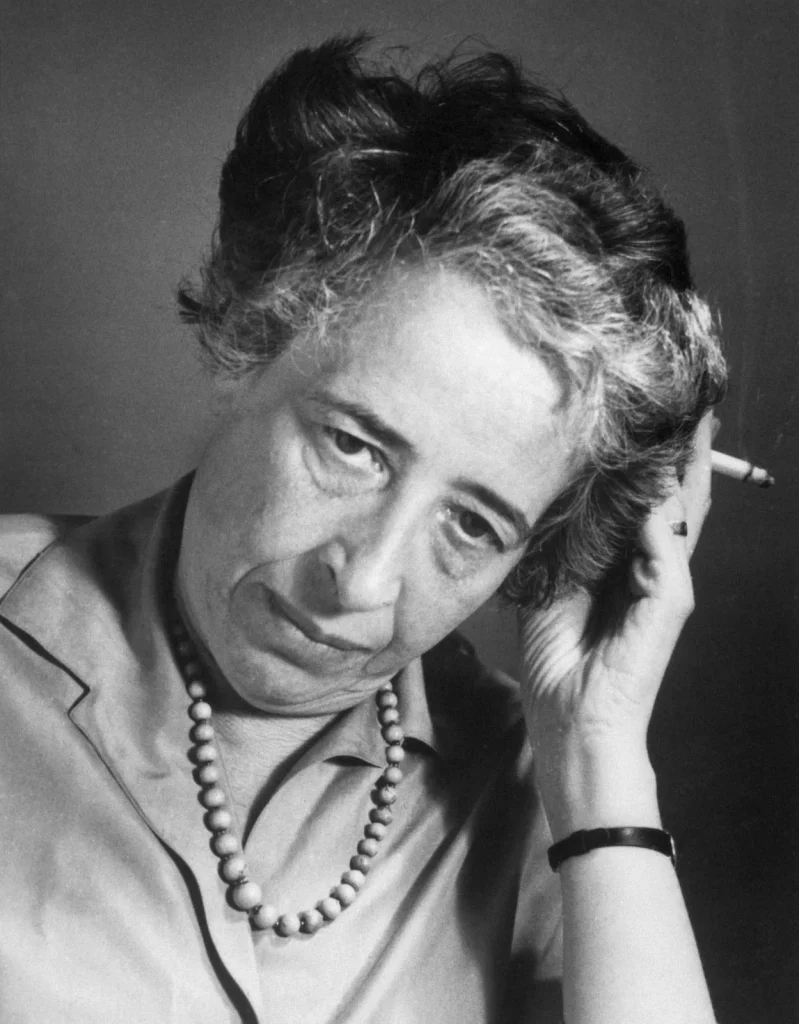
Hannah Arendt provides a second lens through which to understand the placard. Her assertion that “the raison d’être of politics is freedom” deepens the argument beyond the right to vote. Arendt’s formulation suggests that politics should not be understood merely as the management of institutions or the administration of elections. Politics should create a public world in which people can appear, speak, act and participate in shaping their common future.
The placard is an example of that political action. The unemployed graduate refuses to remain an isolated statistic in a labour-market report. They take a private condition and make it public. Unemployment becomes not simply a personal problem but a political accusation. In effect, the placard says: if the state and its representatives have the authority to shape people’s lives, they must also answer for the consequences.
Arendt’s idea of freedom also exposes the limits of reducing democracy to electoral procedure. The unemployed graduate may be free to vote, but the placard asks whether that freedom is meaningful when the person cannot find work, build an independent household or plan a secure future. The right to choose a representative is important, but it is not identical to the power to influence the conditions under which one lives.
A ballot can establish formal citizenship. It cannot, by itself, guarantee substantive freedom.
CAPTION: HANNAH ARENDT – PHOTO CREDIT: BRITTANICA
This is the central contradiction in the placard. South Africa possesses the familiar procedures of democracy: elections are held, Parliament sits, political parties compete, public hearings take place and constitutional rights are formally protected. Yet many citizens experience these procedures as increasingly remote from their material lives. The forms of democracy remain visible, while its promised substance appears unevenly distributed.
The placard’s satire cuts through the ceremonial language of politics because it refuses to discuss democracy in abstract terms. It does not ask whether the electoral system is technically sound. It asks what the system has done for a particular person: a 35-year-old graduate who remains unemployed while being encouraged to sustain the parliamentary career of someone who is 60 years old.
That is the political arithmetic behind the placard. The unemployed citizen is expected to demonstrate responsibility by voting, while those who seek power are not always required to demonstrate an equivalent responsibility through measurable delivery. Citizens are told that every vote matters, but political representatives are not always compelled to explain what their continued tenure has achieved for the people whose votes keep them in office.
The system can respond to this frustration with familiar gestures. It can announce another youth employment programme, convene another summit or create another short-term opportunity that produces favourable headlines without changing the long-term trajectory of young people’s lives. It can appoint a few younger faces while leaving the deeper structures of party control, patronage and economic exclusion untouched.
But symbolic inclusion is not the same as transformation. A young person placed in a photograph is not necessarily a young person given power. A training programme is not necessarily a job. A promise of reform is not necessarily reform. The unemployed graduate’s satire is directed precisely at this gap between announcement and outcome.
Fanon helps us understand why such gaps produce more than disappointment. They generate a sense of betrayal. A society that has formally declared its commitment to equality becomes particularly vulnerable to anger when equality remains an elusive dream. The more frequently citizens are told that transformation is taking place, the more intolerable it becomes when their own lives provide little evidence of it.
Arendt helps us understand the political consequences of that betrayal. When citizens cannot see themselves as active participants in shaping a common world, politics becomes a performance conducted by others. Parliament appears on television, parties appear on posters and elections appear on the calendar, but the ordinary citizen remains a spectator whose principal role is to periodically validate the system.
The placard interrupts that performance. It places the spectator on the stage.
Its message is not that every older parliamentarian must leave. It is that age and longevity do not constitute a sufficient justification for continued power. An experienced politician may still make a valuable contribution, but experience must be measured against responsibility, competence, integrity and results. A long political career should not be treated as an entitlement to another term. It should invite a more demanding question: what has this career produced for the people it claims to represent?
That question is especially urgent in a country where unemployment and inequality continue to shape the life chances of millions. The 35-year-old graduate is not simply asking for personal assistance. They are asking whether the political system recognises their generation as a constituency whose future matters now, rather than as an electoral bloc to be addressed before the next vote.
The placard also challenges the moral language used to secure political consent. Citizens are encouraged to remain loyal, patient and grateful. They are reminded of the sacrifices of previous generations and warned against political alternatives that might threaten stability. These considerations are not without merit. But they become inadequate when they are used to silence legitimate questions about performance.
Fanon’s warning remains relevant because liberation movements and governing parties can become vulnerable to the belief that their historical role entitles them to permanent trust. Arendt’s argument remains relevant because political institutions can continue to operate while losing their connection to freedom as a lived experience. Together, they explain why the placard is both a generational complaint and a broader indictment of South Africa’s democratic condition.
It is a complaint about a system that has achieved political inclusion without completing economic inclusion. It is also a warning that the distance between the procedures of democracy and the substance of daily life is becoming too wide to conceal with speeches, slogans and electoral symbolism.
The placard’s final sting is not that a 35-year-old should never vote for a 60-year-old. The sharper point is that the 60-year-old must be able to explain why and how their continued presence in Parliament serves the 35-year-old’s future. The burden of justification should fall on those who seek renewed authority, not permanently on those whose lives have been placed on hold.
Fanon asks whether political liberation has produced genuine transformation. Arendt asks whether citizens possess meaningful freedom rather than merely formal rights. The placard brings those questions down to street level. It asks why a person excluded from economic life should be expected to keep alive the political career of someone who benefits from the continuity of the system.
That is why the message is funny, painful and politically dangerous. It turns procedure into satire and satire into accountability. It reminds South Africa that a democracy can remain procedurally intact while becoming substantively hollow. Elections may still take place, Parliament may still sit and citizens may still vote, but procedure without delivery eventually becomes theatre.