
Africa’s World Cup dream officially ended on Thursday night in Foxborough, Massachusetts, when Morocco — the continent’s last team standing, went down 2-0 to France.
PiE Sport Desk Feature
Africa’s World Cup dream officially ended on Thursday night in Foxborough, Massachusetts, when Morocco — the continent’s last team standing at the 2026 FIFA World Cup — went down 2-0 to France in the quarter-finals. It was a cruelly familiar scoreline. Four years earlier, in Qatar, the same two nations had met at the same stage of elimination, France edging the Atlas Lions by an identical margin in the semi-finals of that tournament. History, it seems, has a habit of repeating itself when these two sides meet on the biggest stage.
Thursday’s contest, played at Gillette Stadium near Boston, was one-sided for long stretches. Morocco managed just a single shot on target across the ninety-plus minutes, and it arrived in the 82nd minute, by which point the game was already beyond them. Kylian Mbappé broke the deadlock in the 60th minute, notching his eighth goal of the tournament, before Ousmane Dembélé added a second to seal France’s passage into the semi-finals. Morocco’s best moment of genuine threat came earlier, when midfielder Azzedine Ounahi forced a smart save from French goalkeeper Mike Maignan, but chances of that quality were rare on a night when the Atlas Lions could not find their attacking rhythm.
Moroccan coach Mohamed Ouahbi was gracious in defeat afterwards, telling reporters that the future would remain bright for his side even as the disappointment of the night settled in. France’s Didier Deschamps, for his part, credited his side’s control of possession and their ability to nullify Morocco’s wide threats as the difference between the two teams.
The Long Goodbye
Morocco’s elimination brought the curtain down on what had, for a fleeting moment in late June, looked like it might become Africa’s greatest World Cup showing yet. Nine African nations — a tournament record — reached the expanded Round of 32: Algeria, Cape Verde, DR Congo, Egypt, Ghana, Ivory Coast, Morocco, Senegal and South Africa. Only Tunisia fell at the group stage, unable to pick up a single point.
What followed was a period African football will remember as bittersweet. One by one, the continent’s representatives fell away, almost always by the narrowest of margins. Ivory Coast were beaten by Norway courtesy of a late Erling Haaland strike. South Africa lost in stoppage time to co-hosts Canada. Algeria could not overcome Switzerland. DR Congo led England for over an hour before being pegged back and beaten in the final quarter of the match. Senegal surrendered a two-goal lead to Belgium and were eventually undone by a controversial extra-time penalty. Ghana could not find a way past Colombia. Cape Verde, playing above themselves throughout the tournament, pushed Argentina all the way to extra time before bowing out. Egypt came agonisingly close to one of the great World Cup upsets, leading holders Argentina 2-0 with barely ten minutes to play in the Round of 16, only to concede three times in a stunning late collapse.
That left Morocco — 2022’s history-makers, the first African side ever to reach a World Cup semi-final — as the sole bearer of the continent’s hopes heading into the quarter-finals. Their exit on Thursday means that, for the first time since the knockout rounds began, there is no African team left in the competition.
The Happiest Team to Go Home
Of the nine African teams who made the trip to North America, only one seemed to leave with more smiles than regrets — and it wasn’t the continent’s top-ranked side. Bafana Bafana, ranked among the more modest outfits in the field, were the very first African nation eliminated from the knockout rounds, beaten by co-hosts Canada in stoppage time. And yet South Africa’s tournament will be remembered not for how it ended, but for what it represented: a first-ever appearance in the knockout stages of a World Cup, achieved on the team’s fourth attempt at the tournament.
It is a milestone worth putting in context. South Africa made football history in 2010 as the first African country to host a World Cup, opening that tournament with a draw against Mexico that remains one of the more fondly remembered moments in the country’s sporting history. Yet on the pitch, in three previous World Cup appearances, Bafana Bafana had never once made it out of the group stage. This time, under Belgian coach Hugo Broos, the story changed. A rocky opening defeat to Mexico — in which South Africa also had two players sent off — was followed by a hard-fought draw against Czechia and then a famous 1-0 win over South Korea that sent them through as Group A runners-up.
Broos, who has spent five years rebuilding the national team, called the achievement a success in itself, saying reaching the second round had been the target all along and that anything beyond it would have felt like a bonus. South African football administrators were similarly effusive, with SAFA president Danny Jordaan noting that the squad could hold its head high for the history it made in North America. The run also carried a financial reward, with South Africa’s prize money climbing past the 13 million US dollar mark once the knockout-stage bonus was factored in.
There is a certain symmetry to South Africa being both the first African nation to host the World Cup and now, sixteen years later, a team that finally broke its own knockout-stage curse — even while more fancied African sides fell earlier or, in Morocco’s case, later but no less painfully.
Mbokazi: The Breakout Star
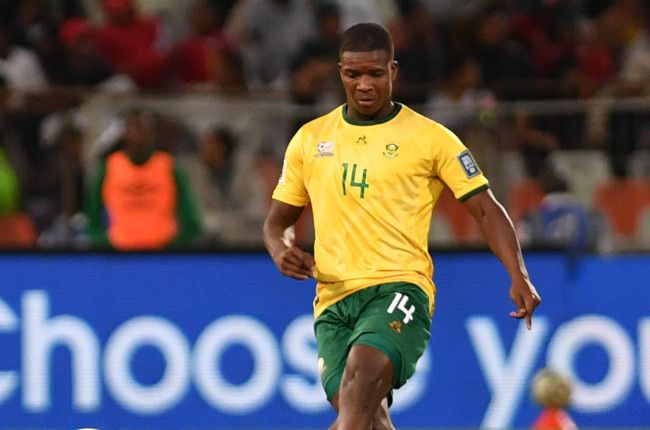
Few individual stories captured South Africa’s feel-good campaign quite like that of Mbekezeli Mbokazi. The 21-year-old centre-back, who made the move from Orlando Pirates to Chicago Fire ahead of the 2026 season, was one of the more composed performers in a young Bafana Bafana back line, reading the game with a maturity well beyond his years throughout the tournament. Born in Hluhluwe in 2005, Mbokazi’s rise has been rapid: a senior South Africa debut in May 2025, a regular starting berth in the national team, and then a place in coach Hugo Broos’ 2026 World Cup squad — built, by all accounts, on composure under pressure and reliable physical defending.
Now back home in Durban during his post-tournament break, Mbokazi has been enjoying the trappings of a breakout year. Footage circulating on social media this week showed the young defender taking delivery of a new Toyota Hilux GR-Sport, a sleek black double-cab reported to be worth in the region of R1.2 million. Kitted out with aggressive styling cues, reinforced suspension and GR performance tuning, the Hilux GR-Sport has become something of a status symbol in South African football and business circles alike — a vehicle that signals arrival without sacrificing the everyday practicality that appeals to buyers across the country.
Beyond the new set of wheels, Mbokazi has spent his down time reconnecting with home. He was reportedly spotted in KwaMashu alongside national teammate Thalente Mbatha, the pair making the most of the off-season together before club commitments resume. For a young player now based in the United States, moments like these — and purchases like the Hilux — offer a tangible link back to where his career started, and a reminder of just how far a steady, disciplined rise through the ranks has taken him.
Mbokazi’s form did not go unnoticed beyond South Africa’s borders either. His calm authority at the back — highlighted by a crucial goal-saving intervention against Canada in the Round of 32 — made him one of the most talked-about young defenders to emerge from the tournament, and reports back home suggest he is already attracting interest from clubs in Europe’s bigger leagues.
Mofokeng: Straight From the World Cup to Belgium
If Mbokazi represented the defensive steel of South Africa’s World Cup story, Relebohile Mofokeng supplied its flair. The 21-year-old, affectionately nicknamed “President Yama-2000” by Orlando Pirates fans for his close control and swagger, started as the No. 10 in South Africa’s decisive 1-0 win over South Korea, a performance that helped send Bafana Bafana into the knockout rounds for the first time. His dribbling and vision throughout the tournament left little doubt that his talent had outgrown the domestic game.
What made Mofokeng’s story remarkable was the timing. An agreement between Orlando Pirates and Belgian champions Royale Union Saint-Gilloise had quietly been reached before the World Cup even began, with both clubs deliberately holding off on any announcement so the youngster could focus fully on the tournament. Within seventy-two hours of Bafana’s exit to Canada, Mofokeng boarded a flight from Los Angeles straight to Brussels, bypassing a homecoming altogether to complete his medical and finalise a four-year deal reported to be worth in excess of R70 million. He follows a path trodden by South African greats such as Percy Tau, joining a club renowned for developing talents like Victor Boniface and Mohamed Amoura into full-fledged European stars.
Bafana captain Ronwen Williams welcomed the move as a sign of where South African football needs to head, noting the pride the whole squad felt in seeing a teammate take that step. Mofokeng himself has said the switch was less about money and more about growth, describing the move as a chance to keep developing as both a player and a person while chasing an even bigger opportunity in Europe down the line.
Hugo Broos: The Architect Bows Out
None of it — not Mbokazi’s rise, not Mofokeng’s move abroad, not South Africa’s historic run itself — happens without Hugo Broos. The 74-year-old Belgian took charge of Bafana Bafana in mid-2021 and leaves as the longest-serving coach in the national team’s history, closing out his tenure with a record of 29 wins, 19 draws and just 12 defeats from 60 matches, a win rate above 48 percent.
Broos’s five years in charge produced a run of milestones that had eluded South African football for a generation: a bronze medal at the 2023 Africa Cup of Nations, back-to-back AFCON qualifications, a first World Cup appearance since 2010, and finally that long-awaited breakthrough into the knockout stages in North America. Just as significant was his willingness to hand debuts and starting roles to a wave of young players — Mbokazi and Mofokeng chief among them — who have since become the new face of the national team.
For weeks after South Africa’s elimination, Broos left the door open to extending his stay, admitting he was tempted to continue after the emotional high of the World Cup run. In the days after Morocco’s own exit closed out the African contingent’s 2026 campaign, however, Broos confirmed his coaching career had come to an end, telling Belgian outlet Voetbalnieuws that the decision was irreversible while leaving open the possibility of a future advisory or scouting role with SAFA.
Enter Pitso: The Favourite to Take Over
Broos’s departure has reopened one of the most anticipated conversations in South African football: who takes the reins next. The name at the top of almost every shortlist is Pitso Mosimane, widely regarded as the most successful coach in the country’s history and understood to have SAFA’s technical committee, several senior players and even Sports Minister Gayton McKenzie among his backers.
Mosimane’s résumé is difficult to match on the continent. At Mamelodi Sundowns, where he spent nearly eight years in charge, he won five Premier Soccer League titles along with a string of domestic cups, and delivered the club’s first-ever CAF Champions League title in 2016 — a result widely credited with changing how South African clubs were viewed across Africa. He then became the first non-Egyptian African coach to take charge of Al Ahly, and promptly won back-to-back CAF Champions League titles in 2020 and 2021, along with an Egyptian league and cup double, making him the first African coach to lift the continent’s top club prize three times.
His career since Al Ahly has taken him through Saudi Arabia, the UAE and Iran, with spells at Al-Ahli Jeddah, Al Wahda and Esteghlal, none of which matched the heights of his Sundowns and Al Ahly years. Mosimane also has previous experience with Bafana Bafana itself, having served as caretaker national coach in 2007 and then head coach between 2010 and 2012. He has been open about the one prize still missing from his cabinet — continental glory with the national team — telling a recent podcast appearance that lifting the Africa Cup of Nations with Bafana Bafana is the medal he wants most to complete his career.
Should SAFA confirm the appointment, Mosimane would inherit a squad already reshaped by Broos and freshly emboldened by its first knockout-stage World Cup appearance — with a defensive cornerstone in Mbokazi, an attacking spark in Mofokeng abroad in Belgium, and a September start to 2027 AFCON qualifying to mark the beginning of the next chapter.
A New Chapter Beckons
As Morocco’s exit brings the curtain down on Africa’s 2026 World Cup, South Africa’s story stands apart from the rest of the continent’s disappointment. A first-ever knockout stage appearance, a coach departing with his legacy secure, a young core already making waves at home and abroad, and a decorated successor waiting in the wings — together they sketch the outline of a Bafana Bafana that, for the first time in a long time, has genuine reason to believe its best days are still ahead of it.