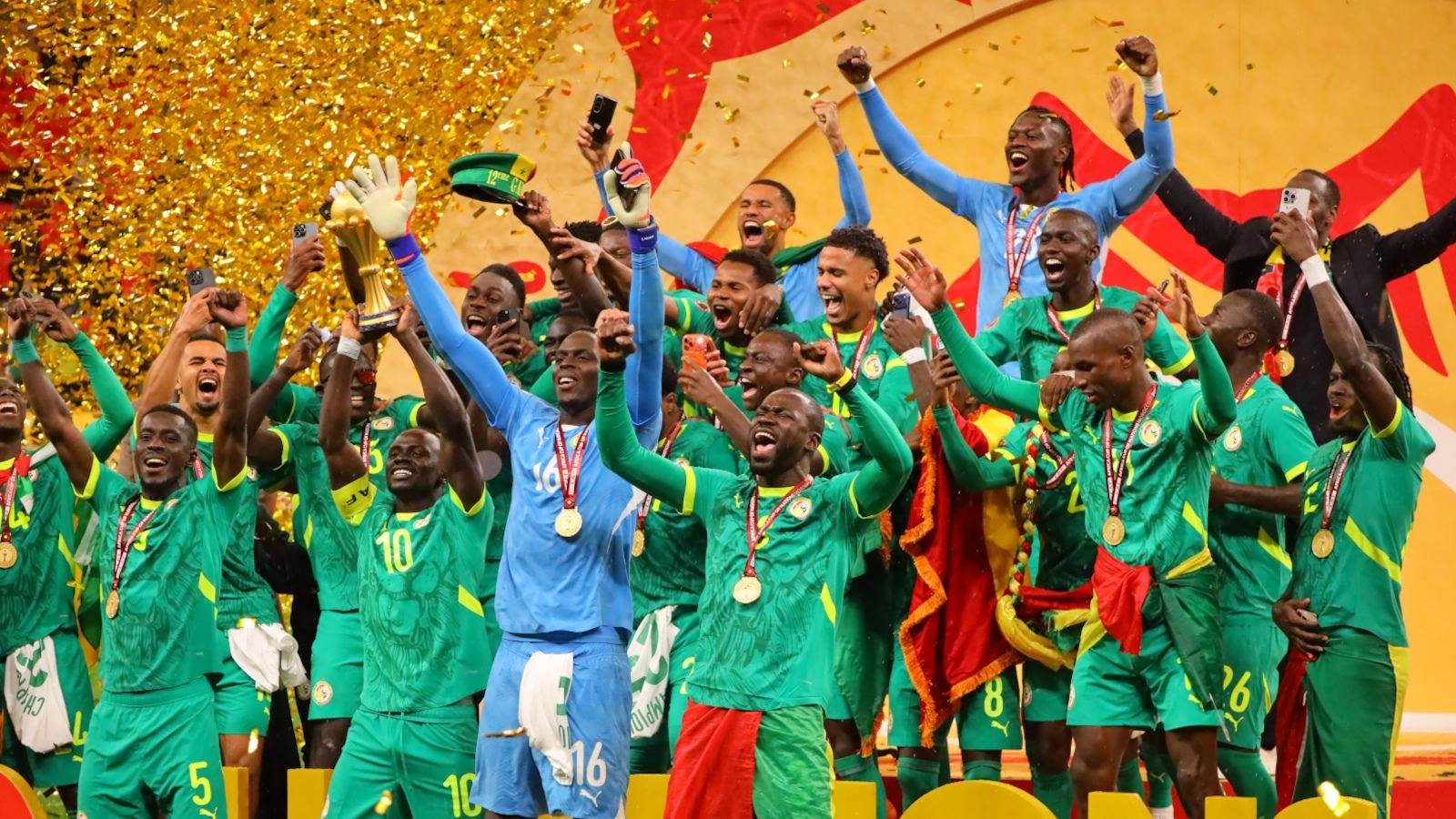

The Court of Arbitration for Sport has unanimously ruled that the referee was within his rights to restart the January final, restoring Senegal’s 1-0 win and ending ten months of legal wrangling.
PiE SPORTS
Senegal are African champions again. The Court of Arbitration for Sport (CAS) on Tuesday upheld the Senegalese Football Federation’s (FSF) appeal and set aside the Confederation of African Football (CAF) ruling that had stripped the team of the 2025 Africa Cup of Nations title and handed it to Morocco.
The three-person panel was unanimous. In its statement, CAS said the decision of the CAF Appeal Board was annulled and the earlier decision of the CAF Disciplinary Board reinstated. The result of the final in Rabat on 18 January, a 1-0 win for Senegal after extra time, was confirmed.
The ruling reverses CAF’s March decision to record the match as a 3-0 forfeit win for Morocco, and returns the trophy Senegal won on the pitch more than ten months ago.
Why CAS sided with Senegal
The case turned on the “field of play” doctrine, under which a referee’s decisions during a match are generally not open to review. Senegal argued that referee Jean-Jacques Ngambo Ndala’s decision to restart the final in the 109th minute (90+19) fell under that doctrine and could not be reviewed. Morocco’s federation (FRMF) countered that the doctrine could not shield the disciplinary consequences of Senegal’s conduct. It argued that by leaving the pitch, Senegal breached Articles 82 and 84 of the AFCON regulations, which should have led the referee to end the match early, and that Ndala had erred in law and acted arbitrarily.
The panel disagreed. It found that the decision to resume or stop a match lay within the referee’s sole authority. By blowing his whistle to restart play, it said, Ndala judged that the conditions for resuming had been met: both teams were back on the pitch and both were willing to continue. The effects of that decision were limited to the pitch, and it was therefore covered by the doctrine.
Articles 82 and 84, CAS said, exist only to settle the outcome of a match when a team’s conduct leads the referee to abandon it permanently. They did not apply here, and in resuming the game Ndala did not err in law. The panel accepted that he had to decide in an atmosphere of extreme tension, but said that did not make the decision arbitrary, and that his judgment did not appear to have been influenced by factors outside the game.
CAS also noted that the FSF, coach Pape Thiaw and certain players had already been sanctioned by CAF in separate disciplinary proceedings. Reinstating the Disciplinary Board’s decision means that ruling, which left the result untouched, is the one that stands.
Morocco vows to fight on
The Moroccan federation said it would pursue all necessary legal avenues to contest the ruling. It also pointed to what it described as contact between German arbitrator Ulrich Haas, one of the three panel members, and FSF president Abdoulaye Fall 48 hours before the decision was announced. Morocco said it had written to CAS earlier on Tuesday asking for the announcement to be postponed so the claim could be investigated. The allegation is Morocco’s, and the reports reviewed did not include a response from CAS or the FSF.
The most likely next step is a challenge before the Swiss Federal Tribunal, which hears appeals against CAS awards, although such challenges are limited to procedural grounds. CAF president Patrice Motsepe said in March that he would respect and implement whatever CAS decided, and that his own opinion on the matter was irrelevant.
How the saga unfolded
The dispute began in the closing minutes of regulation time in Rabat. After a Senegal goal was ruled out, Morocco were awarded a penalty deep into stoppage time. Thiaw led his players off in protest. Captain Sadio Mané persuaded the team to return, and play resumed after a delay of roughly 15 minutes. Brahim Díaz’s penalty was saved by Édouard Mendy, and in extra time Pape Gueye scored the only goal, giving Senegal their second continental title after 2021.
CAF’s Disciplinary Board initially left the result alone. In late January it fined the two federations and individuals, more than $1 million in total, and banned Thiaw and players from both teams, but rejected Morocco’s protest. Morocco appealed, and on 17 March the CAF Appeals Board found that Senegal’s walk-off amounted to a forfeit, overturned the result and declared Morocco champions. It said Morocco’s protest was admissible and that Senegal’s right to be heard had not been fully respected in the first proceedings.
The FSF called that ruling “unfair, unprecedented, and unacceptable” and lodged its appeal with CAS on 25 March, asking for the CAF decision to be set aside and for Senegal to be declared winners. In the meantime, Senegal never stopped treating themselves as champions, parading the trophy before fans at a friendly against Peru in Paris.
| Date | Development |
| 18 Jan 2026 | Final in Rabat. Senegal walk off after a late penalty is awarded to Morocco, return, and win 1-0 in extra time. |
| 29 Jan | CAF Disciplinary Board fines both federations and bans Senegal coach Pape Thiaw and players from both sides. It rejects Morocco’s protest, so the result stands. |
| 17 Mar | CAF Appeals Board, acting on Morocco’s appeal, declares Senegal forfeit under Articles 82 and 84 and records a 3-0 win for Morocco. |
| 25 Mar | Senegal’s federation lodges its appeal with CAS. |
| 8 Oct | Closed-door hearing at CAS headquarters in Lausanne. |
| 24 Nov | CAS unanimously upholds the appeal and confirms the 1-0 result. |
What it means
For Senegal, the title they celebrated in January is theirs again, and the reversal of a reversal closes one of the strangest chapters in AFCON history. For CAF, the ruling is a significant rebuke. Its Appeals Board applied Articles 82 and 84 to a match the referee had chosen to finish, and CAS has now said those articles were never meant to work that way. Motsepe has said CAF is changing its statutes and regulations to strengthen trust in referees, VAR operators and judicial bodies.
Both Senegal and Morocco have already qualified for the 2027 AFCON, co-hosted by Kenya, Uganda and Tanzania, whatever the outcome of the case.