
Lucky Nyathi | PiE News | 24 November 2026
Nvidia’s co-founder is back at the helm less than two weeks after stepping down, but the controversy surrounding the AI chip giant is far from over.
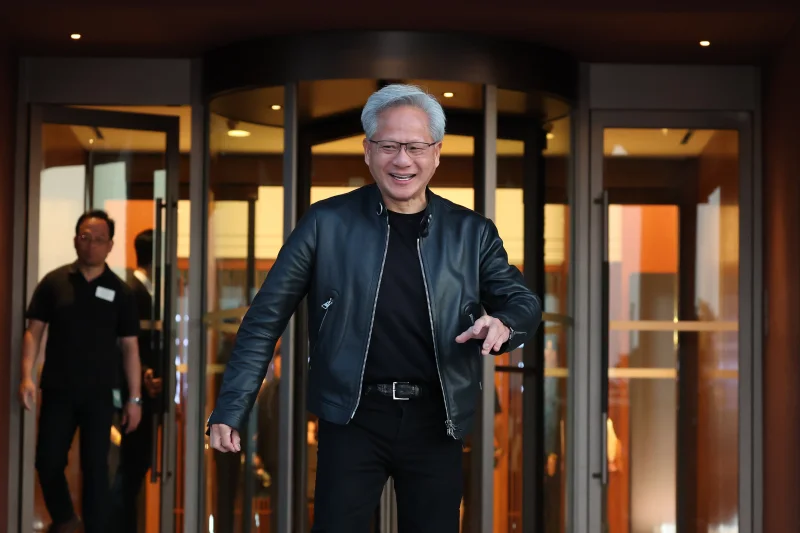
Nvidia has reinstated Jensen Huang as its president and chief executive officer, reversing its earlier decision to accept his resignation in a dramatic leadership turnaround that has drawn fresh attention to the company’s influence over the global artificial intelligence industry.
The decision, announced on 23 November, followed days of uncertainty over Huang’s future and growing pressure from employees, investors and prominent technology figures who wanted him back.
However, his return comes as US authorities continue examining national security concerns and possible export-control violations linked to the wider controversy. In a significant development on Tuesday, the United States added Singapore-based Megaspeed International to its trade blacklist.
The developments leave Nvidia facing two major questions: whether Huang can restore confidence in its leadership, and whether the company can navigate growing scrutiny over the movement of advanced AI chips.
Nvidia board reverses its decision
Huang stepped down on 12 November, with Nvidia appointing chief financial officer Colette Kress as interim CEO. The resignation followed intense scrutiny surrounding reports of his personal relationships, including an admitted affair with Alice Huang, a Chinese businesswoman whose alleged links to Chinese intelligence have attracted US government attention.
The Nvidia board initially said it would not reinstate him. That position changed on 23 November.
In its official announcement, Nvidia said the board voted unanimously to restore Huang as president, CEO and board director. Chairman Harvey C. Jones said the board was satisfied with Huang’s candour and ability to lead the company following discussions and meetings.
The company also said it had received input from senior levels of the US government. Based on that input, the board said it was confident Huang’s reinstatement posed no national security risk.
Huang described his return as an opportunity to lead Nvidia with renewed commitment. He thanked the board, employees, shareholders and industry partners for their support.
Colette Kress will return to her role as chief financial officer, while Jones will remain board chair.
Trump’s intervention adds a political dimension
The reinstatement also attracted attention because of the reported involvement of US President Donald Trump and senior administration officials.
According to the Associated Press, Trump publicly pushed for Huang’s return and later claimed his intervention had been important in securing the board’s decision. Vice President JD Vance also reportedly became involved in making the case to directors.
Trump argued that Huang’s leadership was important to Nvidia and America’s position in the global AI race. The president also said his administration had assured the company that Huang’s return did not present a national security concern.
The intervention has raised questions about the relationship between government priorities and corporate decision-making, particularly when a company plays such an important role in a strategically sensitive industry.
Nvidia is a central supplier of graphics processing units used to develop and operate advanced AI systems. Its products are critical to major technology companies, data centres and governments investing in artificial intelligence.
Megaspeed added to US trade blacklist
While Huang’s return has dominated headlines, the regulatory story continues.
On 24 November, Al Jazeera reported that the US Department of Commerce’s Bureau of Industry and Security had placed Megaspeed International and six other companies in Southeast Asia on its Entity List.
The designation means companies seeking to supply the listed entities with certain US-origin technology, including advanced Nvidia GPUs, must obtain an export licence.
US authorities have been investigating possible export-control violations involving Megaspeed, a Singapore-based data centre company. Investigators are examining suspicions that advanced chips may have been diverted to China.
Alice Huang, whose reported relationship with Jensen Huang contributed to the leadership controversy, previously held a senior position at Megaspeed. US officials have also alleged that she had links to China’s Ministry of State Security.
These claims remain subject to investigation. The US Justice Department has not publicly established that Alice Huang was a Chinese intelligence operative, and the allegations should not be treated as proven findings.
Megaspeed has previously rejected claims that its business activities were unlawful, describing itself as a legitimate company.
The latest US designation nevertheless signals that Washington’s scrutiny of advanced chip supply chains is continuing independently of Nvidia’s leadership change.
Nvidia shares rally as Huang returns
The leadership reversal also had an immediate market impact.
According to the Associated Press, Nvidia shares closed at $165.05 on Monday, gaining more than 31% following news of Huang’s reinstatement. The rally helped lift broader US markets, with the S&P 500 rising 4.7% and the Nasdaq Composite gaining approximately 6.5%.
The market reaction reflects the importance investors attach to Huang’s leadership. He co-founded Nvidia and has been closely associated with its transformation from a graphics processor manufacturer into one of the most influential companies in the AI infrastructure market.
However, a sharp rise in the share price does not resolve the governance and regulatory questions facing the business.
Investigations continue despite the comeback
Nvidia has confirmed that its independent board investigation will continue to its conclusion. The company said the committee investigating the foreign intelligence effort has retained independent legal counsel.
It has also established a separate National Security and Export Control Committee, made up of independent directors, to oversee trade compliance and national security risks.
Nvidia is additionally searching for a chief compliance officer who will oversee compliance across the company and report to its Nominating and Corporate Governance Committee.
The company has said it will continue cooperating with government investigations and inquiries.
Huang’s reinstatement therefore does not amount to a clearance of every issue surrounding the controversy. Congressional scrutiny and government investigations remain important parts of the unfolding story.
PiE Perspective: A comeback, but not the end of the story
Jensen Huang’s return highlights the extraordinary influence that founders can have over the companies they build. Nvidia’s board reversed its position within days, following strong support from sections of its workforce, investors and influential figures in the technology industry.
But the episode also exposes the difficult balance between commercial interests and national security.
Advanced AI chips are no longer ordinary technology products. They are strategic assets in a global competition involving the United States and China. Decisions about who leads Nvidia, where its chips are sold and how its supply chains are monitored have implications beyond the company’s shareholders.
Huang is back in charge, but the questions surrounding Nvidia’s governance, export controls and international relationships remain.
For the world’s most closely watched AI chipmaker, the next chapter will be measured not only by its market performance, but also by how it handles the scrutiny that comes with its growing global influence.