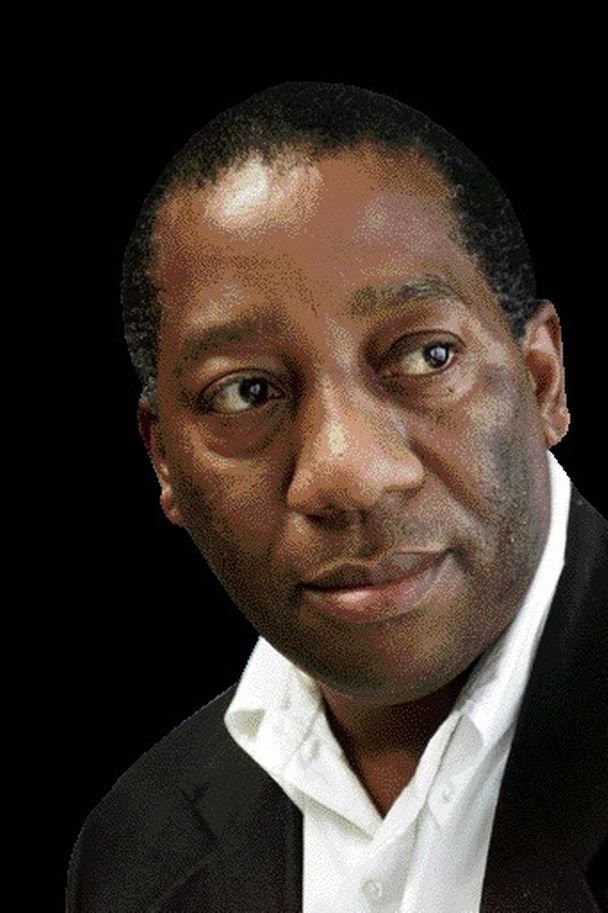

VIEWPOINT: OUPA NGWENYA
THE UNSEEN ASSAULT
What must be attended to first is not legislation. Not budgets. Not board seats.
What must be attended to is the assault on our thought process.
We may not be conscious of it. But it reveals itself every day. It is in the words we choose. It is in the vocabulary we deploy. And it is in the language through which we identify issues, define problems, and attach meaning to developments under study, review or scrutiny. No area of our lives is this assault more felt than in the question of land dispossession.
Once this assault inserts itself in our minds, hearts and souls, it becomes a default position. This position entrenches itself as a normal way of thinking that automatically applies, suggesting there is no room for choice or to change unwelcomed conditions to anything else.
Here is how we read, write and reason about the black condition. We speak, argue, and strategise as if the master narrative frames were voluntary. Once subliminally embedded, it is as if they were originally ours.
What we do not see is that we have displaced ourselves. We have moved, quietly, from the centre of who we are, to the periphery of inconsequence others have made us believe we are. This is the marginal sorry state where those who despise us, as black people, have always intended us to be.
This is not a political error. It is an epistemic one.
It is what we must now name plainly: epistemic dependency.
THE MOMENT WE RECLAIMED THE CENTRE: 1968
The year 1968 is the moment we reclaimed the centre. It is remembered as a time when we moved ourselves from the periphery by the scruff of our necks. The self-pull factor was authentic, black, proud and rehumanising.
At the helm of this moment was the South African Student Organisation — SASO — rejecting the identities handed to us: ‘non-European’, ‘non-White’.
These were definitions by negation. We existed only in relation to what we were not. Dependent variables we had become.
SASO countered: We are Black. Not only because of the skin we walk in. But because of consciousness. Because of a decision to define ourselves, from ourselves, for ourselves.
The founding father of Black Consciousness, Steve Biko, had already set the tone:
“The first step therefore is to make the black man come to himself; […] to infuse him with pride and dignity, to remind him of his complicity in the crime of allowing himself to be misused and therefore letting evil reign supreme in the country of his birth.”
In that self-exorcist act, we ceased being dependent variables. We stopped seeing ourselves through the eyes of subjugating white tormentors. We broke the stranglehold of their lenses — the lenses that had trained us to see, accept, and even justify, our own diminution.
Becoming black, proud and conscious was more than a slogan. It was a philosophical rupture. It placed black people at the centre of our own analysis, our own history, our dispossession, our pain, our healing and our own future.
THE QUIET RETURN TO THE PERIPHERY: 2026
How have we quietly returned to the periphery so soon in the year 2026?
Today, that pride of place we had occupied has slipped away. The centre keeps eroding, wittingly and unwittingly. Consider the casual reference to Vuka Azania as “the much awaited Black Afriforum”.
On the surface it sounds harmless. The complicity of letting evil be the predeterminant factor bypasses awareness. It sounds like shorthand. But look closer. The formulation places Afriforum at the centre. Whiteness and Eurocentricity become the reference point, the template, the standard against which black initiative is measured.
It echoes the old logic of “non-White beings” and “non-European beings”. It suggests that for a black organisation to be legible, it must be understood as a version of a white one.
That is not innovation. That is regression. It makes us willing participants in the white man’s game. That is epistemic dependency — the very condition SASO sought to destroy in 1968.
It is the demon that _Vuka Azania_ co-mover Muzi Sikhakhane has been seized with. It is now walking among us again, dressed in familiar language. The message takes flight from our very lips.
HOW THE CENTRE WAS LOST: A BRIEF GENEALOGY
This did not happen overnight. It was the product of a twin assault — from the oppressor camp, and from within the ranks of the liberation movement itself.
19 October 1977: On orders from the oppressor state, Justice Minister Jimmy Kruger lowered the sledgehammer. The 18 Black Consciousness organisations, The World, The Weekend World, and the Christian Institute’s Pro Veritate were outlawed on that day. The back of the institutional infrastructure of independent black thought and action was deliberately broken.
The 1980s: The Deepening of the Assault
The space for autonomous black analysis narrowed to zero. It was criminal to be black for ourselves.
March 1983: The National Forum is launched. It tables the Azanian Manifesto. Its premise is clear: black people must remain at the centre of the struggle and of the analysis. The envisaged singularity of the country, and the oneness of the people is amplified in the slogan: One Azania, One Nation.
August 1983: The United Democratic Front is launched. It opts for the Freedom Charter and a “wall-to-wall” congress mobilisation approach. The centre shifts. White centricity creeps in. Black Consciousness is labelled racist. Black people believe it and abandon themselves as a primary reason why the struggle for liberation was launched in the first place. And the language changes with it. The sweeping mobilisation fervour finds expression in the slogan: Apartheid Divides, UDF Unites.
Late 1980s: The call for a Constituent Assembly, rooted in internal mass power, is eclipsed by the Conference for a Democratic Future [CDF]. The CDF is presented as a popular endorsement of the Harare Declaration — an OAU-led external route to be followed.
2 February 1990: The organisations are unbanned. But the black community’s thrust toward intellectual and political independence arrives at the negotiating table battered, scarred, and guilt-tripped. The black thought process no longer speaks from the ground of its own centredness.
Codesa: The National Party under FW de Klerk re-asserts its power to convene. The format is not oppressor versus liberation, two sides negotiating an end to domination. It is “inclusion” — a round table bolstered by a host of government-created institutions plus all invited parties. Consensus became the governing principle.
From that moment, ‘inclusion’ became the syllabus. And the hidden lesson of that syllabus was this: To be, is to be like. And to be like, for black people, is to be like white people. With this in mind, the mitigating line to hold on corruption would most predictably read: “Forgive us our corruption as white people’s is not greater than we have seen them do.” That would most likely be the implied message in remorseless defence.
WHY LANGUAGE MATTERS
Words are not neutral. They are architecture.
When we describe a black initiative only in relation to a white one, we are doing epistemic work for the oppressor. We are saying: “This is the original. You are the copy.” We are saying: “Whiteness is the default. Blackness is the variation.”
That is how dependency is reproduced without a single law being passed. It is reproduced in press statements, in fundraising pitches, in panel discussions, and in the quiet moments when we search for the right analogy.
THE TASK NOW: EXORCISM
What is required of us in 2026 is an exorcism.
We must exorcise ourselves from the demon of epistemic dependency. We must refuse to define our initiatives, our pain, and our solutions through someone else’s mirror. It is our images we should look for. Start with us, make that change. And be exemplary.
Reclaiming the independence of black thought does not mean rejecting engagement. It does not mean isolation. It means this: that when we speak, we speak from our centre. That when we diagnose, we diagnose from our history, our wound, our pain with the black condition as a source of all our afflictions and affections that knows the keener fondness of black self-love. That when we build, we build from our needs. We do so not as a reaction, but ideally as an assertion.
In 1968 the South African Students Oorganisation (SASO) showed us how. They took the insult of “non-White” and turned it into the power of “Black”. They did not ask to be included in someone else’s definition. They authored their own. Black Consciousness became our elixir to heal us to come back to ourselves.
As Toni Morrison reminds us:
“It is about how necessary it is for us to be human and remain humans… Not giving in to the comic book version of who we are… Doing what we know deep down is what is right, true and needed. We have to get there. We have to.”
CASE STUDY: THE POWER OF NAMING LAND LEGISLATION
If the land redress policy intent had found itself named Land Restoration, Reparations and Relief Act, the discourse would be different. Reactive litigation would be seen for what it patently is: soliciting legal sanction for everlasting black dispossession.
Words and meanings behind them frame the battlefield before the first shot is fired. Any redemptive measures that follow are likely to be dressed as injustice when the opposite is true.
What does the wording ‘expropriation’ do?
Being a legal/technical term at the disposal of the state, “expropriation” reduces redress state action to sound more like taking.
This puts property law at the centre. The debate immediately becomes section 25, compensation, “willing buyer willing seller”.
This gives opponents of land restoration the language. They can now litigate “property rights vs state overreach”. Courts are then asked: “Can the state take?”
In answer to that, the state is already made to concede on the premise that this is about ‘taking from owners’.
What would framing it as “Land Restoration, Reparations and Relief Act” do?
It puts history at the centre. Restoration names the crime: dispossession. 1913, 1936 and forced removals. The Act is now the remedy, not the ‘taking’ aggressor state.
It puts victims at the centre. “Recovery and Relief” frames beneficiaries as people owed something, not as recipients of state charity.
It flips the litigation paradigm.
The issue becomes how acquisition of property standing on that land happened. Opponents would be seen as enlisting courts to rule in continued favour of black dispossession. That is a very different moral position to defend.
It shifts the constitutional question.
The question is no longer: “Can the state take?” but “how do you restore?” section 25(5) and section 25(8) become the lead clauses, not section25(3).
By calling it “expropriation”, we adopted the dispossessor’s legal vocabulary. We let the 1913 Act define the terms in 2025. We made white ownership the default, and black landlessness the deviation that must be “expropriated” away.
Land Restoration, Reparation and Relief
This legislative framing re-centres black experience. It says: this law exists because land was stolen. Now we are restoring, recovering, and giving relief.
Going to court against that would have to argue against restoration. Against recovery. Against relief. The counter argument amounts to keeping dispossession in place. The optics and the jurisprudence both change.
CONCLUSION: BACK TO THE CENTRE
The SASO lesson again:
In 1968 we stopped calling ourselves “non-White” and started calling ourselves “Black”. In 2026 we could stop calling it “Expropriation” and start calling it “Restoration”.
Language is the first act of reclaiming the centre.
The first act of liberation is always in the mind. Policy, law, and power will follow that act — not precede it.
If Vuka Azania is to mean anything, it cannot mean “Black Afriforum”. It must mean: a black initiative, named by black people, answering black questions, on black terms.
Until we place black people, black thought, and black experience back at the centre, we will continue to negotiate our freedom in a language that was designed to contain it.
Let 2026 be the year we remember 1968.
Let it be the year we reclaim the centre.
And let it be the year we finally exorcise ourselves from the epistemic dependency demon. Reclaim black consciousness as our elixir.
OUPA NGWENYA is a Corporate Communications Strategist | Business & Political Foundations, Writer, Freelance Journalist