
By Siyabonga Kamnqa
THIRTY-year-old Maleshoane Chaka carries her 18-month-old daughter on her back as she listens attentively to speakers inside the quiet hall.
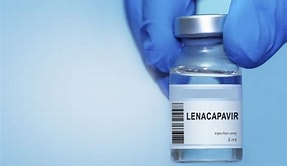
The discussion is close to her heart: ways to prevent HIV infection and the role of lenacapavir (LEN). In a country with a high burden of HIV, the twice-yearly prevention injection has been hailed as an important addition to efforts to reduce new infections.
Chaka, a sex worker based in Tshiawelo, Soweto, believes LEN could help protect people who face difficulties negotiating condom use.
Speaking to Weekly SA Mirror, she said she had been working as a sex worker since 2023.
“I come from a very impoverished community faced by joblessness. As a result, young people like myself are roaming the streets without any hopes. After searching for a job without any luck, I decided, following also the passing of both my parents, to sell my body,” she said.
Chaka, who seeks male clients at shebeens, said she feared contracting HIV because not all her clients were willing to use condoms.
“I get different clients. One will even pay you more, just to break the condom rule. And I have no choice but to oblige because I need the money,” she said.
She believes LEN could go a long way towards reducing the risk of HIV infection.
During a media workshop on HIV prevention hosted by the Bhekisisa Centre for Health Journalism in Sandton, Gauteng, last week, health experts, journalists and LEN users discussed the role of the medication in preventing new infections.
Addressing the gathering, Professor Saiqa Mullick, director of Implementation Science at the Wits Reproductive Health and HIV Institute (Wits RHI), discussed how LEN works.
LEN is an antiretroviral medicine used as pre-exposure prophylaxis (PrEP) to help prevent HIV infection in HIV-negative people. Its long-acting injections are administered every six months.
According to the Department of Health’s September 8 update, LEN had been rolled out to 360 public health facilities across 24 districts in six provinces, following its national launch by President Cyril Ramaphosa and Health Minister Dr Aaron Motsoaledi on June 5.
At the Johannesburg Health District Wellness Clinic in the city centre, there was a hive of activity. A senior nurse described how misinformation about LEN could complicate patient care.
“What we have seen is that patients don’t normally follow our instructions once they walk out of our doors. One patient, for example, after being injected with LEN on the abdomen, went home and, upon feeling pain, she was advised to take a cabbage leaf, warm it and then put it on the lumps. And the patient felt more pain,” she said.
This article first appeared in the WEEKLY MIRROR