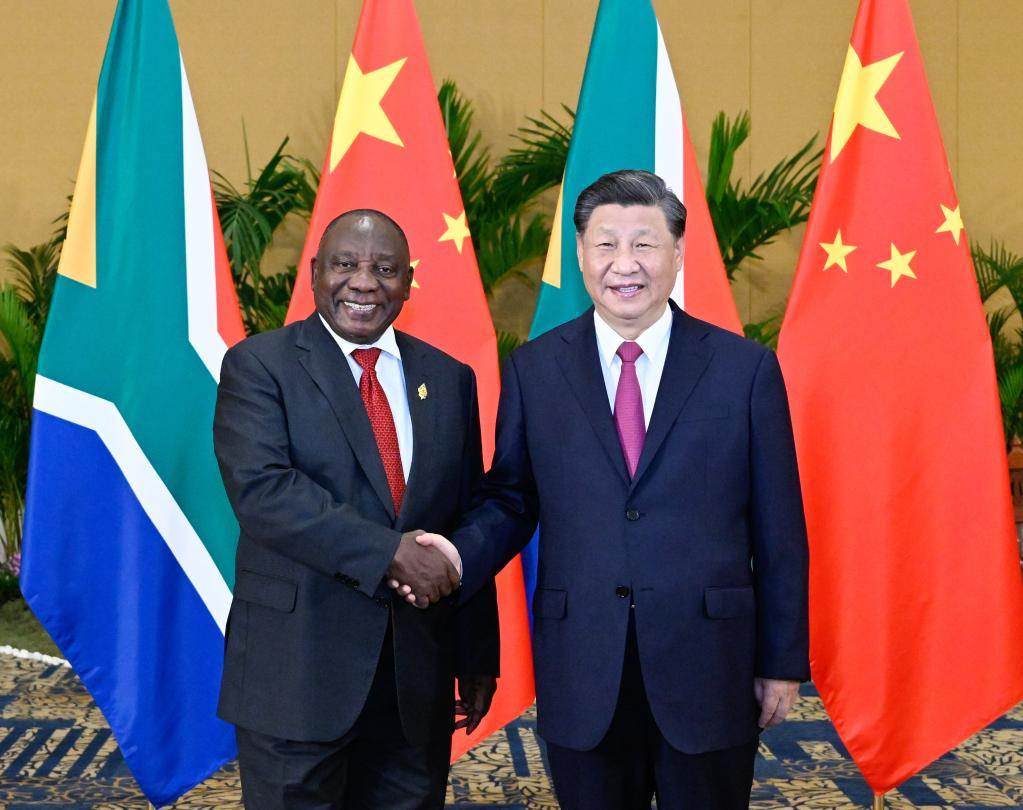

CAPTION: South Africa’s president Cyril Ramaphosa shaking hands with China’s Xi Jinping
IDO LEKOTA AND PIE CORRESPONDENTS
Imagine a world in which your government wakes up one morning and bans a word. Not a swear word, not a slur: a perfectly respectable two-letter acronym. From now on, official correspondence may not mention “AI”. It must say “SI”. The “A” for artificial is out; the “S” for super is in.
That is, more or less, the world the United States has just built for its own civil service. It is also a world in which Africa’s most industrialised economy is looking east, shaking hands in Wuhan and agreeing to build a centre of excellence on home soil. Two capitals, two very different answers to the same question: what do you do when the most powerful technology of your generation arrives and nobody agrees on what to call it, who owns it, or who gets to learn how it works?
Grab a coffee. This one has chips, billionaires, a Chinese vice minister, and a presidential executive order that renames an entire field of science.
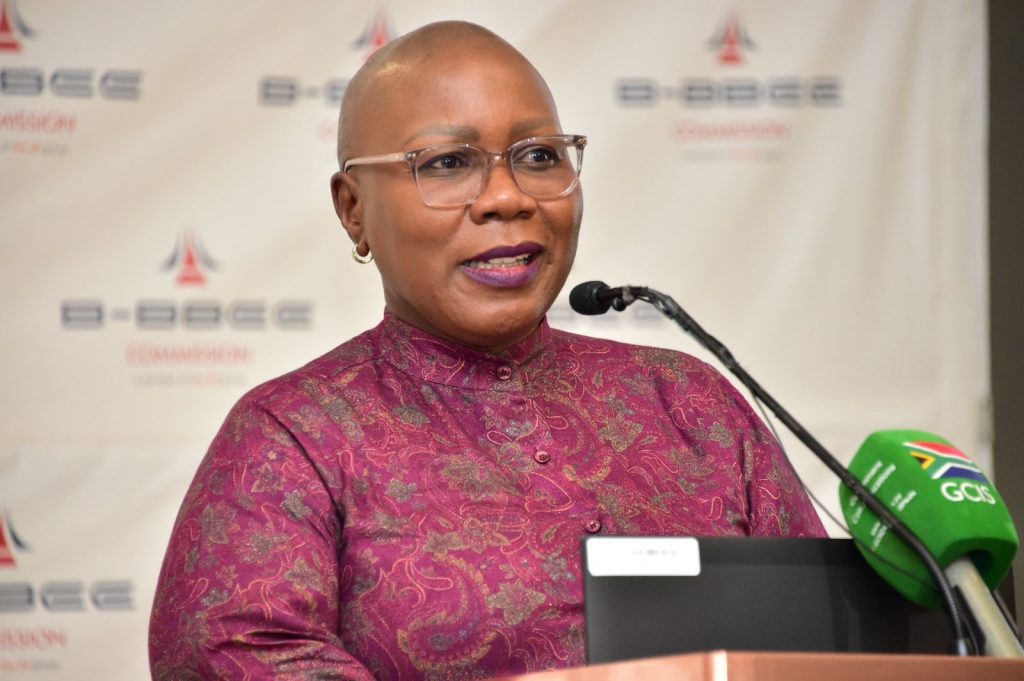
South Africa’s Deputy Minister of Science, Technology and Innovation, Dr Nomalungelo Gina
Act one: a handshake in Wuhan
Let’s start closer to home, because that is where the practical news is. Following bilateral talks in Wuhan, South Africa’s Deputy Minister of Science, Technology and Innovation, Dr Nomalungelo Gina, and China’s Vice Minister of Science and Technology, Zhang Guangjun, announced plans for an Artificial Intelligence Talent Development and Innovation Centre in South Africa.
The pitch is refreshingly unglamorous. The centre is meant to tackle the country’s digital skills shortage and nurture local innovation. “The centre will strengthen innovation capabilities and deepen the bilateral cooperation between our countries in the field of artificial intelligence,” Gina said. Zhang, for his part, pointed to President Xi Jinping’s call for “mutually beneficial cooperation” across the digital economy, AI and new energy.
It is not a one-off. The centre sits inside an elevated strategic partnership between Presidents Cyril Ramaphosa and Xi, and Pretoria has already pencilled in 5G, biotechnology and advanced manufacturing as the next areas for joint work. Read the subtext and it is hard to miss: as diplomatic and trade disputes strain ties with Washington, South Africa is choosing technical cooperation with Beijing. Interestingly, it was also a week that South African president Ramaphosa travelled west, to the Silicon Valley in California, US, to be precise, leading a South African delegation that was received by influential Americans to discuss matters yet unclear in relation to the emerging AI economy.
One capital is rewriting the vocabulary. The other is writing a curriculum.
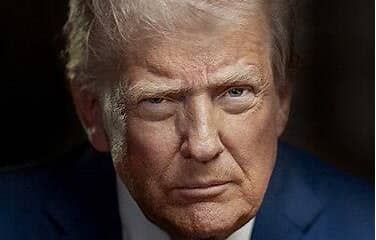
CAPTION: DONALD TRUMP
Act two: “We’re leading by a lot”
Washington’s answer to the same moment could hardly be more different. After his summit with Xi, President Donald Trump told reporters he would rather not integrate American and Chinese capabilities. “When you’re leading, you don’t open it up to each other,” he said.
He was just as brisk with the safety crowd. Tech executives, lawmakers and international bodies have called for guardrails; Trump compared the worriers to earlier political bugbears, arguing that those wanting to “put on brakes” are really trying to stop American progress because “we’re leading China by a lot”. (He filed the warnings alongside global warming and the “Russia, Russia, Russia hoax”, which tells you how seriously he rates them.)
This is not off-the-cuff bravado. It lines up with Winning the AI Race: America’s AI Action Plan, a White House blueprint of more than 90 federal measures built around expanding data-centre capacity and stripping away regulation. AI and crypto czar David Sacks says the US “must win the AI race”; Secretary of State Marco Rubio calls winning “non-negotiable”. The money, naturally, agrees: Gartner expects global AI spending to jump 49.5% to $2.7 trillion in 2026, and its analyst John-David Lovelock calls the data-centre buildout the largest infrastructure project humanity has ever undertaken.
| BY THE NUMBERS $2.7 trillion Projected global AI spending in 2026 (Gartner). 49.5% Forecast growth in that spending. 90+ Federal measures in America’s AI Action Plan. 1 Executive order to rename the lot. |
Act three: the word that ate the field
Which brings us to the executive order that has the tech press arguing. Titled “Inaugurating the Era of Super Intelligence”, it instructs federal agencies to use “Super Intelligence” and “SI” in official correspondence, websites, reports and policy documents, “to the maximum extent permitted by law”, and tells the executive branch not to acknowledge the use of “Artificial Intelligence” and “AI” in applicable official settings.
Here is the sleight of hand. The order defines “Super Intelligence” as the technologies already covered by the statutory definition of AI. Nothing has been upgraded. The chatbot that drafts your emails and the algorithm that screens CVs have been promoted overnight, without sitting an exam.
That matters because, in technical circles, super intelligence means something quite specific and quite hypothetical: a system that vastly outstrips human cognition across a wide range of domains. Applying the label to everything from narrow, single-task tools upward is, to put it politely, a rhetorical escalation rather than a scientific finding.
| JARGON BUSTER: THREE LETTERS, THREE VERY DIFFERENT THINGS AI: Today’s tools: systems built for specific tasks, from spam filters to chatbots to medical imaging. AGI: Artificial general intelligence. A hypothetical system as broadly capable as a human being. SI: Super intelligence. A hypothetical system far beyond human ability. Under the new US order, also a federal synonym for AI. |
Our view, and that of critics of the order, is that the real trick is the vocabulary doing political work. The language is quintessentially Trumpian: it casts the administration as the author of a historic new era, treats rapid deployment as patriotism and caution as obstruction, and converts uncertainty into swagger. It also quietly erases useful distinctions. If every algorithm is “SI”, then systems used for military targeting, medical diagnosis, hiring and administration all seem to belong to one gleaming, inherently progressive category, which makes sensible differences in risk harder to see and oversight harder to argue for.
Who’s in the room
A rebrand needs a launch party, and this one had a guest list that reads like the top of the Nasdaq. The White House Accord on Super Intelligence was signed by Trump alongside Google’s Sundar Pichai, Anthropic’s Dario Amodei, Meta’s Mark Zuckerberg, OpenAI’s Greg Brockman, xAI’s Elon Musk and Nvidia’s Jensen Huang. The wider summit added Jeff Bezos, Microsoft’s Satya Nadella, AMD’s Lisa Su and Palantir’s Alex Karp.
Being in the photo does not prove anyone sincerely believes in the new acronym. But it does show how close the administration is to the firms that control the chips, clouds, models and data centres. Nvidia’s Huang has been described as a central influence on Trump’s AI approach, including resistance to state-level regulation and the shaping of global chip policy, which is a neat illustration of how control of one piece of specialised hardware becomes political leverage.
The arrangement is mutually handy. Politicians get an image of technological mastery; companies get access, influence over the rules and a friendly climate for expansion. And the accord itself? Described as a “morally binding” pledge, not a legally enforceable framework. In other words, the state supplies the legitimacy, and industry keeps largely writing its own homework.

CAPTION: A modern data centre layout
The cloud is made of stuff
Here is where the story stops being about words and starts being about things. AI is not a mist floating above society. It runs on scarce chips, power-hungry data centres, global supply chains, vast data collections, skilled labour and capital markets.
Researcher Kate Crawford, in Atlas of AI, describes the technology as “both embodied and material”: built from natural resources, fuel, labour and logistics, and prone to entrenching inequality and environmental damage. Shoshana Zuboff’s work on surveillance capitalism adds that whoever controls the information infrastructure also controls who knows what, and how people can be influenced. Nick Srnicek goes further, suggesting AI is becoming a utility, like electricity. If he is right, owning the platforms means owning something close to a public system.
Notice what a triumphant label like “Super Intelligence” conveniently skips: who owns the data centres, who supplies the electricity, whose labour trains the systems, and whose communities absorb the environmental bill. The worry is not that tech bosses turn up in politics. It is that the people who own the foundations of AI may also get to define the language the rest of us use to talk about it.
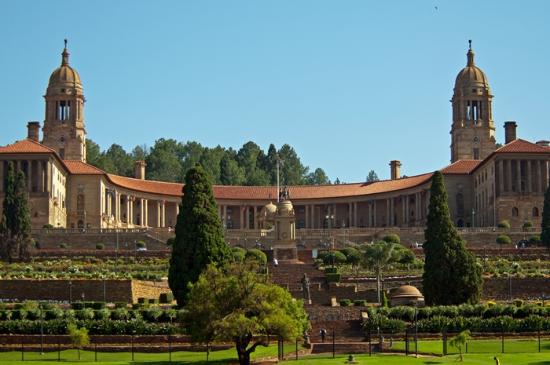
CAPTION: Union Buildings, South Africa’s seat of government in Pretoria
So why should Johannesburg care?
Because the rest of the world does not have to play along. If Washington says “SI” while researchers, institutions and most governments keep saying “AI”, international documents could fragment linguistically, and shared definitions are the plumbing of treaties, technical standards, procurement rules and cross-border enforcement. Other powers may answer with grand terminology of their own. Companies operating across borders may end up using one word in a US government contract and another everywhere else, which is a compliance headache waiting to happen.
There is a bigger point for a country in South Africa’s position. Competition for advanced chips, energy, data centres and access to frontier models may become as strategically important as oil or telecoms once were. Read through that lens, the Wuhan agreement is less a diplomatic curiosity than a hedge: if the leading power declines to share (“we’re leading by a lot”), a middle-income country with a skills gap will shop for a partner that will.
It would be naïve to treat Beijing as a charity, just as it would be naïve to treat Washington’s branding as science. Any partnership deserves the same questions: who owns the data, who controls the infrastructure, who trains whom, and what happens when the goodwill runs out? The centre’s real test will not be the ribbon-cutting. It will be whether South African graduates leave with skills they own and can take anywhere.
A sensible reader’s checklist
Nobody needs to be anti-technology to ask for discipline in how we talk about it. The experts quoted above suggest a short list that works just as well in Pretoria as in Washington:
- Define it. If a government coins a new term, it should publish a capability-based definition and say how it differs from the old ones.
- Judge by properties, not prestige. Autonomy, reliability, transparency, resistance to misuse and the effects on jobs, rights, security and the environment all matter more than the label.
- Show your interests. Executives who endorse government technology drives should disclose their contracts, financial stakes and lobbying ties.
- Build public capacity. Public compute, open research infrastructure and independent evaluators mean states are not wholly dependent on a handful of private firms.
- Keep the receipts. Agencies should maintain searchable records under both the old and new terminology, so rebranding never rewrites history.
- Measure outcomes. Health, education, discovery and freedom are better yardsticks than who looks dominant.
The last word
Call it AI, call it SI, call it Kevin. A name does not make a system safe, broadly capable or good for society. It can, however, make investors more confident, make sceptics look backward and make officials look like they hail from the future.
Washington has decided that the answer to a complicated technological moment is a louder adjective. Pretoria, whatever you make of its choice of partner, has at least reached for a classroom. The deeper question for citizens, researchers, journalists and governments is whether we let a promotional label stand in for evidence, accountability and democratic choice.
Because in the end, the test of an intelligence, super or otherwise, is not what we call it. It is what it does, and for whom.
Sources: reporting by Awogbemila Temitope (Business Insider Africa) on South Africa–China AI cooperation and US AI policy; Gartner spending forecasts; commentary on the “Super Intelligence” executive order.