
LEN KALANE
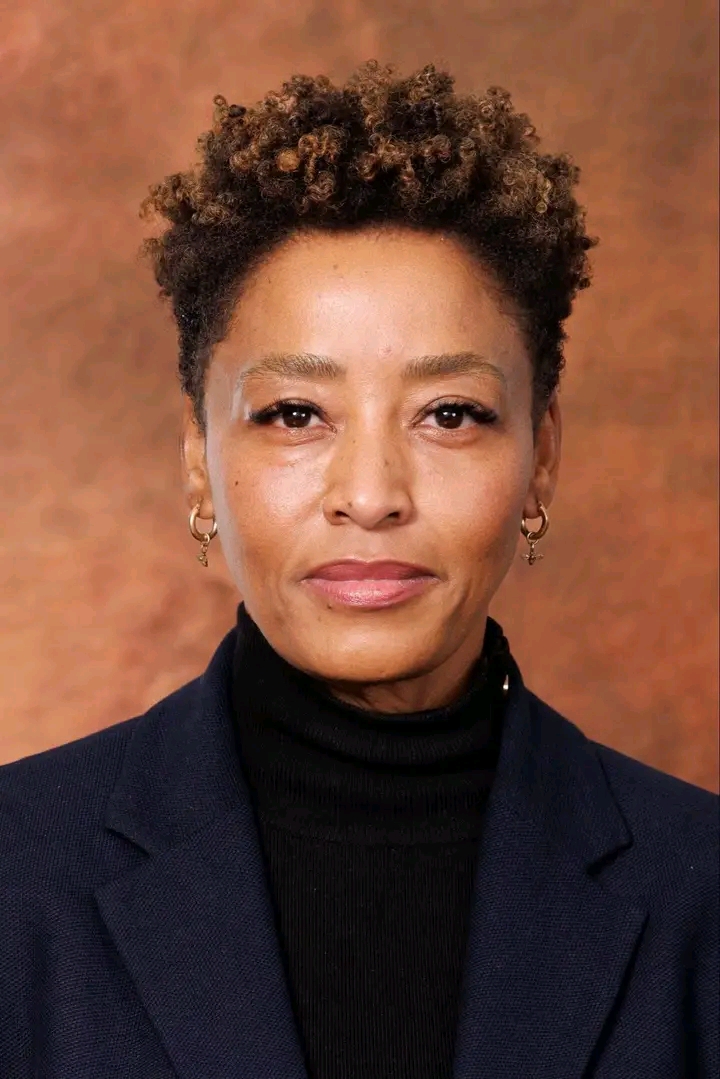
From a Johannesburg law degree to the glare of the Madlanga Commission, Lee Segeels-Ncube has built a reputation less on noise than on nerve — a quiet, exacting presence who has repeatedly made hardened witnesses reckon with the truth.
There is a particular kind of courage that doesn’t announce itself. It doesn’t shout across a courtroom or perform for the cameras. It shows up in the pause before a follow-up question, in the steady voice that doesn’t rise even when a witness’s does, in the file of documents that has clearly been read twice over.
That is the courage Advocate Lee Segeels-Ncube brings to the Madlanga Commission’s evidence leaders’ table, and it is why, more than a year into South Africa’s most consequential inquiry into criminality and political interference in the criminal justice system, her name has moved from the footnotes of press reports into the headlines themselves.
It should be said plainly, and Segeels-Ncube herself would likely insist on it: she is one of several formidable women who have defined this commission. Advocate Mahlape Sello SC has led marathon examinations with force and clarity. Advocate Adila Hassim SC arrived with the gravitas of Life Esidimeni and the International Court of Justice already behind her.
This is not a story that diminishes them to elevate one. But it is fair to say that Segeels-Ncube has emerged as a standout in her own right — a lawyer whose rise from a solid, unglamorous commercial-law practice to the centre of a national reckoning has been one of the quieter surprises of the Madlanga hearings, and made all the more striking by where she sits in the room: noticeably younger, and less decorated on paper, than most of the silks seated beside her.
From Auckland Park to the Bar
Segeels-Ncube’s path into the law followed a familiar, unspectacular route — the kind that, in hindsight, looks like preparation for exactly this moment. She read law at the University of Johannesburg, then still finding its feet as the successor to the Rand Afrikaans University, before cutting her teeth as a senior associate at Eversheds (then Routledge Modise Attorneys). She completed her pupillage at the Johannesburg Society of Advocates and was admitted to the Bar in 2013, joining the Bridge Group of Advocates at Sandown Chambers, where she has practised administrative and commercial law ever since.
It is not, on paper, the biography of a commission star. There was no single spectacular case that made her a household name before 2025. Colleagues instead point to something more durable: a reputation, built case by case, for diligence, precision and an unusual calm under pressure — the advocate you want holding the file when the file matters.
“A Johannesburg commercial and administrative law advocate… less of a household name but plays a vital role in the evidence-gathering process, with a reputation for diligence and precision.” — how one early profile of the Madlanga legal team described her, before the hearings made that description feel like an understatement.
Called to the Biggest Case of Her Career
When retired Deputy Chief Justice Mbuyiseli Madlanga assembled his legal team for the Judicial Commission of Inquiry into Criminality, Political Interference and Corruption in the Criminal Justice System — the inquiry that grew out of KwaZulu-Natal police commissioner Lieutenant General Nhlanhla Mkhwanazi’s explosive allegations — Segeels-Ncube was named an evidence leader alongside Terry Motau SC, Matthew Chaskalson SC, Mahlape Sello SC, Adila Hassim SC, Ofentse Mohlasedi and Thabang Pooe. It placed her, overnight, inside one of the most closely watched legal proceedings in recent South African history, tasked with drawing testimony out of police generals, Hawks investigators, politicians and, at times, deeply reluctant witnesses.
It is one thing to be appointed to a commission. It is another to hold your ground in it, session after session, against witnesses who arrive with lawyers, political cover and, occasionally, very little intention of giving a straight answer. That has been the real test — and the moments that have followed suggest Segeels-Ncube has passed it repeatedly.
The Moments That Made Her Name
Ask anyone who has followed the Madlanga hearings closely and a handful of Segeels-Ncube exchanges tend to come up unprompted.
WATCH: Adv Segeels-Ncube identifies Molefe & others in photograph presented at the Madlanga Commission hearing. Credit: Ngada Attorneys / YouTube
There was her cross-examination of Hawks Brigadier Lesiba Mokoena over the unannounced raid on businessman Katiso “KT” Molefe’s home — an exchange that ended with the brigadier conceding, under her questioning, that his own report on the day’s events had not been accurate. It was a small admission with large implications, the kind that only comes from an advocate who has done the unglamorous work of comparing statement against statement until the gaps show themselves.
There was her questioning of Chief Samuel Mashaba over a message he had sent referencing ANC-aligned Gauteng MEC Faith Mazibuko — “Let us work so we can look after Faith Mazibuko” — pressed, plainly and without theatrics, to explain what those words actually meant. He had no answer. Sometimes the most devastating cross-examination is simply refusing to let a sentence go unexplained.
There was the moment, widely shared afterwards, when she read out the results of Warrant Officer Karl Sander’s polygraph test — declared null and void, fully exonerating him — and the room watched a visibly emotional officer absorb the vindication in real time. It was a reminder that evidence-leading is not only about pursuing wrongdoing; it is also, sometimes, about clearing a name, and that she has handled both sides of that responsibility with the same evenness.
There was her lengthy, methodical questioning of retired Hawks national head Lieutenant General Godfrey Lebeya across two appearances in late August and early September 2026 — walking him from his Sandhurst property through to the roughly 541kg of cocaine, worth an estimated R200 million, that was seized at Durban harbour in 2021 and later stolen from a Hawks safe in Port Shepstone, and then putting to him a photograph of the men the commission’s evidence has described as an alleged “Big Five” syndicate. Her line to Lebeya — that other generals had come before the commission “afraid to mention some of these individuals” — was as close as she has come to editorialising, and it landed.
Video: Adv Segeels-Ncube Questions Lebeya on Polygraph Tests for DPCI Members | Madlanga Commission — Credit: Ngada Attorneys⚖️🎙️ via YouTube
And there was her handling of a former MP’s evidence at the Brigitte Mabandla Justice College, where she played a recorded consultation the witness had objected to, over his protest, and calmly dismantled his account of where his information had actually come from. “No, Mr Adams, you have the CAS numbers now,” she told him — eight words that did more work than a page of argument.
The Youngest Voice at the Top Table
Look down the Madlanga legal team’s letterhead and the seniority is obvious at a glance. Terry Motau, Matthew Chaskalson, Mahlape Sello and Adila Hassim all carry the SC after their names — Senior Counsel, the silk conferred only after many years and a formal application process, and in this team’s case, careers that stretch back to the State Capture Commission, the Constitutional Court and international tribunals. Segeels-Ncube, admitted to the Bar in 2013, does not yet carry that rank. In a line-up built largely around decades of seniority, she is very much the newer generation — a point the Mail & Guardian made explicitly when it grouped her among the commission’s “new generation of constitutional lawyers,” distinct from the more senior names carrying the bulk of the commission’s institutional memory.
That gap matters, because it changes the shape of the achievement. It is one thing for a Senior Counsel with thirty years of scar tissue to face down a reluctant general. It is another for a comparatively junior advocate, roughly a decade into practice and without silk behind her name, to be trusted with exactly the same witnesses — and to hold her own against them just as firmly. Her colleagues on the team were, in large part, cutting their teeth on cases before she had finished her pupillage. That she has kept pace with them at the Madlanga table, rather than being kept to the margins of it, is arguably the most underappreciated part of her story so far.
The Eye for Detail, and the Eye of the Public
It would be incomplete to write about Segeels-Ncube’s rise without noting the other reason her name now travels well beyond legal circles: she has become, in the language of social media, a Madlanga “eye-catcher” — a composed, elegant presence whom commentators and clip-watchers alike have singled out during Women’s Month tributes and viral hearing excerpts. Popular South African podcaster Mighti Jamie TV calls her Halle Berry, the American actress renowned for her timeless beauty who began her career as a model and beauty contestant.
It is a curious kind of attention for an advocate whose actual currency is precision rather than performance, and it says as much about a public hungry for figures of quiet authority as it does about her. But talk to those who watch the hearings for the substance, not the clips, and the compliment they return to is not about appearance at all — it is about composure: the sense that whatever a witness throws at her, she does not flinch.
A Chronology, in Brief
2000–2005 — Reads law at the University of Johannesburg (formerly RAU).
2010–2012 — Senior associate at Eversheds (formerly Routledge Modise Attorneys).
2013 — Completes pupillage at the Johannesburg Society of Advocates; admitted to the Bar.
2013–2025 — Builds a commercial and administrative law practice at the Bridge Group of Advocates, Sandown Chambers.
2025 — Appointed evidence leader at the Madlanga Commission of Inquiry.
Late 2025 — Cross-examines Hawks officers over the Molefe raid; questions Chief Samuel Mashaba over the Mazibuko message; reads out Warrant Officer Sander’s exonerating polygraph result.
2026 — Leads testimony on the Ramsamy consultation recording and the former MP’s disputed statement; questions Lt-Gen Godfrey Lebeya over the Sandhurst property, the stolen cocaine haul and the alleged “Big Five” syndicate.
What Comes Next
The Madlanga Commission is far from finished, and Segeels-Ncube’s part in it is far from over. There will be more witnesses, more reluctant answers dragged into the light, more days when the country’s attention turns, briefly, to a Johannesburg advocate who spent a decade building a quiet commercial-law practice before being handed one of the loudest stages in the country. If the last year is any guide, she will meet each of them the same way she has met everything else here: unhurried, exact, and entirely unwilling to let a bad answer stand.
This feature draws on public reporting from the Madlanga Commission’s official record, Daily Maverick, the Mail & Guardian, News24/City Press, Corruption Watch, Legalbrief, Jacaranda FM and the Bridge Group of Advocates’ chambers profile.