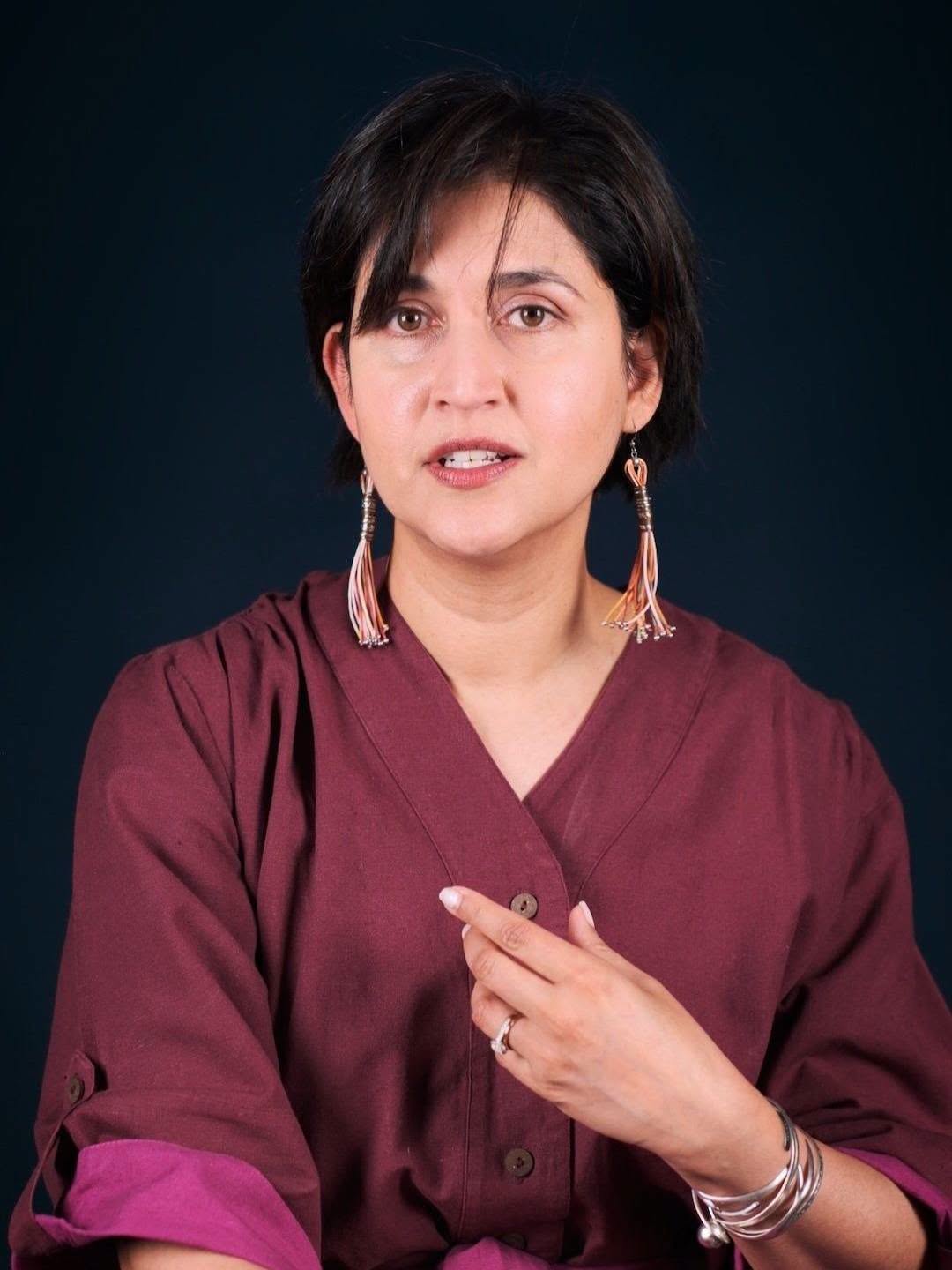

As the University of the Western Cape conferred an honorary doctorate on Adila Hassim, South Africa gets a rare moment to look past the courtroom composure and ask: who is the woman behind the Madlanga Commission’s most searching questions?
LEN KALANE
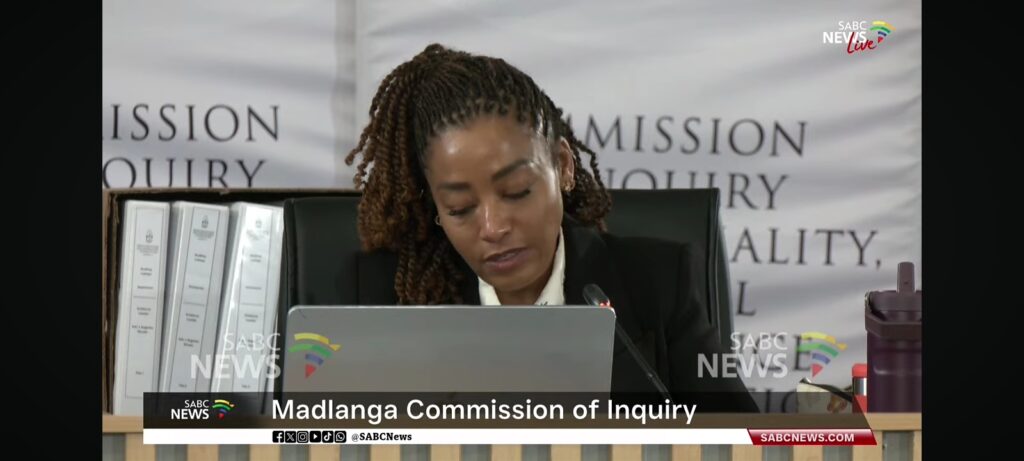
Viewers who have followed the Madlanga Commission’s hearings this year know the look: the steady gaze, the unhurried pace of a question that is really three questions folded into one, and a face that gives almost nothing away. Advocate Adila Hassim SC does not perform for the cameras trained on her at the inquiry into criminality, political interference and corruption in South Africa’s criminal justice system. She simply works. When, occasionally, a witness’s answer earns the barest flicker of a smile, it registers as an event — proof that the composure is a professional instrument, not an absence of feeling.
That discipline has made Hassim one of the most closely watched women in the country this year, as she and her fellow evidence leaders have picked apart testimony involving an allegedly captured police minister, a self-described hitman, and a drug cartel with reach into the upper ranks of law enforcement. It is exacting, unglamorous work, carried out in public and under enormous scrutiny. It is also, by all accounts, exactly the kind of work Hassim has built her career around.
A Doctorate for a Life’s Work
On Friday, 28 August, the University of the Western Cape awarded Hassim a Doctor Philosophiae, honoris causa, recognising a career the university describes as advancing constitutional rights, healthcare access and social justice. The announcement, shared by UWC to mark its Honorary Doctorates programme, drew an immediate wave of warmth online, with colleagues at the Madlanga Commission and members of the public alike sending their congratulations to a woman more often seen interrogating witnesses than accepting applause.
It is a fitting honour. Long before Hassim became a household name for her composure under the television lights, she was quietly reshaping how South African law understands the rights to health, housing, food and social security — the cluster of protections known as socio-economic rights, and the very provision, section 27 of the Constitution, that would eventually lend its name to the public-interest law centre she helped found.
From Law Clerk to Litigator
Hassim was born in 1972 and studied at the University of Natal in Durban, graduating with a BA and an LLB. Her formative professional experience came at the Constitutional Court, where she clerked for justices Pius Langa and Edwin Cameron — including on Soobramoney v Minister of Health, an early and defining case on the right to healthcare in the new constitutional order. That grounding in health rights would come to define the next two decades of her career.
She went on to earn an LLM with distinction from Saint Louis University in the United States on a Franklin Thomas Fellowship, before a further fellowship took her to the University of Notre Dame, where a doctorate in law was conferred on her with honours in 2006. Her dissertation examined the protection of social rights in South Africa, tracing the gap between constitutional promise and practical delivery — a gap she would spend her career trying to close from the other side of the bench.
Admitted to the Johannesburg Bar in 2003, Hassim built her practice through the AIDS Law Project and the Treatment Action Campaign during the fiercest years of South Africa’s battle over access to HIV treatment. In 2010 she helped found SECTION27, serving as its Director of Litigation, and she remains a co-founder of the anti-corruption organisation Corruption Watch. Along the way she co-edited a foundational guide to health rights law and policy in post-apartheid South Africa, a text still used to train lawyers in the field.
The Cases That Built a Reputation
Hassim’s litigation record reads like a syllabus in public-interest law. She led the legal team that forced the Limpopo provincial government, through the Supreme Court of Appeal, to deliver hundreds of thousands of outstanding textbooks to schoolchildren. She represented the Treatment Action Campaign and Sonke Gender Justice in the silicosis class action against South Africa’s gold-mining industry, one of the largest occupational-health suits in the country’s history. And in 2017 she was lead counsel in the Life Esidimeni arbitration, representing the families of psychiatric patients who died after being moved out of state care — a case that exposed catastrophic failures in the health system and became a byword for institutional accountability.
Her reputation crossed borders in January 2024, when she stood before the International Court of Justice in The Hague as part of the legal team representing South Africa in its case against Israel, delivering arguments that drew global attention and cemented her standing as one of the country’s most formidable advocates.
Evidence Leader, Once More
That combination of technical precision and public-interest instinct is what the Madlanga Commission called on when it appointed Hassim as one of its evidence leaders. Alongside fellow senior counsel, she has spent the year steering the commission and the public through allegations that would strain belief in a work of fiction: an assassination attempt on a senior crime-intelligence official, a witness deemed too unwell to testify who was later shown out shopping, and testimony reaching into the political leadership of the police service. It is precisely the kind of complicated, high-stakes, high-scrutiny brief that has defined her career — only this time playing out live, every hearing day, in front of the whole country.
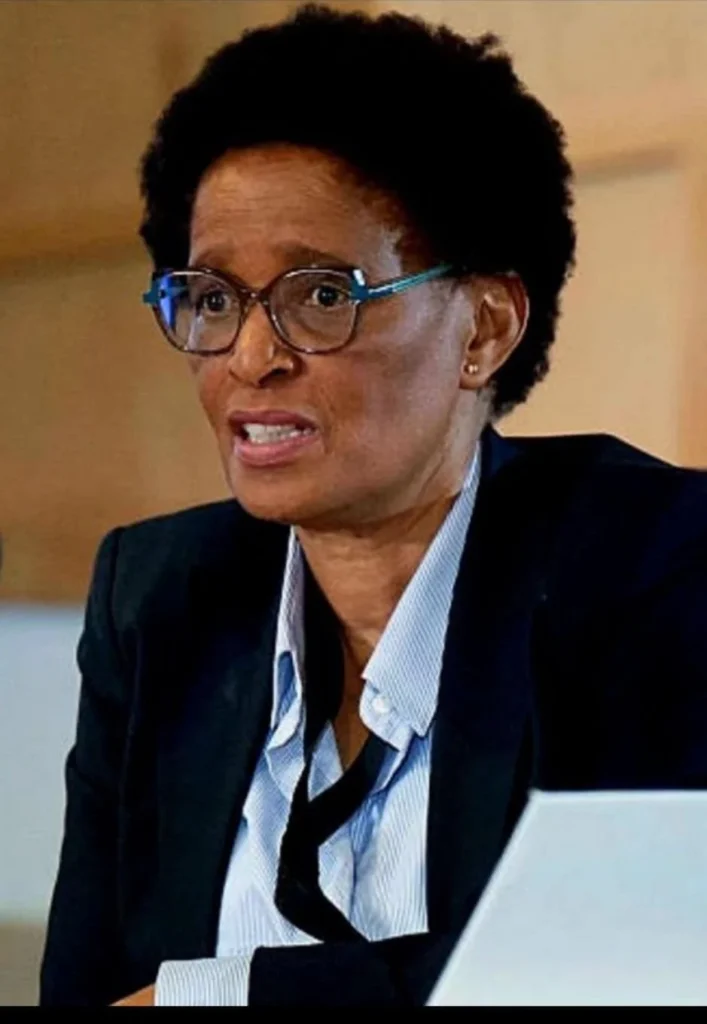
CAPTION: ADVOCATE MAHLAPE SELLO
She is not alone in that spotlight. The commission’s bench and evidence-leading team include several other formidable women whose work deserves its own recognition. Advocate Mahlape Sello SC, another of the commission’s evidence leaders, has drawn her own share of public admiration for the composure with which she has taken senior police and metro police officials through gruelling cross-examination, drawing on two decades at the Johannesburg Bar, a stint on the Zondo Commission and the Section 89 Phala Phala panel, and continuing service on the South African Law Reform Commission. Behind the scenes,
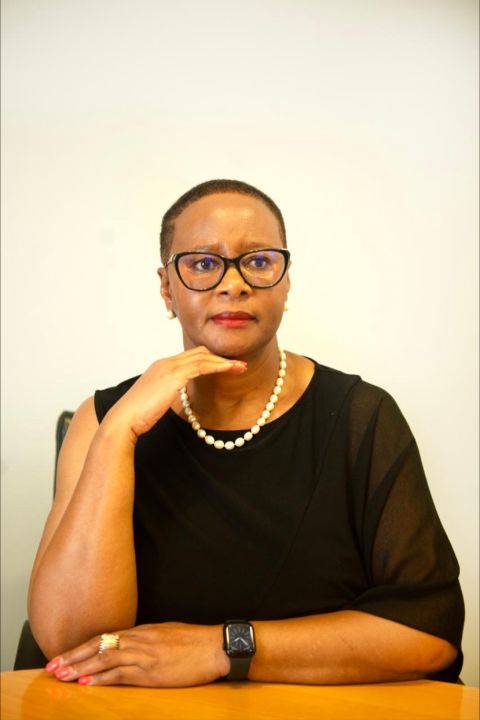
CAPTION: DR NOLITHA VUKUZA
Dr Nolitha Vukuza, the commission’s secretary and a former senior executive at the University of Johannesburg, holds a PhD in Education Policy Studies from Stellenbosch University and carries responsibility for the commission’s entire administrative and investigative infrastructure — from witness safety to a budget running into hundreds of millions of rand. Add commissioner Sesi Baloyi SC and evidence leaders Lee Segeels-Ncube, Thabang Pooe and Ofentse Motlhasedi, and the Madlanga Commission becomes something rarely seen in one room: a critical mass of senior South African women, each bringing her own record of excellence to a process that has, whatever its findings ultimately are, already showcased the depth of talent in the country’s legal profession.
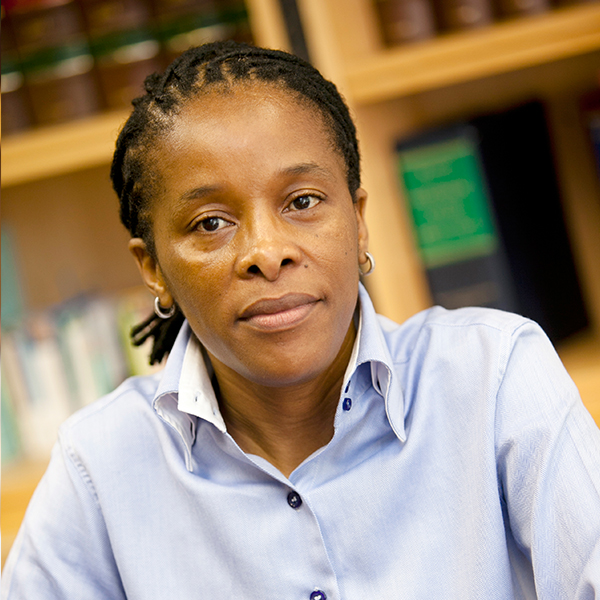
CAPTION: ADVOCATE SESI BALOYI
CAPTION: LEE SEGEELS-NCUBE

CAPTION: THABANG POOE
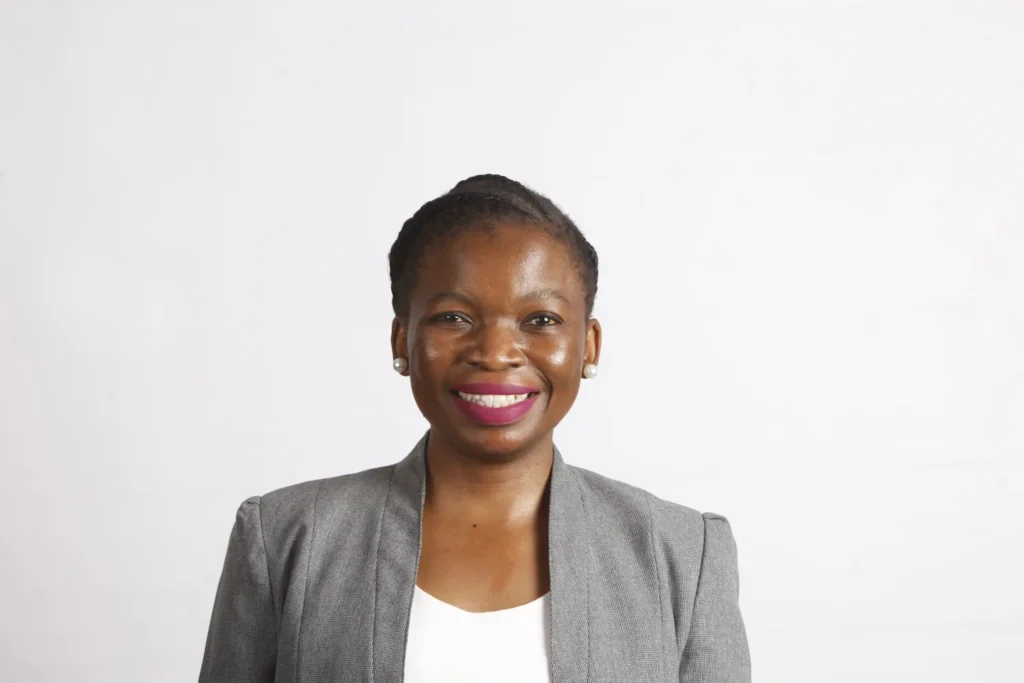
CAPTION: OFENTSE MOTLHASEDI
Why She Matters
It would be easy to reduce Hassim to the sum of her television appearances: the stern-faced advocate, unmoved, unsmiling, relentless. But that reading misses the throughline of a career spent, quietly and consistently, on the side of people with the least power to make institutions listen — mineworkers with silicosis, families failed by a collapsing mental healthcare system, schoolchildren without textbooks, patients denied treatment. The honorary doctorate UWC will confer this week is not a reward for a performance. It is recognition of three decades spent turning constitutional promises into enforceable rights.
For a country in need of proof that its institutions can still produce excellence, integrity and quiet courage in the same person, Adila Hassim’s story is an easy one to hold up. It is, in the truest sense, aspirational — not because it is extraordinary to watch, but because it shows what is possible when discipline is put entirely in service of other people’s dignity.
This profile draws on public reporting, university and organisational records, and coverage of the Madlanga Commission of Inquiry.