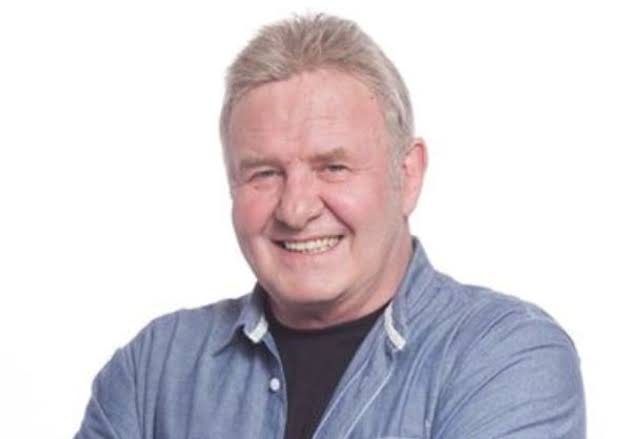

LEN KALANE
Tribute to Leon Schuster — comedian, prankster, box-office record-breaker, and, by his own sidekick’s account, a father figure who never saw colour.
Somewhere in a bedroom in Boskruin, Johannesburg, an old man who spent forty years making South Africa laugh is fighting through a different kind of struggle. Four failed back surgeries. Months confined to bed. Days measured out in painkillers instead of punchlines. At 75, Leon Schuster — the man who made “Oh shucks!” a national catchphrase — is not the invincible prankster who once hid in a fake postbox to scare unsuspecting motorists. He is, by his own admission, a man in pain.
But before we get maudlin about it — and Schuster himself would hate that — this is not an obituary. He is still very much with us, still cracking jokes from his sickbed, still talking about one more film. So let’s do what Leon Schuster has always done best: let’s laugh, remember, and give thanks. Because for four decades, in a country that has not always had much to laugh about, this “outjie” from Vereeniging gave South Africans of every stripe a reason to howl.
From Vereeniging prankster to national institution
Long before the movie cameras, Schuster was the kid in Bloemfontein fooling his grandmother into thinking he’d shot himself in the foot, tomato sauce standing in for blood. He studied at the University of the Orange Free State, played rugby for the first team, taught for a couple of years at his old school, and then landed at the SABC — where the prank instinct finally found a paying outlet on Afrikaans radio.
It was television and film, though, that turned Schuster into the biggest comedy draw the country had ever produced. His candid-camera debut, You Must Be Joking (1986), set the template: ordinary South Africans, unwittingly filmed, reacting to Schuster’s outrageous disguises and stunts. It was slapstick, it was chaotic, and audiences could not get enough of it.
A debut built on a real war
Schuster’s first big-screen outing, in 1990, didn’t reach for a safe subject. Oh Schucks! Here Comes UNTAG (released in some markets as Kwagga Strikes Back) landed in cinemas at almost the exact moment South West Africa was becoming Namibia — and it mined that real, fraught transition for laughs.
Video: Oh shucks…..Here comes UnTAG – part 2 l Leon Schuster — Credit: Peoplelovecomedy / YouTube
The background was anything but funny. South Africa had occupied and administered South West Africa for seven decades, and SWAPO had fought a long guerrilla war for independence. Under a 1988 deal linking Cuban troop withdrawals from Angola to Namibian self-rule, the United Nations finally sent in the UN Transition Assistance Group — UNTAG — in April 1989, tasked with disarming forces, repatriating tens of thousands of exiles and shepherding the territory to its first free election. It was a landmark peacekeeping mission, but a shaky one: on the very first day of the supposed ceasefire, fighting flared up again between SWAPO fighters and South African-aligned forces, killing several hundred people before order was restored. Nobody watching the news that year would have called the situation a joke.
The story did, in the end, have the ending UNTAG was sent in to secure. In November 1989, Namibians turned out in huge numbers — turnout was put at around 97 percent — for elections that international observers certified as free and fair, and SWAPO swept to a comfortable majority in the new Constituent Assembly. A constitution was adopted in February 1990, and on 21 March 1990 Namibia formally became independent, with Sam Nujoma sworn in as its first president in Windhoek. It remains one of the UN’s clear-cut peacekeeping successes — which is precisely the tense, unresolved backdrop against which Schuster chose to set a farce.
Schuster, never a man to let real-world tension get in the way of a punchline, fictionalised the whole affair. His film relocated the story to an invented country called Nambabwe, standing in none too subtly for Namibia, and cast Schuster as Kwagga Robertse, a wily bush farmer squaring off against a platoon of bumbling, corrupt UN peacekeepers led by a scheming American major. Guerrilla fighters, smuggled diamonds, a farm inheritance dispute and a UN love interest were all thrown into the slapstick mix. It was, in effect, the biggest, most delicate geopolitical story unfolding on South Africa’s own doorstep, repackaged as a broad comic farce — audacious, faintly ridiculous, and very much Schuster’s style: take the thing everyone is anxious about and make people laugh at a cartoon version of it instead.
It was also, not incidentally, the film that first put Schuster and Alfred Ntombela on screen together, with Ntombela playing Kwagga’s street-smart sidekick Bambo — the beginning of a partnership that would run for decades and, as it turns out, mean far more to Ntombela than either of them could have guessed at the time.
The record-breaker
What followed was, quite simply, the most successful run any South African filmmaker has ever had at the local box office. There’s a Zulu on My Stoep became the country’s highest-grossing film. Mr Bones then took the crown, only to be dethroned by its own sequel, Mr Bones 2: Back from the Past. Mama Jack and Schuks Tshabalala’s Survival Guide to South Africa kept the streak going. For years, industry figures pointed to the almost absurd fact that Schuster’s homemade comedies — shot with no Hollywood backing and precious little CGI — were out-earning international blockbusters at South African cinemas.
He did it all, notably, his way: broad, unpretentious, unmistakably local humour that spoke to braai-going, rugby-watching, gogo-visiting South Africans rather than to international critics. Reviewers abroad were sometimes sniffy about the subtlety (or lack of it). South Africans didn’t care. They queued.
Shorty: more than a sidekick
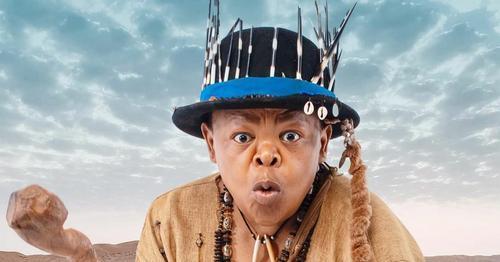
If Schuster was the engine of these films, Alfred Ntombela — universally known as Shorty — was very often the heart of them. From that first pairing in Here Comes UNTAG, Ntombela went on to appear alongside Schuster in a string of hits, from Sweet ‘n Short to Mama Jack to the Mr Bones franchise, his infectious laugh becoming as recognisable to South African audiences as Schuster’s own disguises.
Off screen, their bond ran far deeper than a working partnership. Ntombela lost his father when he was three years old and was later left by his mother, growing up with very little of the family structure most children take for granted. Earlier this month, in a video posted to his Instagram, a visibly emotional Ntombela described Schuster as the closest thing to a father he has ever known. It’s the kind of admission that reframes decades of on-screen chemistry: what audiences read as comic timing was, underneath, a genuine friendship built across a colour line that South African law once tried very hard to enforce.
There is something quietly powerful in that. Apartheid was designed, brick by legal brick, to keep a “Shorty” and a “Schuster” apart — different queues, different suburbs, different futures. Instead, the two of them spent decades making South Africans of every background laugh at the same jokes, in the same cinemas, together. Whatever else gets said about Schuster’s career, that particular friendship, and what it has clearly meant to Ntombela, is one of its most human legacies.
Trailer: ‘Mr Bones 3 – Son of Bones’ – “GWARRA GWARRA” — Credit: Nu Metro / YouTube
Laughing in dark times
It is easy to forget, watching the films now, just how much South Africa needed to laugh during the years Schuster was working. His early candid-camera films were shot in the last, ugly decade of apartheid; his box-office peak came through the turbulence and hope of the 1990s transition and the uneasy nation-building years after. Schuster’s comedy rarely engaged directly with politics, but its very existence — Afrikaans and English speakers, black and white audiences, all laughing at the same absurd pratfalls — offered a strange kind of relief valve in a deeply divided country. He wasn’t Pieter-Dirk Uys, skewering politicians with satire. He was something blunter and, in its own way, just as necessary: a national permission slip to be silly together.
The reckoning nobody could dodge
No honest tribute to Schuster can skip over the part of the story that is genuinely uncomfortable: his long-running use of blackface characters. In June 2020, as the global reckoning that followed George Floyd’s death reached South African shores, Showmax quietly pulled nine of Schuster’s films from its platform pending a review, later permanently delisting several — including Mama Jack, Mr Bones and Mr Bones 2 — over what the streamer called negative racial stereotyping. Schuster defended the work as innocent at the time, insisting he didn’t see colour, though he later conceded he had some regrets about profiting from blackface.
Five years on, in 2025, MultiChoice quietly restored a number of the films to DStv and Showmax, describing them as products of their time that had been made with positive intent, while stopping short of an outright apology. The reaction, predictably, was split — some viewers delighted to have the old favourites back, others questioning why they’d returned at all.
It’s a complicated legacy, and pretending otherwise would do Schuster and his critics both a disservice. But it sits, uneasily and honestly, alongside the other, gentler story — of a white Afrikaans comedian and a Black co-star who found, in each other, something that looked a great deal like family.
The man in the bed
These days, the pranks have given way to a much tougher script. Schuster’s troubles began in 2023 when he injured his back on the set of Mr Bones 3. Three more surgeries followed, none of them the fix he was hoping for; by his own account, doctors are now reluctant to operate again. He has spoken candidly about depression and loneliness, about days spent entirely in bed in his Boskruin home, managing the pain with medication and his Christian faith. Fans, in their thousands, have flooded social media with messages of support, and a recent kykNET documentary series has traced his life story just as his old films quietly returned to South African screens.
Through it all, Schuster keeps saying the same thing: he hopes to make one more film, possibly one built around his faith. Whether or not that happens, the body of work is already extraordinary — a homegrown comedy empire built on nothing more than nerve, disguise and an unerring sense of what would make South Africans laugh.
Still laughing
So here’s to Leon Schuster, currently propped up on pillows in Johannesburg rather than hiding in a fake letterbox somewhere on the N1. Here’s to the box-office records, the terrible puns, the outrageous costumes — and to Shorty, the man who has told the world that behind the wig and the fake moustache was, for him, something like a father.
Get well, Oom Leon. South Africa isn’t done laughing with you yet.
Get-well messages for Leon Schuster can be shared via his official social media channels. If this piece has stirred memories of your own favourite Schuster prank or film, share them with us — we’d love to run your stories in a future edition.