
By Lucky Nyathi | PiE Entertainment
There are music festivals, and then there are cultural institutions.
For two decades, Back to the City has occupied an unusual space in South African popular culture. It is a hip-hop festival, but describing it simply as a festival misses much of what has made it endure. It is a meeting point for rappers and producers, DJs and graffiti artists, dancers and designers, entrepreneurs and streetwear brands, established stars and artists still trying to get their first serious break.
At its centre is Johannesburg.
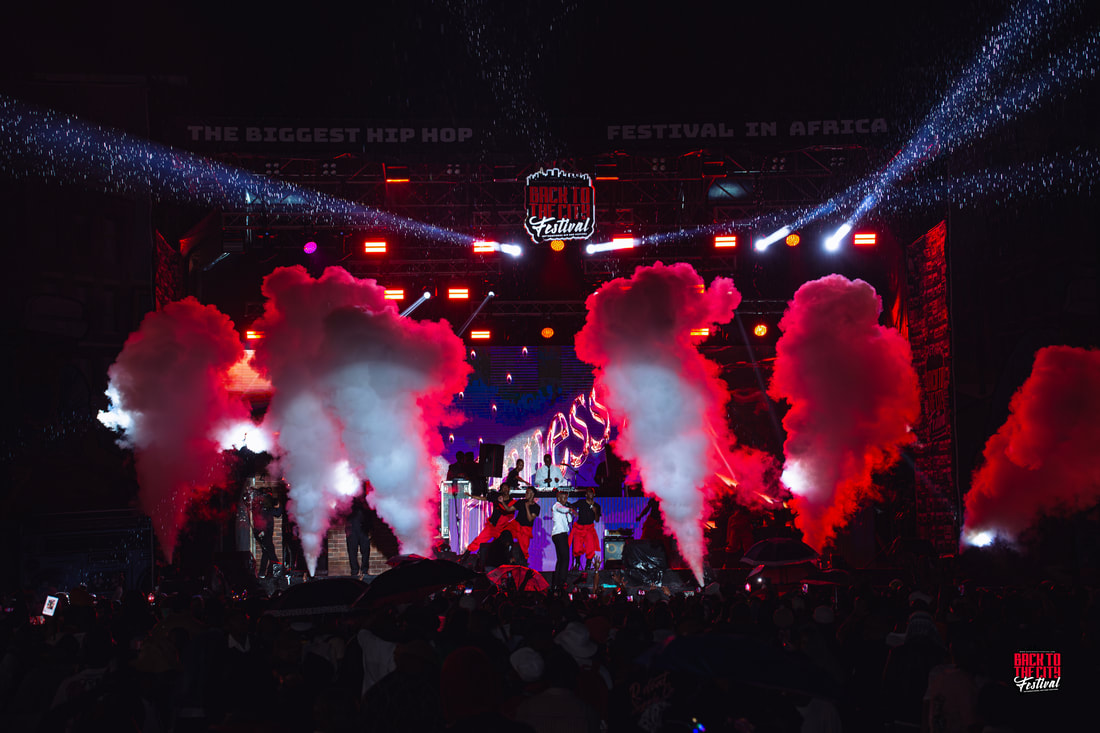
Credit: BacktothecityFestival
And on 10 October 2026, Mary Fitzgerald Square in Newtown will once again become the meeting point for that culture when Back to the City celebrates its 20th anniversary.
This year’s edition arrives with an unusually significant backdrop. The festival is marking two decades of its own history while Johannesburg celebrates 140 years of the city’s existence. The year also marks 50 years since the June 16 Youth Uprising of 1976, creating a wider conversation around youth, expression, resistance, identity and the role of culture in shaping a city.
For Back to the City, those themes are not new.
They have been part of its DNA from the beginning.
From a small gathering to a Johannesburg institution
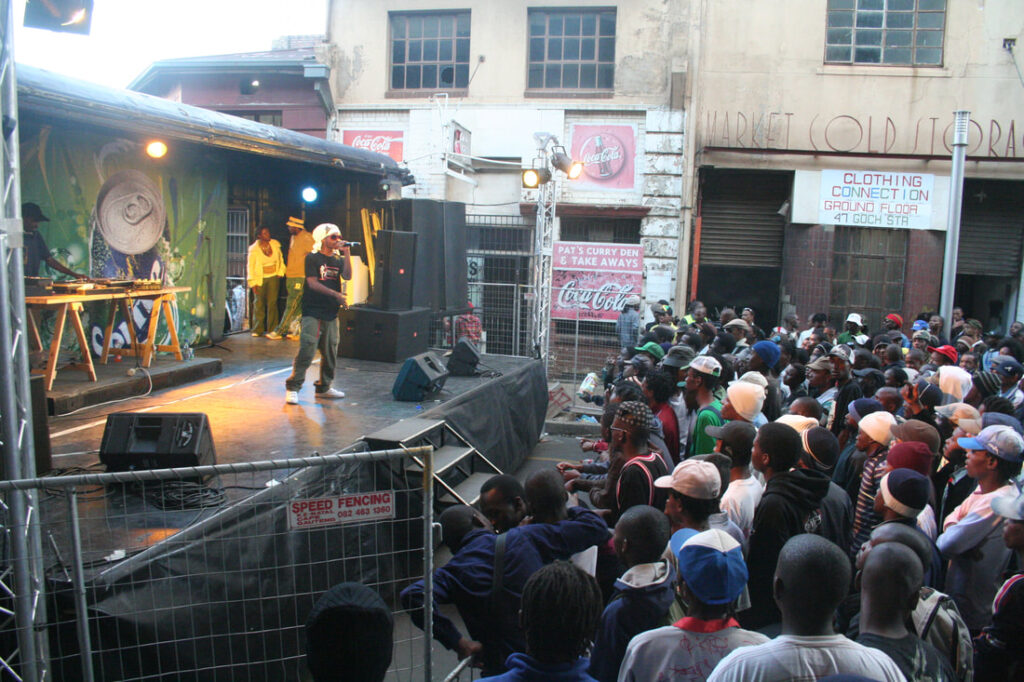
Back to the City first took place in 2007, drawing just over 3,500 people. According to the festival’s own historical records, attendance grew steadily over the following years, reaching approximately 8,000 in 2009, 15,000 in 2012 and more than 20,000 by 2014.
The growth tells only part of the story.
The festival spent its first six years under the M1 bridge on Henry Nxumalo Street before establishing Mary Fitzgerald Square in Newtown as its home.
That move was more than a change of address.
Newtown has long been associated with Johannesburg’s creative identity, and Back to the City effectively turned the surrounding urban landscape into part of the festival itself. The streets, walls, stages and public spaces became places where hip-hop could exist beyond the traditional boundaries of a concert.
The festival was initially held on Freedom Day, 27 April, a deliberate connection between the idea of political freedom and hip-hop’s own tradition of freedom of expression. Organisers described the original purpose as bringing young people back into the city while using music, graffiti and exhibitions as vehicles for expression.
That connection between culture and freedom has remained central to the festival’s identity.
Hip-hop was never just about the microphone
One of Back to the City’s most important characteristics is that the festival has consistently treated hip-hop as a culture rather than simply a musical genre.
The official festival programme describes an environment that incorporates live performances, street art, breakdancing, art installations, skateboarding, film, fashion, gaming, workshops, speakers and panel discussions.
That approach matters because South African hip-hop has never developed in isolation.
The music has always existed alongside fashion, dance, visual art, DJ culture, graffiti, entrepreneurship and street culture. Back to the City created a physical space where all of those elements could collide.
Its daytime Hip-Hop Summit has also been designed around education, with discussions covering subjects such as publishing, distribution, recording, independent versus mainstream music, funding and entrepreneurship. The objective has been to give artists practical knowledge that can help them build sustainable careers rather than simply giving them a stage for one afternoon.
That educational element has helped distinguish the festival from an event built purely around entertainment.
It is part concert, part marketplace, part classroom and part cultural archive.
The numbers tell the story of its growth
The festival’s historical attendance figures illustrate just how dramatically it expanded.
From around 3,500 people in 2007, Back to the City records show approximately 4,500 attendees in 2008, 8,000 in 2009, 9,000 in 2010, 11,500 in 2011 and 15,000 in 2012.
By 2013, attendance had reached about 17,000.
The festival then crossed the 20,000 mark in 2014, with its own records putting attendance at approximately 21,000 that year and 23,000 in 2015. From 2016 through 2019, the festival recorded crowds of around 25,000.
Then came the pandemic.
The 2020 and 2021 editions were presented online, before the festival returned physically in 2022. Its historical records put attendance at about 20,000 in 2022, 2023 and 2024.
The road back was not simply about getting people through the gates again. It was about rebuilding the communal experience that makes a festival like Back to the City matter.
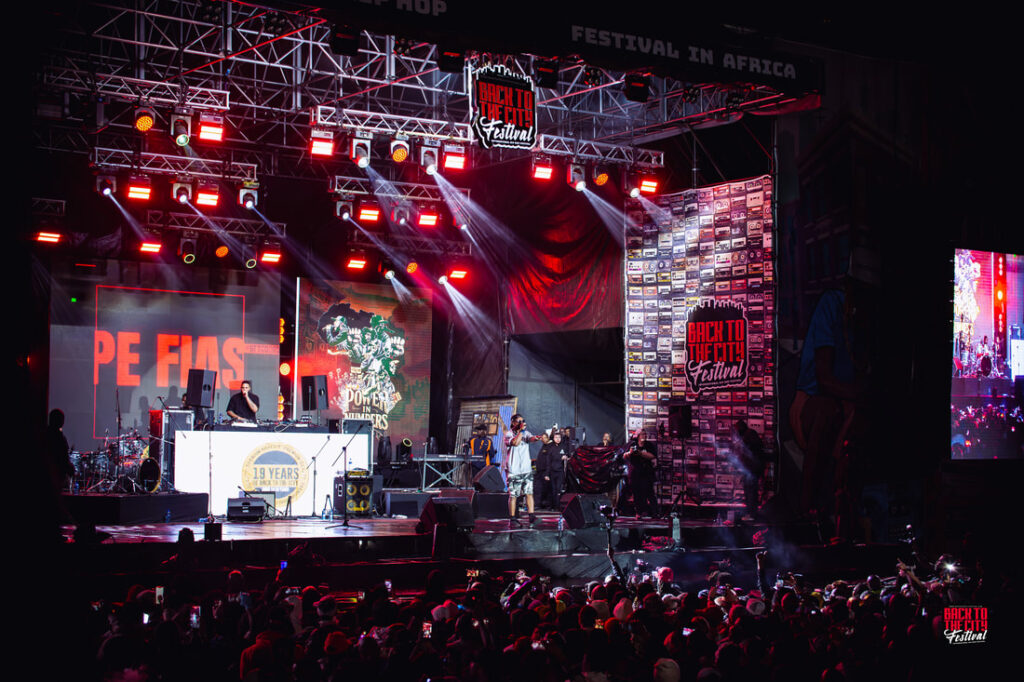
By 2025, the event had returned strongly, attracting approximately 18,000 people according to The Citizen. The edition featured US rapper Lupe Fiasco as the headline international act, with performances from South African artists including Maglera Doe Boy. Even heavy rain could not completely empty the area around the main stage.
That image — thousands of people staying through the rain to watch a performance — says something about the relationship between the festival and its audience.
When the city becomes the stage
There is something particularly fitting about Back to the City being based in Johannesburg.
Hip-hop has always had a complicated relationship with cities. It tells stories about neighbourhoods, ambition, inequality, identity, survival and aspiration. Johannesburg provides an enormous canvas for those stories.
Newtown, with its history as a creative and cultural district, gives the festival an environment that feels connected to that tradition.
For one day, Mary Fitzgerald Square becomes a concentrated version of Johannesburg’s creative economy.
There are musicians on the stages, artists working on walls, clothing businesses selling designs, food vendors serving crowds, DJs moving between sets and young performers competing for attention. The festival’s current programme also includes skateboarding, basketball, gaming areas, food, fashion, graffiti and competitions.
This is why Back to the City has gradually become bigger than the artists performing on its main stage.
The audience is not simply consuming culture.
It is participating in it.
The festival has kept one foot in the past
One of the more interesting features of Back to the City is its willingness to place generations of South African hip-hop alongside one another.
The festival has repeatedly created space for established figures and younger artists to appear within the same cultural ecosystem.
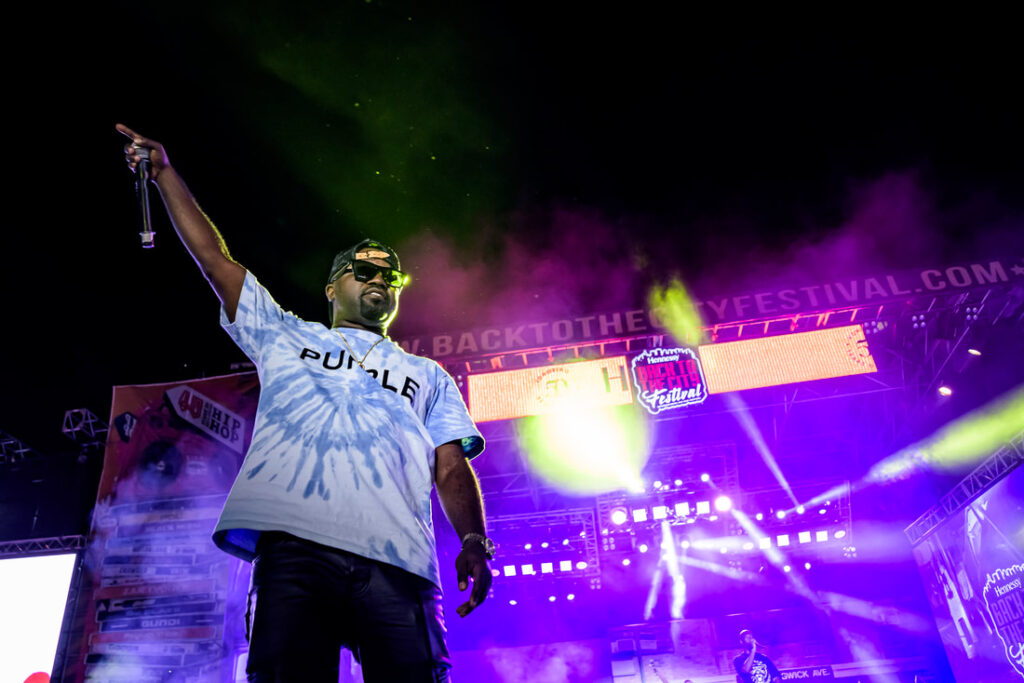
That approach was visible in 2023, when Back to the City marked 50 years of hip-hop with international appearances from The Beatnuts, J-Live and Mobb Deep’s Havoc, while also running MC and producer competitions designed to give emerging talent a platform.
The 2024 edition continued that generational approach.
More than 100 artists were announced across the festival programme, with names including Nasty C, Blxckie, Emtee, Nadia Nakai, Okmalumkoolkat, Stogie T and Big Zulu. US rapper Benny the Butcher served as the international headliner.
The festival also used its Heritage segment to connect hip-hop with older South African popular music traditions. Kwaito figures such as Thebe have been incorporated into the programme, following earlier appearances by artists including Alaska, Mapaputsi and Zola 7.
That is an important part of the Back to the City story.
It recognises that today’s hip-hop culture did not appear from nowhere.
It grew out of South Africa’s broader history of urban music, youth culture and creative resistance.
A festival that has survived changing tastes
South African hip-hop has changed dramatically since Back to the City began.
The early years of the festival belonged to an industry that was still navigating the transition from physical music sales to digital distribution. Since then, social media, streaming platforms, smartphones and globalised music consumption have transformed how artists build audiences.
The definition of a successful hip-hop artist has changed too.
A rapper can now build an audience on TikTok, YouTube or streaming platforms before ever appearing on a major festival stage. International collaborations can happen without an artist leaving Johannesburg. Independent releases can reach audiences across Africa and beyond.
Back to the City has had to evolve alongside all of this.
Its continued emphasis on independent artists, competitions, producers, fashion, visual culture and entrepreneurship allows it to remain connected to the wider ecosystem rather than depending exclusively on whichever song happens to dominate the charts.
That may be one of the reasons the festival has lasted.
It has never been only about what is popular right now.
The memorable moments are bigger than the headliners
Looking back at Back to the City’s history, the international names naturally attract attention.
But some of the festival’s most memorable moments have come from the interaction between artists and audiences.
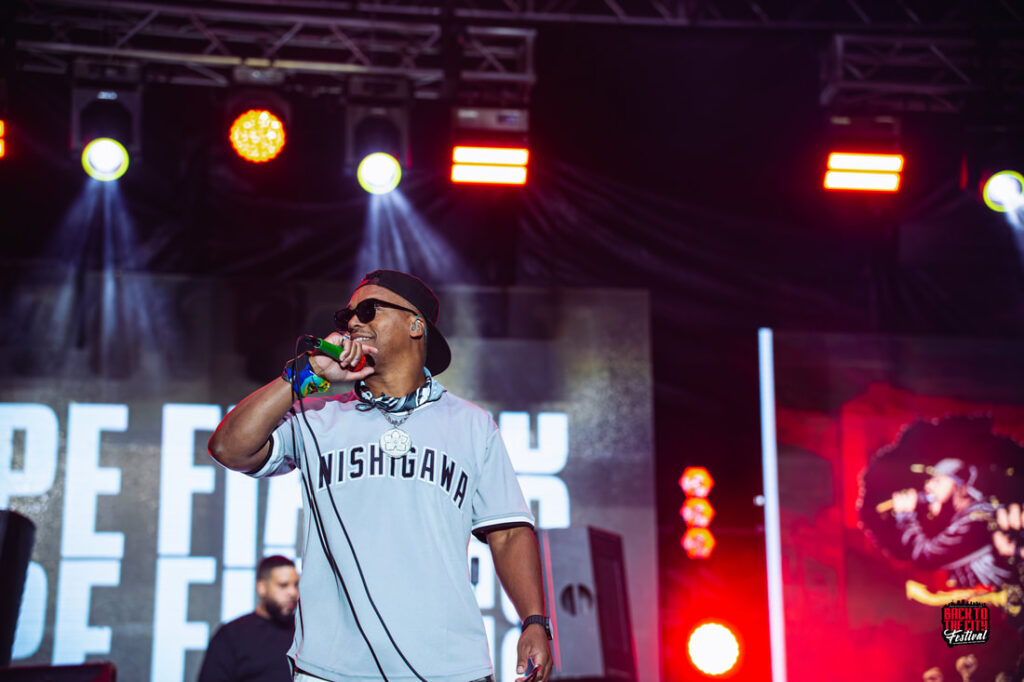
In 2025, Lupe Fiasco brought an international dimension to the festival, while Maglera Doe Boy’s performance became one of the night’s talking points as rain poured over the crowd.
In 2024, Nasty C delivered one of the performances highlighted in retrospective coverage of the festival, while Blxckie, Tyson Sybateli and Okmalumkoolkat were among the artists who helped keep the crowd moving throughout the day.
The festival’s international bookings have also helped connect Johannesburg’s hip-hop community with artists and movements beyond South Africa.
But there is another kind of memory being created at Back to the City: the memory of discovery.
For an emerging rapper, producer, dancer or designer, the most important moment may not be the headline performance. It may be the first time thousands of people hear their name.
That is where festivals become part of an artist’s career story.
2026: Twenty years later, the city is calling again
Now comes the anniversary edition.
Back to the City 2026 takes place on Saturday, 10 October at Mary Fitzgerald Square in Newtown.
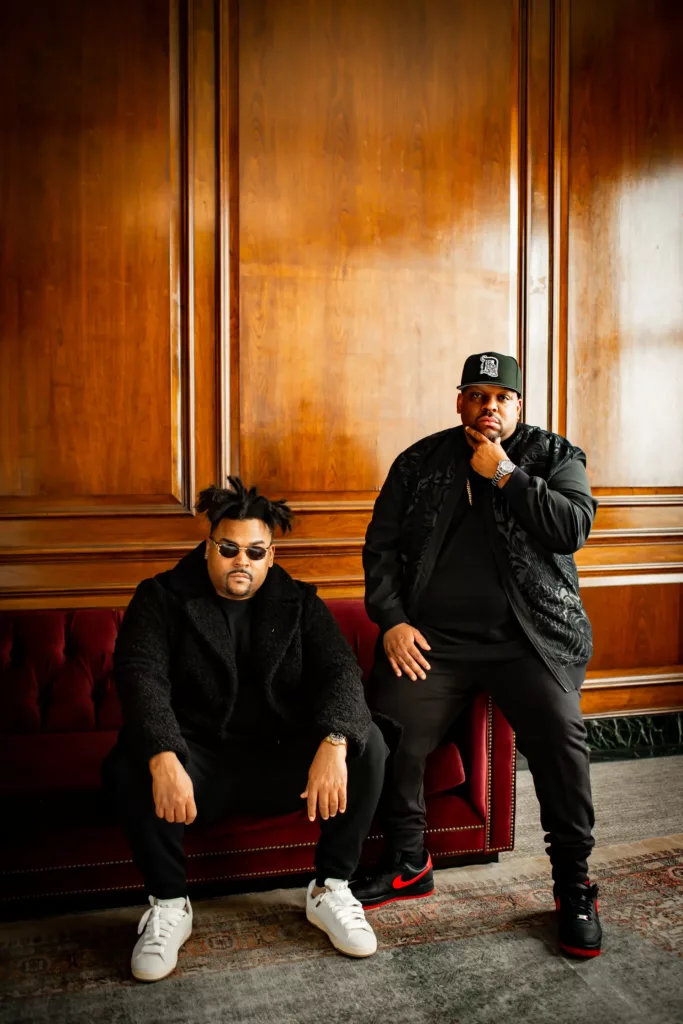
The festival has announced an international line-up featuring US artists Ab-Soul, Slum Village and Blu & Exile. They will appear alongside a large South African roster including Cassper Nyovest, Emtee, Blxckie, Stogie T, Reason, Tuks, Touchline, Dee Koala, Frank Casino, Zakwe and Maraza, among others.
The programme is deliberately broad.
There will be a Heritage segment celebrating Trompies, while Power Hour will feature La Cabra, Just Sam, Tshego Santana and Mfana Touchline. Sixby9ine Presents will bring together Flow Jones Jr, Roiii, The Northmob and Bantu Nots. The DJ programme includes names such as DJ Speedsta, Kyotic, Kenzhero and DJ Azhul.
The wider festival experience is just as ambitious.
Organisers are advertising a programme featuring approximately 100 artists, dozens of DJs and graffiti artists, clothing and food stalls, activation zones, MC battles, DJ battles, a skate park, basketball, gaming zones and viewing decks.
In other words, the anniversary is not being treated as a concert.
It is being treated as a cultural gathering.
20 years of Back to the City. 140 years of Johannesburg.
The timing of the 2026 edition gives the festival another layer of meaning.
Johannesburg is celebrating 140 years, while Back to the City reaches its 20-year milestone. At the same time, South Africa is remembering 50 years since the June 16 Youth Uprising.
For a festival built around youth culture and freedom of expression, those dates inevitably overlap.
Back to the City’s own 2026 campaign frames the anniversary around resilience, creativity, culture and the legacy of young people who challenged the conditions around them.
The connection does not require hip-hop to be presented as a substitute for history.
Instead, it shows how cultural movements can carry memories forward.
The generation that experienced 1976 is not the same generation that will arrive at Mary Fitzgerald Square in 2026. But the idea of young people using culture to express identity, frustration, ambition and hope continues to connect the two eras.
That is perhaps the most interesting part of this anniversary.
Back to the City is old enough to have its own history now.
The next generation is already in the crowd
Twenty years is a long time in music.
Some of the people who attended the first Back to the City are now parents. Some of the artists who performed during the festival’s early years are now regarded as veterans. Some of today’s young performers were not even born when the first edition took place.
And yet the festival continues to create the same basic opportunity: bring people together in the city and give culture a physical place to breathe.
That matters in an era when so much of music consumption happens through headphones and screens.
A streaming platform can recommend a song.
An algorithm can introduce an artist to millions of people.
But neither can quite reproduce the feeling of standing in a crowd while an entire square reacts to the same beat.
That is what Back to the City has protected for two decades.
The collective experience.
More than nostalgia
It would be easy for a 20th anniversary festival to become a nostalgia exercise.
Back to the City appears to be taking a different route.
Yes, there will be legends. There will be artists whose music is connected to previous chapters of South African hip-hop. There will be references to the culture’s history and the festival’s own journey.
But there will also be Ab-Soul, Blu & Exile, Slum Village, Blxckie, Emtee, Touchline and a long list of artists representing different generations of the current scene.
That balance is important.
A culture stays alive not by constantly looking backwards, but by allowing the past and the present to occupy the same space.
Back to the City has spent 20 years building that space.
The city is waiting
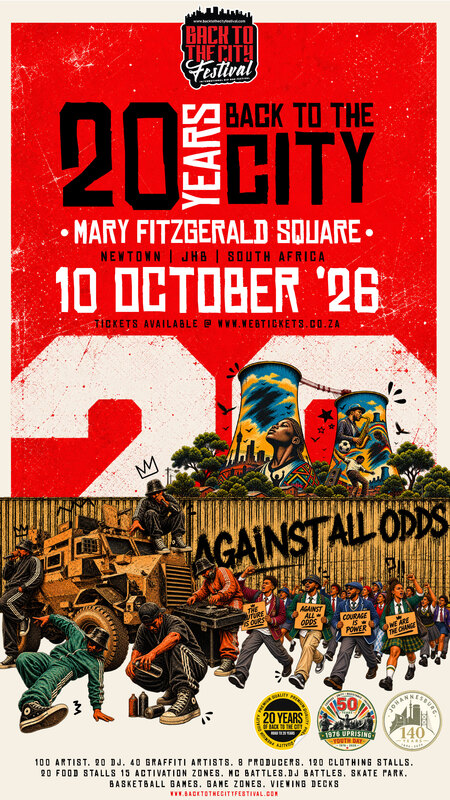
On 10 October, Newtown will once again become the destination for thousands of people arriving for one of South Africa’s longest-running hip-hop gatherings.
Some will come for the international artists.
Others will come for the South African legends.
Some will arrive for the graffiti, fashion, skateboarding, basketball, gaming, food or the chance to discover an artist they have never heard before.
And some will simply come because Back to the City has become part of their own personal history.
That may ultimately be the festival’s greatest achievement.
It has survived changing technology, changing musical tastes, a pandemic and the inevitable turnover of generations. It began with a crowd of roughly 3,500 people and grew into an event that has repeatedly attracted crowds in the tens of thousands.
Twenty years later, it is still bringing people back to the same fundamental idea:
that a city can be more than buildings and streets.
It can be a stage.
It can be a classroom.
It can be a marketplace.
It can be a meeting place.
And, for one day, it can belong entirely to the culture.
Back to the City 2026 takes place on 10 October 2026 at Mary Fitzgerald Square, Newtown, Johannesburg. Tickets are being sold through Webtickets and Pick n Pay, with the festival advising attendees to use its official channels and authorised ticketing outlets.
Twenty years on, Back to the City is not simply returning.
It is bringing the city with it.
PiE Entertainment
This article forms part of PiE’s coverage of South African entertainment, music, youth culture and the creative industries.
Image Credit: All images featured in this article are sourced from and credited to backtothecityfestival.com.