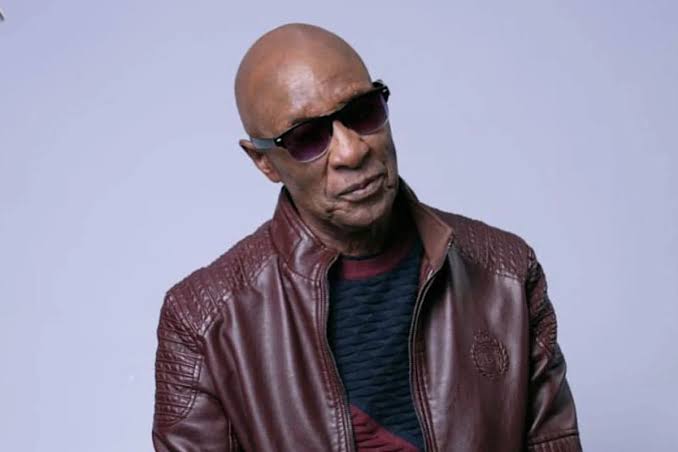

By Lucky Nyathi | PiE Entertainment | 3 October 2026
South Africa has lost one of its enduring musical voices. Babsy Mlangeni, the Soweto-born singer, guitarist and composer whose career stretched across almost six decades, has died at the age of 83 following a short illness. His passing closes another chapter in the story of South African music, but his songs remain firmly embedded in the memories of generations.
There are musicians whose careers belong to a particular era, and there are musicians whose work seems to travel through time.
Babsy Mlangeni belonged to the second category.
For more than five decades, his distinctive voice carried songs about love, relationships, ordinary life and the experiences of South Africans across language and cultural boundaries. His catalogue included enduring favourites such as “Bua Nnete”, “Sala Emma”, “Botsotso”, “Lonely Man” and “Umadlembathini”, songs that helped establish him as one of the country’s best-known music veterans.
Mlangeni died on Thursday, 1 October 2026, after a short illness. He was 83.
The news has prompted tributes from government, Parliament, music organisations and fans who remember an artist whose career was not simply measured by recordings and awards, but by the number of generations that continued to recognise his voice.
From Orlando East to the South African Music Landscape
Born Bernard Mlangeni in Orlando East, Soweto, in 1943, Mlangeni’s relationship with music developed despite circumstances that could easily have restricted his opportunities.
He lost his sight when he was a young child and later attended the Athlone School for the Blind in Cape Town, where he learned to play the guitar. It was there that his musical journey began developing into something much larger.
During his time at the school, Mlangeni became involved in a group of blind musicians that became known as The All-Rounders. Jacaranda FM reports that Mlangeni was among the group’s founding members in 1962, while the group’s 1967 debut album Coming Home is associated with the development of what became known as South African soul.
The significance of that period is easy to underestimate today.
South Africa’s music industry was operating under a very different social and political system, and opportunities for black artists were heavily constrained. Blind musicians faced additional barriers.
Mlangeni nevertheless built a professional career as a singer, guitarist and composer, establishing himself as a performer whose work could travel beyond the limitations imposed by language, geography and disability.
Then Came “Bua Nnete”
Mlangeni’s breakthrough came during the early 1970s with “Bua Nnete”, which helped establish him as a recognised voice in South African music. More popular recordings followed, but it was the combination of his distinctive voice, songwriting and emotional delivery that would become the defining feature of his career.
Then came the song that would become inseparable from his name.
“Sala Emma”
“Sala Emma” was written about his wife, Emma, and became his signature recording.
The song was a tender Sesotho ballad, but its emotional reach extended far beyond Sesotho-speaking audiences. Its appeal demonstrated something that Mlangeni’s career would repeatedly prove: music does not always require the listener to understand every word in order to understand the feeling.
The song became one of the enduring recordings associated with his name and remains among the works most frequently mentioned in tributes following his death.
That ability to cross boundaries became one of the defining characteristics of Mlangeni’s music.
He recorded and performed in isiZulu, Sesotho and isiXhosa, helping his music reach audiences across different linguistic communities.
A Career Built Across Generations
Mlangeni’s career lasted long enough to encompass several generations of South African music.
He was already an established figure when many of the musicians who would later become household names were beginning their careers.
His catalogue grew to include “Botsotso”, “Lonely Man” and “Umadlembathini”, among other recordings. His music dealt with love, life and ordinary experiences, helping make his work accessible to audiences across different generations.
But his influence was not limited to his own recordings.
Mlangeni also became a mentor to younger musicians, including the late Steve Kekana, another visually impaired South African musician who would go on to establish a major career of his own.
That part of his legacy is particularly important.
An artist’s contribution to a music industry is not only what appears in their discography. Sometimes it is also found in the careers they help make possible.
More Than a Story About Disability
It would be easy to tell Mlangeni’s story only through the fact that he was blind.But that would reduce a remarkable musical career to one aspect of his life.
Mlangeni himself built a career in an industry that presented substantial barriers to blind musicians, becoming a successful performer, songwriter, guitarist and composer at a time when access and opportunity were far more limited than they are today.
His story therefore became an important example of what could happen when talent was allowed to exist beyond the limitations society placed around it.
The Department of Sport, Arts and Culture described him as a trailblazer who challenged perceptions about what people living with disabilities could achieve, while noting his role in mentoring younger musicians.
Parliament also highlighted his place alongside musicians such as Lazarus Kgakgudi and Steve Kekana in the music of the 1960s, 1970s and 1980s, describing that generation’s music as part of the cultural record of apartheid-era South Africa.
That gives his catalogue another layer.
These were not songs created outside history.
They were songs created inside it.
The Soundtrack of Ordinary South African Life
One of the most striking descriptions of Mlangeni’s legacy has come from the tributes following his death.
The Department of Sport, Arts and Culture said his music became part of the soundtrack of South Africans’ lives, highlighting the ability of songs such as “Sala Emma” to move across languages and generations.
That description fits the career.Mlangeni did not need to constantly chase musical trends to remain relevant.
His strength was storytelling.
Love.
Loneliness.
Relationships.
Everyday life.
The things people experienced regardless of what language they spoke or where they lived.
That gave the music longevity.
The Recognition Came, Too
Mlangeni’s contribution did not go unnoticed.
At the height of his career, he won the Black Music Award for Best Male Vocalist in 1975 and 1976. Decades later, the South African Music Awards recognised his contribution with a Lifetime Achievement Award in 2017.
Recognition continued into his later years.
In 2024, he was honoured through the Department of Sport, Arts and Culture’s Living Legends initiatives. In 2025, he received the Artist Living With Disability Award at the National Arts and Culture Awards.
He was also still performing and appearing at cultural events in his later years.
In 2024, he was honoured through the Department of Sport, Arts and Culture’s Living Legends initiatives. In 2025, he received the Artist Living With Disability Award at the National Arts and Culture Awards.
He was also still performing and appearing at cultural events in his later years.
I5 July 2025, he performed at a Department of Sport, Arts and Culture tribute concert honouring veteran singer Abigail Kubeka.
There is something significant about that.Mlangeni did not simply become a historical name.
He remained connected to the musical community that had shaped his life.
A Voice That Outlived the Era That Created It
Mlangeni’s music was created in an era that no longer exists in the same form.
The way people discovered music has changed.
The recording industry has changed.Radio has changed.
The economics of being a musician have changed.Streaming platforms now allow listeners to discover songs recorded decades ago with a few taps on a phone.
Yet songs like “Sala Emma” continue to have a place in South African musical memory.
That is the real measure of longevity.
A song survives not because someone tells you it is important.
It survives because people continue to play it.
The End of an Era
Mlangeni’s death is therefore not simply the loss of another veteran musician.
It is the passing of someone whose career connected multiple eras of South African music.
He came from the generation that helped shape South African soul.
He performed through the country’s apartheid years.
He continued working after democracy.
He watched the industry move from vinyl and radio to CDs, digital downloads and streaming.
And through all of those changes, his voice remained recognisable.
The Department of Sport, Arts and Culture described his death as the passing of an era, while Gauteng MEC for Education, Sport, Arts, Culture and Recreation Lebogang Maile said Mlangeni’s music had become part of the soundtrack of generations of South Africans.
The Songs Remain
There is a particular kind of comfort in the way musicians live on.
Their physical presence disappears, but the work remains available.
Someone discovering “Sala Emma” years from now may know little about the world in which it was recorded.
They may not know Mlangeni’s story.
They may not know that he learned guitar at the Athlone School for the Blind.
They may not know about The All-Rounders.
They may not know about the awards, the decades of performances or the musicians he mentored.
They will hear the voice.
And that voice will tell its own story.
That is the privilege of leaving behind music that lasts.
Remembering Babsy Mlangeni
South Africa has lost a musician whose career stretched across almost six decades, but it has not lost his music.
Babsy Mlangeni’s legacy lives in the songs that remain familiar, the artists he encouraged, the barriers he challenged and the generations that grew up hearing his voice.
He leaves behind a catalogue that belongs not only to his family or to the music industry, but to the broader cultural memory of South Africa.
The man is gone.
The music remains.
And somewhere, someone will press play on “Sala Emma”, hear that unmistakable voice and discover Babsy Mlangeni all over again.