
SAUL MOLOBI celebrates the courage, sacrifice and enduring legacy of South Africa’s independent media
I have read numerous news articles, listened to commentators and followed social media posts commemorating Black Wednesday, 19 October 1977. I, too, contributed an article to a national newspaper published on Sunday. Today, perhaps as a follow-up to that contribution, I want to expand on the emergence and evolution of independent media in South Africa, particularly in the aftermath of the apartheid government’s media crackdown.
Let me hasten to make one important distinction: The events of 19 October 1977 did not mark the beginning of independent media in South Africa. Rather, they exposed the determination of the apartheid state to suppress independent voices and, paradoxically, helped propel the struggle for media freedom to greater heights.
To commemorate Black Wednesday meaningfully, we must look beyond that fateful day. We must acknowledge the generations of Black intellectuals, journalists, editors, publishers, and political activists who understood, long before 1977, that the struggle for freedom would also have to be fought in the pages of newspapers, through political commentary, and by asserting African people’s right to tell their own stories.
Independent media before Black Wednesday
The history of independent Black media in South Africa stretches back to the late nineteenth century, when an emerging African intelligentsia began using the printed word to challenge racial exclusion, colonial domination and the denial of political rights.
One of the most significant milestones was the establishment of Imvo Zabantsundu – meaning “African Opinion” or “Views of the Black People” – on 3 November 1884. Pioneering journalist, politician, and educationist John Tengo Jabavu founded the newspaper in King William’s Town (now Qonce), in the Eastern Cape.
As South Africa’s first Black-owned and controlled newspaper, Imvo Zabantsundu created an important platform for African journalism and political debate. It showed that Black South Africans could build their own media institutions, articulate their political aspirations, and engage public affairs beyond the confines of colonial and missionary-controlled narratives.
This was more than a publishing enterprise. It was an assertion of intellectual agency at a time when Black people were routinely denied the right to determine how they were represented in public life.
Other publications soon followed, broadening the space for African political expression.
Izwi laBantu (“Voice of the People”), established in East London in 1897, provided a platform for African political interests and offered a more militant voice in the debates of the period. It reflected a growing determination among African intellectuals to challenge the political and social arrangements that subordinated Black people.
In 1903, John Langalibalele Dube established Ilanga lase Natal in Durban. Published in isiZulu and English, the newspaper became an important vehicle for education, political rights, social commentary, and African advancement. Dube later became the founding president of the South African Native National Congress, established in 1912 and later renamed the African National Congress (ANC).
Another important publication was Abantu-Batho, founded in 1912, the year the ANC was established. Published in several African languages, including isiZulu, isiXhosa, and Sesotho, as well as English, it became closely associated with the ANC’s political mobilization and its campaign against discriminatory legislation.
Sol Plaatje, a founding figure of the ANC, was also central to the development of African political journalism. His newspaper work, including his association with Tsala ea Becoana, formed part of a broader tradition in which the written word became an instrument of political education, cultural affirmation and resistance.
These pioneers understood something that remains relevant today: Whoever controls the means of communication has considerable influence over whose experiences are recognised, whose ideas shape public debate and whose interests are served by society.
Independent Black media was therefore never simply about owning printing presses. It was about reclaiming the power to interpret reality, challenge dominant narratives, and help define the country’s future.
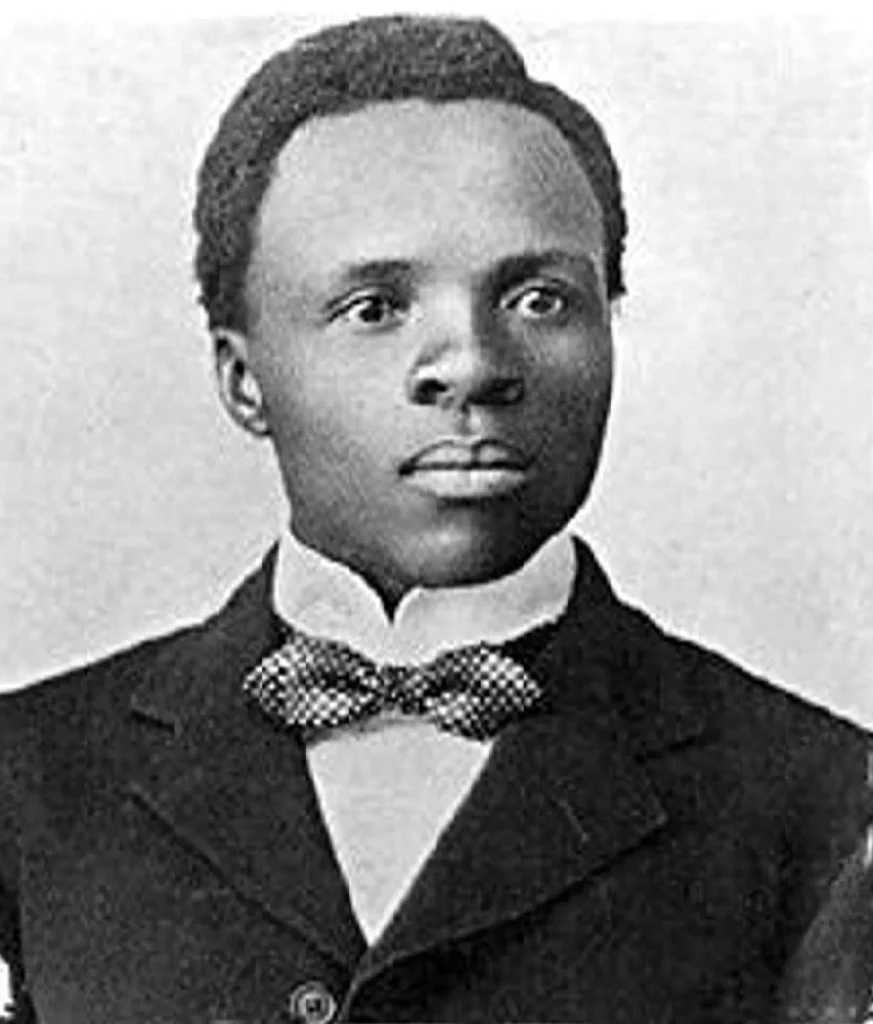
CAPTION: SOL PLAATJE
The commercialisation of the Black press
However, structural inequalities constrained the growth of independent African journalism. Limited access to capital, advertising revenue, printing facilities and distribution networks made it difficult for small publications to remain financially viable.
By the 1930s, many independent African newspapers were struggling to survive. The expansion of commercially oriented, white-controlled publishing interests, including Bantu Press and the Argus Printing Company, changed the ownership and operating environment of Black publications.
Bantu World, launched in 1932, became an important publication in the Black press, but its emergence also illustrated the growing influence of commercial publishing structures over the African readership.
Commercialisation did not necessarily eliminate Black journalism or its capacity to challenge the status quo. Nevertheless, concentrated ownership and resources raised enduring questions about editorial autonomy, the relationship between capital and content, and the extent to which African audiences could meaningfully control the media serving them.
These questions have not disappeared. They remain central to contemporary debates about media ownership, advertising dependence, editorial independence and the representation of historically marginalised communities.
Liberation politics, left-wing journalism and Black Consciousness
As the liberation struggle intensified, independent and alternative publications became increasingly important instruments of political education and mobilisation.
Left-wing and anti-apartheid publications, including New Age in the 1950s, sought to expose racial oppression, labour exploitation and the political economy of apartheid. Their work was part of a wider struggle to make visible the realities the state and its allies sought to conceal or minimize.
The banning of liberation organisations in the 1960s severely restricted political activity and narrowed the space available for dissenting voices. Publications and journalists associated with the liberation movement faced censorship, surveillance, intimidation and closure.
Yet the suppression of one generation of voices did not extinguish the desire to communicate. New forms of organisation and expression emerged, including those associated with the Black Consciousness Movement.
The South African Students’ Organisation (SASO) and its publications helped create spaces for intellectual resistance and the assertion of Black identity, dignity and self-determination. Steve Biko’s celebrated writings under the pseudonym “Frank Talk”, including the essays associated with I Write What I Like, exemplified the power of ideas to challenge the psychological and ideological foundations of apartheid.
Black Consciousness understood that liberation required more than changing political institutions. It also demanded that Black people transform how they understood themselves and their place in the world.
Publications became part of that process. They circulated ideas, challenged imposed identities and encouraged readers to question the political assumptions underpinning their oppression.
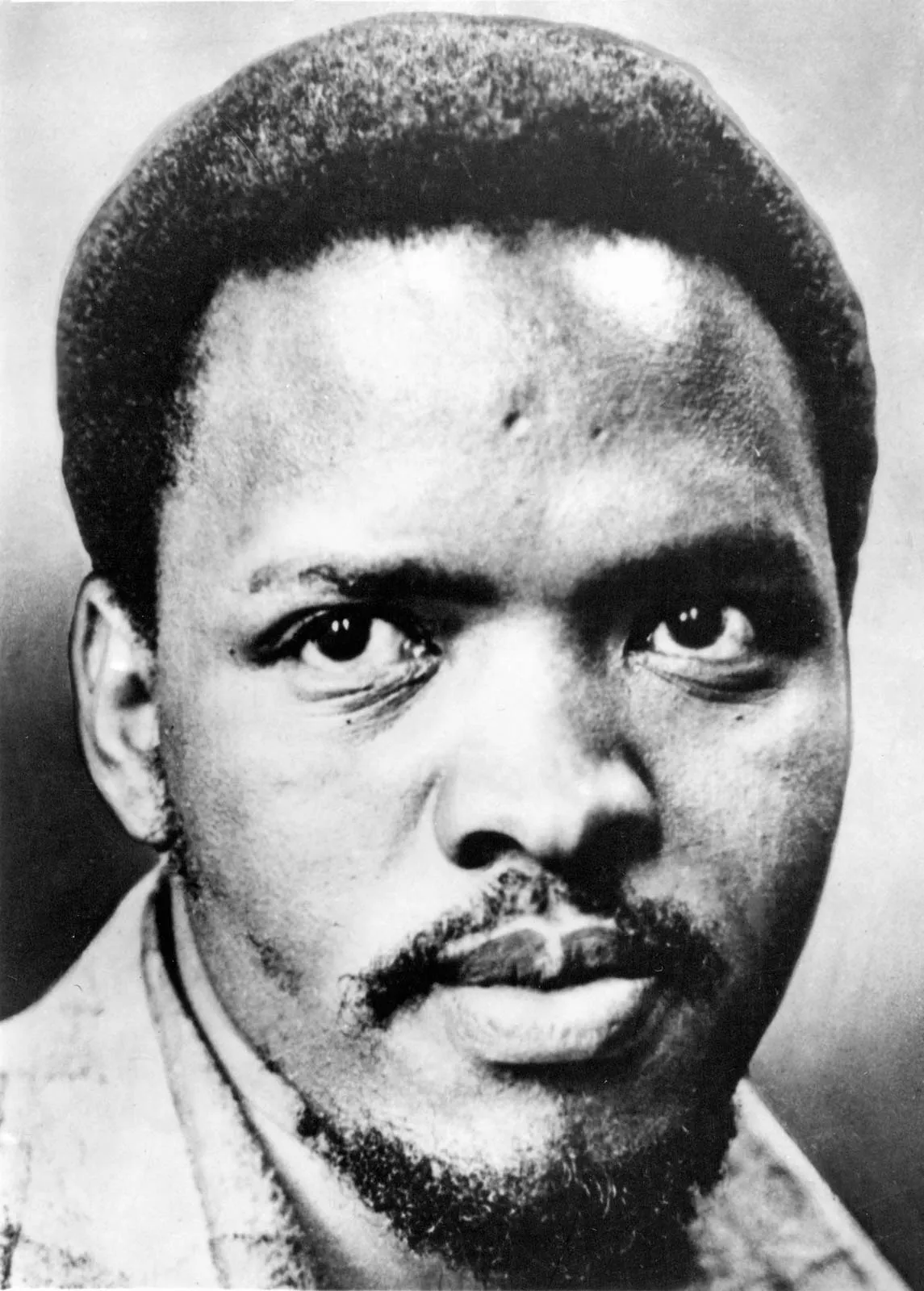
CAPTION: STEVE BIKO
Black Wednesday: 19 October 1977
Against this historical background, Black Wednesday unfolded.
On 19 October 1977, the apartheid government intensified its assault on independent and anti-apartheid media. The authorities banned The World and Weekend World, arrested journalists and activists, and repressed other publications and organizations.
The crackdown followed the detention and death in police custody of Black Consciousness leader Steve Biko in September 1977. The state’s actions reflected its determination to contain the growing influence of anti-apartheid ideas and prevent independent media from exposing the realities of its rule.
The closure of newspapers was not an isolated administrative decision. It aimed to dismantle the infrastructure through which information circulated, communities became politically conscious, and abuses of power came into public view.
Black Wednesday’s significance lies partly in what the state sought to silence. The World, in particular, had established a substantial readership among Black South Africans. Its closure deprived readers of a newspaper that spoke to their experiences and interests, while demonstrating how vulnerable journalism became when the state treated independent reporting as a threat to national security.
But the state could close newsrooms, seize publications and arrest journalists without eliminating the need for independent information. It could interrupt communication, but it could not permanently suppress the ideas and aspirations that sustained it.
In this sense, Black Wednesday became both a symbol of repression and a reminder of independent journalism’s resilience.
It also reinforced a lesson that remains pertinent in democratic societies: press freedom is not merely journalists’ freedom to publish. It is the public’s right to receive information, scrutinize those who exercise power, and participate meaningfully in decisions that affect their lives.
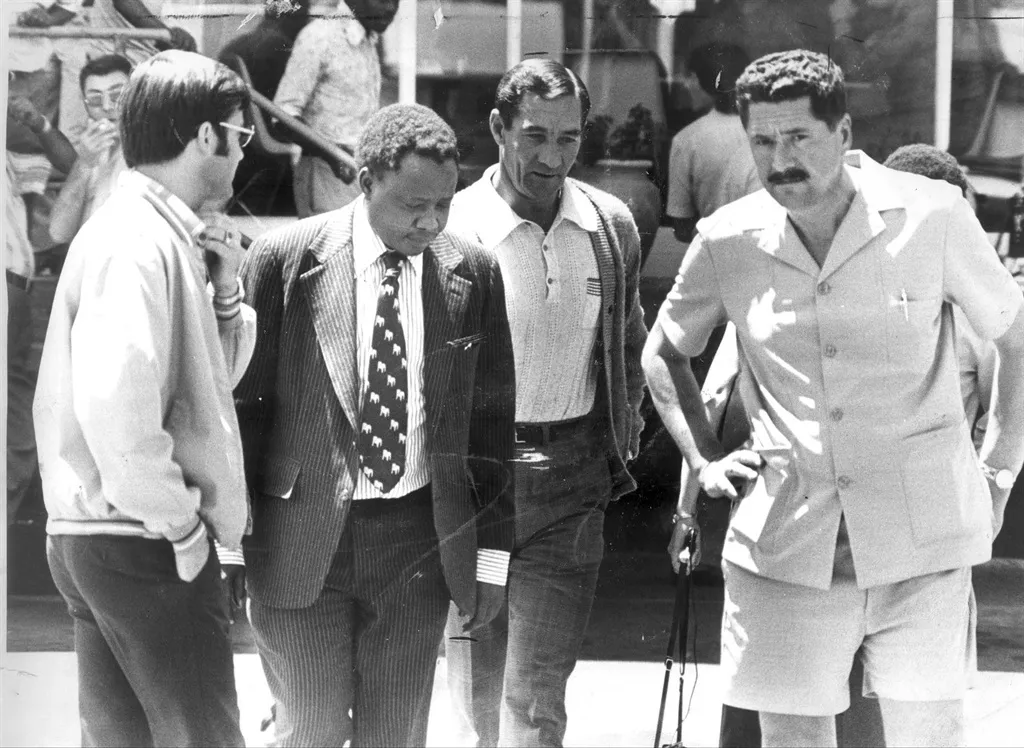
CAPTION: PERCY QOBOZA, EDITOR OF WORLD AND WEEKEND WORLD WAS FETCHED FROM HIS OFFICES AND TAKEN INTO DETENTION BY WHITE OFFICERS FROM THE APARTHEID SECURITY BRANCH OF THE SOUTH AFRICAN POLICE ON OCTOBER 19, 1977, AND THE TWO NEWSPAPERS HE EDITED WERE BANNED ON THE DAY
The emergence of a new generation of independent publications
The repression of the late 1970s did not end the independent media tradition. As the political environment evolved, a new generation of alternative publications emerged, many supported by non-governmental organizations, community structures, trade unions, and international anti-apartheid solidarity networks.
During the 1980s, publications such as Learn & Teach, Saamstaan, Grassroots, Work in Progress, the South African Labour Bulletin, Challenge, SPEAK and Upbeat helped sustain alternative voices. Community newspapers, including The Eye in Pretoria, also contributed to a growing ecosystem of local journalism and civic communication.
These publications differed in their audiences, editorial approaches and political orientations. Some focused on labour and workplace struggles; others addressed education, gender, youth development, community organising, political analysis or the everyday experiences of people living under apartheid.
Together, however, they helped create alternative channels for information to circulate beyond the state’s control and the established commercial press.
Their emergence mattered because independent journalism required more than courageous writers. It needed editors willing to publish difficult truths, printers prepared to take risks, distributors to move publications into communities, funders to support alternative voices, and readers who understood the importance of independent information.
International anti-apartheid organisations and donor networks helped sustain many of these initiatives, although financial support did not remove the operational difficulties or political risks associated with publishing under apartheid.
The state continued to monitor, intimidate and restrict independent publications. This included a lengthy detention of Zwelakhe Sisulu for his editorship of the New Nation. Yet these initiatives persevered, expanding the space for public debate and contributing to the wider struggle for democracy.
In this tradition, I joined Learn & Teach in August 1988, fresh from 13 months of detention under the State of Emergency as a university student leader.
For me, this was not simply an opportunity to work in publishing. It was an encounter with the practical meaning of media freedom: the responsibility to communicate ordinary people’s experiences, the courage to question authority, and the determination to ensure important stories did not disappear simply because they were inconvenient to those in power.
At Learn & Teach, we experienced censorship firsthand. Security forces repeatedly seized our publications, invoking State of Emergency regulations that granted authorities sweeping powers in the name of protecting the state.
The irony was unmistakable. A government that claimed to maintain order routinely used its powers to prevent information from reaching the public and to obstruct scrutiny of its own conduct.
Seizing a publication did not merely threaten its publishers’ livelihoods. It disrupted the relationship between writers and readers, denied communities access to information and weakened the public’s ability to understand and respond to the conditions under which they lived.
Yet we continued. The work had to be done because silence would have served the interests of those who wished to monopolise public discourse.
Looking back, I see that period as part of a much longer continuum of independent African journalism – from Jabavu and Dube to Plaatje, Biko, and the editors, journalists, and community publishers who kept alternative media alive during apartheid’s final decades.
The generations differed in their circumstances and methods, but they shared a fundamental conviction: the right to tell our own stories is inseparable from the struggle for freedom.
*******
Saul Molobi is the former Editor-in-Chief of Learn & Teach magazine and currently CEO of Brandhill Africa, a pan African brand management agency