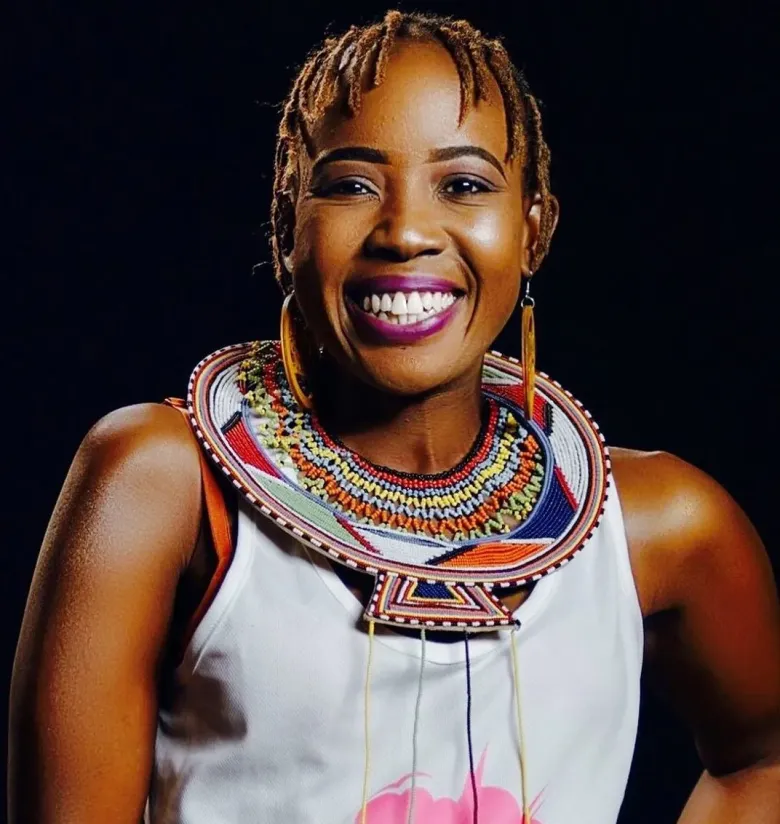

Len Kalane
Johannesburg has never lacked for personalities willing to fight over it. But few entrants into this year’s mayoral race have arrived with a resume quite like Nontsikelelo “Ntsiki” Mazwai’s.
For two decades, Mazwai has been one of South Africa’s most recognisable — and most argued-about — public voices. A poet, musician, author and television personality raised in Soweto and Johannesburg, she built her name on refusing to soften her opinions, whether the subject was gender politics, the entertainment industry, or immigration. That same instinct, she says, is what finally pushed her past the point of commentary and into candidacy.
“Today, I refuse to remain an armchair critic, a keyboard warrior,” she told reporters at her campaign launch this week, announcing that she will run for mayor of Johannesburg under the banner of the Land Party in November’s local government elections.
A Small Party’s Big Swing
The Land Party is not a household name. Founded in Hermanus in 2018 and officially registered in January 2019, it has built its identity around an unusual economic blueprint for South African politics: development policy modelled loosely on China’s approach, with an emphasis on collective farming, land rights and local job creation. It is now attempting to break into the country’s most fiercely contested metro.
Party leader Gcobani Ndzongana has been candid about the strategic logic behind recruiting Mazwai. Speaking to reporters after her announcement, he framed the decision not as a celebrity stunt but as a deliberate play for younger voters — specifically the generation of South Africans born around or after 2000, who he believes are more likely to respond to a familiar cultural voice than to a conventional party structure. Mazwai’s large social media following and her history of blunt, viral commentary, he argued, are assets a small party can’t otherwise buy.
The Pitch
Mazwai’s campaign platform leans heavily on the language of restoration and service delivery — themes nearly every Johannesburg candidate this cycle is running on, given the metro’s well-documented struggles with water outages, potholed roads and municipal dysfunction. She has pledged to prioritise dignified housing for Alexandra, fix crumbling infrastructure, and pursue what she calls “responsible” foreign investment that puts South Africans first.
Where she diverges from the pack is on labour policy. Mazwai is campaigning on a proposal to mandate that 90% of Johannesburg’s workforce be South African, capping foreign labour at 10% across the city — a position that places her firmly inside the country’s broader, increasingly heated debate over immigration and jobs. She has also voiced support for tighter border enforcement, a stance the Land Party has echoed in its own messaging about what it calls the security risks of “porous borders.”
“I carry in my heart the story of this city, its painful history of repression, its days of glory, and the difficult chapter it is living through right now,” she said in her launch speech, framing her candidacy as personal rather than purely political.
A Crowded, Skeptical Field
Mazwai enters a mayoral race stacked with far more conventional political operators: the DA’s Helen Zille, ActionSA’s Herman Mashaba, Rise Mzansi’s Lukhona Mnguni, the Patriotic Alliance’s Kenny Kunene, and the IFP’s Mlungisi Mabasa, with the ANC still weighing a shortlist that includes incumbent mayor Dada Morero. Against that field, a candidate with no prior governing experience and a public history defined more by controversy than by policy work is, by her own party’s admission, a gamble.
That controversy hasn’t stayed in the past. Mazwai has previously been sued over public comments, has drawn criticism for remarks on feminism, and has taken combative positions in South Africa’s ongoing immigration debate — most recently warning against joining anti-immigration marches, drawing on what she described as her own experience of being left legally and financially isolated after a prior controversy. Ndzongana has pre-emptively defended her against character attacks, invoking the language of “restorative justice” and “second chances” in public statements since her nomination.
Public reaction to her candidacy has split sharply. Some have welcomed a fresh, outspoken face willing to challenge the status quo; others have questioned whether celebrity recognition can substitute for administrative capacity in a city facing genuine infrastructure and governance crises. Social media commentary since the announcement has ranged from encouragement to open skepticism, with some critics noting a broader trend of high-profile figures launching their own parties rather than working within existing structures.
Whether Mazwai’s name recognition translates into votes — and whether the Land Party’s underdog strategy pays off in a metro this contested — will become clearer only when Johannesburg goes to the polls on 4 November. For now, her candidacy has already achieved one thing smaller parties rarely manage this early in a campaign: it has people talking.