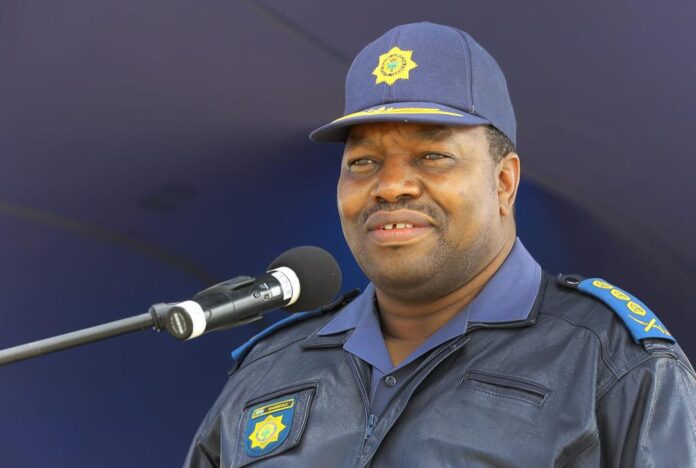

MAIN PHOTO: SUSPENDED POLICE COMMISSIONER GEN FANNIE MASEMOLA
The Mkhwanazi–Khumalo–Masemola line, IDAC’s second failed prosecution, and where the accountability question goes from here, THE PiE TEAM updates…
Executive Summary
On 15 September 2026, National Director of Public Prosecutions (NDPP) Advocate Andy Mothibi ordered the withdrawal of the criminal charges against suspended National Police Commissioner General Fannie Masemola, arising from the R228–360 million SAPS–Medicare24 tender awarded to alleged crime boss Vusimuzi “Cat” Matlala. Mothibi’s office says an internal review found no reasonable prospect of a successful prosecution. Masemola still has to appear in court for the formal withdrawal to be recorded.
This is the second major Investigating Directorate Against Corruption (IDAC) case to collapse in under a month. In August 2026, all charges against Crime Intelligence boss Lieutenant-General Dumisani Khumalo and six co-accused, relating to the appointment of Brigadier Dineo Mokwele, were withdrawn on the same basis. Both cases were built while Advocate Andrea Johnson headed IDAC; both were prosecuted by teams whose legal mandate and motives are now under direct scrutiny at the Madlanga Commission of Inquiry; and both cases targeted officers — Masemola, Khumalo, and by extension KwaZulu-Natal Commissioner Lieutenant-General Nhlanhla Mkhwanazi — who had publicly alleged political interference in policing.
The withdrawal does not, on its own, establish that IDAC officials committed any crime. It does, however, sharpen a live question the Madlanga Commission was already circling: were these prosecutions a good-faith exercise of prosecutorial discretion that simply didn’t hold up, or a directed campaign to discredit specific officers? That question, and what legal exposure it could create for the people who built the cases, is the subject of this note.

CAPTION: LT-GEN NHLANHLA MKHWANAZI
1. How We Got Here
The origin point is Lieutenant-General Nhlanhla Mkhwanazi’s press briefing on 6 July 2025, at which the KwaZulu-Natal police commissioner accused then-Police Minister Senzo Mchunu of interfering in the Political Killings Task Team (PKTT) and laid a criminal complaint against him. That briefing triggered the Madlanga Commission of Inquiry, which opened public hearings in September 2025.
Masemola and Khumalo both testified early in the Commission in support of Mkhwanazi’s account, describing a pattern in which all three men had been pushed out of senior acting roles as far back as 2012 for trying to reform Crime Intelligence, and in which the PKTT — which Masemola says was achieving “unmatched success” — was abruptly disbanded on ministerial instruction while he was on leave.
Within months of that testimony, IDAC moved against both men. Khumalo was arrested in June 2025 over the appointment of Brigadier Mokwele to a senior technical role in SAPS. Masemola was charged in April 2026 under the Public Finance Management Act over his alleged failure to prevent or act on the Medicare24 tender — notably not with corruption or fraud themselves, unlike his co-accused, who included Matlala.
- Evidence at the Commission from IDAC’s own investigators — including chief investigator Dylan Perumal and prosecutor Drushantha Ramsamy — described an internal operation dubbed “Project Diversion”, said to have been directed at building cases against Masemola and Khumalo specifically.
- Former IDAC head Andrea Johnson conceded at the Commission that the charges against Masemola did not fall under IDAC’s statutory mandate at all.
- Evidence also linked suspended Police Minister Senzo Mchunu to sharing a confidential Inspector-General of Intelligence report with IDAC, which is alleged to have fed the case-building against Khumalo and Masemola.
- Johnson resigned in August 2026, with President Cyril Ramaphosa waiving her notice period, shortly after this evidence emerged.
Justice Minister Mmamoloko Kubayi and Mothibi subsequently announced a six-month “reset” of IDAC — auditing its caseload, staffing and financial management — which is the process that produced both withdrawals.
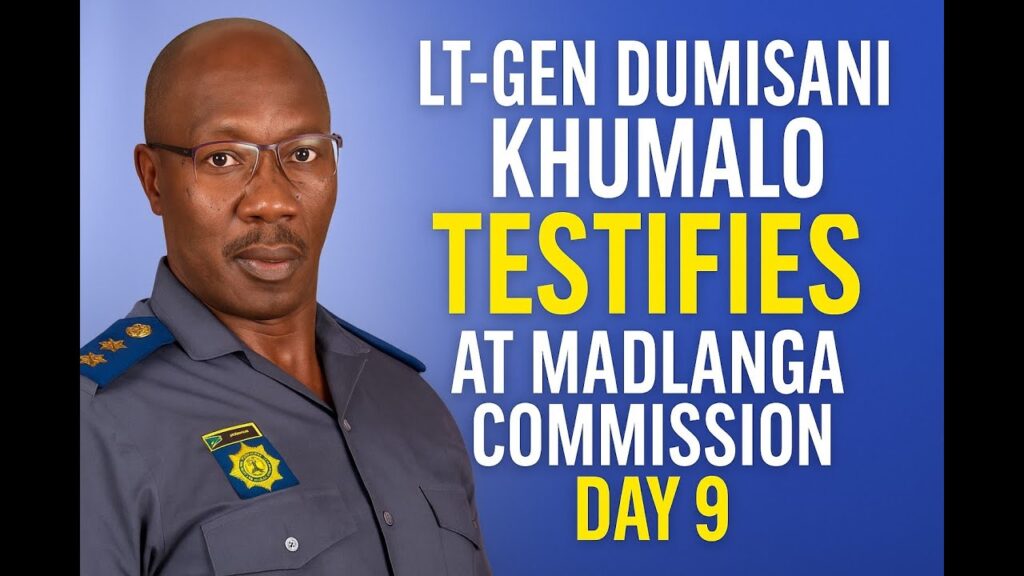
CAPTION: LT-GEN DUMISANI KHUMALO
2. Two Cases, One Pattern
| Khumalo & six co-accused | Masemola | |
| Alleged basis | Irregular appointment of Brig. Dineo Mokwele to a senior technical post | Failure to prevent/act on the Matlala-linked SAPS-Medicare24 tender |
| Charged | June 2025, at OR Tambo airport | April 2026, followed by suspension |
| Withdrawn | August 2026 (provisional, then formalised) | 15 September 2026 |
| Stated reason | No reasonable prospect of successful prosecution, per NPA review | Same — NPA review found no reasonable prospect of success |
Table 1: Comparison of the two withdrawn IDAC cases against senior police officers.
The parallel is what makes this more than a single embarrassing climbdown. Both men had testified, or were associated with testimony, that contradicted senior figures in policing and politics. Both were prosecuted by the same directorate, under the same former head, on charges an NPA-ordered review has since found could not stand up in court. IDAC’s own witnesses have already described one of these efforts, by name, as a directed operation rather than a routine investigation.
As it stands, the Mkhwanazi–Khumalo–Masemola account — that they were targeted for exposing interference — has not been disproved by events; if anything, the sequence of resignations, the “reset” of IDAC, and now two collapsed prosecutions are consistent with it. That is not the same as it being conclusively proven. IDAC investigators such as Col. Brian Padayachee have testified under oath that the Khumalo case was evidentially sound and free of political motive, and that dispute has not been resolved by a court — only by a prosecutorial decision not to proceed.
3. Why the Masemola Withdrawal Carries More Weight
- Rank and optics: a sitting national police commissioner standing in the dock alongside the alleged organised-crime figures he is constitutionally meant to be prosecuting was uniquely damaging to public confidence in policing, arguably more so than the Khumalo case.
- Mandate defect: Johnson’s own admission that the Masemola charge fell outside IDAC’s mandate is a more fundamental problem than a weak evidential case — it goes to whether IDAC had the legal authority to charge him at all.
- Second strike: one collapsed IDAC prosecution of a senior, PKTT-aligned officer could be an isolated misjudgement; two, on the same institutional fault lines, reads as a pattern to the Madlanga Commission and to the public.
- Timing: the withdrawal lands mid-way through IDAC’s own NPA-mandated six-month institutional reset, effectively becoming Exhibit A for why that reset was necessary.
- Election context: this unfolds against a backdrop of pressure on President Ramaphosa to be seen tackling corruption ahead of November’s local elections — the optics of the failure cut in more than one political direction.
For Masemola personally, a formal court withdrawal ends the immediate legal jeopardy but does not automatically end his suspension, which is a presidential/executive matter separate from the criminal case. Watch for whether Ramaphosa now moves to reinstate him, and how the Police Ministry (under whichever minister is in place following Mchunu’s own troubles) responds.
4. Could This Produce Charges Against IDAC Officials? A Non-Lawyer’s Map of the Terrain
This section sets out, in general and educational terms, the kinds of legal questions this situation raises under South African law. It is not legal advice, and it does not allege that any named individual has committed a crime — that is precisely the question the Madlanga Commission and any follow-on process would need to determine. Two things have to be kept separate: a withdrawal of charges for insufficient evidence, and a finding that the withdrawn prosecution was itself unlawful or malicious. South African courts and prosecutors withdraw cases for many reasons short of wrongdoing, including honest evidential misjudgement, so any of the possibilities below would require its own investigation and evidence, not simply an inference from the withdrawal.
Broad legal avenues that become theoretically relevant only if evidence of deliberate misconduct (rather than mere error) is established:
- Defeating or obstructing the ends of justice — a common-law offence that can, in principle, apply to state officials who manipulate an investigation or prosecution process for an improper purpose.
- Malicious prosecution — primarily a civil delict in South African law (allowing the wronged party to sue for damages) rather than a standalone crime; it requires proof the prosecution was instituted without reasonable and probable cause and with malice, and that it failed.
- Abuse of public office / corruption-related offences under the Prevention and Combating of Corrupt Activities Act (PRECCA) — relevant only if there’s evidence the prosecutions were pursued in exchange for, or to protect, some improper benefit, rather than out of misjudgement or institutional dysfunction.
- Perjury or fraud on the court — only if it is shown that evidence or affidavits were knowingly fabricated or misrepresented, as opposed to being investigated poorly.
- Disciplinary and professional-conduct routes — separate from criminal law: the Legal Practice Council for admitted attorneys/advocates, and internal NPA/IDAC disciplinary processes, are more likely first movers than a criminal charge, and have a lower evidential bar.
Practically, any criminal case against IDAC officials would most likely originate from: (a) findings and recommendations in the Madlanga Commission’s final report, which can refer matters for prosecution or disciplinary action; (b) a separate SAPS or Hawks investigation opened off the back of Commission evidence; or (c) a private prosecution or civil claim brought by Masemola, Khumalo or their co-accused. None of these has yet happened as of this writing, and each carries a materially different evidential threshold — civil malicious-prosecution claims are the most immediately realistic route, criminal charges the least, absent stronger evidence of intent than has been made public so far.
Given the stakes and the fact that named individuals could ultimately face real legal jeopardy, anyone actually pursuing this — as a complainant, a journalist doing more than background scene-setting, or an affected party — should treat this section as a starting map for further reading and take it to a practising South African criminal or delict specialist, not as a conclusion.
5. What to Watch Next
- The formal court appearance to record Masemola’s withdrawal, and any statement from him or his legal team afterward.
- Whether Ramaphosa lifts Masemola’s suspension now that the criminal basis for it has fallen away.
- The Madlanga Commission’s final report and recommendations — the likely vehicle for any formal findings of wrongdoing against IDAC officials or political figures.
- Progress of IDAC’s six-month institutional reset, and whether Kubayi’s ministry moves toward restructuring or disbanding the directorate, an option she has so far resisted calls for.
- The status of the separate Matlala/Medicare24 case against the remaining co-accused, which the state has said it intends to keep pursuing, with Matlala himself being rejoined to the main matter.
- Any civil claims for malicious prosecution or defamation lodged by Masemola, Khumalo or their co-accused against IDAC or individual officials.
Sources
Eyewitness News (15 Sept 2026); The Citizen (28 Aug 2026); eNCA; Daily Maverick (11 & 19 Aug, 5 Jul 2026); TimesLIVE (7 Aug 2026); Polity.org.za (21 Aug 2026); Al Jazeera (23 Apr 2026); Joburg ETC (31 Jul 2026); IOL (14 Jul 2026, 18 Apr 2026); News24/City Press (22 & 29 Sep 2025); Wikipedia — Madlanga Commission; PMG committee records.
This note is a journalistic and analytical synthesis of public reporting as of 15 September 2026. Facts around a live commission of inquiry and ongoing prosecutions may still change; several of the allegations described (e.g. “Project Diversion”, claims of political interference) remain contested and have not been finally adjudicated.