
By Lucky Nyathi | PiE+ | 28 September 2026
Meta is taking its artificial intelligence ambitions beyond smartphones and smart glasses with Muse Charm, a new pocket-sized device designed to give users direct access to its personal AI agent, Muse.
The next big gadget may not be another smartphone.
It may not even look like a traditional piece of technology.
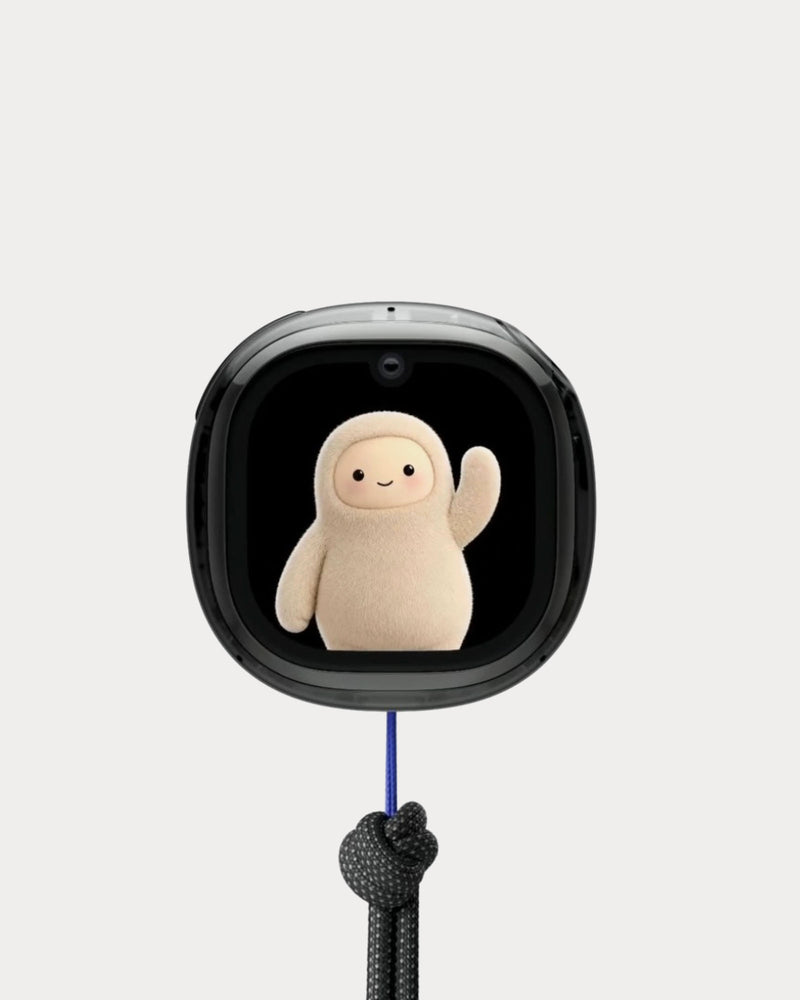
At Meta Connect 2026, Meta introduced Muse Charm, a pocket-sized device designed specifically for interacting with its Muse personal AI agent. The company says the device combines Muse with a state-of-the-art real-time voice model and is designed to fit comfortably in a pocket.
That sounds simple.
But behind the small device is a much bigger idea: Meta wants artificial intelligence to become something people carry with them rather than something they only open on a screen.
Meta Muse Charm: What is it?
Muse Charm is essentially a dedicated physical gateway to Meta’s Muse AI assistant.
Rather than opening an application on a smartphone, users can interact directly with Muse through the device.
Meta has described it as a device built for talking and interacting with Muse, while additional details about the hardware and its capabilities are expected later in 2026.
Reuters reports that the device is roughly the size of an Apple AirPods case and features a touchscreen of around two inches alongside built-in 5G connectivity. Meta is targeting the holiday season in December 2026 for its release, although the company has not announced a price.
That combination makes Muse Charm particularly interesting.
It is not trying to replace your smartphone outright.
Instead, it appears designed to make interacting with AI more immediate.
From AI assistant to AI agent
The biggest story here is not necessarily the hardware.
It is Muse.
Meta introduced Muse earlier in September as a personal AI agent designed to do more than simply answer questions.
According to Meta, Muse can help users complete tasks such as sending emails and booking travel, while working across connected services. Meta has also been expanding its integrations with platforms and companies including Walmart, Best Buy, Sephora, Expedia, Instacart, Notion, GitHub and Box.
That represents a broader change in how technology companies are approaching artificial intelligence.
Traditional digital assistants wait for instructions and provide an answer.
AI agents are being developed to take those instructions and actually carry out parts of the task.
For example, instead of asking an AI to find a hotel, the longer-term vision is to tell it what kind of trip you want and have the agent handle much of the research and booking process.
That is the world Meta is trying to build around Muse.
Why put AI into another device?
This is where Muse Charm becomes more interesting.
Most AI interaction still happens through a smartphone, laptop or web browser.
You open the application.
You type a prompt.
You read the answer.
Meta is experimenting with something more natural.
A device that is always available.
Something you can carry, interact with and potentially use without having to stop what you are doing to unlock your phone.

Meta is already moving in this direction with its AI glasses. At Connect 2026, the company announced that Muse will be integrated into its AI glasses, allowing users to access their personal AI agent hands-free.
Muse Charm gives Meta another route.
You do not have to wear glasses.
You simply carry the device.
A small screen with a big purpose
The reported two-inch display could prove important.
AI devices have experimented with voice-only interaction, but voice does not work perfectly for every situation.
Sometimes you need to see information.
Sometimes you need to confirm what an assistant is doing.
Sometimes a visual response is faster than listening to a long explanation.
The reported touchscreen could therefore give Muse Charm a useful middle ground between a voice assistant and a smartphone.
But there is also a danger.
If users spend most of their time looking at the screen, Meta could simply be creating another miniature smartphone.
The real test will be whether Charm makes interaction with AI simpler, rather than creating another interface users have to manage.
The post-smartphone race is heating up
Muse Charm arrives at a fascinating moment in consumer technology.
Technology companies are increasingly exploring devices that could eventually reduce our dependence on traditional smartphones.
Smart glasses are becoming more capable.
AI assistants are becoming more autonomous.
Wearable computing is improving.
And companies are experimenting with devices that allow people to interact with digital services without constantly looking down at a rectangular screen.
Meta has made this direction particularly clear.
The company says it is building a family of devices that allow people to connect with personal AI from different places and form factors.
Charm is one piece of that strategy.
But can an AI agent really become personal?
This may be the most important question.
Meta says Muse can remember information that matters to a person and use that context to make suggestions or help complete tasks.
That could make an AI assistant dramatically more useful.
Imagine an assistant that understands your normal routines, remembers your preferences and knows which services you regularly use.
But personalisation also creates a responsibility.
The more an AI knows about you, the more important privacy and security become.
Meta says Muse operates inside a dedicated secure virtual machine and that users control which services it can access. The company also says users can disconnect services and choose whether their interactions are used to train Meta’s AI models.
Meta says Muse also asks for user confirmation before sensitive actions such as sending emails or making purchases.
Those controls will matter enormously if AI agents become part of everyday life.
What could Muse Charm mean for Africa?
There is another interesting dimension to this technology.
Africa has repeatedly demonstrated that it does not always follow the same technological path as wealthier markets.
Mobile phones helped many consumers bypass traditional fixed-line infrastructure.
Mobile money transformed financial services in countries where conventional banking access was limited.
The same kind of leapfrogging could potentially happen with AI.
But affordability will be critical.
A sophisticated AI device is only useful if consumers can afford the hardware, connectivity and services required to operate it.
For African markets, connectivity costs, data availability, local-language support and digital literacy will be just as important as the technology itself.
If AI devices are designed primarily around wealthy English-speaking markets, their impact across Africa could remain limited.
If companies begin building for Africa’s linguistic and economic realities, however, the opportunity could be considerably larger.
The biggest unanswered question: price
For now, Meta is keeping one of the most important details under wraps.
How much will Muse Charm cost?
Meta has not announced a price.
The company has said it will share more information later this year, while reporting indicates that the device is targeting a December 2026 holiday release.
Price could determine whether Muse Charm becomes a mainstream gadget or remains an interesting piece of experimental hardware.
Consumers will inevitably compare it with something they already own: their smartphone.
If a phone can already access Meta’s AI assistant, users will need a compelling reason to spend additional money on dedicated hardware.
That reason could be convenience.
It could be speed.
It could be the ability to interact with AI without constantly reaching for a phone.
Or it could simply be the novelty of having an AI companion physically with you.
Is Meta building an AI companion?
There is something almost deliberately personal about the Muse Charm concept.
The device is not being presented as a traditional computer.
It is being positioned around interaction with an AI agent.
That distinction matters.
The computer asks you to operate it.
An AI agent increasingly asks what you want done.
That could eventually change how people think about technology.
Instead of learning which application contains a particular function, users could simply tell an agent what they want.
The agent becomes the interface.
And the device becomes the doorway.
PiE+ Perspective
Muse Charm is still an unfinished story.
Meta has revealed the concept, but the company has not yet provided the full specifications, final pricing or complete details about how the device will work in everyday situations.
That means it is too early to determine whether Muse Charm will become a genuine new category of consumer technology.
But its significance is already clear.
Meta is betting that the future of personal computing will not necessarily be about putting more powerful technology into bigger screens.
It may be about making technology less visible and more available.
Your smartphone may remain in your pocket.
Your glasses may sit on your face.
And an AI agent could quietly sit beside your keys, ready to respond when you need it.
That is the idea behind Muse Charm.
And if Meta gets it right, the most interesting thing about the device may not be what is inside it.
It may be what it allows us to stop doing.
Maybe the future of technology is not another screen.
Maybe it is simply a conversation.