
PiE Sports
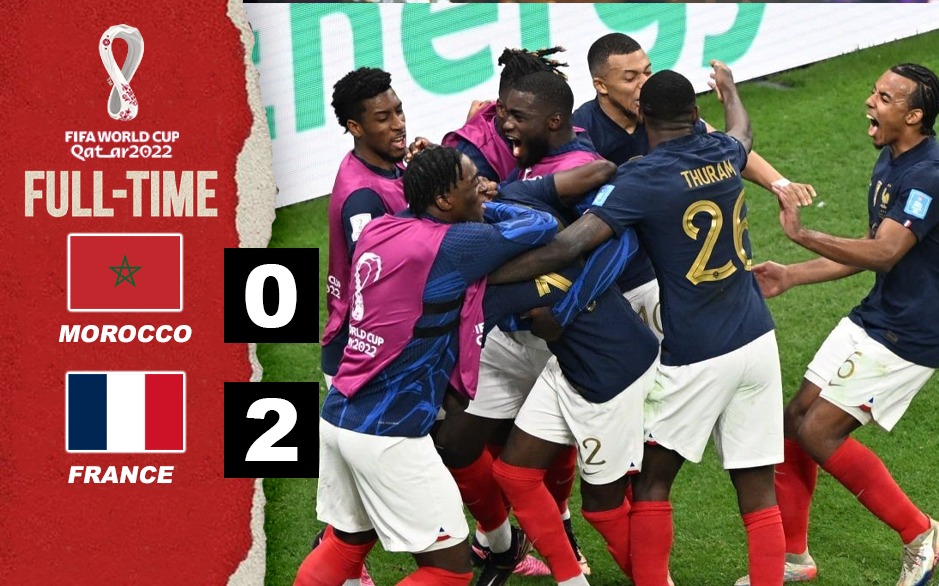
Foxborough, Massachusetts, July 9, 2026 — By the time Ousmane Dembélé wheeled away in celebration for France’s second goal against Morocco on Thursday evening, the writing was on the wall. A tournament that began with a record nine African nations in the knockout rounds — and hopeful talk of Africa’s first-ever semifinalist — ended with the continent shut out of the final four entirely. Morocco, the last African side standing, lost 2-0 to the tournament favourites, in an eerie repeat of their 2022 semifinal defeat to the same opponent.
It has been a World Cup of heartbreak for Africa, controversy for FIFA, tears for football royalty, and — with two of the pre-tournament giants gone in stunning fashion — one of the most wide-open finals in years.
How Morocco fell
This was billed as revenge for 2022, when Morocco’s fairytale run to the semifinals in Qatar was ended by the same French side. Instead, the script repeated almost beat for beat. France dominated possession and chances from the opening whistle, and after Kylian Mbappé was upended in the box, the French captain stepped up to the penalty spot in the 25th minute — only to be denied by a diving Yassine Bounou, one of several outstanding saves from the Moroccan goalkeeper. The two sides went into the break level at 0-0, with Morocco barely registering a shot.
The dam broke shortly after the hour mark. A turnover deep in French territory fell to Mbappé, who found space and drilled the ball past Bounou to open the scoring — his eighth goal of the tournament, level with Lionel Messi atop the Golden Boot race. Six minutes later, Dembélé doubled the lead with a driving solo goal that all but ended Morocco’s resistance. Coach Mohamed Ouahbi’s side, missing injured talisman Ismael Saibari, never found the attacking spark that carried them past the Netherlands on penalties in the round of 16.
Morocco leaves as the first African nation to reach consecutive World Cup quarterfinals — a genuine marker of progress — but also as the latest reminder of just how big the gap to the very top remains once the games get tightest.
Africa’s long march home: the elimination sequence
Africa arrived in North America with real optimism, sending a continent-record contingent into the knockout stage. Here is how, one by one, that hope faded:
- Tunisia — out in the group stage, losing all three matches (1-5 to Sweden, 0-4 to Japan, 1-3 to the Netherlands), the only African side not to escape the groups.
- South Africa — the first team eliminated in the knockout rounds, beaten 1-0 by co-hosts Canada in the round of 32 on June 28.
- Ivory Coast — bowed out 2-1 to Norway on June 30, undone by a late Erling Haaland winner after Amad Diallo’s equaliser had raised hopes.
- DR Congo — led England for over an hour before conceding twice in the closing stages, going down 2-1 on July 1.
- Senegal — eliminated the same day, 3-2 to Belgium after extra time, beaten by a controversial 120th-minute penalty that many felt should never have been given.
- Algeria — fell 2-0 to Switzerland on July 2 in what had been billed as one of the tournament’s fiercest grudge matches.
- Cape Verde — the smallest nation ever to play at a World Cup nearly toppled the defending champions, taking Argentina to extra time before losing 3-2 on July 3.
- Ghana — also went out on July 3, beaten 1-0 by Colombia despite having navigated a group containing England and Croatia.
- Egypt — the round-of-16 heartbreaker. Leading Argentina 2-0 with 11 minutes to go on July 7, the Pharaohs collapsed to lose 3-2 in a match that has become the tournament’s defining controversy (more below).
- Morocco — the last African flag standing, falling 2-0 to France in the quarterfinals on July 9.
A brutal pattern runs through several of these exits. Ivory Coast, Senegal, DR Congo and Egypt all lost matches they were winning or controlling deep into the closing stages — conceding late goals or late penalties rather than being outplayed for ninety minutes.
What Africa can take from this World Cup
The consistent theme from analysts watching this campaign has been about the final fifteen minutes, not the first seventy-five. Several African teams were competitive with, and at times better than, their opponents for long stretches, only to lose control of matches in the closing minutes through fatigue, tactical inflexibility, or an inability to manage a lead. Morocco’s own run — needing penalties to beat the Netherlands, and creating almost nothing in the first half against France — pointed to the same issue in miniature: quality in bursts, but a struggle to sustain control against the very best sides for a full match.
There is also a deeper structural point. Morocco remains, by number of tournaments and squad depth, the clear standard-bearer for African football at this level — Africa’s top-ranked side and sixth in the world. The gap between that side and the rest of the continent’s representatives is still significant, and closing it will likely take the kind of sustained investment in youth pathways and European club exposure that has underpinned Morocco’s own rise since 2022.
Egypt’s “robbery of the century”
No African exit generated more controversy than Egypt’s. Leading Argentina 2-0 in Atlanta with the match slipping away from the defending champions, Egypt had a second goal ruled out by VAR for a marginal shirt-pull in the build-up — a decision replayed endlessly on social media in the hours that followed. Argentina then completed a stunning comeback, winning 3-2 in stoppage time.
Coach Hossam Hassan didn’t hold back afterward, telling reporters he wouldn’t be watching the rest of the tournament and suggesting officials had come under pressure to keep Messi alive in the competition. Forward Mostafa Ziko broke down in tears in his post-match interview, saying the decisions had wasted the effort of an entire nation. The word “robbed” spread quickly across football media and social platforms — even New York City Mayor Zohran Mamdani weighed in publicly on the side of the Egyptians — while pundits like José Mourinho called it “daylight robbery.” Not everyone agreed: several football analysts who reviewed the incident argued the disallowed goal was, in isolation, a correct application of the handball/foul rule, even if the overall officiating standard across the match looked inconsistent. What’s undisputed is that the episode, combined with a separate row over a reversed red-card suspension for a USA player following a public request from President Trump, has left FIFA facing real questions about the consistency and optics of its officiating at this tournament.
Brazil’s tears
If Egypt’s exit was about anger, Brazil’s was about heartbreak. The five-time champions crashed out in the round of 16 to Norway, beaten 2-1 despite creating by far the better chances — 2.74 expected goals to Norway’s 0.73 — undone by a missed first-half penalty and clinical finishing from Erling Haaland at the other end. It was Brazil’s earliest World Cup exit since 1990. Neymar, introduced as a substitute and possibly playing his final tournament for the Seleção, broke down in tears on the pitch as the final whistle went, later telling reporters simply that he had tried, and that it was now over. Images of Brazilian players collapsing to their knees became one of the enduring pictures of this World Cup — a reminder that even football’s most decorated nation is not immune to the tournament’s ruthlessness.
Who’s left, and who plays whom
With the African contingent gone and Brazil, Germany, Portugal and the USMNT also eliminated, the final eight has taken on a distinctly European-and-Argentine flavour:
- France will face the winner of Spain vs Belgium (Friday, July 10, Los Angeles) in the first semifinal, in Arlington, Texas on July 14.
- Norway vs England (Saturday, July 11, Miami) and Argentina vs Switzerland (Saturday, July 11, Kansas City) will decide the second semifinal pairing, to be played in Atlanta on July 15.
France enter as the tournament favourites, and for good reason: they’re the only team to have won all five of their matches so far without needing extra time, Mbappé is in career-best form, and they’re chasing a third straight World Cup final appearance — something only two other nations have managed. Spain, unbeaten and yet to concede a goal all tournament, are the obvious danger to that path, with six consecutive World Cup clean sheets to their name. Belgium, who ended the USMNT’s tournament, have the individual quality to cause an upset but have looked less consistent.
On the other side of the draw, Argentina remain defending champions and have Messi still producing moments of magic, but their side has looked shaky at the back, twice needing dramatic comebacks (against Cape Verde and Egypt) to survive the knockout rounds — hardly the form of a team cruising to a repeat title. Norway, built around Erling Haaland’s extraordinary scoring form, are the tournament’s most refreshing story, reaching the quarterfinals for the first time in three attempts. England, under Thomas Tuchel, have ground out results without hitting top gear, while Switzerland are the surprise package of the bottom half of the draw.
The final picture
If you’re backing France to go all the way — as plenty are, given their form, depth and Mbappé’s scoring streak — the most likely obstacle isn’t Spain’s attack, but their defence: nobody has broken it down yet. A France–Spain semifinal, if it materialises, would arguably be the match of the tournament before the final itself. On the other side, Argentina’s recent shakiness makes them more vulnerable than their pedigree suggests, and either Norway or England could plausibly end Messi’s chance at a fairytale send-off.
Put it all together and the shape of the tournament’s final week looks like this: France as the team to beat, Spain as the team most likely to beat them, and a genuinely open second half of the draw where Argentina’s aura is doing more work than their defending currently justifies. Whoever emerges, it will be a European or South American name lifting the trophy on July 19 in New Jersey — for the fourth World Cup in a row, Africa’s wait for a first-ever finalist goes on.