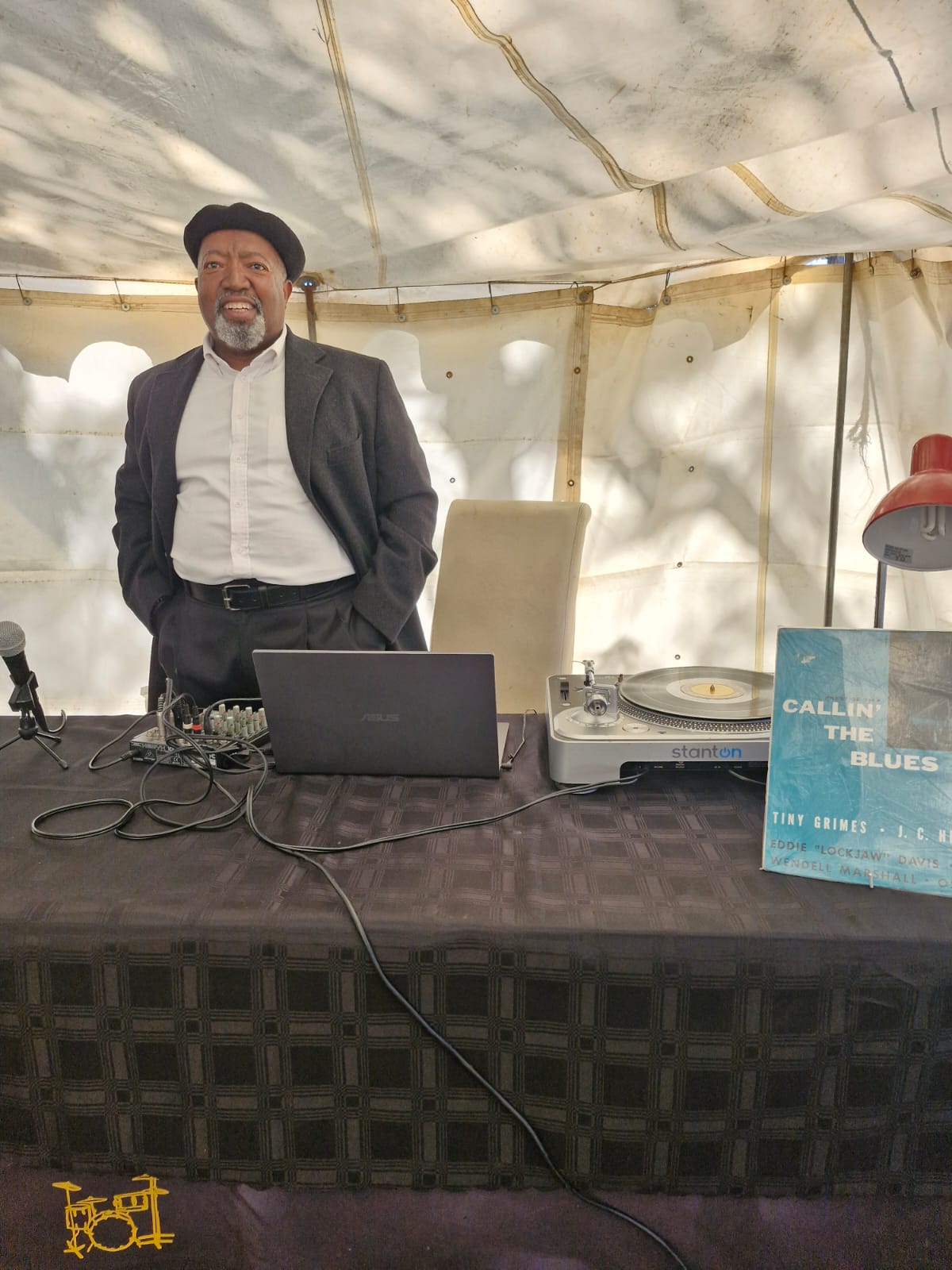

CAPTION: THE MAN AT THE DECKS – REUBEN HUMA
LEN KALANE
Somewhere in Brackenhurst, behind a perfectly ordinary suburban gate, there is a garden that most people only discover once they are standing in it. Ask Reuben Huma about the woman whose children bought her a ticket and drove her there, and he will smile before you reach the end of the question. She stepped out of the car, he recalls, a little disappointed. She had been expecting a park. Then she walked through to the back yard and was, in her own words, blown away.
That reaction is the whole idea. In a country where live music for young adults has come to mean amapiano and big-stage festivals, and where jazz is something you catch once a year at a major festival or in a members-only club, Huma has quietly built something different: a jazz afternoon under the trees, on the lawn, beside the pool, with a crowd dressed from head to toe in white.
Six weeks from now, on Wednesday 16 December, Jazz In The Garden returns for its marquee session of the year, on the same date, in the same garden, where it all began.

A chubby boy, a notebook and a running club
To understand why Huma does what he does, it helps to know that he has never been able to enjoy anything alone. “I have always been a people’s person,” he says. “If I like something I would never do it alone but get others to follow or be part of it.”
Born in the 1950s in the North West, he moved to Johannesburg as a teenager and attended Orlando West High School, better known as Matseke High, one of Soweto’s best-known schools, in the era of the June 1976 student uprising. He started work in 1980 as a switchboard operator and joined the Johannesburg Stock Exchange in 1982, where he stayed until he retired in 2017.
That same year, 1982, he decided to do something about being the chubby boy he had always been. He began walking 5 km a day. Within weeks he could run. Then came the realisation that running by himself was no fun at all. So he went out with a pen and a small notebook and stopped every runner he met on the road to ask for their particulars. The recruitment drive worked: in 1983 he founded the Meadowlands Athletic Club in Soweto, which still exists today.
Soccer followed, although by his own admission he hardly played. He was the club secretary. Later he co-founded a stokvel called Airport 80, and it was there, he says, that the music bug really bit.
Monday blues over the wire fence
The stokvel crowd played R&B and soul, but jazz was always in the air. In those days it was considered the music of the “amagrootmane”, the grown men, and their sisters, the “amasusters”. Township yards were separated by wire fencing rather than the precast walls of today, and a curious young man could stand at the fence and watch the grown-ups play and dance to jazz. The most popular session was the Monday blues.
It left a lasting impression: jazz as something shared across a fence, in a yard, among neighbours. Not behind a door, and not for members only.
“What attracted me was their style of play. They would play matlapa, hot, deep jazz, in the afternoon, and after six they would swing until everybody goes home.”
Katlehong, and a quiet frustration
In 1990 Huma married and went on to raise three children, two boys and a girl. Around the year 2000, a friend invited him to a jazz session in Katlehong, on the East Rand. He was taken aback, in the best way, and within months he had joined one of the clubs, Jam Session Unlimited, as a player. There was a scramble to build a collection: he had a few LPs and CDs, but a member could be called to play at any session, so he had to start collecting quickly.
What drew him in was how the club played: matlapa, the hot, deep tunes, through the afternoon, and then a swing into the night. But after about three years he left. The reason was not a falling-out. It was a worry. The clubs, he felt, were not growing. They were not attracting new people, and especially not young people.
It is the same worry that anyone who loves a niche art form eventually has. Huma’s answer was not to complain but to do what he had done on the running track in 1983: invite people in.
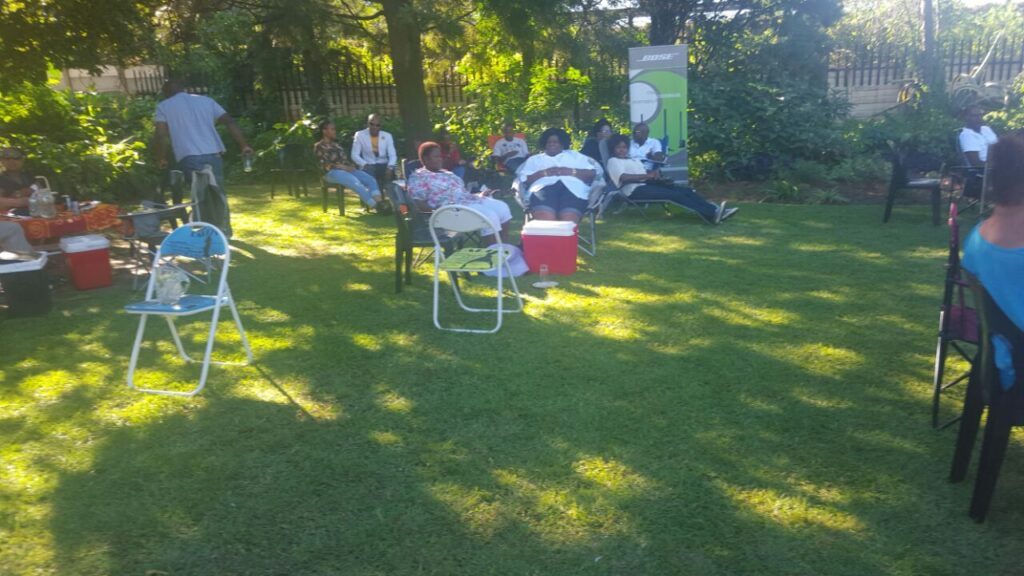
CAPTION: BACK IN THE DAY WHEN IT ALL STARTED WITH JUST A FEW FRIENDS
Fifteen guests and a garden
In 2013 he invited a few friends to his garden, just to jam. Fifteen to eighteen people came, curious to see whether this departure from traditional jazz sessions would appeal to anyone. He fed them. They brought their own drinks. It worked.
On 16 December 2014, Jazz In The Garden officially began. It was free, it happened once a year, and it had no theme. Three years in, he began charging R30 at the gate simply to cover his costs. By 2024, the tenth anniversary, 470 patrons were in the garden. “It was hectic,” he says, “but very enjoyable.”
The themes came from the patrons themselves, who asked for them. December is strictly all white. Easter Sunday is open to any theme. The winter edition, in July, is black and white. What began as a single December date is now a three-a-year calendar, though the December session remains the marquee.

CAPTION: REUBEN HUMA (THIRD LEFT IN WHITE HAT) AND THE CREW OF FRIENDS WHO STARTED IT ALL
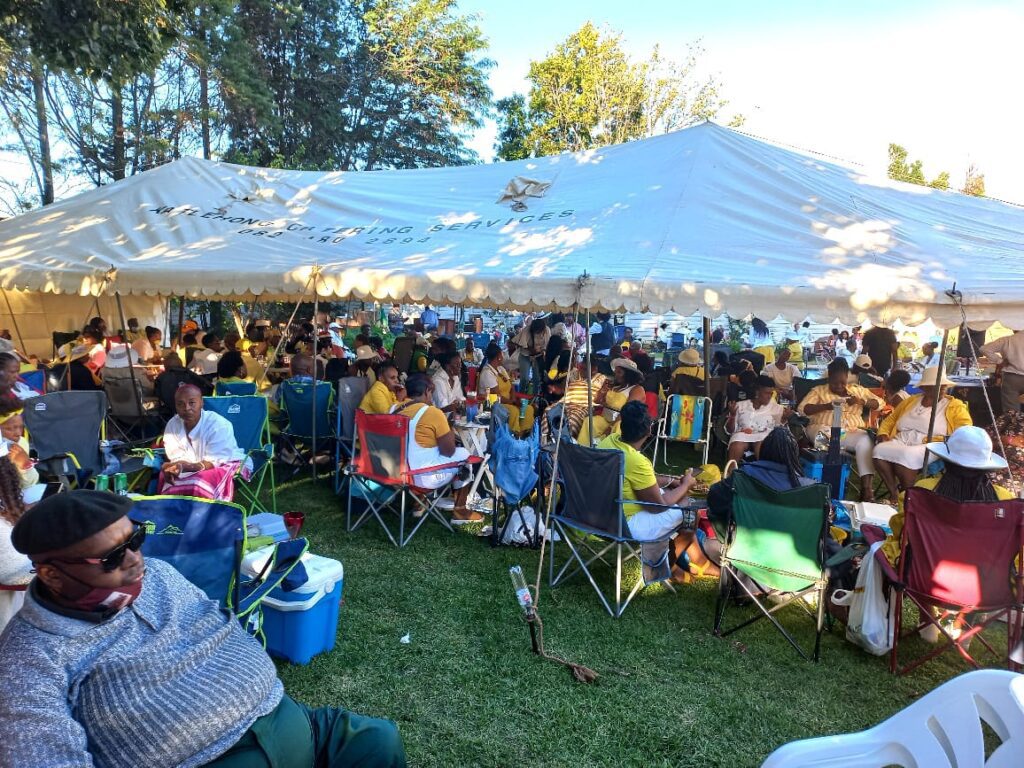
CAPTION: AND THE EVENT GREW
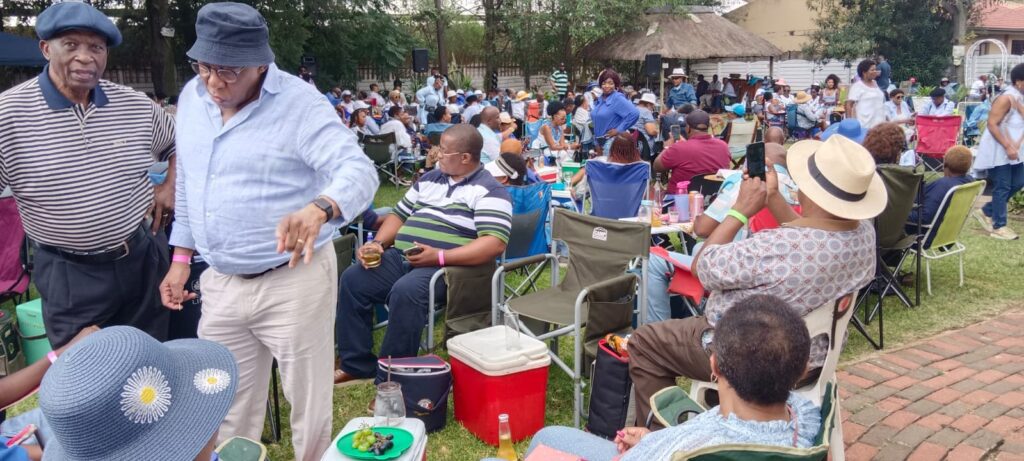
CAPTION: AND GREW AND GREW
Swing for the people who love to dress up
Huma is candid that he is not programming for the hardcore. What inspired him, he says, was bringing jazz to people who were not deep-jazz fanatics. He leans towards swing, which suits the crowd that comes: mostly women, many of whom have been waiting for exactly this sort of afternoon.
The music is a mix: vinyl, CDs, online sets and the occasional live trio, with no fixed playlist. The DJ is allowed to watch the crowd and respond to the mood. Names such as Mcoy Mrubata and Linda Kekana have graced the garden, among others. There is no VIP section, which means you may well stand next to someone famous without knowing it. “We treat everybody as a VIP,” he says.
Vendors in the front garden sell food, wine and perfume, and at one stage, clothes.
“Thank you for organising this event. At least we have some place to go and have fun as adults.”

CAPTION: VENDORS THAT SELL GOODIES AT JAZZ IN THE GARDEN EVENT
The afternoon the heavens opened
Ask for a favourite memory and Huma has plenty, but the rain at one Easter Sunday event is the one he returns to. The forecast had promised nothing. The heavens opened anyway. He phoned the tent supplier, who put up a marquee within the hour, though it could not cover everybody.
What happened next became the order of the day. When the rain fell, guests ran to their cars. When it stopped, they came back. Car, back. Car, back. Nobody left. The jazz carried on until 02h00 the next morning.
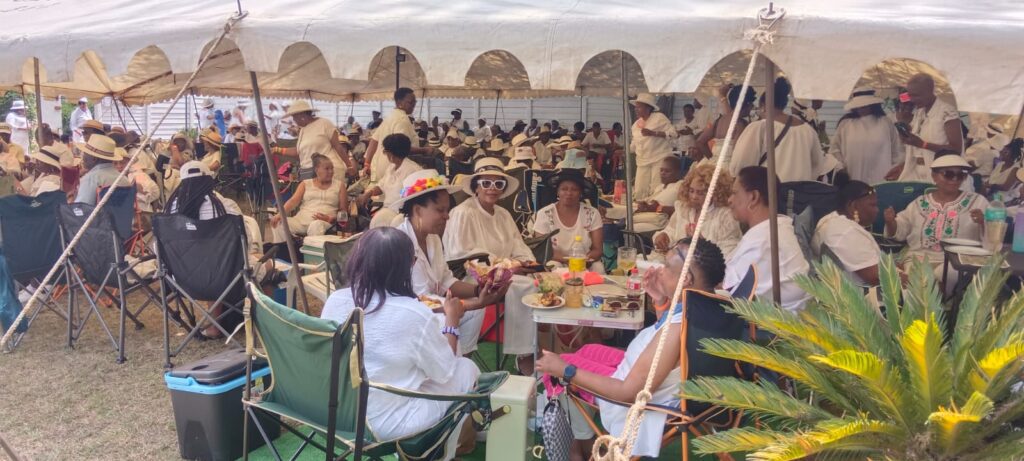
CAPTION: A TYPICAL CHILL SESSION AT THE JAZZ IN THE GARDEN
Small on purpose
Most promoters measure success by growth. Huma is moving the other way. He says he will never move Jazz In The Garden to a bigger venue. The private suburban garden, and the controlled numbers that come with it, are what people love. If anything, he would rather cap attendance at 350 and let the event become exclusive, even iconic.
The messages of thanks, he says, arrive all the time. For a man who loves to be seen among people, that is the real reward.

CAPTION: PHOTOGRAPHED GOING TO THE PREVIOUS JAZZ IN THE GARDEN EVENT
This December: what to know
The 2026 edition of Jazz In The Garden, presented as Reuben & Friends, is a summer jazz day in a private garden. The theme is All White. Come dressed accordingly, bring a garden chair and your own drinks, and plan to buy your food at the venue. The event is cashless at the gate, so tickets must be bought in advance through Pick n Pay or Webticket. Vendors may still accept cash, so it is wise to come armed both ways, with your card and a little cash in your pocket.
| Event | Jazz In The Garden presents Reuben & Friends |
| Date | Wednesday, 16 December 2026 (Day of Reconciliation) |
| Time | 12h00 – 21h00 |
| Venue | 10 Holzgen Street, Brackenhurst, Alberton |
| Theme | All White – summer jazz in a private garden |
| Tickets | R200 per person, at Pick n Pay or online at Webticket (cashless admission) |
| Bring | Your own garden chair and your own drinks |
| Food | Sold at the venue; bring a card and a little cash, as vendors may still take cash |
| Enquiries | Reuben Huma, 082 976 8481 (WhatsApp) |
With six weeks to go, and 16 December falling on a public holiday this year, there is little excuse to miss it. Just remember that the garden is not a park, and that it is all the better for it.