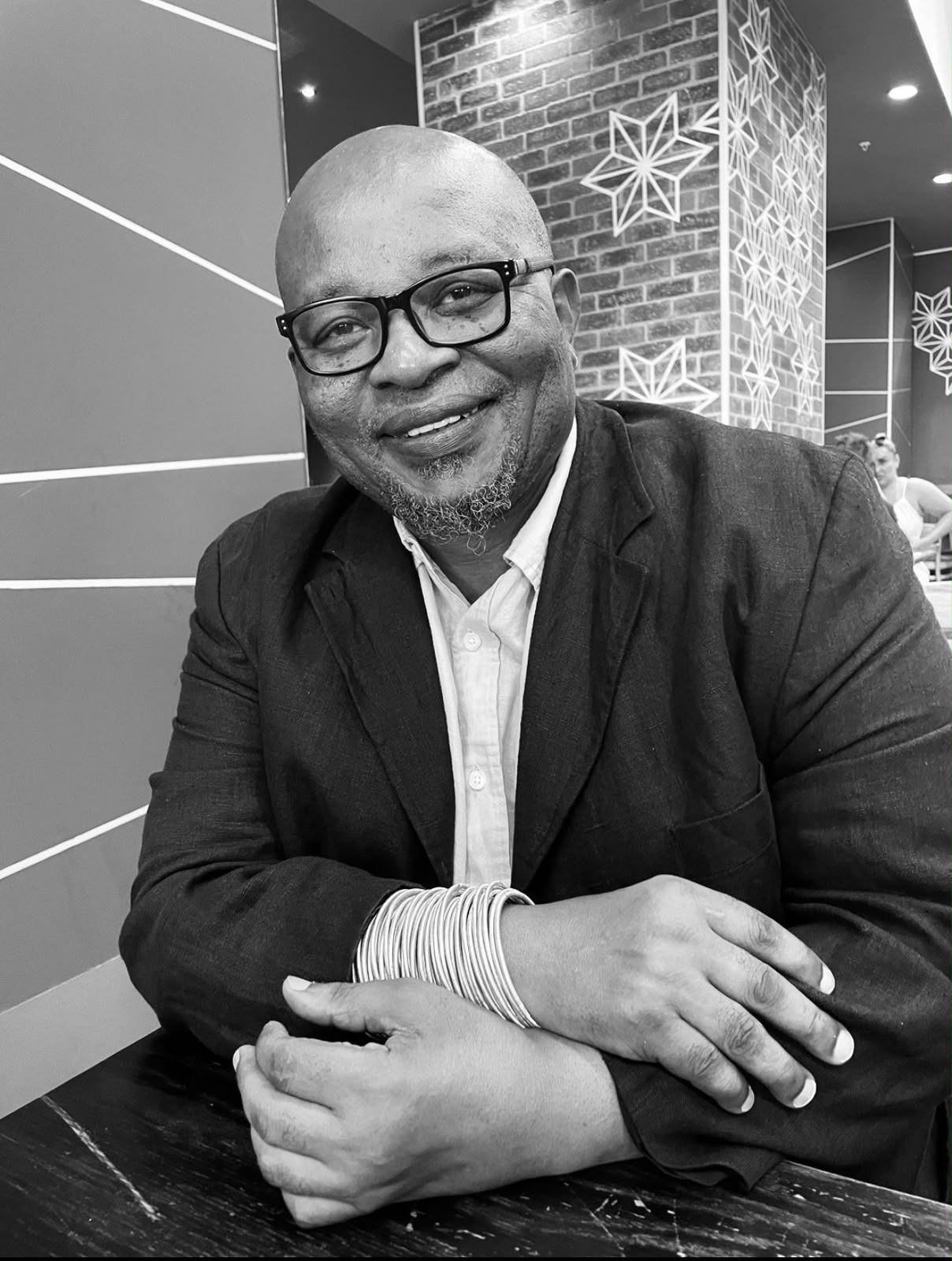

MAIN PHOTO: SAUL MOLOBI
By Saul Molobi
Johannesburg is once again preparing to welcome what has become one of the most significant weekends on South Africa’s cultural calendar: The Standard Bank Joy of Jazz, taking place on 25 and 26 September 2026 at the Sandton Convention Centre.
For 27 years, the festival has occupied a distinctive place in the country’s musical landscape. Conceived and launched by the legendary Peter Tladi, Joy of Jazz has grown into one of Africa’s most important international jazz gatherings – a meeting place where South African, African and global musical traditions converge.
For me, however, Joy of Jazz is more than an annual concert. It is a living archive of African musical expression, a celebration of artistic agency and a space where music, memory, culture and commerce intersect.
I was reminded of this particularly strongly in 2024, when the festival celebrated its 25th anniversary. My company, Brandhill Africa, published and launched Rhythms in Black and White: A Virtual Journey Through the World of Jazz, a unique jazz photography book accompanied by poetry, during the two-day festival.
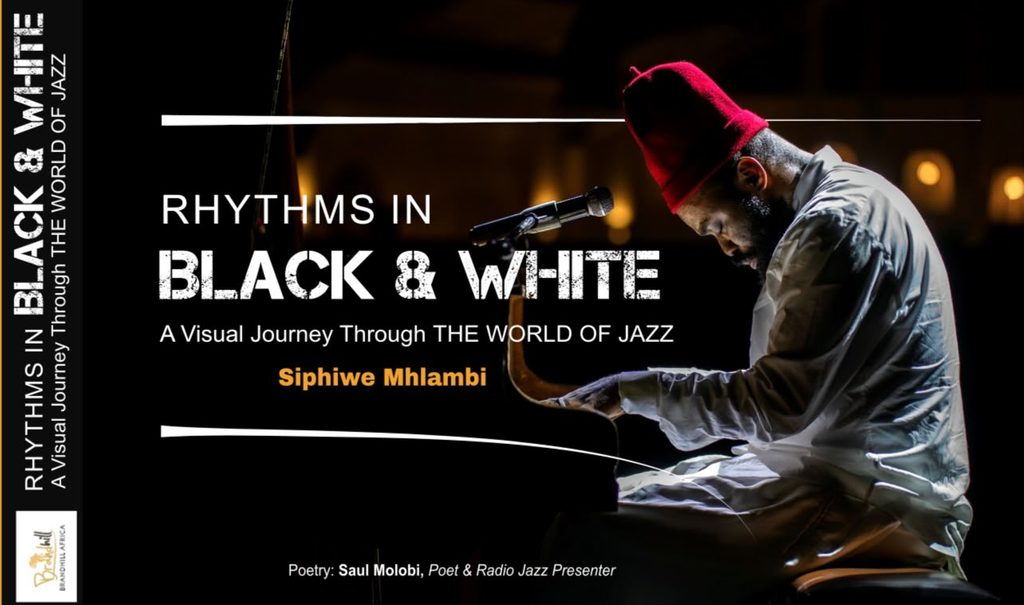
Written by Siphiwe Mhlambi and I, the book brought together photography and poetry to explore the visual, emotional and cultural worlds of jazz. A selection of the photographs was exhibited on the third floor of the Sandton Convention Centre, creating an additional visual dimension to the music unfolding across the festival.
That experience reinforced something I have long believed: jazz is not merely something we listen to. It is something we document, interpret, remember and continually reinvent.
Five stages, one jazz conversation
The 2026 edition brings together more than 50 artists across five stages, creating a musical tapestry that stretches from South Africa and the wider African continent to Europe, North America and beyond.
The programme is characteristically international and eclectic. Among the major international highlights are Beninese global music icon Angélique Kidjo and American saxophonist Kamasi Washington, both making their Joy of Jazz debuts.
The international line-up also includes Ibrahim Maalouf, Nubya Garcia, Tank and the Bangas, Floetry, Ola Onabule and Carmen Souza, among others.
Their presence reflects one of the defining characteristics of Joy of Jazz: its ability to position African jazz and related musical expressions within a genuinely global conversation.

CAPTION: ANGELIQUE KIDJO
Angélique Kidjo, in particular, represents the extraordinary reach of African musical creativity. A Beninese-born artist whose career has crossed continents and musical traditions, she has become one of Africa’s most internationally recognised cultural ambassadors. She has just become the first African musician and black African artist to receive a star on the Hollywood Walk of Fame. Her appearance at Joy of Jazz is therefore not simply another item on a festival programme; it is another affirmation of the continent’s contribution to global popular culture.
The festival’s musical palette is equally broad, encompassing Afro-jazz, neo-soul, jazz fusion, progressive jazz and experimental sounds. This diversity is important because jazz itself has never been static. It has always absorbed, challenged and transformed the sounds and circumstances surrounding it. Hence we talk about the jazz family tree.
Freeing the jazz spirit
Last year, organisers experimented with extending the festival into a third performance day on the Sunday. That Sunday programme will not form part of this year’s festival.
Instead, 2026 introduces another significant dimension: Free The Jazz Concert, presented on Thursday, 24 September, as part of the Heritage Day celebrations.
The concert offers music lovers free admission and an opportunity to begin their Heritage Day celebrations through live music.
There is, however, an important distinction between free and walk-in. To assist organisers with capacity and safety management and to avoid unaccountable numbers, audiences still need to book a complimentary ticket through the designated booking platform. In other words, admission carries no cost, but a ticket is still required.
It is a welcome initiative because Heritage Day is ultimately about celebrating who we are, where we come from and the cultural expressions that connect us.
And few forms of South African cultural expression have travelled as widely or carried as many layers of history as jazz.
More than a festival
It is no hollow claim that “The Standard Bank Joy of Jazz” is more than a music festival… It is a cultural and economic catalyst” – as their website states. The event has a significant impact on the economy of Johannesburg, the capital of Gauteng Province.
Johannesburg provides an appropriate setting for this continental initiative because it is one of Africa’s most important commercial, financial and cultural centres. It is the capital of Gauteng Province, which is itself the economic capital of Africa, with a GDP that ranks eighth on the continent and is larger than the economies of 46 African countries.
The province contributes 30% to South Africa’s GDP – equivalent to the combined contribution of the second- and third-largest provincial contributors, KwaZulu-Natal at 16% and the Western Cape at 14%. Johannesburg’s economy – contributing 16% to the country’s GDP – ranks thirteenth on the continent, making it larger than the GDPs of 42 African countries.
The event is staged in Africa’s richest square mile, Sandton, home to the Johannesburg Stock Exchange (JSE), further underscoring the intersection of culture, commerce and economic activity that the Joy of Jazz represents.
Consequently, when thousands of people converge on Johannesburg for a major cultural event, the economic impact extends beyond the ticket purchased at the entrance. Visitors require accommodation, transport, restaurants, entertainment, retail and other services.
The cultural economy and the broader economy therefore meet in places such as Joy of Jazz.
This is why cultural festivals should not be regarded simply as entertainment events. They are part of the ecosystem through which cities construct their identities, attract visitors, create markets and project themselves to the world.
Johannesburg does not merely host Joy of Jazz.
For one weekend, it becomes one of the world’s important meeting points for jazz.
The festival that happens all year
Another aspect of Joy of Jazz that deserves recognition is that the festival is not a once-off event that suddenly appears on the Johannesburg calendar every September.
It is the culmination of a broader programme of subsidiary activities, including special performances, workshops, commemorative initiatives and other engagements that sustain the jazz conversation throughout the year.
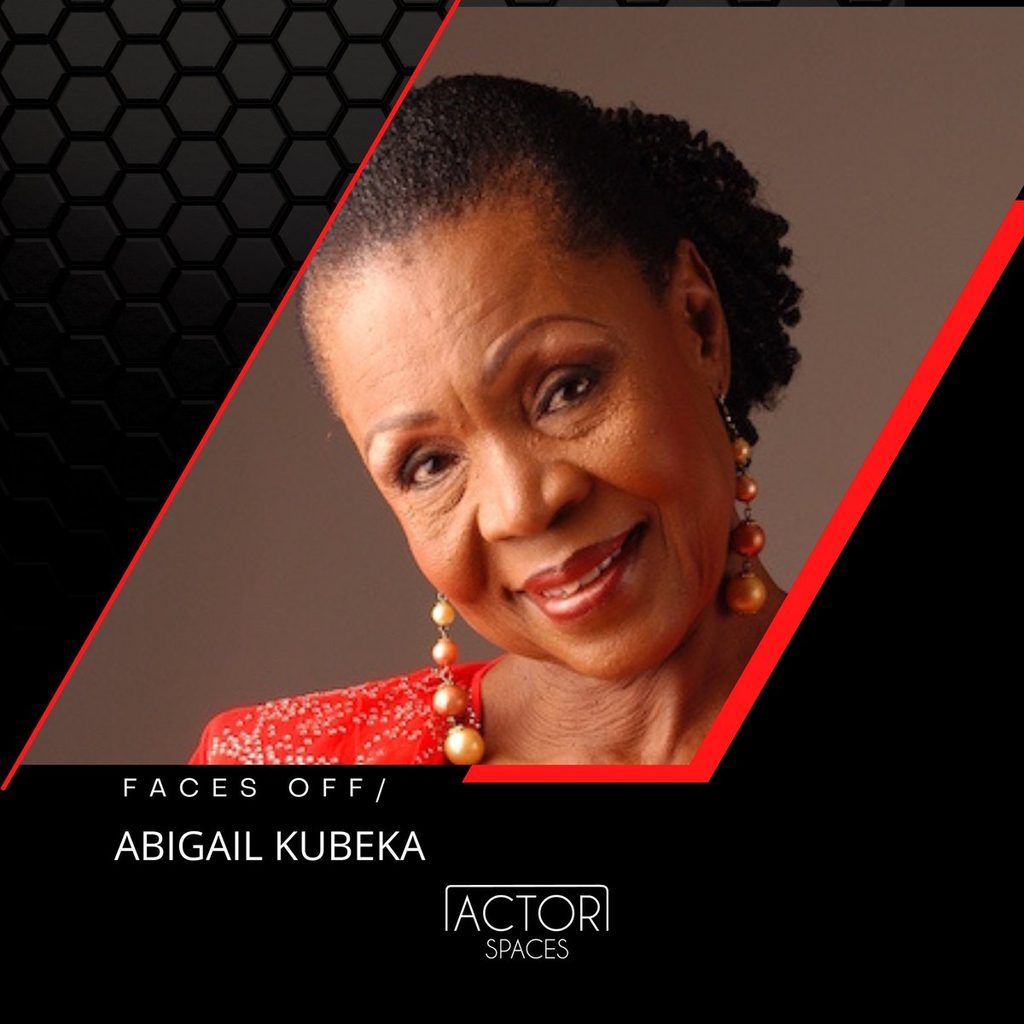
One such initiative was Ignite Her Soul, held on 30 August 2026 to honour the legacy of veteran musician Abigail Kubeka.
The gathering brought together influential women and leading voices from music, arts, culture, business and leadership for an afternoon devoted to celebrating women and honouring Kubeka’s contribution to South Africa’s artistic and cultural heritage.
As Mantwa Chinoamadi, Standard Bank Joy of Jazz curator, stated in a media release:
“Through music, dialogue and shared memories, Ignite Her Soul Experience celebrated the strength, resilience and influence of women across generations, while recognising the enduring impact of Mama Abigail Kubeka’s contribution to the arts and cultural heritage.”
Such initiatives demonstrate that Joy of Jazz is not confined to the performance stage. It is also about memory, intergenerational dialogue, recognition and cultural continuity.
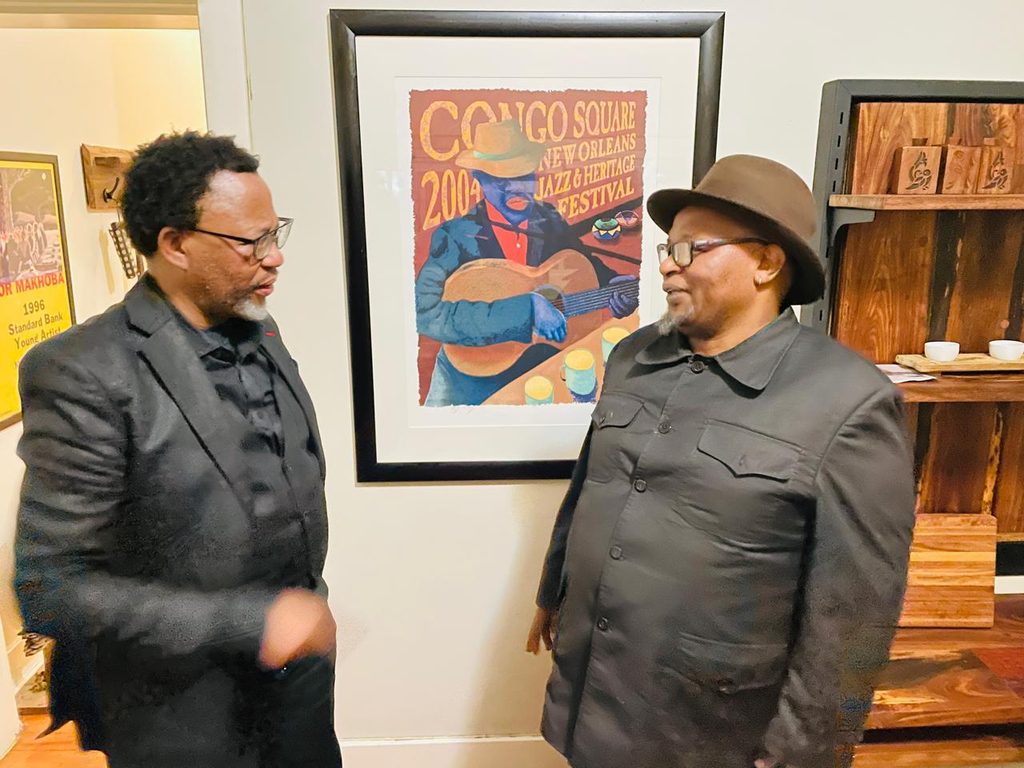
CAPTION: JAZZ GUYS, LESLIE DIKENI (LEFT) AND SAUL MOLOBI
When jazz becomes an obsession
Perhaps the most vivid illustration of what Joy of Jazz means to its devotees comes from a personal experience.
In 2024, my author friend Leslie Dikeni broke a rib in a freak accident and was admitted to a private hospital in Midstream.
After spending about a week in hospital, Leslie convinced his doctors that he was feeling considerably better and insisted on being discharged so that he could recuperate at home as an outpatient.
There was, however, something the doctors did not know.
Leslie wanted to attend Joy of Jazz.
His partner tried unsuccessfully to persuade him to stay at home. She then turned to me because Leslie was supposed to attend the concert with me.
I failed too.
Leslie was adamant that he had to attend. His justification was that he was conducting research for the book he was writing, Jazz and I: Music Agency and Power.
As an author and researcher myself, I understood the argument. As his friend, I was considerably less convinced.
Eventually, I made a commitment to take care of him.
And so Leslie attended Joy of Jazz –sedated, injured and determined.
He watched some of the artists he wanted to see, absorbing the performances and collecting material for his research. But the night eventually caught up with him. Once the effects of the painkillers began to wear off, the pain returned, and he could not remain until midnight. He went home.
By Tuesday, he was back in hospital. Yet he was happy. He had collected the material he needed for his book.
His only disappointment was that he had been unable to attend both days of the festival and see all the artists on his list.
That story has remained with me because it captures something difficult to quantify about jazz.
There is an emotional and intellectual investment in the music that cannot always be measured in conventional economic terms.
For some, jazz is entertainment. For others, it is memory. For many others still, it is research, identity, history, resistance, spirituality and a way of understanding the world.
For Leslie, in that moment, it was all of these things.
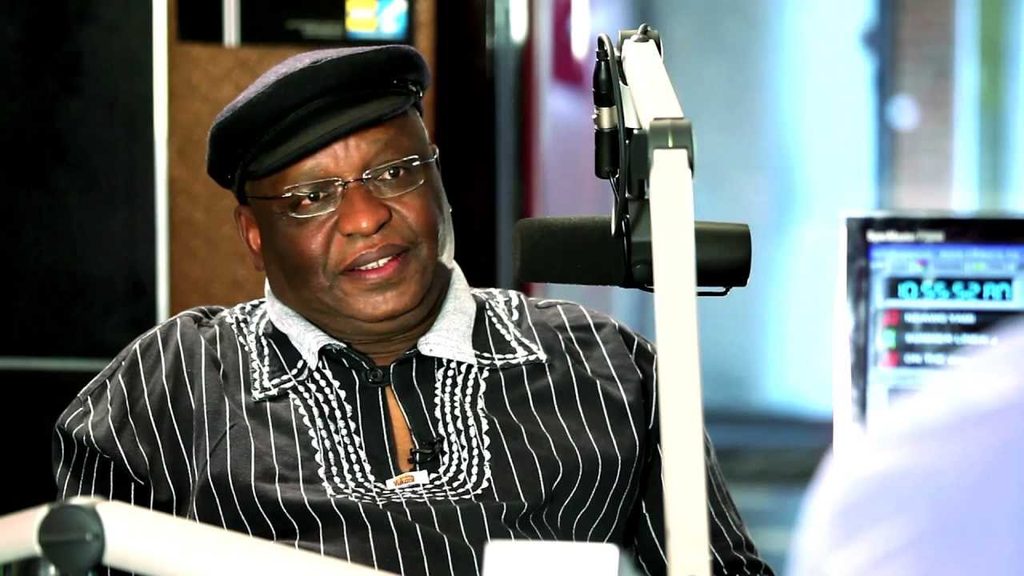
VISIONARY PETER TLADI
Remembering the man who started the journey
And perhaps this is where the story must ultimately return to Peter Tladi.
On 26 September 2025, I paid tribute to him on my jazz programme, “Sunset Serenade” on 101.9 Chai FM, and subsequently shared the tribute on TikTok under the title: “The Doyen of Joy: Peter Tladi and the song without end” (click to listen to the rendition of the poem).
The title captured my sense of what Tladi gave South African jazz. He did not merely create another concert. He created a platform. And those in the know will tell you how much platforms matter.
They provide artists with audiences, audiences with experiences, cities with cultural identity and generations with memories.
Twenty-seven years after Joy of Jazz was conceived and launched, its continued existence is itself part of Tladi’s legacy.
Every saxophone solo, every bass line, every drumbeat, every vocal performance and every conversation between musicians and audiences adds another chapter to that legacy.
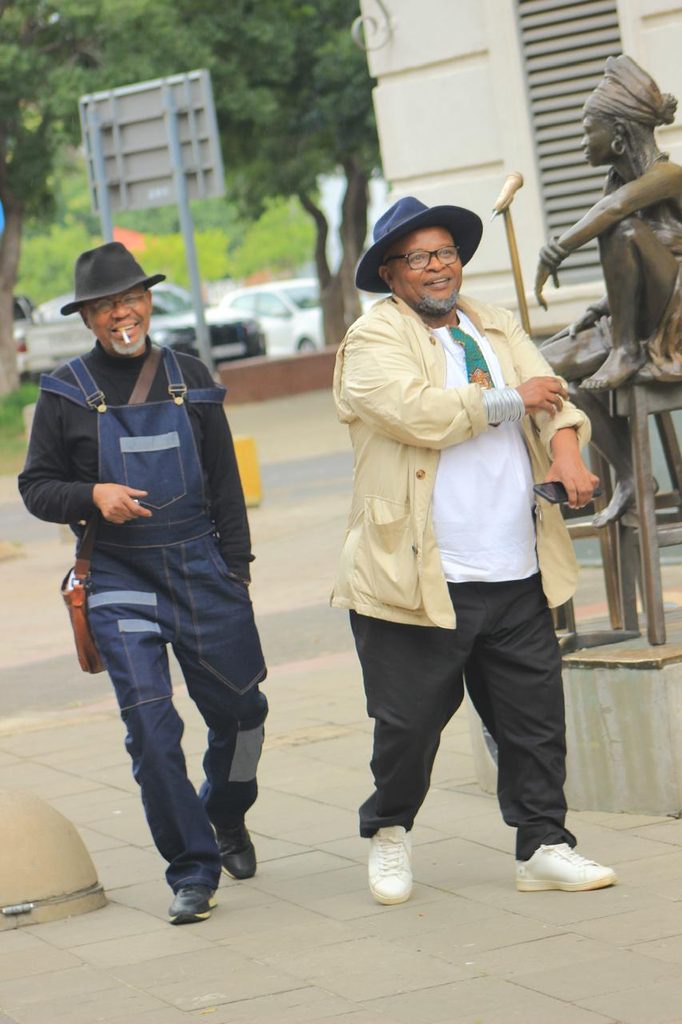
STEPPING OUT IN THE TOWN – LESLIE DIKENI (LEFT) AND SAUL MOLOBI
Johannesburg, jazz and the world
As Johannesburg prepares to receive the 2026 edition, the Sandton Convention Centre will once again become a crossroads of musical cultures.
There will be the established masters and the contemporary innovators. There will be African sounds speaking to American traditions, European influences encountering African rhythms, and musicians challenging audiences to listen differently.
There will be great food, great company and the relaxed festival atmosphere that has become synonymous with the Joy of Jazz experience.
But beneath the entertainment will be something deeper. A festival of this magnitude is also an assertion of cultural confidence.
It says that African cities can host international cultural platforms. Also, that African musicians belong at the centre of global cultural conversations.
Furthermore, it says that jazz – born from complex histories of migration, struggle, creativity and cultural exchange – continues to evolve.
And it reminds us that culture is not an accessory to society or the economy. Culture is a major contributor to the economy. It is part of diplomacy – it forges our identity and communicates to the world who we are. It is part of how cities and countries tell their stories to the world.
That is why the Standard Bank Joy of Jazz matters.
For the lifelong jazz aficionado, it is an essential appointment. For the newcomer, it is an invitation to discover. For Johannesburg, it is an opportunity to demonstrate once again why the city remains one of Africa’s great cultural crossroads.
And for those of us who have followed this journey over the years, it is another opportunity to celebrate the music, the musicians, the audiences – and the visionary who started the song. Peter Tladi’s song continues. And Joy of Jazz remains one of its most enduring refrains.
****
Saul Molobi is a brand architect and a jazz activist, writer, publisher and radio presenter.