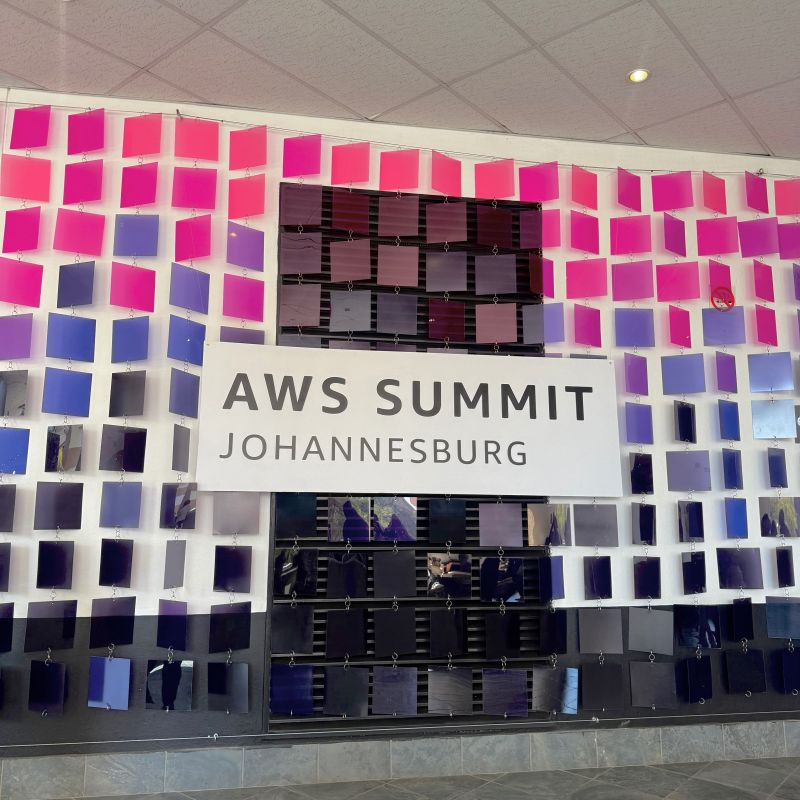

By Lucky Nyathi | PiE Magazine – Innovation
There is an undeniable energy that takes over when thousands of technologists gather under one roof, and the AWS Summit Johannesburg, held at the Gallagher Convention Centre in Midrand, delivered exactly that from the moment I arrived.
Getting In: Queues, Volunteers, and an Unshakeable Lecturer
Arriving at the venue, I was greeted by a queue stretching well around the entrance. As someone who naturally prefers observing over small talk, I found myself standing next to a systems engineer from a local tech firm. We chatted briefly about the sheer size of the crowd — a clear signal that cloud adoption across the region isn’t just growing; it’s accelerating year after year.
Thanks to an army of friendly volunteers directing the flow, registration moved quickly. Within minutes, I had my event badge, along with swag, food, and refreshment vouchers in hand. Next came the essentials: the queue for my official AWS Summit bag, followed immediately by the queue for coffee.
While holding my warm cup and trying to peacefully take in the bustling hall, a lecturer I’d bumped into earlier spotted me again. He was full of energy — eager to show me an email confirming his interview for a CIO position, tell me about his academic work, and detail his connections with big tech executives. As an introvert and a good listener, I mostly smiled and let him talk, even obliging a selfie and an exchange of contact details before we went our separate ways. Every summit has one of these encounters, and honestly, they’re part of the charm.
By 09:30 AM, the crowd had migrated toward Hall 5 for the keynote. A live band performing high-energy covers of trending tracks kept the atmosphere electric, setting the stage for the main event at 10:00 AM.
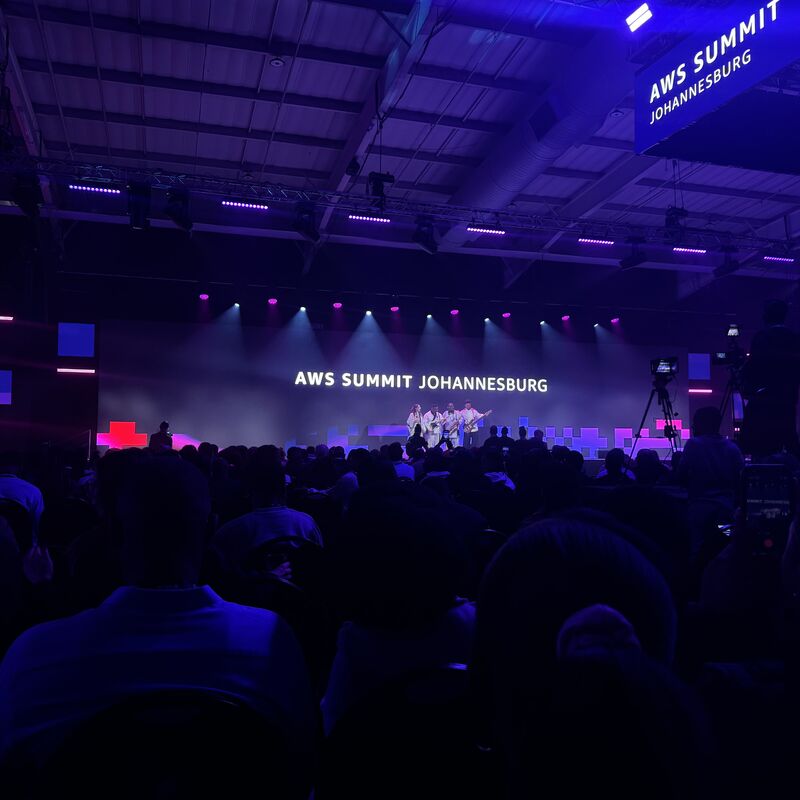
The live band performing high-energy covers on stage ahead of the keynote at AWS Summit Johannesburg.
Setting the Stage: Africa’s Leapfrog Moment
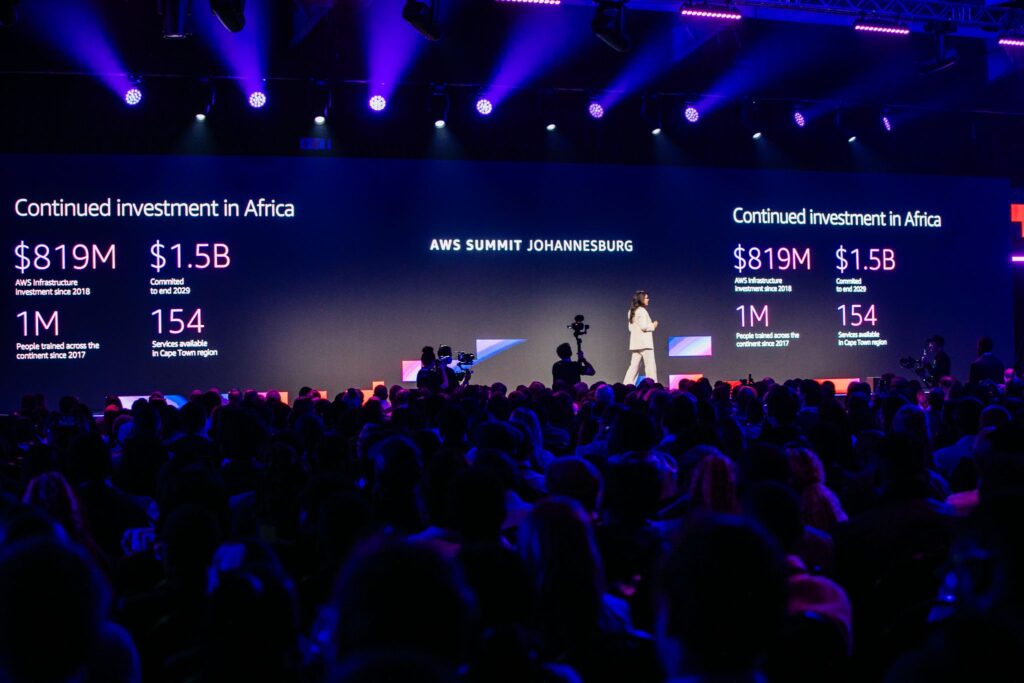
Jyoti Ball, AWS General Manager for Sub-Saharan Africa, addressing delegates during the keynote at AWS Summit Johannesburg.
The keynote opened with a regional perspective from Jyoti Ball, AWS General Manager for Sub-Saharan Africa. Her argument was simple, and on this continent, familiar: progress doesn’t have to happen in sequence, and Africa has the track record to prove it.
Ball reminded the room that the continent never built out copper landlines at scale before catching up with the rest of the world — it jumped straight to mobile. Fewer than 10% of connections in Africa run over fixed lines today, against roughly 115 million mobile connections and a mobile money ecosystem that has made the continent a genuine global leader in digital payments. That, she argued, isn’t a one-off success story; it’s a recurring pattern, and it’s the evidence AWS points to when it says AI adoption could follow the same trajectory.
She backed the thesis with numbers: Africa’s AI market is now valued at more than $16 billion, growing at roughly 27% annually — a rate that dwarfs the continent’s overall GDP growth of around 4%. While mature markets are busy retrofitting AI onto decades of legacy infrastructure, much of Africa is building from a comparatively clean slate, without the same legacy systems to unwind first. In her words, the continent has “an opportunity to leapfrog traditional technology adoption cycles and build for the future from the ground up.”
Tanuja Randery, AWS’s Managing Director for Europe, the Middle East and Africa, picked up the thread and made it concrete. She pointed to AWS’s own investment as proof the leapfrog thesis isn’t just a slogan: $819 million poured into African infrastructure since 2018, with a further $1.5 billion committed through the end of 2029. AWS’s regional skills programmes have trained over a million people across the continent since 2017, and the AWS Africa (Cape Town) Region now offers 154 services locally. Her summary of the mood in the room came down to three words — Africa is ready — and she was careful to stress that this wasn’t readiness in theory, but readiness now.
Standard Bank’s Operational Playbook
Taking the stage next, Standard Bank Group CIO Kgomotso Molabe shared the bank’s operational playbook for scaling cloud infrastructure across a continent with 54 countries, dozens of regulatory regimes, and just as many currencies to contend with.
Molabe distilled it into three principles: build a solid cloud foundation before anything else, foster a culture that treats mistakes as learning iterations rather than failures, and reinvent legacy workflows instead of simply patching around them. In the fireside conversation that followed with Randery, Molabe described an outcomes-first approach — starting with the business result the bank actually needs, and only then working backwards to the combination of tools and technologies that can deliver it, rather than starting with the tech stack and hoping the outcome follows. Leading by example, he was candid that executive leadership has to adopt these tools alongside their engineering teams, not just mandate them from the top down — going as far as positioning himself as the bank’s own number-one adopter of the new way of working.

Tanuja Randery, AWS’s Managing Director for Europe, the Middle East and Africa, in conversation with Standard Bank Group CIO Kgomotso Molabe on stage at the AWS Summit Johannesburg.
The Main Event: Agents, Automation, and a $1 Billion Bet on People
AWS VP Jonathan Allen led the core technical keynote, and it was easily the most technically dense hour of the morning.
Allen opened with a nod to the region, reminding the audience that it wasn’t S3 or EC2 that first put AWS on the map, but the Simple Queue Service — and that EC2 itself was originally built right here in Cape Town. Twenty years and over 200 services later, he said, the obsession with solving real infrastructure problems hasn’t changed.
From there, Allen moved into the heart of his talk: the shift from AI agents as a concept to AI agents in production. He described a familiar friction point in enterprise workflows — context dying in the “spaces between tools.” Most organisations, he argued, spent the last year building their own AI assistants, wiring them into chat windows and internal tools, only to find they answered one question and then forgot everything. The promise was intelligence; what most teams actually got, in his words, was a slightly faster search bar.
His answer to that problem is Amazon Quick (formerly Amazon Q Developer), an agentic system that reasons across an organisation’s entire data lake — documents, emails, chats, and the relationships between them — to execute outcomes rather than isolated steps. Allen demonstrated the tool prepping a customer meeting for him in real time: pulling roadmap data, layering in email and Slack context, and drafting an executive briefing without being asked for each step individually. He was candid that Amazon itself now leans on Quick internally as what he called a genuine force multiplier.
For the cybersecurity crowd, the highlight was the introduction of AWS Continuum, a security suite that automates threat modelling mapped across all six STRIDE categories directly from source code and design documents. Continuum also ingests existing vulnerability backlogs, runs its own scans, and validates attack paths in sandboxes to eliminate false positives before ranking mitigations by priority. True to AWS’s trust-first messaging, it launches in a “Learn Mode” with a human in the loop, only graduating to autonomous “Enforce Mode” remediation once confidence is earned — a philosophy Allen summed up simply as trust needing to be earned, in that order.
He closed his segment with an unexpected history lesson: when Thomas Edison launched the gramophone in 1878, he assumed it would be used by business leaders to dictate memos and record phone calls. Instead, the world used it for music. It was his way of arguing that the most valuable agents organisations build won’t be the ones AWS hands them — they’ll be the ones only that organisation’s people can imagine, because only they can see the opportunities hiding inside their own business.
A Billion Dollars of Engineers, Headed This Way
In a separate conversation after the keynote, Allen confirmed a detail that had previously only applied globally: South Africa will be getting access to AWS’s Forward Deployed Engineers (FDE) programme, with several local customers already exploring deployments. The initiative — backed by a $1 billion global commitment from AWS — embeds AWS’s own frontier engineering teams directly inside customer organisations to help build and ship production AI systems using the customer’s own data, governance, and processes. Francessca Vasquez, VP of Frontier AI Engineering and Services at AWS, has described it as pairing experienced AWS engineers with a customer’s business, engineering, and security teams on the ground.
Allen stopped short of giving a firm date for South African deployment, saying only that AWS will bring the programme locally “as soon as it is appropriate.” On how organisations have reacted to embedding outside engineers into sensitive environments, he struck a notably human tone — acknowledging that every engineer and business professional is on a demanding learning curve right now, and that leadership’s real job is patience, not just enforcement. What AWS is seeing, he said, isn’t resistance so much as hunger: engineers eager to use agentic AI to move the needle, with leadership asking AWS for help on the guardrails — security, operational resilience, and governance — to make sure that enthusiasm is channelled safely.
Deep Dives: Hands-On Breakout Sessions
After the keynote, I ran into my friend Roderick, a data engineer. We caught up briefly before splitting off to our respective tracks — he headed to a data analytics workshop, while I made my way toward the startup and technical sessions.
As a cybersecurity enthusiast, my first stop was the Startup Theatre for “Red Team vs Blue Team – Securing AI Agents,” presented by AWS Solutions Architect Alice Wanjohi. The talk dug into real-world adversarial threats targeting agentic workflows — prompt injection, tool abuse, and agent-to-agent privilege escalation — and demonstrated how defensive teams can apply Amazon Bedrock Guardrails, rate limiting, and Zero Trust principles to build secure-by-default AI agents in production. It was a sobering reminder that the more autonomy we hand these systems, the more creative the attack surface becomes.
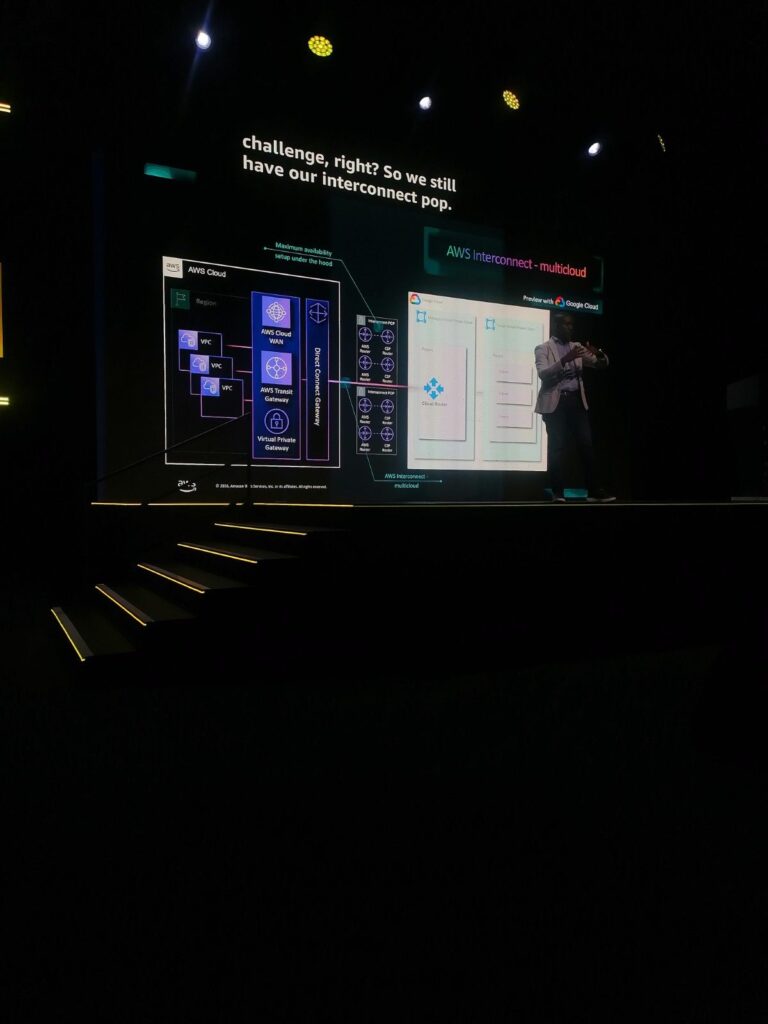
AWS Senior Solutions Architect Joseph Mutua presenting “Hassle-Free Multicloud Connectivity with AWS Interconnect” in Breakout 5 at AWS Summit Johannesburg.
Next up was “Hassle-Free Multicloud Connectivity with AWS Interconnect” in Breakout 5, with AWS Senior Solutions Architects Joseph Mutua and Ashraf Altalleh. They unpacked AWS Direct Connect Multicloud Connectivity, showing how organisations can use AWS Transit Gateway and AWS Cloud WAN as a single control point to enforce routing policies and manage cross-cloud connections — without needing to lean on third-party colocation providers to stitch environments together. For any enterprise juggling more than one cloud vendor (which, in my experience, is most of them), this session was a practical blueprint rather than a sales pitch.
My final session was at the Training & Certification Zone on the Expo floor, where freelance trainer Mandy Northover hosted “Accelerate Your Cloud Journey with AWS Transform.” The session detailed how specialised AI agents within AWS Transform automate complex migration challenges — migrating VMware workloads to EC2, modernising legacy .NET applications, and converting IBM z/OS mainframe applications — with AWS claiming cloud transformation up to four times faster than traditional migration approaches.
Looking Ahead
The AWS Summit made one thing abundantly clear: cloud computing and artificial intelligence in Africa are no longer future projections — they are operational realities. From agentic security frameworks and autonomous software development to multicloud architectures, billion-dollar engineering investments, and large-scale migration tools, the technology landscape is evolving at remarkable speed.
What struck me most, though, wasn’t any single product announcement. It was the consistency of the message across every speaker — from Ball’s leapfrog thesis, to Randery’s investment figures, to Molabe’s insistence on foundations before flash, to Allen’s reminder that the most valuable agents are the ones only you can imagine. As Africa continues its digital transformation journey, the real opportunity lies not only in adopting these technologies, but in building the talent, infrastructure, and innovation ecosystems needed to shape their future.
I left the venue with a notebook full of ideas, a renewed appreciation for the pace of innovation unfolding across the continent, and fresh inspiration for the digital media and engineering projects that lie ahead. As Ball put it before the applause died down: Africa is no longer waiting for the future to arrive. It is actively building the infrastructure, skills, and systems that will define the next era of digital innovation.
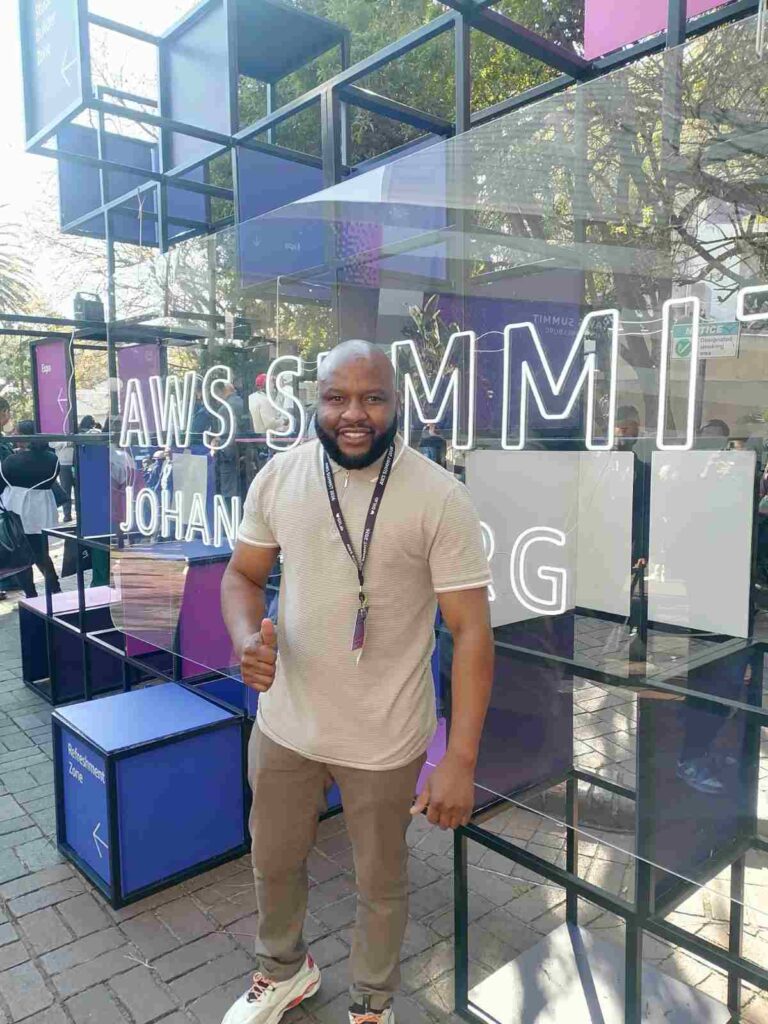
Lucky Nyathi is an IT Infrastructure Engineer, cybersecurity enthusiast, and technology writer passionate about Africa’s digital transformation. He contributes to PiE Magazine’s Innovation section, covering cloud computing, cybersecurity, internet governance, emerging technologies, and the people shaping Africa’s digital future.