

In 1876 a man shouted for his assistant down a wire, advent of the telephone, history tells us. A century and a half later, the Madlanga Commission has shown us how the wire has a memory, a forensic extraction kit, and a very long list of people who wish it had kept quiet.
LEN KALANE
Alexander Graham Bell gave us the telephone. Well, he did not do it alone, and the history books have long been politely arguing about it. Elisha Gray reportedly turned up at the patent office the very same season with a rival claim, and others had tinkered with talking wires before either of them. But it was Bell’s name on the patent in March 1876, and it was Bell who, days later, summoned his assistant Thomas Watson from the next room in the first successful call. Note the genre of that historic first message – it was a summons: “Mr Watson, come here…”
Some 150 years on, the summons still works. It just arrives with two blue ticks.
From crank handle to “forwarded many times”
Early commercial telephones arrived by 1877, and the gadget has not stopped changing since. It lost its cord, gained a camera, swallowed the diary, the bank, the newspaper and the photo album, and then moved us all into one enormous neighbourhood called social media, with Twitter and Facebook as the noisy taverns on the corner. A delight, certainly. Also, as the Matlala–Sibiya orbit has shown the nation, a hazard to anyone who forgets that the thing in their pocket is a notebook that never blinks.
Mr Bell wanted us to speak across distance. He cannot have imagined that we would one day speak across distance, in writing, with timestamps, to a man who would later be shown the transcript by an evidence leader.

LT-GEN NHLANHLA MKHWANAZI
“You delete, we retrieve it”
Hence the most unnerving customer-service slogan in the Republic, courtesy of Lt Gen Nhlanhla Mkhwanazi, delivered while giving evidence to Parliament’s ad hoc committee: “You delete, we retrieve it.” (The PiE FEATURES desk would like to note that it has never sounded so much like a data-recovery advert, nor been so effective at making grown men reach for the airplane-mode button.)
It is a comforting thought for investigators and a cold shiver for everyone else. Deleting a chat, it turns out, is rather like hiding something under a glass rug. You feel better. Everyone else can see it perfectly well.
Delete for me. Delete for everyone. Retrieved by everyone else.
Credit: Lt-Gen Mkhwanazi Says “You Delete We Retrieve” Even The View Once #southafricanpolitics #news | Institute For African Affairs
The WhatsApp hall of fame
The Madlanga Commission has been a long masterclass in what the modern phone remembers. Consider the evidence so far, every bit of it allegation and testimony, none of it yet tested to the end.
First, the human router. Police sergeant Fannie Nkosi, who testified as Witness F and then later as Nkosi himself abandoning the anonymity of the witness “F” tag after his identity was inadvertently revealed, told the commission he forwarded messages between Matlala and Sibiya because Sibiya’s phone was often off. A phone that is often off is, in the age of the smartphone, the oldest trick in the book. The only snag is the second phone, held by the sergeant, which was very much on.
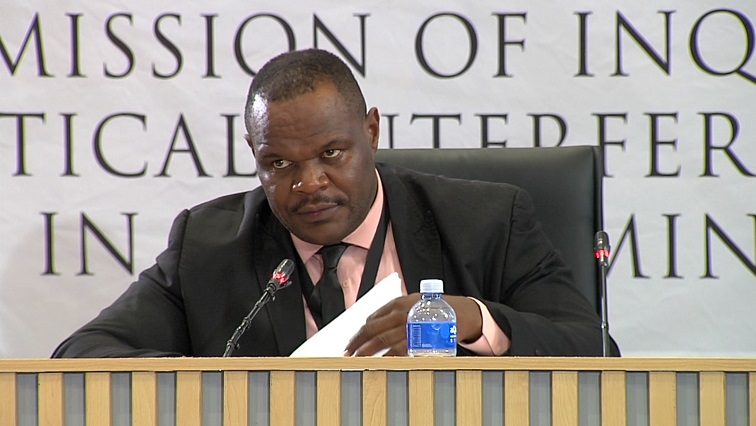
CAPTION: FANNIE NKOSI, NOW BEHIND BARS
Then came the contradictions. The commission chair, retired Justice Mbuyiseli Madlanga, told Sibiya that he appeared to be contradicting himself, after chats were put to him that did not fit his account of how little he and Matlala had to do with each other. Sibiya has disputed some of the material, and rightly keeps his right to do so. But few witnesses enjoy a cross-examination in which the other side has a transcript.
There were voice notes, too, reportedly about impalas being delivered to a general’s home. The animals, one gathers, are not covered by WhatsApp’s disappearing-messages setting. And there was the defence of last resort: the Forward arrow. Witness F’s lawyer argued that the chats did not distinguish what his client had written from what had simply been forwarded to him. It is the digital version of “I was only carrying the parcel”, and it has been argued in court with a straight face, which is the highest tribute one can pay to a legal team.
Elsewhere, messages said to have been retrieved from Matlala’s phone while he was behind bars have reportedly been disputed by Sibiya, a reminder that Mr Bell’s invention has now found its way into places he surely never pictured, including, apparently, places where phones are not allowed.

CAPTION: FORMER POLICE CHIEF SHADRACK SIBIYA
Who’s who on the party line
| Who | Where the phone comes in (all allegations, none tested) |
| Vusimuzi “Cat” Matlala | The centre of the web, and now in custody at Kgosi Mampuru. WhatsApp exchanges involving him were put before the commission, including voice notes that allegedly concerned impala deliveries. |
| Shadrack Sibiya | Resigned as deputy national commissioner, his lawyers confirmed, just before his SAPS disciplinary hearing began. Chats with Sgt Nkosi were shown to the commission, which found his version hard to square with them. He disputes the authenticity of some messages. |
| Fannie Nkosi (“Witness F”) | Police sergeant, also held at Kgosi Mampuru, who testified he forwarded messages because Sibiya’s phone was often off. His lawyer tried, unsuccessfully at first, to stop the chats being used. |
| Brown Mogotsi | North West businessman named in messages with Matlala that reportedly refer to planned meetings. |
| Rachel Matjeng | Testified that she once relayed messages between Matlala and former police chief Khomotso Phahlane. |
| Richard Shibiri | Messages about his attendance at a “thanksgiving ceremony” at Sibiya’s home were relayed through Nkosi, the commission heard and through Nkosi, also the famous “tell Cat (Matlala) to make a turn”. |
| Suliman Carrim | Went to court to block his appearance at the commission, which wanted to explore WhatsApp evidence between him and Matlala. Charges have since been laid over his failure to appear after being summoned; he has cited ill health. |
Resignations, dismissals and the sound of silence
Blame the smartphone, say those who like their scapegoats electronic. In the wake of the commission’s revelations, a number of senior names have left the building or been shown the door: Maj-Gen Leseja Senona, Maj-Gen Richard Shibiri, former Brig Rachel Matjeng and ex-Maj-Gen Feroz Khan, who may yet appeal his dismissal. Andrea Johnson, too, has been caught in the chat-shaped net, remember her? – the one-time IDAC head who gave us “Project Diversion”. She resigned and so did Sibiya, his lawyers confirmed, just before his SAPS disciplinary hearing began, and he now sits in a high-security section of Kgosi Mampuru while his bail application is argued, a short corridor away from Matlala and Nkosi. Even the prison address book is starting to look like a contact list.
Then there are the no-shows. Suliman Carrim and Feroz Khan have both resisted appearing before the commission, with ill health cited, and both have since had charges laid against them for failing to turn up after being summoned. Bell’s “come here” turned out to be a great deal easier to send than to answer.

CAPTION: SULIMAN CARRIM
And they came for Carrim this week – he was on his way out to Dubai, we hear, from where he would have proceeded to Saudi Arabia and then Pakistan where he said he was going to seek for spiritual help, but Carrim, as fate would have it, was flagged and the system at the OR Tambo international airport in Johannesburg picked this up this past Thursday as he was about to board and he wasn’t allowed to leave the country. Instead, he was arrested and is now in custody after having appeared in court this past Friday, arguing to be released on bail. His bail hearing resumes this Monday, October 19, 2026 – an important date politically in South African history dubbed “Black Wednesday”, the apartheid-era crackdown day in 1977 on media and 18 black consciousness anti- apartheid organisations banned in one fell swoop (UPDATE: Carrim’s bail application was postponed to October 28, next week Wednesday for judgment).
From the table above, you would have noticed, four are now in custody – Matlala, Sibiya, Nkosi, Mogotsi and now Carrim, making it five. Both Sibiya and Carrim await bail application decisions. All are at Kgosi Mampuru prison, except for Mogotsi.
Perhaps the saddest part is how ordinary it all is – how this cellphone thing really gets to work. None of this required a spy satellite or a wiretap in a dim warehouse. It required people to type, to forward, to voice-note, and to believe, against all the evidence of the past decade, that no one would ever look.
| A note on the tone The Madlanga Commission deals with grave matters, and everything above is allegation or testimony that is yet to be tested. Separately, Shadrack Sibiya is applying for bail on serious sexual-offence charges that are before the Randburg Magistrates Court some aspects of which he denies. Those matters are not the subject of any joke in this article. We are looking squarely at technological advancement, presented light-heartedly, at our relationship with our phones emerging from these hearings. |
The moral of the story
Technology has no loyalties. The same invention that carries a grandmother’s voice across the country carries an incriminating voice note to a commission, and the same cloud that backs up the family holiday photos has a way of backing up everything else. For investigators, the cellphone has been a gift: a quiet, patient witness that never gets tired, never needs a lawyer and never forgets who said what to whom, and when.
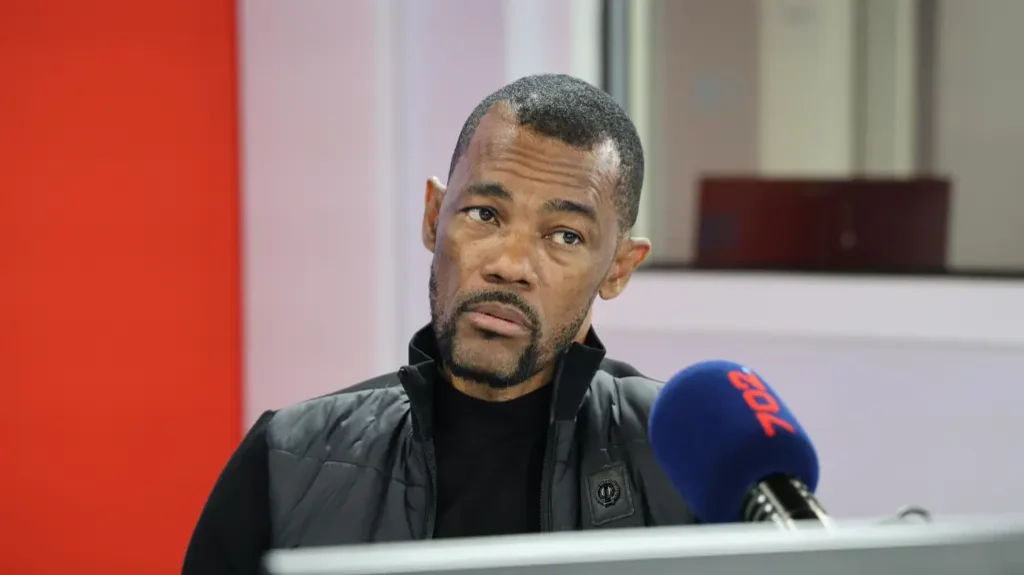
CAPTION: SERGE CABONGE – PHOTO: EYEWITNESS NEWS
Still don’t believe how much of a mess the cellphone can enmesh you in? Then ask Serge Cabonge. He inadvertently stepped into the fray, inviting himself, unwittingly, into the noisy party, all because of this great little tool of communication wonder. Cabonge, a Congolese national said to be a Sandton businessman and self-proclaimed “blesser”, has previously been mentioned at the Madlanga Commission (and there is quite a bit about him in this Matlala-Sibiya orbit).
Things had lulled a little bit around his name since first mention, but not until the cellphone recordings playing out this week: The Randburg courtroom, where Sibiya’s bail application hearing continued, heard, along with TV viewers and podcast followers across the country, a recorded conversation in which Cabonge (allegedly) claimed he knew someone who “sits in the front” at the Madlanga Commission, implying that a senior representative at the commission was “his man” – not his exact words.
He said “his man” was a “Judge President” in “one of the biggest courts”. The commission sought to engage Cabonge on this matter while dismissing the allegations as false. The Political Killings Task Team (PKTT) police unit is also looking into this….
Time will tell. Ring, ring, ring – or buzz, buzz, buzz.
Bell’s first words down the line were a summons. After all this time, the telephone is still doing exactly what it was built for. It is the rest of us who keep being surprised.
So, this Sunday, a gentle public-service announcement from the PiE features desk: before you forward, ask yourself whether you would like it read aloud in a room with a judge in it. And if the answer is no, you already know what to do. Mr Watson, come here, and for goodness’ sake bring your phone...
…. Or find another way to communicate.