
By Lucky Nyathi | PiE+ | 14 October 2026
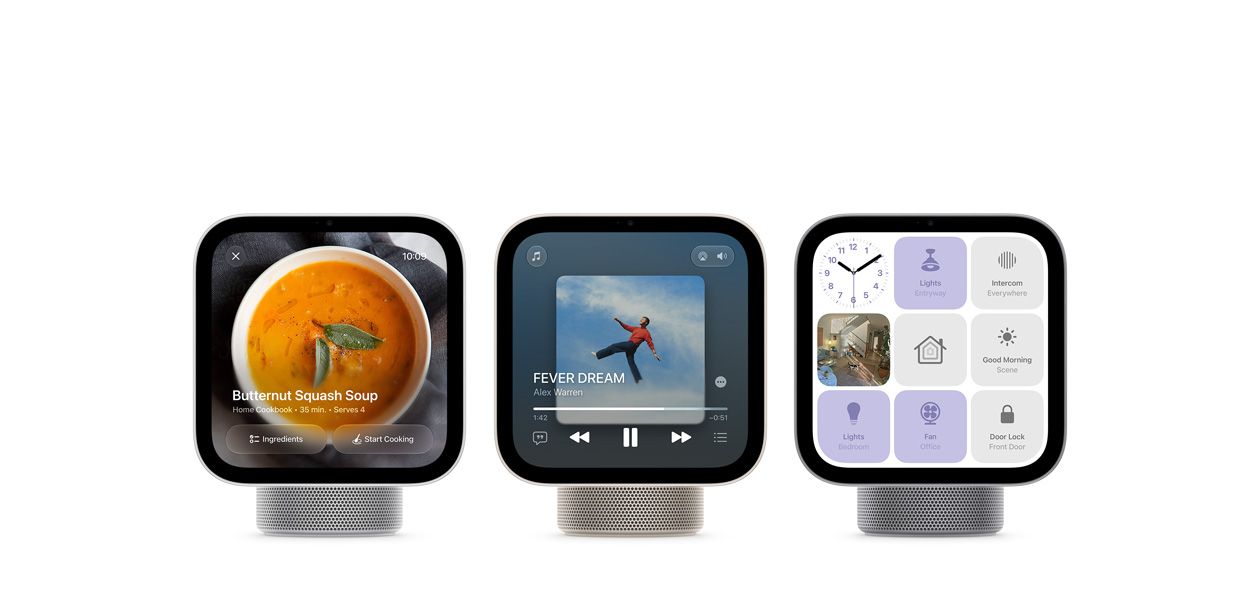
Apple is entering the smart display market with HomeView, a 7-inch device designed to combine AI assistance, video calls, entertainment and smart-home controls in one personalised hub.
Apple is bringing its vision of a connected home to life with Apple HomeView, a new smart display that puts artificial intelligence, entertainment and home management into a single device designed for shared family spaces.
Announced on 13 October 2026, HomeView represents a significant expansion of Apple’s smart-home ambitions. Rather than functioning simply as a speaker with a screen, the device is designed to serve as a central point for controlling compatible home accessories, making video calls, checking reminders, listening to music and interacting with Apple’s updated Siri AI assistant.
The launch also places Apple more directly in competition with smart displays from Amazon and Google, as technology companies look for ways to make artificial intelligence useful beyond smartphones and computers.
For Apple, the challenge is to turn the connected home from a collection of separate gadgets into a more seamless experience.
A Display Designed for Everyday Living
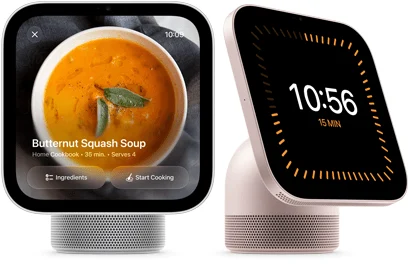
HomeView features a 7-inch Liquid Retina display with True Tone technology, housed in an aluminium design that can sit on a kitchen counter, bedside table or desk. The tabletop model connects the screen to a domed speaker base through a stainless-steel hinge, allowing users to adjust the viewing angle.
Apple says the display can reach 500 nits of brightness and dim to as little as 0.3 nits, helping it remain visible during the day without becoming unnecessarily bright in a dark bedroom.
The interface is designed to respond to how close someone is standing. From across the room, users can see simpler information, while moving closer reveals more detail and interaction options.
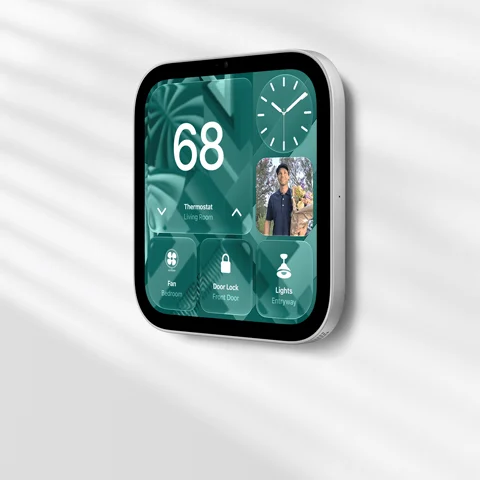
HomeView will be available in silver, starlight, rose pink and space grey for the tabletop version. A separate wall-mounted model, available in silver and space grey, is designed for locations such as hallways and entryways.
The two designs offer different ways to position the device within a home, whether as a shared family display or a permanent control point for connected devices.
Siri AI Is at the Centre of the Experience
The most significant feature of HomeView is its integration with Apple’s updated Siri AI.
Apple says the assistant is designed to offer more conversational responses, broader world knowledge, improved music discovery and awareness of what is displayed on screen. When paired with an Apple Intelligence-enabled device, HomeView can also use relevant personal context from apps such as Messages and Calendar to provide more useful responses.
In practical terms, this could make everyday tasks easier to manage. A user might ask about upcoming appointments, check reminders, find information or request music without needing to pick up a phone.
The display is also designed to make information accessible to several members of a household, rather than treating the home as if it has only one user.
HomeView’s facial recognition system can identify up to six people and adapt the experience accordingly. Personal information in Messages, FaceTime, Calendar, Reminders and Find My can be presented to the relevant user, while shared content remains available for the household.
That distinction is important for a device that may sit in a communal area where family members and guests can interact with it.
A Central Control Point for the Smart Home
HomeView is designed to work with Apple’s Home ecosystem, bringing compatible smart-home controls into a single interface.
Depending on the connected accessories, users can manage lighting, adjust thermostats, view compatible security cameras and interact with smart locks or doorbells. Voice commands and automations can reduce the need to open separate applications for routine tasks.
Imagine arriving home and using a voice command to activate selected lights, adjust the temperature and check a compatible camera feed. Instead of controlling every accessory separately, the display becomes a central point for managing those actions.
The usefulness of this approach will depend on device compatibility and the quality of the wider smart-home setup. Buyers should check that their existing accessories support Apple’s Home platform and the particular features they want to use.
HomeView is therefore not simply a screen for the home. It is intended to make connected devices easier to access and coordinate.
FaceTime, Music and Entertainment
Apple has also built communication and entertainment into the experience.
HomeView supports FaceTime video calls, allowing users to connect with friends and family through the display rather than holding a phone. Its speaker system is designed to fill a room with audio, while the screen can provide access to music, podcasts, photos and other supported content.
The device could be particularly useful in kitchens and shared living spaces, where people may want to listen to music, follow reminders or make a call while carrying out other activities.
Its role is different from that of a television or tablet. HomeView is intended to remain available in a fixed location, making common tasks accessible without requiring users to search for a device or navigate through multiple apps.
This always-available approach is one of the defining ideas behind smart displays, and Apple is now applying it to its own ecosystem.
Privacy in a Shared Household
Placing a camera, microphone and AI assistant in a communal space naturally raises questions about privacy.
Apple says privacy and security are central to HomeView’s design. The device uses the company’s A18 chip and supports on-device processing for certain requests, while more demanding requests can use Apple’s Private Cloud Compute infrastructure.
Apple says information processed through Private Cloud Compute is not stored or made accessible to the company. Its approach is intended to extend the privacy protections of Apple devices to cloud-based AI processing.
Personalisation also introduces an important distinction between individual and shared information. HomeView is designed to recognise different household members while preventing one person’s private content from simply becoming visible to everyone using the display.
As with any connected device, buyers should still review permissions, camera and microphone settings, account access and the privacy controls available for their connected accessories.
For a product intended to remain in a shared space, trust will be just as important as convenience.
Apple HomeView Price and South African Availability
Apple has announced a starting price of US$299 for both the tabletop and wall-mounted versions in the United States.
South African customers will be able to pre-order HomeView through Apple Authorised Resellers, with availability scheduled to begin on 13 November 2026. Apple has not announced an official South African retail price, so local pricing should be confirmed with authorised retailers rather than estimated from the US price alone.
The wall-mounted model also requires a compatible mounting and power solution, which may add to the total cost. Apple’s listed mounting accessories are sold separately.
Siri AI on HomeView will support English in South Africa, according to Apple’s published availability information. Other language support and regional feature availability may vary.
For local buyers, the final decision will depend not only on the device’s price but also on compatibility with existing accessories and the features available in the South African market.
How Does It Compare With Amazon and Google?
HomeView enters a category already served by Amazon Echo Show and Google Nest Hub devices.
Amazon’s Echo Show range combines Alexa, a touchscreen, video calling and smart-home controls, while Google’s Nest Hub family focuses on Google Assistant features, connected devices and at-a-glance household information.
Apple’s advantage is its integration with the company’s existing ecosystem. People already using an iPhone, Apple services and compatible Home accessories may find it easier to connect HomeView to the devices and information they use every day.
However, that integration can also be a limitation for households built around Android phones, Google Home or Alexa-compatible products. Buyers should consider their existing setup before choosing a platform.
The US$299 starting price also places HomeView at a premium compared with some competing smart displays. The value proposition will depend on how well its personalisation, smart-home controls, sound and AI features work together in everyday use.
The bigger question is whether customers want a dedicated screen in the home when many similar tasks can already be handled on a smartphone or smart speaker.
PiE+ Perspective: Can AI Make the Smart Home Simpler?
For years, the smart-home promise has been straightforward: lights, cameras, speakers, locks and other devices should work together to make daily life easier.
In practice, the experience can become complicated when accessories rely on different apps, platforms and compatibility requirements. Adding artificial intelligence does not automatically solve those problems.
HomeView’s significance lies in Apple’s attempt to bring these interactions into a shared, personalised interface. If Siri can reliably understand requests, retrieve useful information and coordinate compatible devices, the display could become a practical part of everyday home life rather than another gadget competing for attention.
But success will depend on execution. Voice assistants must be dependable, connected accessories must work consistently, and personal information must remain protected in shared spaces.
There is also a broader question about value. A premium smart display needs to offer enough convenience to justify its price, particularly when smartphones already provide many of the same services.
For households deeply invested in Apple’s ecosystem, HomeView could be an appealing addition. For others, competing devices may offer a better fit or a lower-cost entry point.
The Connected Home Gets an Apple Upgrade
Apple HomeView marks the company’s latest attempt to make its technology a more visible part of everyday domestic life.
By combining a touchscreen, Siri AI, personalised information, FaceTime, entertainment and smart-home management, Apple is positioning HomeView as a shared household hub rather than a conventional speaker or tablet.
Its launch also reflects a wider shift in consumer technology: AI is moving beyond chat interfaces and into the physical spaces where people live, work and communicate.
Whether HomeView becomes an essential part of the smart home will depend on how effectively it delivers on that promise. For now, Apple has introduced a new contender in the smart display market, with South African availability scheduled for November.
The next test is whether the convenience of a screen that knows who is using it — and helps manage the home around them — is compelling enough to earn a permanent place on the household counter.
Apple HomeView is scheduled to become available in South Africa on 13 November 2026. Local pricing is yet to be announced.