
By Lucky Nyathi | PiE+ | 21 September 2026
Apple’s new Mac mini M6 keeps the tiny desktop formula largely intact, but underneath the familiar design is a much more powerful machine built around AI, faster graphics, improved connectivity and Apple’s latest silicon. The bigger question is whether the performance upgrade justifies the much higher price.
There is something almost amusing about Apple’s Mac mini.
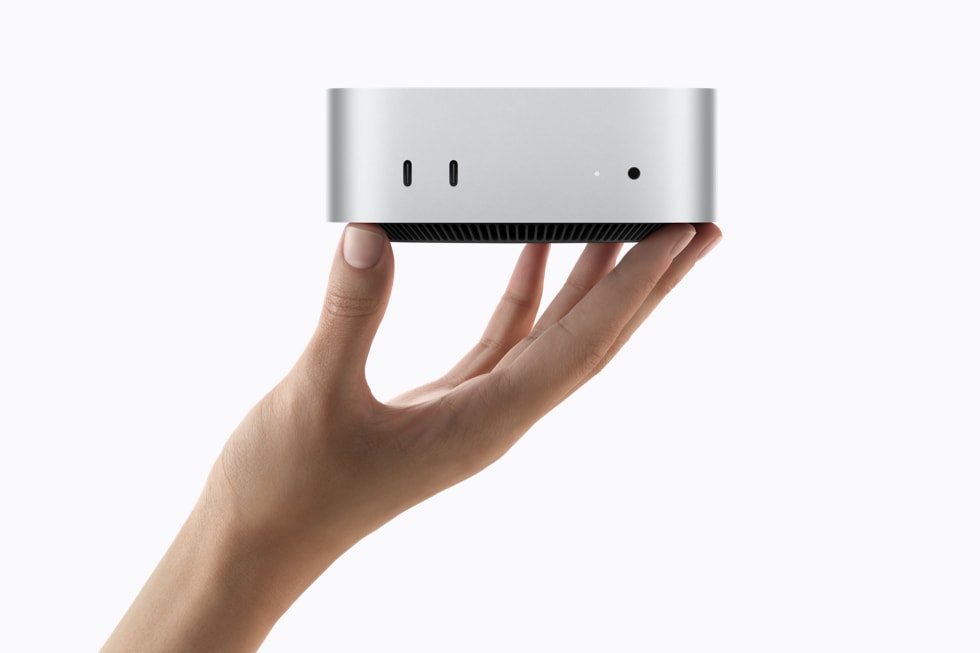
It looks like a small silver box that could disappear underneath a monitor.
Yet the latest Mac mini M6 is designed to handle everything from everyday office work and content creation to gaming and increasingly demanding local AI workloads.
Apple has given the new machine a 12-core CPU and 12-core GPU, faster unified memory, faster storage, Wi-Fi 7, Bluetooth 6 and upgraded 2.5Gb Ethernet. Apple also claims up to 40% faster CPU performance, twice the graphics performance and up to four times faster AI performance compared with the previous-generation M4 configuration it used for its comparisons.
But there is a catch.
The Mac mini has become considerably more expensive.
The Mac mini M6 Is Still Tiny

Apple has resisted the temptation to dramatically redesign the Mac mini.
That is probably a good thing.
The compact desktop retains its small footprint while packing considerably more computing power inside. The design remains one of the biggest reasons to consider the Mac mini in the first place.
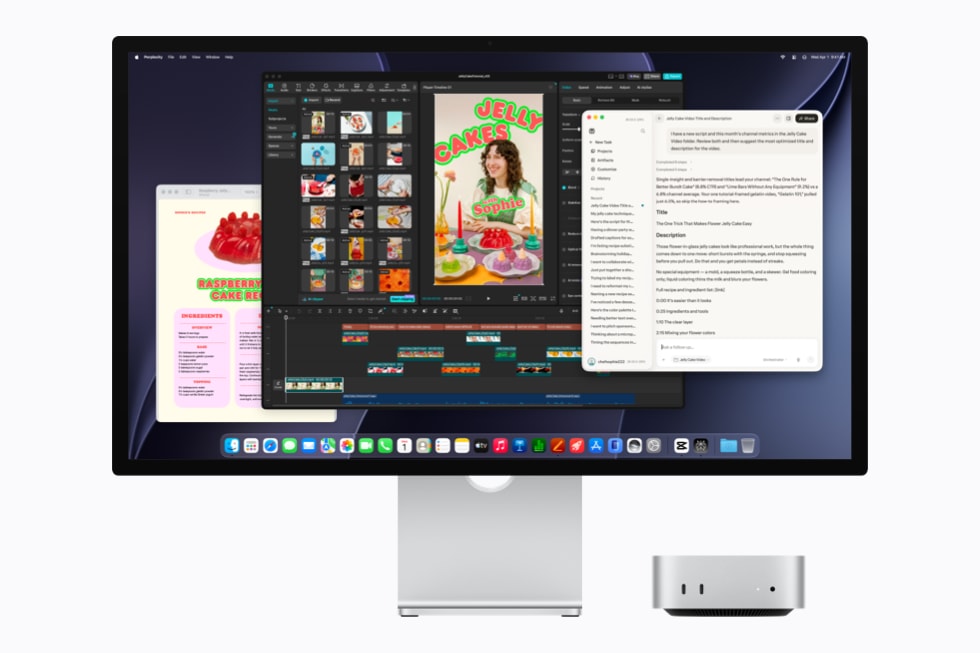
It doesn’t take up much desk space, doesn’t require a large desktop tower and can be paired with almost any existing monitor, keyboard and mouse.
For someone building a home office, creative workstation or small business setup, that flexibility remains important.
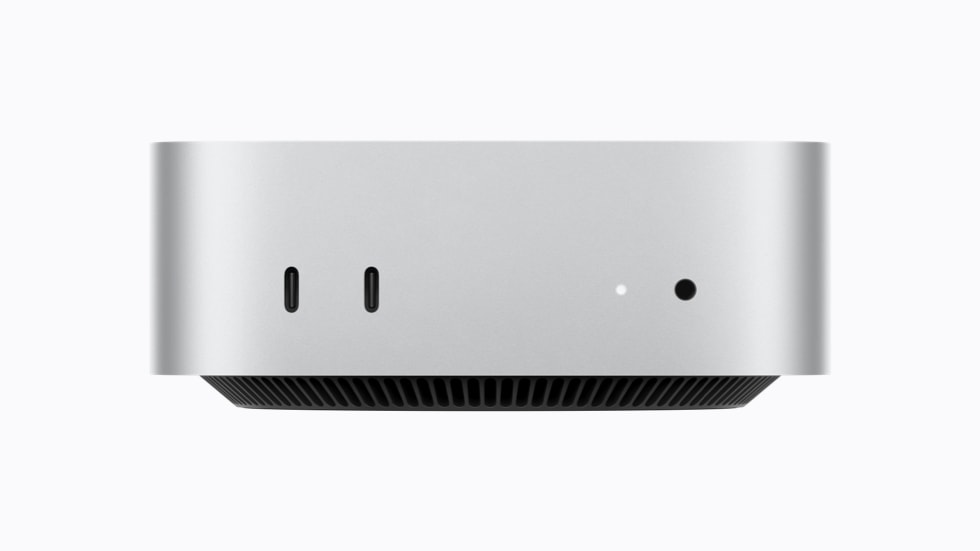
The new Mac mini also retains front and rear connectivity, while Apple has upgraded wireless and networking capabilities. The machine supports Wi-Fi 7, Bluetooth 6 and 2.5Gb Ethernet, with a 10Gb Ethernet option available.
The M6 Is the Real Story
The biggest change isn’t visible from the outside.
It’s Apple’s M6 chip.
The 12-core CPU and 12-core GPU represent a significant step forward from the M4 generation, while Apple has put particular emphasis on AI performance.
The company says the M6 Mac mini can deliver up to four times the AI performance of the previous-generation model used for its comparison.
Independent reviews have generally found the performance impressive.
The Verge describes the M6 Mac mini as a powerful and compact desktop, while Tom’s Guide found that the extra processing and graphics performance makes everyday tasks, photo editing and gaming feel noticeably faster.
That makes the M6 particularly interesting at a time when more users are experimenting with AI tools directly on their computers.
Apple Is Turning the Mac mini Into an AI Machine
This may be the most important part of the M6 story.
Apple isn’t positioning the new Mac mini purely as a faster desktop.
The company describes it as a platform for AI and always-on agentic computing.
That means Apple sees the Mac mini as something that can remain running and handle AI-assisted workflows rather than simply opening applications and documents.
For developers and technically minded users, that could make the M6 an interesting machine for experimenting with smaller AI models locally.
WIRED’s review found the M6 particularly capable with local AI workloads, although its base 16GB of unified memory can become a limitation when workloads become more demanding.
And that brings us to one of the Mac mini’s biggest problems.
16GB RAM and 256GB Storage: Is That Enough?
The entry-level Mac mini M6 comes with:
- 12-core CPU
- 12-core GPU
- 16GB unified memory
- 256GB SSD
The problem isn’t the processor.
It’s the amount of storage.
At a time when video files, games, applications and AI models are becoming increasingly large, 256GB can disappear quickly.
The base model also cannot be upgraded internally after purchase.
That means buyers need to think carefully about their configuration before spending their money.
The 512GB version is significantly more expensive, while higher-memory configurations push the price even further upward. iStore South Africa currently lists the base M6 at R17,699, with 16GB/256GB, while the 16GB/512GB version is listed at R21,699 and the 24GB/512GB configuration at R25,599.
For creative professionals, developers and people planning to run AI workloads locally, the higher-memory and storage configurations may make considerably more sense.
The South African Price Changes the Conversation
This is where the Mac mini M6 becomes complicated.
In the United States, Apple starts the M6 at $899.
That is already a $300 increase over the previous M4 Mac mini’s launch price.
In South Africa, iStore lists the new Mac mini M6 from R17,699.
That puts the entry-level Mac mini into a very different part of the market.
The previous M4 Mac mini was widely praised for offering an unusually strong combination of compact size, performance and affordability.
The M6 is considerably faster.
But it is also considerably harder to describe as a budget Mac.
Mac mini M6 for Creators
For creators, the M6 could be an extremely interesting workstation.
A compact Mac with this level of processing power can handle workloads such as:
Video editing
Photo editing
Music production
Graphic design
Web development
Software development
AI experimentation
Content creation
The key advantage is that the Mac mini allows users to spend money on the computer itself without having to buy Apple’s monitor, keyboard and other accessories.
If you already own a good display and peripherals, you can simply connect them.
For a small creative studio, that’s a compelling proposition.
What About Gaming?
Apple has historically struggled to make the Mac a serious gaming platform.
The M6 doesn’t completely change that story, but the graphics improvements make the Mac mini increasingly interesting for gaming.
Independent testing has found the M6 capable of running modern games impressively for such a small desktop.
However, gamers still need to consider the size of the Mac gaming library compared with Windows.
The hardware may be capable.
The software ecosystem remains the bigger question.
The Good
Compact design:
The Mac mini remains remarkably small for the amount of computing power inside.
M6 performance:
The new chip provides substantial CPU, GPU and AI improvements.
Connectivity:
Wi-Fi 7, Bluetooth 6 and 2.5Gb Ethernet make it much more future-ready.
AI capability:
The M6 is designed with local and agentic AI workloads increasingly in mind.
Versatility:
It can serve as a home computer, office workstation, creative machine, development system or always-on computer.
The Not-So-Good
Price:
The starting price is significantly higher than the M4 generation.
256GB storage:
The base capacity feels restrictive for a modern professional computer.
16GB memory:
It is adequate for everyday work but less comfortable for demanding local AI workloads.
No internal upgrades:
The memory and storage configuration you choose at purchase is effectively the configuration you keep.
Accessories cost extra:
You’ll need your own display and peripherals unless you purchase Apple’s accessories separately.
Is the Mac mini M6 Worth It?
The answer depends heavily on what you are buying it for.
For someone who wants a small, quiet and powerful desktop and already owns a monitor and peripherals, the Mac mini M6 is an impressive machine.
For developers and creators, its combination of CPU, GPU and AI performance makes it particularly interesting.
But the base configuration is difficult to get excited about when the machine costs R17,699 in South Africa and still gives you only 256GB of storage.
The higher configurations make more sense for professional workloads, but they also push the price substantially higher.
That makes the M6 Mac mini less of a bargain than its predecessor.
PiE+ Verdict
The Mac mini M6 is a fascinating example of where desktop computing is heading.
Apple hasn’t radically changed the box.
Instead, it has transformed what can happen inside it.
The combination of powerful Apple silicon, local AI capability, faster graphics, high-speed networking and a tiny footprint makes the Mac mini M6 one of the more interesting compact desktops of 2026.
But Apple’s price increase changes the equation.
The M6 Mac mini is powerful enough to be a serious workstation. The question is whether South African buyers are prepared to pay workstation money for Apple’s smallest desktop.
For PiE+, that’s ultimately what makes the Mac mini M6 interesting: the technology has moved forward, but the value proposition has become much harder to ignore.