
PiE CREW
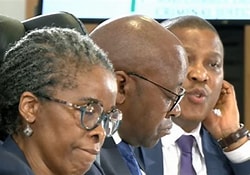
| On Saturday the Presidency gave the Madlanga Commission what it called a final extension. The report is now due on Monday 25 January 2027, ten weeks after the 16 November date set in July. The news landed just days after Justice Mbuyiseli Madlanga marked a year of hearings by saying the evidence so far points to serious criminality inside the criminal justice system. What the commission has not yet done is reach findings. This piece looks at what is still to come, who has to come back, and how much weight the evidence can bear. |
| 110 witnesses heard (to 16 Sept) | 174 hearing days (to 16 Sept) | 105,282 pages of exhibits, 750 bundles | 25 Jan new final-report deadline |
The extension in brief
The Presidency announced on Saturday 19 September that President Ramaphosa had moved the deadline for the final report from 16 November 2026 to 25 January 2027, and called it a final extension. The stated reason is to let the commission process additional evidence, including testimony from experts who have made recommendations relevant to its terms of reference. Commission spokesperson Jeremy Michaels said the time would allow it to hear outstanding testimony and write the report.
This is the second time the reporting date has moved. The commission was originally due to report on 31 August. In July that became 16 November, with public evidence due to close on 2 October.
Backlog, or a bigger job than planned?
Probably both, though the official explanation leans on the second. The Presidency and the commission both point to expert evidence and outstanding testimony rather than to a queue of unavailable witnesses.
The record still shows a calendar repeatedly knocked sideways by witnesses who do not arrive. In July Michaels said the commission’s list of witnesses was long and that postponement applications were among its main pressures. Since then Carrim and Khan have both leaned on medical grounds to stay off the stand, and earlier in the year Brown Mogotsi claimed illness and Sergeant Fannie Nkosi fell ill mid-testimony. At the same time the inquiry’s scope has widened well beyond the original plan, taking in the handling of cases by the Investigating Directorate Against Corruption, the Johannesburg metro police, the stolen cocaine at the Hawks’ Port Shepstone offices, and prisons.
Our read is that the extra ten weeks are meant to cover three things: the stragglers, the systems and expert evidence that feed the recommendations, and the writing.
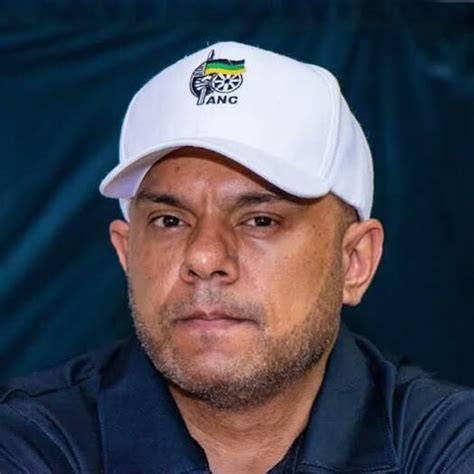
PHOTO: CARRIM
Who is off the list, and who is not
Carrim is effectively out. His stated reason for staying away has been ill health.The chair told a hearing on 14 August that it was “the end of the road” as far as having him before the commission was concerned, and criminal charges followed a week later.

PHOTO: SHADRACK SIBIYA
Shadrack Sibiya is also off the list, for now. After five days of evidence in February, the commission told him in a 12 May letter that the evidence leaders presently do not intend to recall him. The wording leaves the door slightly open.
Those still expected, or plausibly still to come, are below. Everything in the table is allegation or untested evidence, and everyone named is presumed innocent.
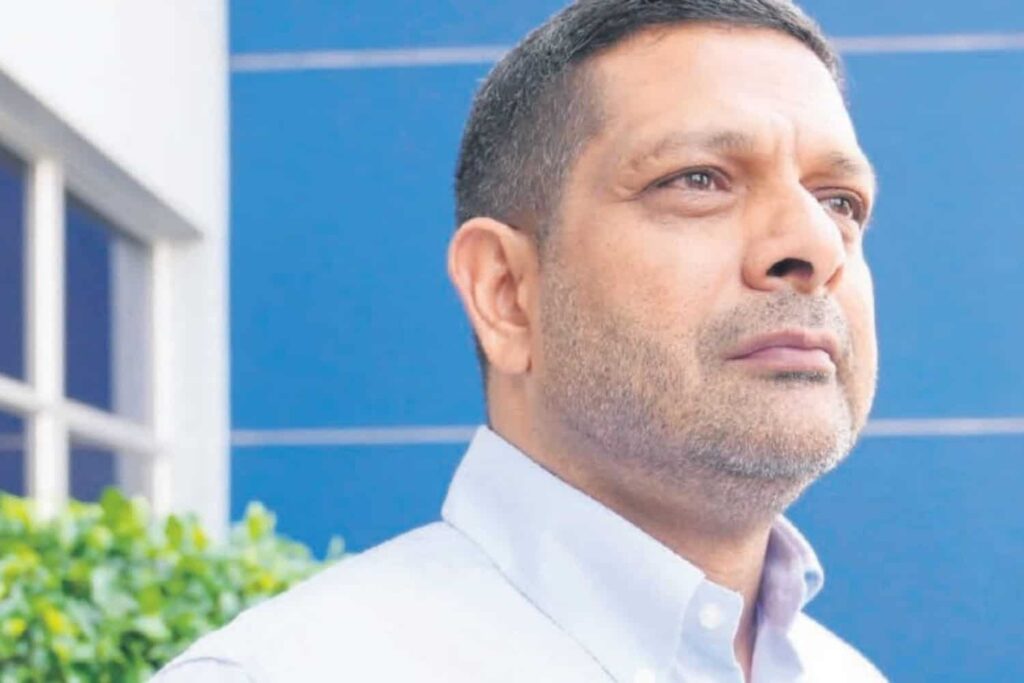
PHOTO: FEROZ KHAN
| Witness | Where things stand | Why it matters |
| Maj-Gen Feroz Khan | Suspended Crime Intelligence deputy head; SAPS “deemed” him dismissed on 2 September after he skipped his own disciplinary hearing. Due to testify in person on 28 September, 09:30, unless an independent specialist certifies he cannot. His affidavit was due 18 September. The commission heard that his treating doctor altered a medical certificate at the request of Khan’s son. He was shot on 28 June, days before his first scheduled appearance. | Sits at the centre of the IDAC strand: evidence that then-NPA prosecutor Andrea Johnson passed a confidential complaint to him, and intimate messages between the two. Earlier evidence linked him to the Matlala tender, though Matlala told the commission he had no relationship with him. Khan has not answered from the witness box. Separately faces a precious-metals case, postponed to 27 November. |
| Suliman Carrim | Testified on 9 and 10 March and never returned, citing ill health. The commission refused an open-ended delay on 29 July, ordered him to appear on 14 August or undergo an independent medical assessment, and he did neither. Charges were laid on 21 August and are with the commission’s Recommendations Task Team. The chair said the commission would not engage with him further. | His evidence on a loan to Cat Matlala stays unfinished: he put it at R10 million, Matlala says R15 million. On 11 September the President signed a proclamation sending the SIU after about R168 million in North West transport tenders linked to a joint venture that includes Carrim’s company Ziggy Investments. |
| Vusimuzi “Cat” Matlala | On the stand from 17 August. He denied relationships with Mchunu and Khan, but invoked the privilege against self-incrimination on most questions about the Medicare24 tender. The commission ordered him to answer some lines, which he then did. Last reported on the stand on 26 August. | The R360 million Medicare24 tender (about R228 million was paid before cancellation) runs through much of the commission’s evidence. His own criminal trial is running in parallel, and his privilege claims limit what the commission can extract. |
| Lt-Col Deena Govender | KZN Hawks officer, last reported part-heard on 31 August. He alleges that Mchunu, via an associate, Mavuso Ntandane, pressed him on 20 August to say Mkhwanazi had sanctioned 172 police shootings, and says he had a recording. Mchunu rejects this. Govender was also taken through 65 cash deposits totalling R1.7 million into accounts held by him and his wife, which he attributed to loans, family and a property purchase. | If Ntandane or Mchunu are called to answer for the recording, this becomes the sharpest direct contest in the inquiry, because it goes to Mkhwanazi’s credibility. Every part of it is untested. |
| Senzo Mchunu | On special leave since 13 July 2025; testified in December 2025. He may be recalled. | Govender’s allegation is the second time he has been accused of trying to steer a witness. Neither has been answered under oath before the commission. Parliament’s ad hoc committee is examining the same disbandment directive. |
| Lt-Gen Nhlanhla Mkhwanazi and supporting witnesses | The commission’s own design has a Phase Three, in which Mkhwanazi and the witnesses who backed him are recalled to answer what those implicated have said. | This is the step that turns allegations that appear to be gaining support into tested findings. It is also where Govender’s counter-allegation would have to be put to him. |
| Joe “Ferrari” Sibanyoni | Read his statement on 28 August; cross-examination was set down for 21 September. He denies extortion allegations and says he was a target of the late taxi boss Jotham Msibi, not a member of any syndicate. | He is also the state’s first witness in Matlala’s attempted-murder trial, so what he says here can be compared with what he says there. |
| Expert witnesses | Recent experts include the World Bank’s Laura Pop (16 September), Dr Mark Shaw of the Global Initiative Against Transnational Organised Crime (2 September), the Public Service Commission’s Prof Somadoda Fikeni and Correctional Services head Makgothi Thobakgale (17 and 18 September). The Presidency named more expert testimony as a reason for the extension. | Pop recommended a one-off, legally entrenched integrity evaluation of senior and high-risk officials. Expert evidence like this shapes the recommendations, the part of the report most likely to outlast the prosecutions. |

PHOTO: LT-GEN NHLANHLA MKHWANAZI
How much weight can the evidence bear?
What Madlanga actually said
On 17 September, a year to the day since Mkhwanazi became the first witness, Madlanga said the evidence points to serious criminality within the criminal justice system, resulting from infiltration and undue influence by criminal elements. He said the fact that a number of people in the system have been charged, dismissed or disciplined lends credence to those indications, and that the system appears for some time to have been populated by “malleable, corrupt state functionaries”, as IOL reported it.
He also made clear this was not a verdict. He asked the question himself, whether the allegations have been proved false or are proving true, and said definitive findings will come only in the final report. A year ago he had warned that if the allegations were proved, they would “spell doom” for the country’s justice system. So this is the chair describing a trend line in the evidence, not pronouncing on any individual.
What has followed from the evidence so far
- Referrals and dismissals: Major-General Lesetja Senona resigned as KZN Hawks head, Major-General Richard Shibiri and Brigadier Rachel Matjeng were dismissed, and Sergeant Fannie Nkosi was arrested and twice refused bail.
- Second interim report (29 May): recommended disciplinary proceedings and urgent criminal investigation involving Sibiya, Witness G, Nkosi and Brown Mogotsi, plus an inspector-general probe into an alleged off-the-books Crime Intelligence operation.
- Metro police: Ekurhuleni fired deputy chief Julius Mkhwanazi on 18 September; he faces five sets of criminal charges.
- Witness fallout: Mogotsi was arrested after testifying and faces perjury and related charges; Khan has been dismissed; charges have been laid against Carrim.
The evidence has cut both ways
It would be a mistake to read the year as a straight line of vindication for the accusers. The commission’s hearings into how the Investigating Directorate Against Corruption built its cases were followed by the withdrawal of charges against seven Crime Intelligence officers, including Lt-Gen Dumisani Khumalo, and then, on 15 September, of all charges against suspended national commissioner Fannie Masemola. Andrea Johnson left her IDAC post after the evidence about her. Whatever the final report finds, some of the consequences so far have been to undo prosecutions as well as to prompt them.
What tempers the picture
- Mkhwanazi’s own evidence has not yet been tested in public. That is the purpose of Phase Three, no date has been set yet.
- A live counter-allegation. Govender’s 172 shootings is untested, It will have to be dealt with.
- Parliament’s reading is more cautious. Reporting on the ad hoc committee’s draft findings says it agreed the disbanding of the Political Killings Task Team could have served organised crime and that Mchunu’s evidence had inconsistencies, but that the evidence does not establish a corrupt agreement or that he acted for a cartel. A draft is not an adopted report, and its final version is due on 30 October.
- A commission is not a court. Its findings go to the President, and its referrals go to the NPA and others, who make their own decisions. Those decisions have not all gone the way the original accusations pointed.
The road to 25 January
Here are the dates that are fixed or reported, followed by our reading of how the ten weeks may be used.
| Mon 21 Sept | Sibanyoni cross-examination set down. |
| Mon 28 Sept | Khan due to testify at 09:30, unless an independent specialist certifies he cannot. |
| Tue 29 Sept | Masemola matter returns to the Pretoria Regional Court. The NPA withdrew the charges on 15 September, but the formal withdrawal still has to happen in open court. |
| Fri 2 Oct | Date set in July for public evidence to close. Whether it has moved is not clear from the reporting. |
| Fri 9 Oct | Matlala and EMPD fleet manager Chris Steyn back in the Germiston court on blue-lights charges. |
| Fri 30 Oct | Parliament’s ad hoc committee report is due (its sixth extension). |
| Mon 16 Nov | The old final-report deadline, now superseded. |
| Fri 27 Nov | Khan’s precious-metals case returns to court in Kempton Park. |
| Tue 1 Dec | Cocaine-theft accused Lucas Legabe returns to court. |
| Mon 25 Jan 2027 | Final report due to the President. Described by the Presidency as final. |
Reading the calendar
- The immediate test is Khan on 28 September. The commission borrowed the Carrim mechanism for him, an independent medical assessment as the only route to being excused. If he neither appears nor is certified unfit, expect the Carrim playbook.
- Drafting time. In July Michaels said August had been set aside for compiling the final report. If the commission wants a similar window now, that would point to hearings continuing into December, with the report written across the year-end. That is our inference, and nothing has been announced.
- “Final” forces triage. With the Presidency having said this is the last extension, the commission will have to choose between finishing the recalls of key witnesses (Phase Three) and adding new strands. Watch which it picks.
What could still knock it off course
- Medical stand-offs. Two of the most awkward witnesses have used health grounds. The commission has shown it will now push back, but each round costs days.
- Legal challenges. The commission reports three High Court applications so far, one dismissed and two withdrawn. Madlanga said Carrim’s side could take the charging decision on review, but that he would be surprised if they did.
- Safety. Witness D, Marius van der Merwe, was killed on 5 December 2025 after testifying, and Khan was shot on 28 June. Threats against Commissioner Sandile Khumalo have also been reported, although the advocates’ body that raised them says they are unconnected to the commission.
- Parallel proceedings. Matlala’s criminal trial, the SIU, Parliament and the NPA’s reviews are all moving at once, which raises the risk of privilege claims, clashing accounts and findings landing out of order.
Notes and caveats
- All allegations in this piece are untested. Nobody named has been found guilty of anything by the commission, and a commission finding would not be a criminal verdict.
- Things we could not confirm from the reporting available: whether Khan’s independent assessment took place; whether the 2 October evidence-closing date has moved; whether Matlala’s evidence has concluded; and whether Andrea Johnson is expected back and when Phase Three will happen.
- Hearing-day detail and several dates come from madlangacommission.co.za, a third-party archive that summarises each sitting and cites mainstream outlets. It is not the commission’s official site.
- Main sources: SAnews/Presidency, News24, IOL, SABC News, Daily Maverick, TimesLIVE, Mail & Guardian, EWN, The Citizen and Business Report, 7 July to 21 September 2026.