
PiE TEAM
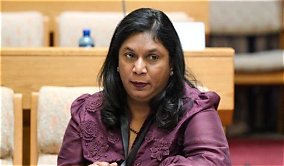
When Advocate Andrea Johnson first took the stand at the Madlanga Commission in Pretoria, she arrived as the head of South Africa’s premier anti-corruption prosecuting body — the Investigating Directorate Against Corruption (IDAC) — defending the integrity of a high-profile case against senior Crime Intelligence officials.
By the time she finished her testimony this week, she had resigned, the case she built looked close to collapse, and a civil society organisation had asked the Legal Practice Council to consider whether she should still be allowed to practise law at all.
What happened in between is a near case-study in how sworn testimony can unravel under sustained cross-examination. Below is a working tally of Johnson’s concessions — moments where she withdrew, corrected, or admitted fault in her own or IDAC’s prior conduct — followed by a look at what consequences are already in motion and which ones are still speculative.
Why this case exists
The Madlanga Commission is probing criminality, political interference and governance failures inside South Africa’s law enforcement structures. Johnson’s IDAC became central to the inquiry after it arrested Crime Intelligence head Lieutenant-General Dumisani Khumalo and several senior officers in June 2025 on fraud and corruption charges relating to the appointment of Brigadier Dineo Mokwele — a former BMW engineer — to a senior technical role in Crime Intelligence. Prosecutors alleged the officers had unlawfully appointed an unqualified person to a senior position. The commission set out to test whether that case had a legitimate legal basis, or whether it reflected something closer to institutional overreach.
The concessions, in sequence
| # | What Johnson had claimed / denied | What she conceded under questioning |
| 1 | Mokwele’s appointment was a “token appointment” | She withdrew the claim and admitted she had never seen Mokwele’s qualifications, CV or application documents before making it, and apologised, saying her judgment relied on incomplete and incorrect information from her own investigators. |
| 2 | Implied Mokwele was under-qualified | She admitted she was unaware Mokwele was pursuing an MBA and held 12 professional certifications, including engineering and mechatronics qualifications. |
| 3 | Her evidence to Parliament’s ad hoc committee was accurate | She acknowledged parts of that testimony were incorrect, saying she had not been fully prepared when she appeared before Parliament. |
| 4 | She was “not at all” aware of a letter from Police Minister Senzo Mchunu about MP Fadiel Adams’ complaint | She conceded her office had in fact received the correspondence, explaining she simply didn’t recall it at the time. |
| 5 | IDAC had not asked Adams to submit a complaint against Crime Intelligence | She conceded it was IDAC that solicited the Section 27 affidavit from Adams — an act she agreed IDAC had no legal authority to take, since the directorate can only receive complaints, not solicit them. |
| 6 | The Khumalo/Mokwele charges were properly founded | Under cross-examination she conceded the charges were baseless, saying, “I relied on the briefing from my team.” |
| 7 | The February 2025 summons over alleged security-vetting manipulation was sound | She conceded the summons she signed may be problematic if there is no strong evidential basis for the underlying allegations. |
| 8 | IDAC’s investigations were all properly authorised | She conceded that investigators in her unit may have pursued corruption investigations without authorisation, in an exchange with co-chair Sesi Baloyi. |
| 9 | Her relationship with Crime Intelligence deputy head Feroz Khan was purely professional | She confirmed a “very close relationship” with Khan, and the commission heard uncontested evidence she had prematurely disclosed a docket in his 2018 assault case. |
| 10 | — | She declined to testify or counter allegations that she acted improperly by sharing that docket with Khan, effectively leaving the allegation unchallenged. |
| 11 | She had acted properly regarding her husband’s appointment | She had previously admitted, across the commission, a parliamentary committee, and a 2025 interview panel, that she acted unethically by not recusing herself from a selection panel that interviewed her husband, Junaid Johnson, for a post at the disbanded Scorpions. |
Throughout, Johnson also invoked her constitutional right against self-incrimination at points during proceedings — a legally available option, but one that inevitably reads, in the court of public opinion, as a tacit admission that the honest answer would have been damaging.
What’s already happening
This wasn’t just bad theatre — it triggered real institutional consequences within days:
- She’s out of IDAC. President Cyril Ramaphosa approved Johnson vacating her post with immediate effect, waiving her three-month notice period, though he thanked her for her years of service in the NPA and at IDAC. Notably, her resignation did not exempt her from continued questioning at the commission — she kept testifying for days after stepping down.
- A Legal Practice Council complaint is now live. Public Interest SA has formally asked the Council to investigate her conduct and consider suspension pending disciplinary proceedings, arguing the evidence raises serious questions about her fitness to practise as a legal practitioner and to serve as the country’s foremost anti-corruption prosecutor.
- The underlying prosecution is wobbling. Khumalo is now positioning to have the criminal charges against him withdrawn, and the accused officials have approached the National Director of Public Prosecutions arguing the case isn’t legally sustainable, framing it instead as an SAPS human-resources matter rather than a criminal one.
- A separate complaint has been lodged directly against her. Mokwele lodged a complaint against Johnson with the IDAC ombudsman, retired judge Takalani Raulinga, via a six-page letter raising concerns about her conduct.
- Calls for a wider institutional clean-up. Corruption watchdog OUTA has said all active IDAC cases will need independent review if the directorate is to retain any credibility, while CASAC’s Lawson Naidoo remarked that individuals at IDAC may not survive the fallout from the testimony, even if the institution itself shouldn’t be dismantled.
What might follow — and what’s still speculation
It’s worth separating what’s procedurally likely from what’s merely plausible:
Reasonably likely:
- A Legal Practice Council disciplinary hearing, given the complaint has already been formally lodged. Outcomes there can range from a reprimand to being struck from the roll of advocates — though that process typically takes months, not weeks.
- Withdrawal or substantial narrowing of the criminal charges against Khumalo, Mokwele and the other officers, since the evidentiary basis for the case has now been undermined largely by IDAC’s own head.
- A recommendation in the commission’s eventual final report addressing IDAC’s institutional practices — how Section 27 referrals are handled, authorisation of investigations, and oversight of investigators.
More speculative:
- Any criminal exposure for Johnson herself (e.g., over the conflicting sworn testimony to Parliament versus the commission) would require a separate referral and investigation; nothing in the current reporting indicates that’s been initiated, and proving perjury against conflicting testimony explained as “not fully prepared” or “didn’t recall” is a high bar.
- Whether the IDAC as an institution survives in its current form, versus being restructured, is a political and legislative question the commission’s report may only partially settle.
The bigger picture
What’s striking here isn’t any single admission — it’s the density of them, and the fact that several concessions directly reversed sworn denials made earlier to Parliament. That pattern is what turned this from “an official facing tough questions” into “an official whose own testimony became the strongest evidence against her case.” For an anti-corruption unit whose entire institutional value proposition is credibility, that’s a difficult hole to climb out of — regardless of what happens to Johnson personally.
This account is based on South African media reporting on ongoing commission proceedings as of 29 July 2026. The Madlanga Commission’s inquiry continues, and further testimony or findings could add to or complicate this picture.
ANDREA JOHNSON RESIGNATION SEEN AS THE END AND A BEGINNING AS SHE COMPLETES HER TESTIMONY
VIEWPOINT: IDO LEKOTA
The Madlanga Commission will hear the final bits of Andrea Johnson evidence today Wednesday, hopefully, wrapping up three days of intense questioning this week since the Independent Directorate Against Corruption (IDAC) head took the stand – and a lot has happened in between, startling revelations that were punctuated by a resignation.
Before the resignation the battle-ground was already laid out. Johnson got the taste of what was coming her way during the first days of her appearance last week before going into the weekend break. On Monday she came back to face the commissioners and her appearance came with the news that she had over the weekend resigned from IDAC.
Justice Minister Mmamoloko Kubayi’s statement that Johnson will not get a golden handshake though she remains entitled to her pension, matters in symbolic terms. It signals that her departure is not being rewarded as a service exit insulated from controversy.
Such a distinction may seem technical, but in a climate of public distrust it is politically important because it tells the public that resignation does not automatically erase the consequences of the conduct under review.
Johnson’s resignation lands in the middle of one of the most consequential accountability moments of the year. She had been under intense questioning before the Madlanga Commission of Inquiry, where her leadership of IDAC, the legality of some of its actions, and the basis for its investigation into senior Crime Intelligence officials came under sustained scrutiny. Her departure may have removed her from the immediate line of fire, but it has not resolved the larger questions the Commission is seeking answers for.
At the heart of the controversy is whether IDAC stayed within its mandate. The Commission heard concerns about the institution’s pursuit of a criminal case involving Crime Intelligence head General Dumisani Khumalo, Brigadier Dineo Mokwele and other officials. That investigation has become a lightning rod because it sits at the intersection of law enforcement, intelligence politics and factional battles within the state.
A major turning point came when Johnson conceded before the commission that IDAC had solicited a Section 27 affidavit from National Coloured Congress (NCC) leader Fadiel Adams. That concession mattered because it suggested a procedural and legal defect in the way the matter was initiated. In a corruption environment already saturated with suspicion, such an admission is not minor. It gives critics room to argue that the investigation was not only aggressive but improperly constructed from the start.
The problem deepened when evidence emerged that, after Johnson instructed investigator Dylan Perumal to contact Adams about the absence of a Section 27 affidavit attached to the complaint, Perumal returned with additional names for inclusion in the investigation. The Commission heard that of the 12 people identified, only three or four were actually covered by Adams’s affidavit. That raised a fundamental question: what legal basis existed for including the rest? If IDAC had no mandate to investigate those officials, then the scope of the matter was expanded without proper authority.
Johnson’s answer when asked why the extra names were included was that she could not recall. In another context, that might be dismissed as a lapse under pressure. In this one, it fed the perception that decisions were made carelessly, or at least without the institutional discipline expected from a unit handling politically sensitive corruption matters. For critics, it was further evidence that her leadership had failed to ensure that those under her acted legally and procedurally.
That is why President Cyril Ramaphosa’s handling of the matter matters so much. By accepting her resignation, he avoided having to push the issue through a tribunal process. But the existence of that option is what makes the story sharper.
A tribunal would have created a formal route to examine her conduct, weigh the evidence and possibly recommend her removal. Johnson appears to have resigned before that process could crystallise. In effect, she chose the exit ramp before the full legal test could begin.
This distinction is important. A resignation can be presented as dignified and voluntary, but when it comes under the shadow of possible dismissal, it becomes something else: a tactical retreat. That does not mean the underlying allegations are proved. It does mean the resignation is best understood as the product of pressure, not as a clean expression of public service. That is why her letter, which described “unprecedented” attacks on her person and office, reads so differently to supporters and critics. To one side it is institutional sacrifice. To the other, it is a self-protective narrative designed to soften the blow of scrutiny.
The broader significance extends well beyond Johnson herself. The Madlanga Commission is not merely examining one official’s decision-making. It is testing whether South Africa’s anti-corruption institutions can be trusted to act within the law even when the cases before them are politically explosive. That is why the commission’s work matters to the country’s fight against corruption. If IDAC is seen to have overreached, the fallout will affect future prosecutions, public confidence and the willingness of citizens to believe that state institutions can still police themselves.
Her resignation also raises the stakes for IDAC’s future leadership. The office cannot afford another appointment that becomes trapped in controversy or seen as politically vulnerable. The Inkatha Freedom Party (IFP) called for a more transparent appointment process and for a head who can inspire public confidence, maintain independence and execute the constitutional mandate with professionalism. Those are not decorative words. They are now the minimum requirement for an office that has lost some of its credibility in the public eye.
The Democratic Alliance (DA)’s response that Johnson’s resignation underscores the importance of allowing the Madlanga Commission to continue without fear, favour or prejudice, captures another key point. The institution must be allowed to follow the evidence wherever it leads. If the commission retreats under political pressure or closes ranks around senior officials the moment will have been wasted.
The Congress Of The People (COPE)’s call for an independent criminal investigation into Johnson’s conduct goes further, and reflects the depth of public frustration with the slow collapse of trust in accountability institutions.
Its language about the deliberate abuse of state institutions speaks to a broader anger in society: that anti-corruption bodies are too often drawn into the very factional fights they are meant to clean up.
What remains now is the question of how far the Madlanga Commission will go with its investigations. Johnson is still expected to return and take the stand for the last time, hopefully, on Wednesday to face further questioning. She is also expected to produce documentary evidence and explain the gaps and contradictions that emerged in her testimony. That is essential. If the commission is to have any credibility, it cannot stop where the resignation starts. It must follow the paper trail, the legal basis of the investigations, and the institutional culture that allowed questionable decisions to take root.
In that sense, Johnson’s departure is both an ending and a beginning. It ends her direct stewardship of IDAC at a moment of severe institutional strain. But it begins a deeper reckoning about how anti-corruption power is exercised, who checks it, and what happens when those checks appear to fail.
President Ramaphosa’s willingness to accept her resignation rather than force a tribunal may have prevented a prolonged institutional showdown. It did not, however, prevent the larger moral and legal debate from continuing.
That debate now goes to the heart of South Africa’s governance problem. The country needs anti-corruption institutions that are tough, lawful and credible. It cannot afford agencies that are seen as extensions of factional struggle or as bodies that improvise beyond their mandate. Johnson’s resignation, forced as it was by rising pressure and the looming possibility of formal removal, is a reminder that the battle against corruption is as much about discipline and process as it is about outcomes.