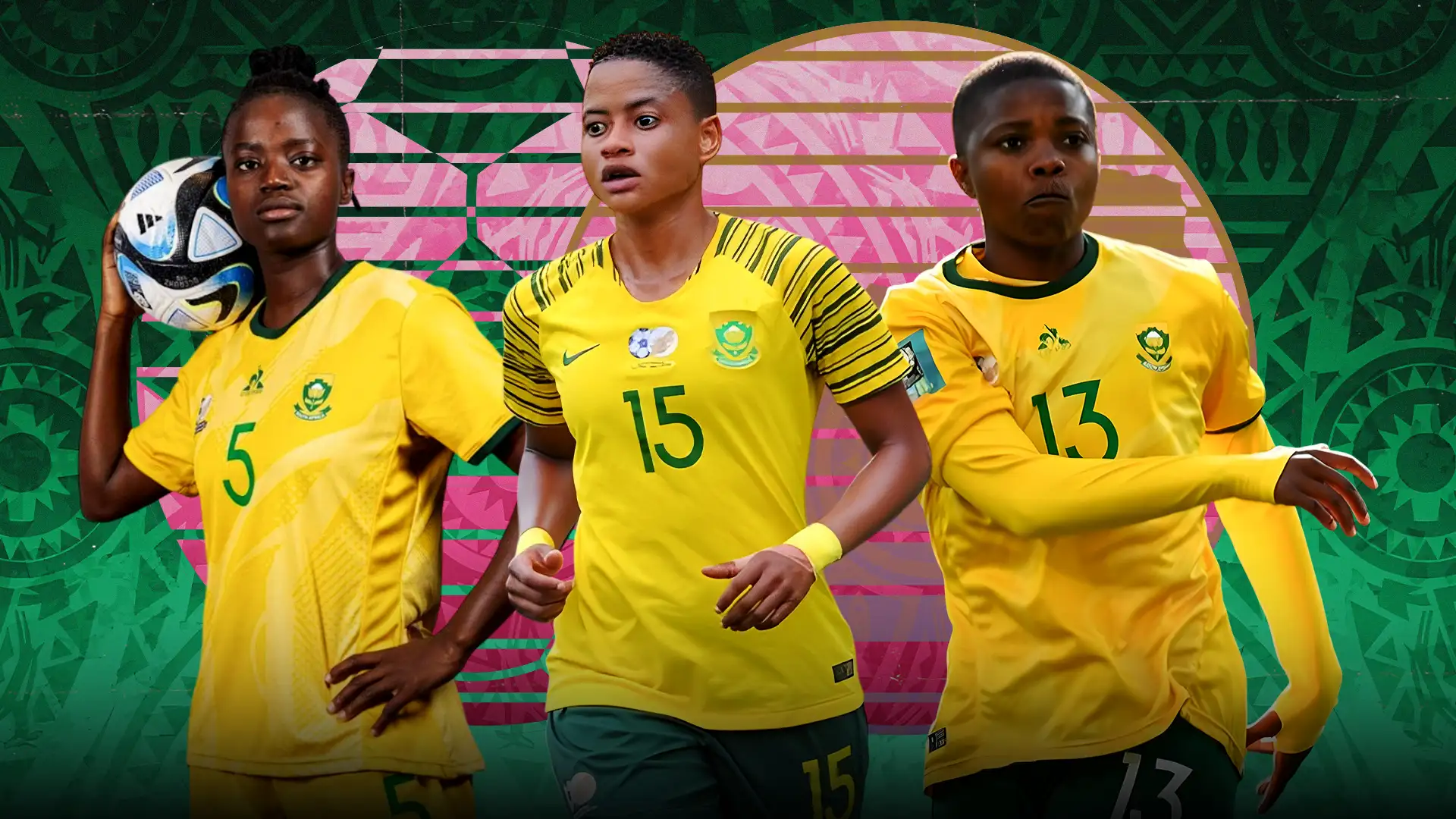

South Africa’s quarter-final exit ends automatic qualification for Brazil 2027, but a play-off lifeline remains. Coach, players and Sports Minister Gayton McKenzie react, and Cameroon’s shock win over Nigeria has reshaped the road ahead.
SPORT DESK | Sunday, 9 August 2026
Banyana Banyana’s Women’s Africa Cup of Nations campaign ended in Rabat on Saturday night, as hosts Morocco came from a position of control to beat South Africa 2-1 in a bruising WAFCON 2026 quarter-final at the Moulay El Hassan Stadium. It was a repeat of the 2022 final, which the South Africans won on the same ground — this time, the Atlas Lionesses got their revenge, and with it, a direct ticket to the 2027 FIFA Women’s World Cup in Brazil.
Sakina Ouzraoui broke the deadlock in the 31st minute with a first-time finish, and Hanane Ait El Haj doubled Morocco’s lead from the penalty spot six minutes into the second half after Noxolo Cesane was penalised for a foul in the box. Thembi Kgatlana pulled one back for Banyana in the 67th minute and the team laid siege to the Moroccan goal in the closing stages, but the equaliser would not come.
A quick correction on the opponent, since this is where a lot of the confusion online has come from: it was Morocco, not Cameroon, who ended Banyana’s tournament. Cameroon’s role in this story is different — and just as important, as explained below.
What Chance Do Banyana Still Have?
All is not lost. WAFCON 2026’s expanded 16-team format built in a second route to Brazil. The four teams that reach Tuesday’s semi-finals — Morocco, Algeria, Cameroon and either Ghana or Malawi — qualify automatically. But the four teams beaten in the quarter-finals are not eliminated from World Cup contention. They go into an additional play-off round on Thursday, 13 August, with the two winners advancing to a FIFA inter-confederation play-off tournament for one more shot at a place in Brazil.
That is where Cameroon becomes relevant to South Africa’s story. On Sunday, Cameroon pulled off one of the tournament’s biggest shocks, beating defending champions Nigeria 1-0 in Casablanca thanks to a first-half strike from teenager Myriam Nyadjou and a string of saves from goalkeeper Michaely Bihina. The result knocked Nigeria out of automatic qualification and sent the Super Falcons into the same play-off pool as Banyana. Under the bracket, South Africa’s beaten quarter-final opponents on Thursday will be Nigeria — the team Cameroon eliminated — while Ivory Coast face the loser of the Ghana-Malawi tie in the other play-off.
“South Africa still have a faint chance of qualifying for the FIFA Women’s World Cup after a 2-1 quarter-final loss to Morocco knocked them out of WAFCON contention.” — ESPN Africa match report
Win on Thursday, and Banyana progress to the FIFA inter-confederation play-off tournament, where they would face teams from other confederations for one of the remaining spots at Brazil 2027. Lose, and the 2026 tournament ends in the most painful way possible: eliminated from both the continental title race and the World Cup in the space of five days.
| The Road That’s Left |
| 13 August — Play-off: South Africa vs Nigeria (winner advances) |
| 13 August — Play-off: Ivory Coast vs Ghana/Malawi loser (winner advances) |
| Winners of both ties progress to the FIFA inter-confederation play-off tournament |
| That tournament decides the final berths at the 2027 FIFA Women’s World Cup in Brazil |
How Did It Go Wrong Against Morocco?
Banyana arrived in the knockout rounds having stumbled through Group B — an opening 2-1 defeat to Tanzania, a 2-2 draw with Ivory Coast, and a nervy 1-0 win over Burkina Faso that only just carried them through on a tiebreaker. By contrast, Morocco went into the quarter-final unbeaten and without conceding a goal in the tournament, and it showed early: the hosts controlled long stretches of the first half before Ouzraoui’s opener, and their second-half penalty took the game further out of reach before Kgatlana’s late rally.
Defender Karabo Dhlamini had said before kick-off that Banyana felt Morocco “haven’t been tested” despite their clean sheets. In the end it was South Africa’s defence that was breached twice, and pundits and fans were quick to point to an ageing spine of the squad and defensive frailties that had already shown up during the group stage, where Banyana conceded four goals in three matches.
“Banyana need to be revamped, half the squad need to retire — a very poor WAFCON.” — fan reaction on social media, via Goal.com
“Extremely tough one, my sisters! You fought hard until the end! Keep your heads up!” — Jermaine Seoposenwe, former Banyana forward
Coach Desiree Ellis: “They’re Not Completely Out of It”
Head coach Dr Desiree Ellis struck a defiant tone in the aftermath, refusing to let the defeat define the campaign and immediately turning attention to Thursday’s play-off.
“For the first 35 minutes we were in control until we conceded, we had played well until that moment. Immediately after the game there was disappointment among the players, but we reminded them that we still have a game to play, and we reminded them that they’re not completely out of it.” — Dr Desiree Ellis, Banyana Banyana head coach
Ellis’s message was echoed by SAFA, who noted the team “fought very hard for the equaliser” and credited the players for forcing Morocco onto the back foot in the closing stages despite trailing by two goals.
The Players: Gutted, But Not Giving Up
Kgatlana, who has carried much of Banyana’s attacking threat throughout the tournament, was central to the late fightback and made clear afterwards that the squad’s focus has already shifted to the play-off. Dhlamini, who spoke confidently before the Morocco game about the team’s readiness, echoed the same sentiment that the group-stage struggles and now the quarter-final exit are “in the past” and that the play-off is where the campaign will be judged.
Beyond the players’ public comments, the mood in the camp was described by SAFA as one of disappointment quickly steadied by the reminder that a route to Brazil still exists — with Thursday’s fixture against Nigeria now the definitive test of that resolve.
Sports Minister Gayton McKenzie Weighs In
Minister of Sport, Arts and Culture Gayton McKenzie, who has been a vocal presence throughout Banyana’s WAFCON campaign — including publicly defending South Africa’s readiness to host the tournament earlier in the year — posted his reaction on X shortly after the final whistle in Rabat.
“Defeat is temporary, but our love for Banyana Banyana is permanent. Lessons were learned, and we shall return a better team. Hold your heads high, ladies.” — Gayton McKenzie, Minister of Sport, Arts and Culture
Gauteng MEC for Sport, Arts, Culture and Recreation Lebogang Maile added his own message of support, saying the team “gave it their all” and praising their “courage, determination and resilience” even in defeat. Neither official’s statement has yet addressed the play-off route directly, but government backing for the campaign has, for now, remained consistent with the tone struck after Banyana’s earlier group-stage defeat to Tanzania, when McKenzie also posted words of encouragement rather than criticism.
What’s Next
Banyana Banyana will now shift their preparation towards Thursday’s play-off against Nigeria in Morocco, with a place in the FIFA inter-confederation play-off tournament — and, by extension, a lingering shot at the 2027 World Cup in Brazil — on the line. It is unfamiliar territory for a side that has never missed a WAFCON since 1995 and has been a fixture at the World Cup since 2019, but Ellis’s message to her players has been consistent: the tournament for Banyana is not yet over.
Sources: SAFA, SAnews, ESPN Africa, Goal.com, beIN Sports, Punch Newspapers, Kick Off, The Citizen, iDiski Times, Sowetan, IOL.