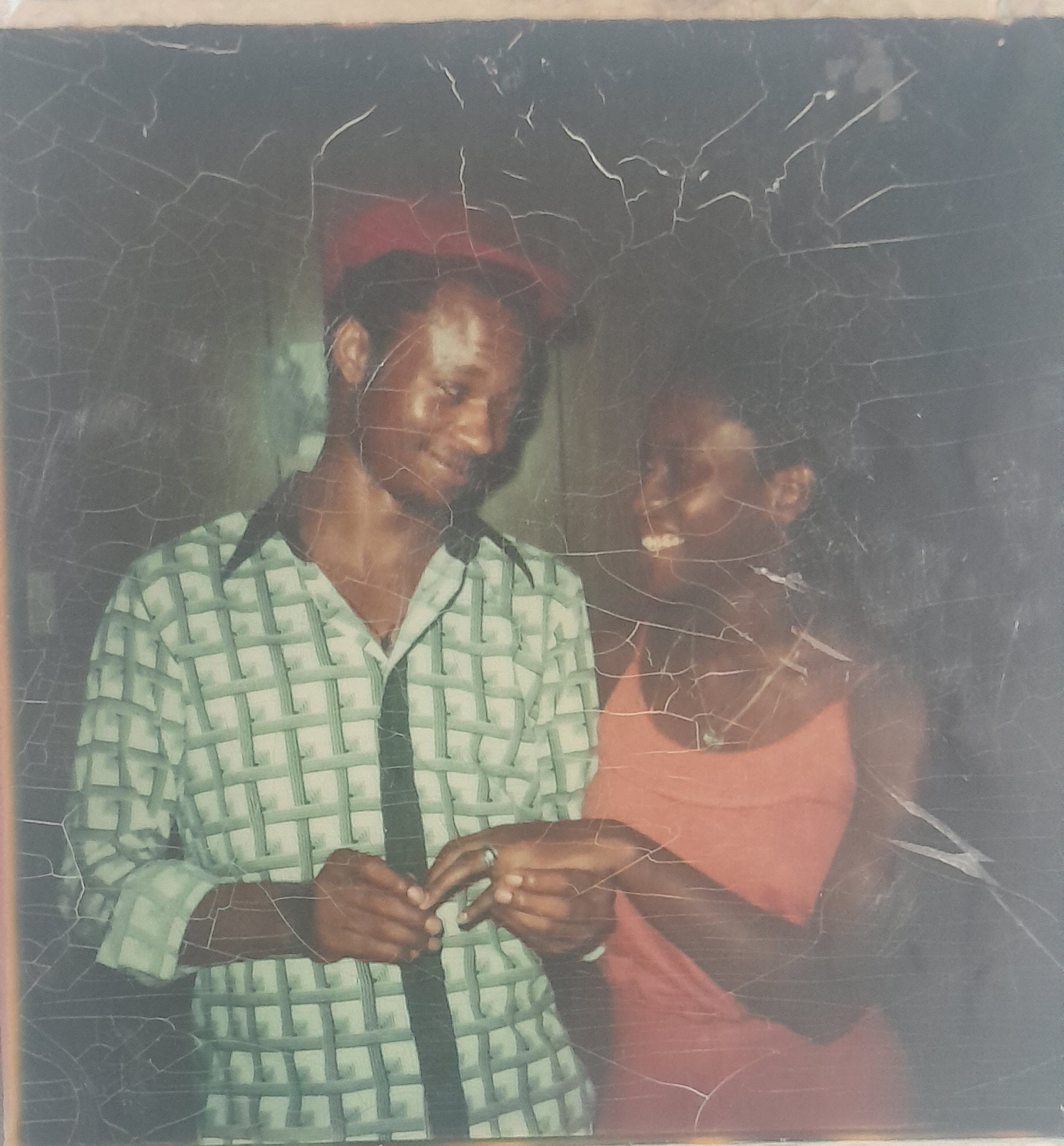

MAIN PHOTO: TSIETSI MASHININI IN EXILE, GETTING ENGAGED TO LIBERIAN MODEL WELMA CAMPBELL
A great deal has been written about that fateful day that changed the course of South African struggle history. In some instances, there have been conflicting narratives, depending on which side of the political fence the story was told. For instance, the official version from police has always claimed that the students were the aggressors who threw stones at them before the first shot rang out. But this was contested by a number of eyewitnesses, including journalists. These conflicting and competing perspectives have been captured in various publications – notably the report of the Cillié Commission of Inquiry, published in 1980.
What is not in dispute, however, is the weather. By all accounts it was a foggy and very cold morning, even by winter standards on the Highveld.
Pupils wore their school uniforms as if it were any normal day. Estimated at 20 000, columns of students from all corners of Soweto took to the streets. Brandishing crudely written posters, they sang and shouted slogans as they gathered at various assembly points throughout the township before the big march.
At Morris Isaacson High, the school bell rang as usual at 8am for the morning assembly. The assembly sessions were 71 normally the responsibility of Norman Malebane, the deputy principal. But on that morning a student, Tsietsi Mashinini, took over the august proceedings as he burst into the singing of ‘Masibulele ku Jesu, ngokuba wasifela’ (Let’s thank Jesus, for He died for us), an old isiXhosa Methodist hymn.
Malebane stopped in his tracks, bemused. He shook his head and laughed as he turned and walked back to the staffroom where he joined his colleagues.
Mashinini broke another tradition when, instead of leading students in reciting ‘The Lord’s Prayer’, he asked Thandi Mkhize, another learner, to sing Nkosi Sikelel’ iAfrika, at the time a hymn that was deemed by the authorities inappropriate to be sung in public.
Thandi was one of the female students who would take turns in singing hymns at assembly. That morning, she was expected to lead pupils in a church song as usual but found herself in the uncomfortable position of singing composer Enoch Sontonga’s banned anthem. The rest of the students took it up and belted it out with gusto. It stirred something deep in their souls: a yearning for a free and just society for all.
Soon after they had hummed the moving anthem’s last note, Mashinini raised his right hand and, with a clenched fist, shouted, ‘Power!’ In response, a forest of fists punched the air as the students shouted back, ‘It’s ours!’ in a chorus.
This was a peaceful march for a just cause, Mashinini told the students. The police would confront them and try to provoke them into behaving in an undisciplined fashion, but it was important that they act with restraint and maintain the moral high ground.
Thereafter, Mashinini, Murphy Morobe and other leaders led students through the gate, which bore a cardboard sign with the words ‘No SBs [security branch police] allowed. Enter at your own risk’.
The atmosphere felt like that of a public holiday as the young marchers poured onto busy Mphuti Street. They turned right and faced the morning sun in the direction of Orlando Stadium, their intended destination. On their way they collected students from other schools, including neighbouring Thesele Secondary in White City Jabavu, where two of the Mashinini brothers, Mpho and Lehlohonolo (Cougar), were scholars. They greeted motorists they encountered on the way with the Black Power salute.
At Mofolo Central they paused outside Sally Motlana’s Sizwe Stores, which would soon become a sanctuary and meeting place for Mashinini (referred to as ‘field marshal’ by some of his admirers) and his lieutenants fleeing from the security police. They were joined by columns of students from Naledi High and other schools in deep Soweto.
In Dube, near the vocational training school on Mncube Drive, a large Plymouth sedan came in their direction. The driver and all her passengers were white women, about five in all. Tsietsi and other older students in charge of the march marshalled the students to the sides of the road, allowing the vehicle to pass without incident. The students cheerfully waved at its occupants. Minutes later, a huge delivery truck with a white driver received the same courtesy.
However, this courtesy wasn’t extended to Daniel Smit, inspector of black schools in the West Rand region. He was driving to Jabulani in the direction of Morris Isaacson High School when the marching schoolchildren stopped him, damaging his car. He was lucky to escape with minor injuries and managed to reach Jabulani, where he opened a case of assault and damage to property.
On their arrival at Orlando West High (Matseke), the Morris Isaacson crowd received a cold reception from MP ‘Shumi’ Mzaidume, a stern headmaster with a reputation for intolerance of student activism. His students were busy writing their first mid-year exam. He told the rowdy, uninvited guests that he did not appreciate any disruption from ill-disciplined learners who didn’t know the purpose of schools. However, when the Matseke students realised what was happening outside, they dropped their pens, tore up their exam papers and joined their visiting peers outside. Many converged on the school gate, and some even jumped over the fence in their eagerness to leave the school premises. There was a lively, carnival-esque atmosphere as students milled around, laughing, chanting and chatting excitedly.
At mid-morning, Lieutenant-Colonel Johannes Augustus Kleingeld, commander of the Orlando Police Station, led a 50-strong squad in a procession of four police trucks, two patrol vans with dogs and three heavy-duty armoured vehicles to the learners’ assembly point up the ridge across the stream separating the two Orlandos. Ironically, the students’ march had been planned three days earlier right under Kleingeld’s nose – directly opposite the police station at the DOCC.
The paths of the students and the police crossed at the intersection of Klipspruit Valley and Khumalo roads, where Hastings Ndlovu would later be shot. Although circumstances around his killing are still sketchy, he is regarded as the first casualty of the uprising.
Majakathata Mokoena, a student leader from Orlando High, had to intervene to remind the students that theirs was a peaceful march; there was no need to risk the wrath of the police by damaging property.
Despite attempts by the police to dissuade the students from proceeding further, they pushed ahead regardless and crossed the bridge into Orlando West. From the westerly direction, columns of marchers emerged from all corners of the neighbourhood, swelling the numbers in the vicinity of Matseke High and Phefeni Secondary School, near the home of the Mandelas, the Tutus and the Sisulus.
The clock struck ten and the wintry air was thick with tension and expectation. ‘Get that car out of here! They are coming,’ a schoolteacher from Matseke High urged a driver from The Star newspaper. His passenger, Lucy Gough Berger, was a middle-aged white woman and a popular columnist. The teacher had a hunch that white lives would be in danger. He was proven right minutes later when the already tense situation spiralled out of control with the first shots fired by police.
More uniformed police – mainly white – and riot squad men arrived on the scene with dogs, mostly German shepherds. Joking, laughing and smoking, they took their positions in a half circle and faced the students like an army preparing for battle, a small battalion in a sea of black faces displaying placards with slogans like ‘Down with Afrikaans’, ‘Black Power’, ‘This is our day’ and ‘No to Afrikaans’, while chanting freedom songs like ‘Niyabasaba na? Hayi asibasabi, siyabafuna’ (Are you scared of them? No, we are not scared. We want them) and ‘Senzeni Na?’ (What have we done?), a haunting, mournful hymn steeped in the tradition of struggle songs and usually sung at funerals and night vigils. Others showed the police peace signs.
Someone remembered ‘Mbhayimbhayi’ (Cannon), exiled singer Miriam Makeba’s militant song. The rest joined in spontaneously and chanted it to their hearts’ content. As the crowd grew bigger, the singing got louder and the barking of the police dogs became incessant. Held securely on their leashes, the animals bared their canines and wagged their tails, as if understanding the significance of the day.
The bulk of the student crowd was concentrated at the entrance of Orlando West High, facing the police who were positioned about 80 metres up the street on the western side of Moema Street.
A group of curious residents – mostly women – gathered on the roadside across from the two schools. ‘Are you going to kill our children?’ one woman asked a black sergeant. ‘No,’ he replied calmly. ‘The children are not fighting anyone. They are only demonstrating.’
The students were now singing ‘Morena Boloka Sechaba sa Heso’, the Sesotho version of the anthem ‘God Save Our Nation’. Two policemen broke ranks and strode menacingly towards the students, who then started waving their hands, gesturing for the policemen to go away.
Without saying a word, one of them picked up what might have been a stone and hurled the unidentified missile in the direction of the students. His colleague immediately followed his example with a number of teargas canisters.
Several demonstrators who stood in front and on the flanks of the crowd panicked and ran helter-skelter in all directions. As they scattered in retreat, one young woman stood her ground. She defiantly stepped towards the police and screamed, ‘Shoot me! Shoot me!’
Taken aback by the unexpected bravery, the men in blue lowered their weapons in a gesture of capitulation.
Emboldened by this incredibly courageous act, the retreating students regrouped
and launched a frenzied counterattack on the police with a hail of stones.
The police raised their firearms again and aimed at the rampaging crowd. Bang! Bang! Bang! The loud sound of gunfire was matched by the children’s heart-rending screams that pierced the cold morning air. A fleeing schoolboy was struck by a police bullet.
In the chaos and confusion of the situation, Antoinette Pieterson searched for her younger brother, Zolile Hector Pieterson. Earlier that morning, the 17-year-old Form II (Grade 9) pupil had seen him in the crowd and warned him not to roam around. She wanted to go back home with him after the march. The two siblings lived with their grandmother in White City Jabavu, where Hector was a Standard Five (Grade 7) pupil at Itshepeng Higher Primary School. But the previous night he had slept at his parents’ home in Meadowlands.
Where could he be in this war zone? Had he managed to elude the bullets and find his way home? As these questions flashed across Antoinette’s anxious mind, she saw a group of boys surrounding a youngster who lay injured on the side of the street. As she approached them, she screamed hysterically when she realised the injured child was Hector.
Suddenly, a lanky youth clad in faded denim overalls appeared out of nowhere, picked up Hector, and began to carry him down the street, with an anguished Antoinette jogging next to him. He was later identified as the 18-year-old Mbuyisa Makhubu.
Sophie Tema, a reporter for The World, was proceeding down the street leading from the Phefeni Clinic in a staff car driven by Stanley Mtshali when she saw the group coming towards them. She ordered Stanley to stop the car – a battered VW Beetle – so that they could take the injured boy to the clinic. Makhubu put Hector inside the car, and he and Antoinette climbed in, with Tema following them on foot.
Following a tip-off, the editor of The World, Percy Qoboza, had sent two news teams to cover the day’s events. One team consisted of Sophie Tema and Dan Tleketle, driven by Mtshali. The other consisted of the photographer Sam Nzima and other reporters, driven by Thomas Khosa.
Nzima also witnessed the scene surrounding Hector Pieterson, and had managed to fire off a few frames. He knew that, if the police realised he had taken the pictures, they would confiscate the film. So he gave the roll to Thomas Khosa, who was also trying his hand at photography under the mentorship of the seasoned lensman and former Robben Islander, the late Moffat Zungu. Khosa sped out of the troubled neighbourhood and drove in a northerly direction via the old New Canada Road that connected Soweto to the city. About fifteen minutes later, he stopped outside the offices of The World and Weekend World newspapers at 11 Newclare Road, Industria, on time for the darkroom guys to process the images for the late-afternoon edition.
At the clinic, the doctor who examined Hector had sad news: The boy was dead. A police bullet had struck him in the back, and he was bleeding through his mouth. According to a postmortem report, the shot caused severe damage to the liver and kidneys, causing instant death.
BOOK EXTRACT TWO
JUNE 16, 1976, BOOK EXTRACT TWO – THE DAY A POLICE DOG WAS SET ALIGHT
Soweto was now a maelstrom of smoke and fire, with running battles between the police and rioting people. Scenes of murder and mayhem played themselves out on the bloodied streets and in the back alleys.
Earlier that morning, just minutes before the bloodbath, a policeman had decided to unleash a German shepherd on the pupils who were loitering outside the premises of Orlando West Junior Secondary. The snarling canine had bounded towards the children, who made a hasty retreat into the schoolyard. But when the dog entered their territory, the students, most of them girls, turned around and ganged up against him. They stoned, kicked and stabbed the dog until he slumped on the ground, dead. One of the students dragged the dog to the school gate. Others prepared a bonfire on his carcass with newspapers and textbooks. Then they doused the dog with petrol and burned him to ashes.
This swift and sadistic act incensed the police. Pandemonium erupted as police, armed with teargas canisters, automatic rifles, pistols and revolvers, released more dogs into the crowd, some of which met the same fate as the first German shepherd.
A second volley of shots rang out, and the students scattered. Shoes, schoolbags, exercise books and all sorts of debris littered the ground.
In the ensuing stampede, many of the fleeing students scaled fences and ran into yards of houses situated in the immediate vicinity, while others sought sanctuary in the premises of the massive Methodist church located opposite Orlando West High. In the blink of an eye, the inside of the church was overflowing with tiny, black bodies, their previously immaculate uniforms torn and bloodied.
Their eyes burning and itching, they were choking, sneezing and coughing non-stop inside the crowded house of worship, the effect of teargas having taken its toll, not to mention the fact that it was their first encounter with the offending white smoke. The combination of the smell of blood and teargas in such a cramped space was overwhelming for some of the children. Feeling nauseous and gasping for fresh air, some of them trudged outside while others passed out.
After this unprovoked show of savage force, police drove down Vilakazi Street, into Khumalo Road and past the bridge, and occupied the open field on the Orlando East side along Klipspruit Valley Road. It was a strategic retreat to review the explosive situation and plan the next onslaught. Although reinforcements had been trickling in, including army units in armoured cars (hippos) and helicopters, the police and soldiers were still hopelessly outnumbered by the rioters.
The respite gave Tsietsi Mashinini the chance to address the students on the next move. Outside Uncle Tom’s Hall, he jumped on top of a bulldozer and spoke to the visibly angry, sullen and grim crowds of students milling around. Raising his arms, he pleaded for calm in the din amid angry shouts of ‘We want them [the police] here. Let them come. We’re waiting for them!’
Barely audible, Tsietsi finally managed to speak and said something to this effect: ‘Those who can hear me, please pass the message to others. About eight students have been killed and more injured. We have to disperse as police are preparing for another attack. We have to disperse quickly before they return, but count this moment as a victory against the regime. There won’t be schooling for another week.’
His short address was greeted with loud cheers. Louder cheers followed when he told them that, from then onwards, everything that belonged to the state was a target to be destroyed.
They went on a rampage. In less than an hour, what had started as a peaceful demonstration had deteriorated into an orgy of violence and destruction of public property.
A black policeman was cornered by pupils in someone’s yard. They beat him mercilessly, relieving him of his handcuffs and manacling his hands behind his back. They then chased him down Khumalo Road and over the bridge across the spruit.
In Vilakazi Street, where it had all begun, a group of students and layabouts stoned a milk-delivery truck. As the driver fled, the crowd helped themselves to dozens of milk cartons before they drove the vehicle away to transport other rioters to strategic points where they manned roadblocks.
On Pela Street, in the vicinity of Uncle Tom’s Hall across from where the Hector Pieterson Memorial now stands, a pall of black smoke billowed. Another delivery vehicle was engulfed in flames. An army helicopter hovered above, seemingly attracted by the fate of the burning vehicle below. It dropped teargas on the rampaging armies of youth swelling in the streets.
A Chinese man driving a Kombi with two black passengers knocked down a black girl on Khumalo Drive in an attempt to escape an attack by rioters. He was lucky to be allowed to proceed.
In another incident, a lorry with liquor was stopped by rioters in the Phefeni area. The liquor was handed out to bystanders, and the vehicle was set alight.
Alcoholism had been a subject of concern in black communities for a long time. Municipal beerhalls and bottle stores were built at strategic places, such as railway stations and bus ranks. These were the first outlets breadwinners saw after emerging from the train platforms. On pay days, a share of these men’s meagre wages was spent in these places. The students blamed them for the cycle of poverty and political apathy among their parents.
Although Naledi community hall was strictly speaking not government property, it did not survive the wrath of arsonists. Its destruction was an inconvenience for community leaders such as Winnie Mandela and Dr Aaron Matlhare who held meetings of the Black Parents’ Association (BPA) there.
By midday, local clinics, surgeries and the casualty wards at Baragwanath Hospital were gory theatres of wounded children and anxious relatives. The victims were transported in private vehicles as most ambulances dared not enter the township. The few emergency services that did, did so under police escort.
Dr Aaron Matlhare’s surgery at Orlando West was another hotbed of activity. So was that of Dr Nthato Motlana in Diepkloof.
Less than an hour after Hector Pieterson was killed, a white West Rand Administration Board official, Johannes ‘JHB’ Esterhuizen, was cornered on Khumalo Street near Phomolong Clinic. He jumped out of the truck he was driving in an attempt to escape, but was surrounded by a group of youngsters. They beat him to a pulp, using an assortment of weapons, including rocks and axes. They then dumped his body into a dustbin in the alleyway across from the clinic. In the stampede of the moment, police who were patrolling the area missed his gruesome killing. He was only discovered later that afternoon, four hours after the incident.
BOOK EXTRACT ONE
On Sunday 13 June, about 500 students from different schools in Soweto met at the Donaldson Orlando Community Centre (DOCC) in Orlando East, one of the earliest sections in the township, with a rich history of anti-apartheid activism and pioneers in various fields. The DOCC ranks among Soweto’s oldest landmarks and has gained a place in history as a space for artistic, sporting and civic activities.
Opened on 10 January 1948 in memory of Lt-Col James Donaldson, the centre hosted the first annual festival of the black arts in 1973, organised by Mdali (Music, Drama, Art & Literature), a cultural group founded in Alexandra by Mongane Serote and Molefe Pheto. It also provided a stage for leading jazz singers from the Sophiatown era, notably Dolly Rathebe, Dorothy Masuku, Thandi Klaasen and Miriam Makeba. (Following the 1976 uprising, Makeba would play a significant role in Tsietsi’s life in exile.)
The DOCC was a creative space for prominent playwrights like Gibson Kente, Sam Mhangwane and Boikie Mohlamme – Soweto’s ‘big three’ of black theatre whose works inspired a younger generation of dramatists, including Tsietsi Mashinini, Seth Mazibuko and Duma Ndlovu. And Nelson Mandela worked out and sparred in its gymnasium with famous fighters of the day, such as Jerry ‘Uyinja’ Moloi and Eric ‘Black Material’ Ntsele.
On this day, however, the students didn’t gather there to watch a boxing match, although their meeting involved planning a fight; it was an unprecedented gathering to discuss how they could challenge the Afrikaans decree as well as other apartheid injustices.
For Tsietsi and the SASM leadership, the historic student summit was also an opportunity to engage with the incident at Naledi High in a higher gear and galvanise students into protest action on a larger scale. About 55 junior and high schools were represented by at least two student delegates from each. Due to their political activism, there were more representatives from Naledi and Morris Isaacson.
There was an air of camaraderie, with students laughing and talking animatedly outside the venue just before they packed the hall. Six people were identified as police informers and politely asked to leave.
The proceedings were chaired by SASM executive members Tebello Motapanyane, David Kutumela and Zwelinzima Sizani. Seth Mazibuko, then a 15-year-old class prefect from Orlando West Junior Secondary School, was invited to update delegates about the state of affairs at his alma mater on the issue of Afrikaans and the boycott. This school had come to symbolise the protests against the Afrikaans-language decree.
A leading item on the agenda was the election of an executive, as police detention and harassment had caused some vacancies. Tsietsi Mashinini was elected as president, and Seth Mazibuko as his deputy. Murphy Morobe, another Morris Isaacson High student and Tsietsi’s classmate, was elected treasurer. Zwelinzima Sizani, a former Orlando High student, was elected as organiser, and Sibongile Mkhabela (née Mthembu) as secretary – the only woman on the executive. They would form the SASM Action Committee, or simply, the Action Committee. This was suggested by Sizani in order to protect SASM against being banned.
Tsietsi Mashinini suggested that high-school students should stage a protest march on 16 June – the day on which mid-year exams were due to start – in solidarity with their junior-secondary and higher-primary counterparts who had been boycotting classes for the preceding six weeks. His proposal was met with cheers of approval by the majority of delegates.
Motapanyane and other seasoned SASM members proposed a strike instead; in other words, a ‘solidarity’ boycott of classes and mid-year exams. But Tsietsi argued that boycotts had been tested and found to be ineffective. He cited the cases of the junior-secondary and higher-primary schools that had been boycotting classes since April. Although the students had made it clear that they were not prepared to accept the Afrikaans decree, authorities had remained unmoved. It was time to adopt a different strategy.
A mass demonstration in the full public glare would make it difficult for the authorities to victimise individual students. As long as the marchers remained peaceful and did not provoke the police, everything would be fine.
Tsietsi’s proposal for a march two days later – on Wednesday 16 June – eventually prevailed and was approved by the majority of delegates. He and other Action Committee leaders spent the intervening days visiting schools to inform students and rally support.
There were also placards to be prepared for all the schools intending to participate. The routes and schedules for the march were meticulously mapped out so that at a particular time all schools would converge at Orlando West Junior Secondary – on the corner of Vilakazi and Moema streets – as a show of respect for and solidarity with the school that had started it all. Thereafter, the marchers would proceed down Vilakazi Street, into Khumalo Road over the bridge, turn left into Klipspruit Valley Road – popularly known as Killer Road, due to its frequent fatal car crashes – and end up at Orlando Stadium, the mecca of South African football.
Once inside the stadium, Tsietsi would read a memorandum of demands, including the abolition of Bantu Education and its odious policy of Afrikaans as a medium of instruction in favour of equal education for all, and the right of students to be taught in their home languages as well as English, regarded as a gateway to educational and professional opportunities in South Africa and beyond.
The memorandum would call for the release of student detainees and others who had been arrested during the school boycotts and protests since April. These included Enos Ngutshane and a number of black consciousness leaders, including the SASO Nine. It would also call for the abolition of apartheid in favour of a constitution that would recognise the rights of all citizens regardless of colour.
Lastly, it would call for the release of all political prisoners in order to enable a new political dispensation based on dialogue between the government and authentic black leaders, as opposed to the puppet administrators known as ‘chief ministers’ in the homelands and township councillors.
After Mashinini’s speech, the students would disperse, satisfied that they had made their point. The ball would then be in the authorities’ court.
All this information and all these preparations had to be kept under wraps until the big day – a secret to be concealed from parents, newspapers, and, of course, the authorities.
Some participants said later that, after meeting at the stadium, the students intended to continue to the Department of Bantu Education’s regional offices in Diepkloof where they would hand over a list of demands.
NEXT: THIRD EXTRACT INSTALMENT FROM THE TSIETSI MASHININI BOOK – LOOK OUT FOR IT!