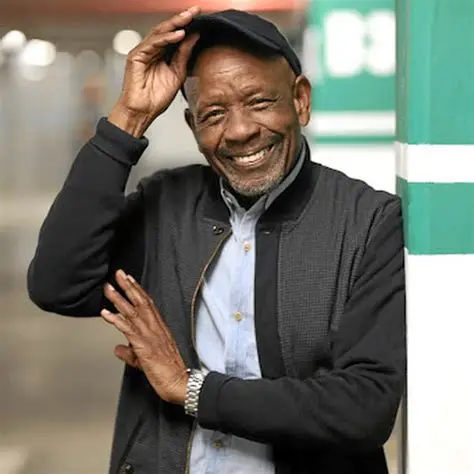

MAIN PHOTO: MUSIC LEGEND CAIPHUS KATSE SEMENYA
Ahead of a landmark three-night tribute at the Joburg Theatre, we trace the life and legacy of the composer who took South African song from Alexandra township to Hollywood scoring stages — and who, at 87, says he isn’t done yet.
LEN KALANE
A Tribute Worthy Of A Living Legend
From 18 to 20 September 2026, the Nelson Mandela Theatre at the Joburg Theatre in Braamfontein will host “Caiphus Semenya – Songbook” (also billed as “Chapters of Music – A Tribute to Caiphus Semenya”), a three-day production built entirely around the six-decade songbook of composer, arranger and musician Caiphus Semenya.
The production is described by Joburg Theatre not as a straightforward concert or a biography, but as “an encounter with a life told through the language that has always defined him: music.” It is presented on the Nelson Mandela Theatre stage as part of Joburg City Theatres’ ongoing tribute series honouring recipients of the Joburg City Theatres Star — productions the theatre says are “declarations that our cultural giants deserve to be celebrated while they can still witness the standing ovation.”
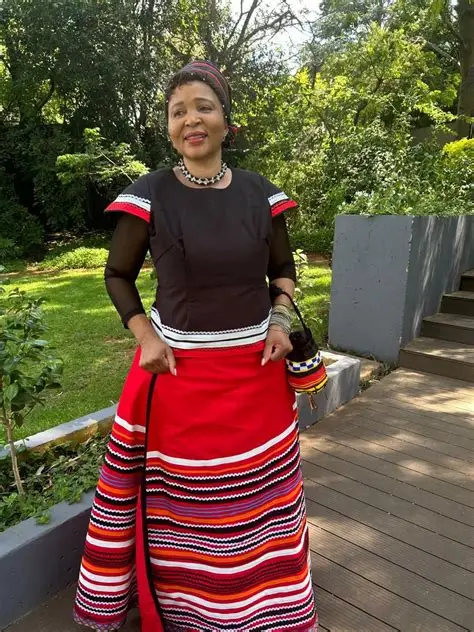
CAPTION: XOLISWA NGEMA – JOBURG THEATRE CEO
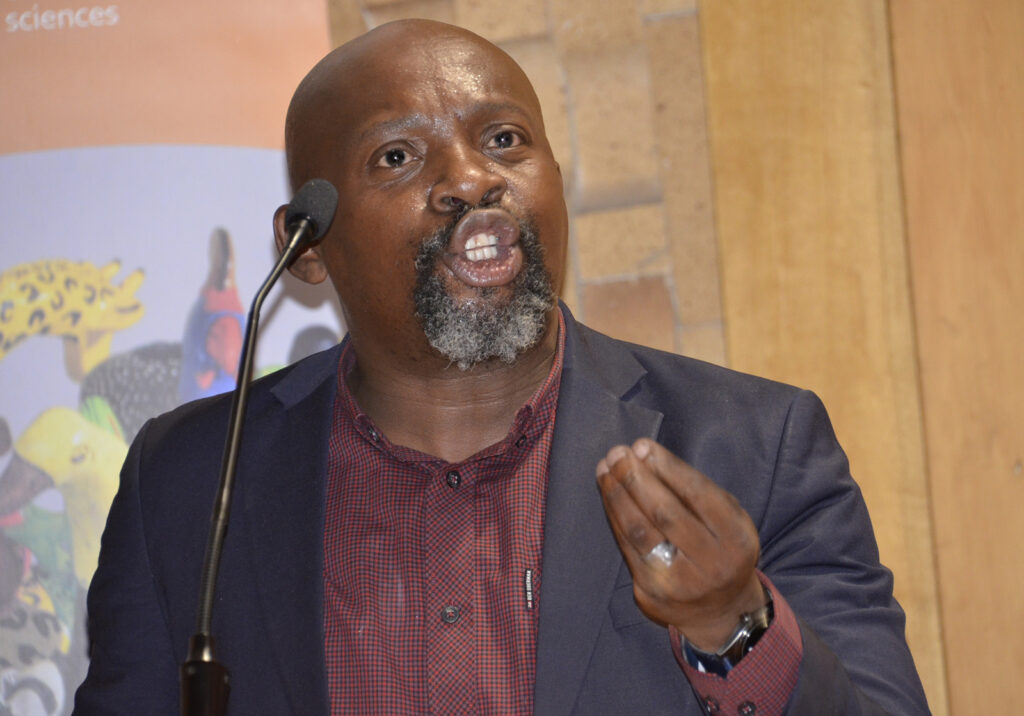
CAPTION: JAMES NGCOBO – DIRECTOR
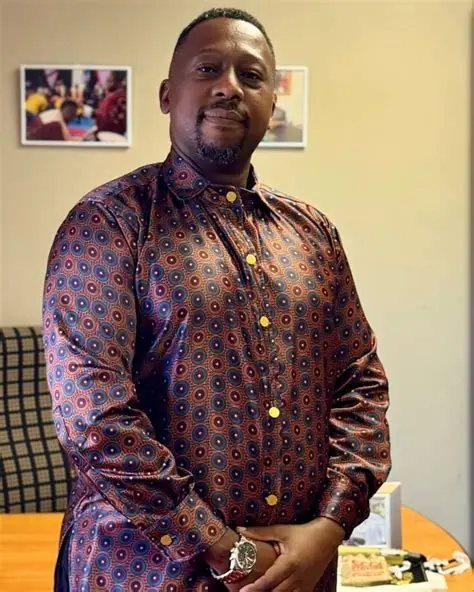
CAPTION: TSHEPO MNGOMA – MUSIC DIRECTOR
The idea took shape over conversations between Joburg Theatre chief executive Xoliswa Ngema, director James Ngcobo and Semenya himself, with Tshepo Mngoma brought in as musical director. Semenya has described it as a collective idea rather than his own: he was, in his words, “tired of just another concert,” and was eventually persuaded to sit back, bring in a line-up of artists, and let Mngoma and Ngcobo shape the show around his catalogue.

CAPTION: AMANDA BLACK

CAPTION: NATHI

CAPTION: MONEOA
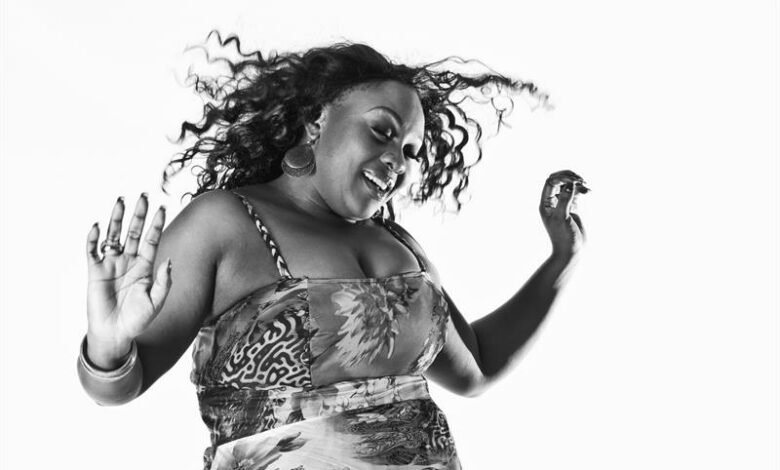
CAPTION: NOKUKHANYA DLAMINI
The confirmed line-up draws together established and emerging voices, including Amanda Black, Nathi, Moneoa and Nokukhanya Dlamini, who will each interpret songs spanning Semenya’s career — from decades-old standards to lesser-known compositions — through live orchestration, movement and visual storytelling. It is a rare instance of a living South African composer having his catalogue reinterpreted on this scale, by this range of generations, while he is still very much active.
From Alexandra To Hollywood
Thabo Caiphus Katse Semenya was born on 19 August 1939 in Alexandra, Johannesburg, into a musical family. He first came to public attention as a teenager, forming a group called the Katzenjammer Kids at Benoni High School before being drawn into the cast of the landmark 1959 jazz opera King Kong — the production that also introduced him to his future wife and lifelong musical partner, singer Letta Mbulu.
Like many black South African musicians of his generation, Semenya left the country in the 1960s to escape the conditions of apartheid, eventually settling in Los Angeles with Mbulu. It was there that his career as a composer and arranger overtook his work as a performer. He built a reputation working across jazz and pop, contributing arrangements and compositions for artists including Cannonball Adderley, Nina Simone, Lou Rawls and Harry Belafonte, while remaining closely tied to fellow South African exiles such as Hugh Masekela, Jonas Gwangwa and Miriam Makeba.
It was in this period that Semenya forged the collaboration that would define much of his international profile: a long-running partnership with producer Quincy Jones. Together they worked on the score for the 1977 miniseries Roots — a production that won nine Emmy Awards — and, in 1985, on Steven Spielberg’s The Color Purple, for which Semenya shared an Academy Award nomination for Best Original Score. He is also widely credited as the arranger behind the Swahili chant that opens Michael Jackson’s “Liberian Girl” on the 1987 album Bad, and later contributed composition credits to Quincy Jones’s Back on the Block, whose title track won the Grammy for Album of the Year in 1991.
Semenya returned to South Africa in the early 1990s as apartheid ended, going on to compose scores for SABC television productions including Molo Fish, Vicious Circle and Gaba Mootho. At home, he and Mbulu became household names performing as “Caiphus & Letta,” with songs such as “Angelina” and “Matswale” becoming standards at South African — and Zimbabwean — weddings and celebrations for decades. In recognition of his contribution to South African music and to the anti-apartheid struggle, Semenya and Mbulu were jointly awarded the Order of Ikhamanga in Silver by the South African government, and in 2015 Semenya received the ACT Lifetime Achievement Award for Music.
Video: Caiphus Semenya gets Lifetime Achievement Award for Music — Credit: SABC News / YouTube
“I Just Pull Out What’s Inside”
Speaking on SABC’s Rise and Shine, Semenya reflected on how the Songbook production came together, and on the roots of his cross-continental style. Asked about the enduring popularity of songs like “Angelina” across the region, he traced his musical instincts back to childhood, listening to his father’s gramophone records in Johannesburg.
When I was a kid, my father had a gramophone. I think the first time I heard a guitar player from Congo, I loved that Congolese guitar. That bug bit me since I was a child — that I was going to try and do music from other parts of Africa. If you listen to Angelina, there’s a little bit of Congo in there, there’s SA in there, and a little bit of the United States. — Caiphus Semenya, on SABC’s Rise and Shine
In a separate radio interview, Semenya has spoken more broadly about where his songs come from, describing his gift as something closer to instinct than formal training — music, in his telling, is not something he constructs so much as something he draws out from within himself. He has pointed to South African jazz composer Victor Ndlazilwane, best known as the principal composer and musical director of the Jazz Ministers, among the figures who shaped his musical direction — a fitting lineage, given that Ndlazilwane, like Semenya, passed through the King Kong era of South African jazz. Semenya has also spoken of songs arriving to him unbidden, including in his sleep, a description that fits the largely self-taught, feel-driven way he has described his own creative process over the years.
This publication was not able to independently verify the exact wording of every remark made in that broadcast interview beyond what was directly heard, so readers should treat the quotations describing his creative process as reported rather than independently confirmed against a published transcript.
Not Finished Yet
For an artist whose songbook is being celebrated on a major theatre stage, Semenya remains notably forward-looking. He has indicated that a return to the live festival circuit is on the cards, once again alongside Mbulu, after a period away from regular live performance — and has spoken of roughly ten new songs he intends to release. Coupled with the Joburg Theatre tribute and his continuing work establishing an arts academy, it points to a musician using this moment of celebration as a springboard rather than a curtain call.
Whether or not every detail of his current plans is captured in any single broadcast, the throughline is consistent: a composer who left South Africa under apartheid, built a career among some of the biggest names in American jazz, pop and film music, brought that experience home, and now — approaching 90 — is handing his songbook to a new generation of South African voices while still, by his own account, writing new chapters.
If You Go
- What: Caiphus Semenya – Songbook (“Chapters of Music – A Tribute to Caiphus Semenya”)
- Where: Nelson Mandela Theatre, Joburg Theatre, 163 Civic Boulevard, Braamfontein, Johannesburg
- When: Friday 18 to Sunday 20 September 2026
- Line-up: Amanda Black, Nathi, Moneoa, Nokukhanya Dlamini and others, directed by James Ngcobo with Tshepo Mngoma as musical director
- Bookings: via Joburg Theatre’s official box office and website
Sources: Joburg Theatre; SABC’s Rise and Shine (Channel Africa); Bona Magazine; SA Music News; Wikipedia; AllMusic; Music In Africa; Gallo Music Publishers. Radio-interview quotations regarding Semenya’s creative process, his forthcoming songs and live plans are reported as relayed and have not been independently corroborated against a published transcript.