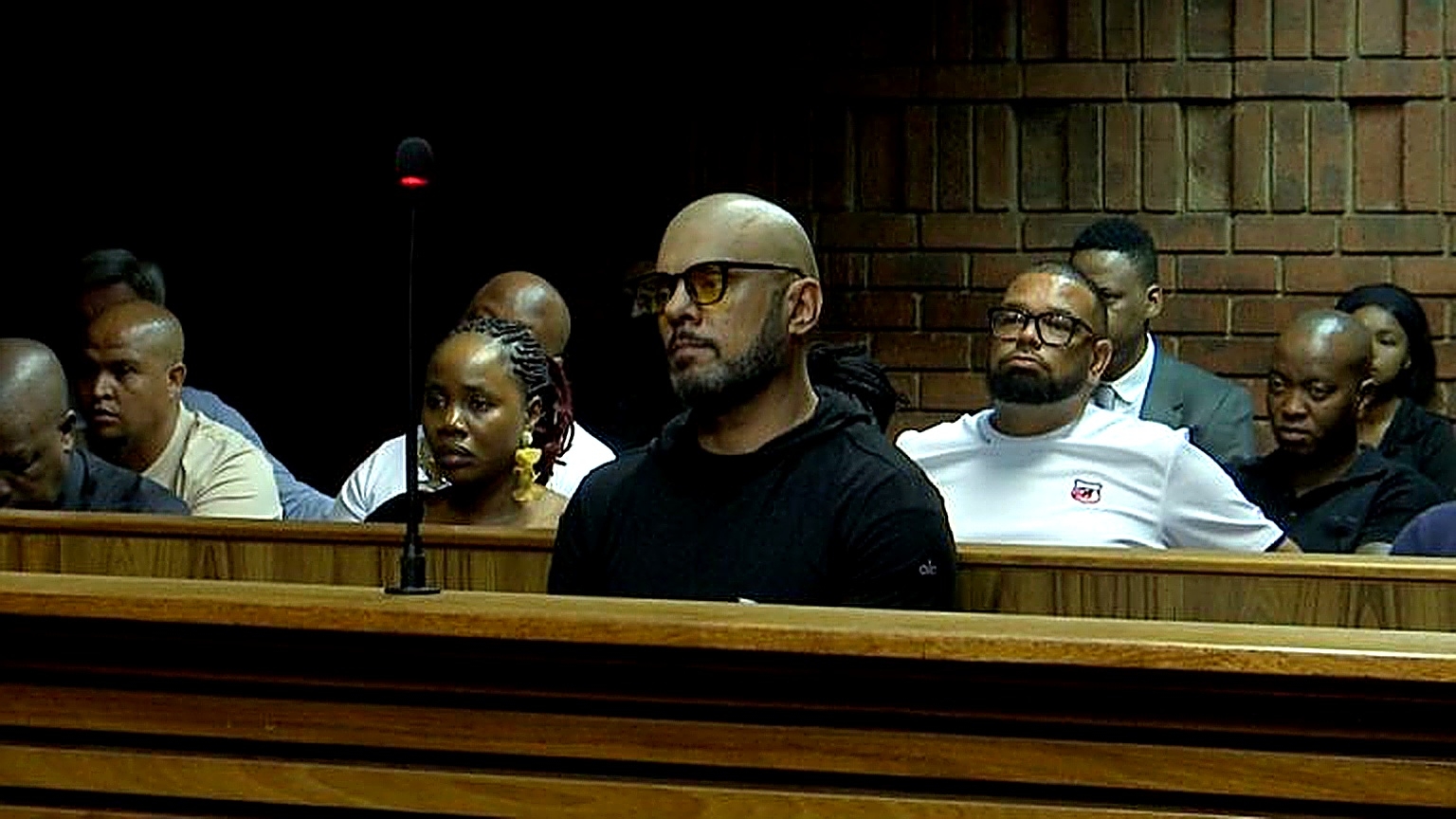

A R100 000 bail order in Pretoria has not opened the door for Suliman Carrim. With employees expected to plead guilty in the Beitbridge vehicle case, Friday’s hearing could define what comes next.
BY PiE NEWSDESK
Suliman Carrim won his bail argument in Pretoria on Wednesday, but he did not go home. The North West businessman remains in custody because a second case, this one in Limpopo, is still waiting for a ruling. On Friday 30 October the Musina Magistrate’s Court will resume his bail proceedings, and whether he walks out of custody will be decided there.
Two cases that began on very different footing are now bound together. One grew out of the Madlanga Commission and Carrim’s repeated absences from it. The other involves two Absa-financed vehicles stopped at the Beitbridge border post. Taken together, they raise the question of where Carrim actually stands, and how much more may be coming.
Pretoria: bail granted, release withheld
Magistrate Marc Curlewis found that the risks the state had identified could be managed through strict conditions and that continued detention was not in the interests of justice. Bail was set at R100 000. Reports say the conditions include surrendering his passport, reporting weekly to a police station and contacting the Madlanga Commission within 48 hours.
The magistrate did not give Carrim a clean bill of health. He acknowledged inconsistencies in Carrim’s testimony, including on his health, and said his earlier failure to attend the commission was concerning. But he also stressed that a bail hearing is not the place to decide guilt. Weighing Carrim’s ties to South Africa, the verified home address in North West and a valid return ticket from his trips to Saudi Arabia and Pakistan, he concluded that conditions would be enough. The case was postponed to 8 December for disclosure of the docket.
Carrim faces a charge of contravening the Commissions Act. He was arrested on 15 October at OR Tambo International Airport by the Commission Recommendations Task Team, moments before a flight to Saudi Arabia via the UAE. His lawyers argued it was a religious pilgrimage and pointed to a return ticket. The state argued that the way he was arrested, and his history with the commission, pointed to a flight risk.
The state’s late push, and why it failed
Just before judgment, the prosecution asked to reopen its opposition to bail. It put two things forward as new: the Musina case, and properties allegedly linked to Carrim’s wife. Because the couple is married in community of property, the state argued, her properties should have been disclosed when Carrim told the court about his assets, and the omission supported its flight-risk argument.
The defence called this an attempt to delay judgment and to create an atmosphere around the case. It argued that Carrim was not obliged to disclose his wife’s properties, that police had already verified his address, and that the Musina matter had no bearing on the Pretoria allegations. The magistrate noted that he had not asked for further information, allowed the state to speak, and then declined to reopen the case and handed down judgment.
That ruling matters beyond Pretoria. A court has now heard the same Musina charges and the same property argument and chose not to let them reopen the bail question in the Madlanga matter. That does not bind the Musina court, which will hear its own evidence on its own charges, but it is a significant data point.
How Carrim got here
Carrim, a former ANC North West regional treasurer, was called before the Madlanga Commission, which is investigating criminality, political interference and corruption in the criminal justice system. He has been described in testimony and reporting as a link between businessman Vusimuzi “Cat” Matlala and Police Minister Senzo Mchunu. The commission also put to him claims that he received R1.5 million from Matlala in connection with the Medicare24 contract with the SAPS. According to The Citizen, he told the commission that he was played in a business deal that went wrong.
After failing to get the Gauteng High Court to interdict the subpoena, he testified, last appearing on 9 and 10 March. He was meant to return on 15 April but reportedly suffered a suspected heart attack two days earlier. Further absences followed for medical reasons between April and July. Commission chairperson Justice Mbuyiseli Madlanga directed him to appear in person on 14 August. He did not, and he refused an independent medical examination. The commission then laid criminal charges.
Musina: the vehicle case
On 22 July 2026, police at the Beitbridge border post intercepted two vehicles allegedly being moved from Mahikeng toward Zimbabwe, with Malawi as the intended final destination. The vehicles were still under finance and have since been returned to Absa. Police say bank authorisation was needed to take them across the border and that fraudulent documents were arranged instead.
Two men reportedly employed by Carrim were arrested at the time. Carrim was added as an accused to the two existing cases only this month, the NPA said, and appeared in Musina for the first time on 22 October. The NPA alleges he acted in collusion with his employees.
The guilty pleas: what they do and do not mean
The defence told the Pretoria court that the two co-accused intend to plead guilty on Friday after plea negotiations. This is the least predictable element of the week, and the one most likely to shape how Musina views the case.
As a general legal principle, an accused person’s guilty plea is not proof against someone else. Carrim stays presumed innocent, and the state would still have to prove its case against him with admissible evidence. But the practical effects can be real. A plea normally comes with a statement of facts, and those facts will describe how the vehicles moved, who gave instructions and where the documents came from. The state could also seek to use the two men as witnesses against Carrim. Their trial may be separated from his. The terms of any plea deal, and whether they implicate him, will tell us a good deal about how strong the state believes its case is.
For bail purposes the pleas cut both ways. If the pair admit the offence while pointing to nobody above them, the state’s case against Carrim looks thinner than it did in the charge sheet. If their account reaches him, the state will say the case has become stronger, and that a man now facing a possible prison term has more reason to flee.
What Musina has to decide on Friday
The magistrate will look at the same broad questions as in Pretoria: whether Carrim will stand trial, whether he might interfere with witnesses or evidence, and whether release would disturb public order. The facts differ in ways that favour each side.
For the state, the Beitbridge allegation involves moving property toward a border, so the cross-border element of the case may carry weight with the court in a way it would not in a purely domestic fraud. The state can also point to his earlier non-attendance at the commission and to the circumstances of his airport arrest. Carrim, for his part, has just persuaded a court that his address, family ties and travel documents answer those concerns. A passport surrender and a reporting regime are already in place as conditions elsewhere, and he has pushed to apply for bail at the earliest opportunity.
Three outcomes are realistic. Bail could be granted, and Carrim would then be released on the combined effect of two orders, with the Pretoria conditions in place. Bail could be refused, which would keep him in custody until the next date in the Musina matter. Or the hearing could be postponed again, as happened on 22 October when the roll was full, extending his detention without any ruling on the merits. A fourth possibility is the one the defence says the state wants: more delay.
Will more charges follow?
What follows is analysis, not reporting. Carrim’s legal exposure has widened in about two weeks, from one Commissions Act charge to a second case in another province. Experience in other high-profile cases is that further charges sometimes follow an initial arrest, so it would not be a surprise if the state brought additional charges should Musina grant bail. But no one in authority has said that is the plan, and the defence says the state is trying to create an atmosphere. Any new charge would have to stand on evidence, not on timing.
There is, however, a documented pipeline of other matters. The police cold case unit, which flagged Carrim at the airport, has been dealing since 2025 with alleged fraud and corruption linked to the Ngaka Modiri Molema District Municipality in North West, and police say that investigation is at an advanced stage. Separately, President Cyril Ramaphosa authorised the Special Investigating Unit in September to probe maladministration and irregular expenditure at North West Transport Investments, including a reported R168 million contract awarded to a joint venture involving Carrim’s company, Ziggy Investments, and Transnat Coachlines. No charges have been announced in either matter, and an SIU probe is civil in nature. But they explain why the question of further charges is being asked.
Key dates
| Date | Development |
| 15 Oct | Carrim arrested at OR Tambo by the Commission Recommendations Task Team as he prepared to fly to Saudi Arabia via the UAE. |
| 16 Oct | First appearance in Pretoria; bail hearing begins. State flags flight risk. |
| 21–22 Oct | Added as accused in two existing Beitbridge cases; first Musina appearance. Bail bid postponed to 30 Oct. |
| 28 Oct | Pretoria magistrate grants R100 000 bail; state’s attempt to reopen its case refused. Carrim stays in custody. |
| 30 Oct | Musina bail proceedings resume; co-accused expected to plead guilty. |
| 8 Dec | Pretoria case returns for disclosure of the docket. |
What to watch. On Friday, three things will tell us the most: whether the co-accused actually plead and what facts they admit; whether the state in Musina opposes bail and on what grounds; and whether the magistrate rules the same day. If Carrim is released, attention turns to whether any new charge is announced. If not, the 8 December date in Pretoria, and the evidence that emerges in the docket, will come into play.
Carrim is presumed innocent in all matters. The allegations described are those of the state and have not been tested at trial. Sources: The Citizen, Daily Maverick, Mail & Guardian, TimesLIVE, EWN, and NPA and SAPS statements as reported.