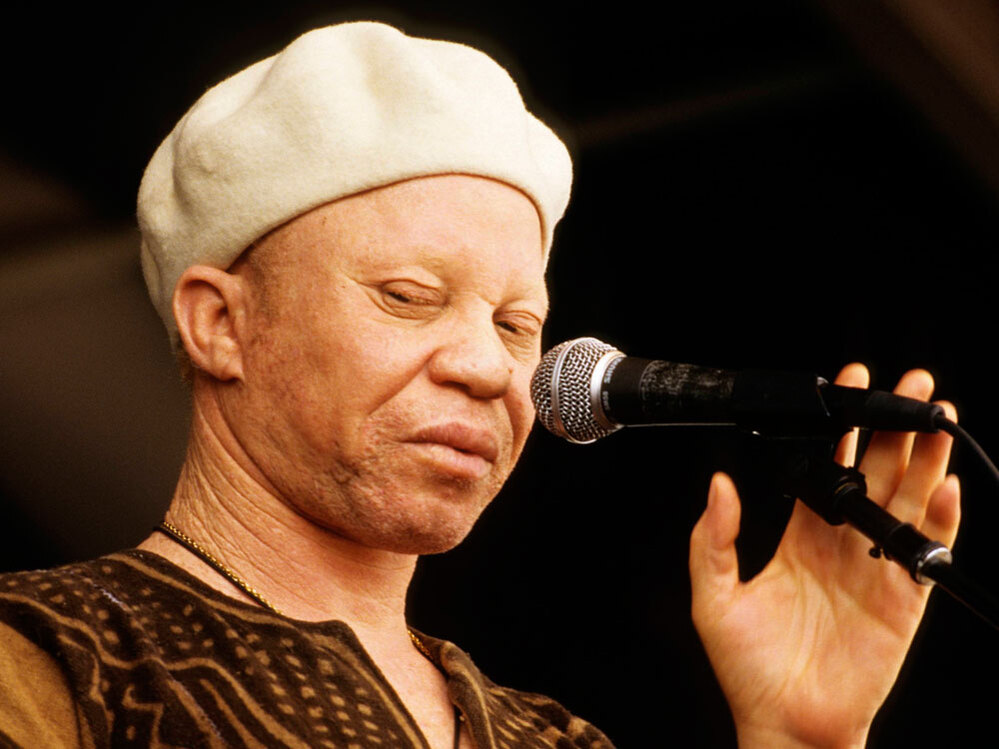

MAIN PHOTO: MALIAN SINGER SALIF KEITA
Salif Keita, the Malian singer known across the continent as “The Golden Voice of Africa,” has cancelled his upcoming commercial performances in South Africa, citing the country’s ongoing xenophobic violence against African migrants. The announcement, posted this week as an open letter to his “beloved brothers and sisters in South Africa,” lands at a moment when South Africa’s relationship with the rest of the continent is under more strain than it has been in years.
What Keita said
In the letter, Keita frames the decision as personal rather than political. He describes more than fifty years of connection to the continent and singles out South Africa as a country that has “always welcomed” him “as a brother, not just an artist.” He recalls performing at the 1988 Nelson Mandela tribute concert at Wembley Stadium, and argues that the same conscience that put him on that stage now compels him to step back from South African stages.
He’s careful to draw a distinction: this isn’t a boycott of South Africans, but a response to violence against migrants. He writes that he is “closing the door on violence,” not on the country, and says he’ll return to sing in townships and for communities once tensions ease. It’s a tone of grief rather than confrontation — closer to Ladysmith Black Mambazo’s 2015 anti-xenophobia collaboration with Keita, “United We Stand,” than to a political ultimatum.
The backdrop: is xenophobia actually escalating in South Africa right now?
Through mid-2026, March and March set a June 30 deadline for undocumented migrants to leave the country, and researchers tracking the movement say weekly protests continued into July. Researchers at the University of the Witwatersrand’s Xenowatch project put the death toll from xenophobic attacks in South Africa since 2008 above 430.
The diplomatic fallout has been real, too: Nigeria, Ghana, Malawi and other countries have evacuated some citizens from South Africa, and South African performers have reported the reverse effect — gigs cancelled elsewhere on the continent in apparent retaliation. South Africa’s Justice Minister, Mmamoloko Kubayi, publicly acknowledged in June that South African artists and businesses abroad were losing income because of the backlash.
Where it gets more contested
This is also where Keita’s letter runs into a genuine dispute, not just a factual gap. The South African government’s position, voiced repeatedly by Minister Kubayi, is that recent enforcement actions — including a large-scale operation targeting undocumented migrants — are about immigration law, not ethnicity or nationality, and that labelling the country broadly “xenophobic” is unfair to South Africans who aren’t involved in vigilante violence. That’s a real argument, not just spin: distinguishing state immigration enforcement from vigilante attacks by groups like Operation Dudula and March and March matters, and rights groups themselves generally direct their sharpest criticism at the vigilante groups and at police inaction, rather than at South African society as a whole.