
By ANWAR OMAR
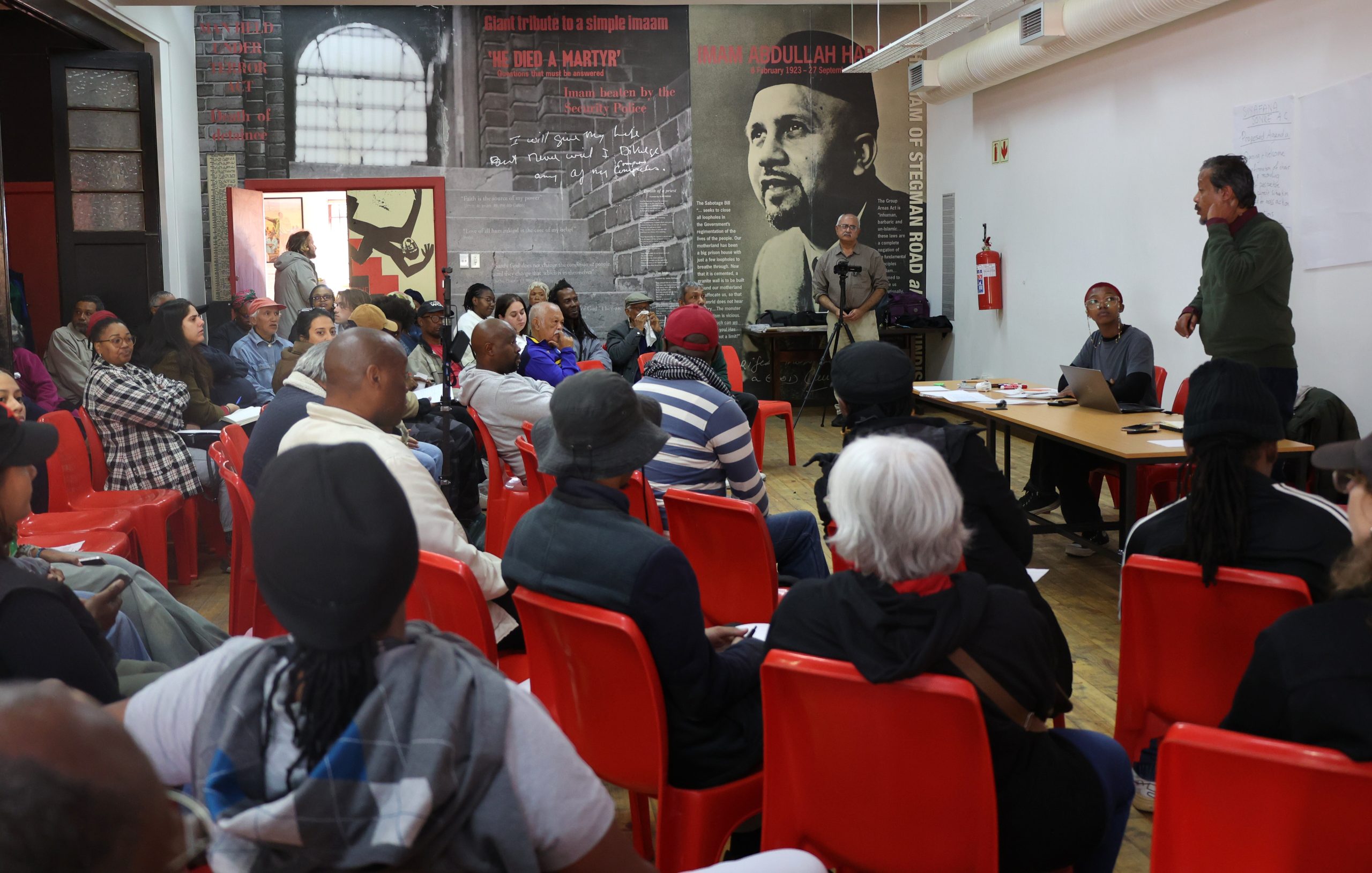
Nearly two weeks after South Africa held its breath through the ‘March and March’ deadline, a coalition of 31 Cape Town organisations met on Saturday, July 11, at Community House in Salt River and unanimously resolved that a mass protest march against Afrophobia and xenophobia must go ahead under the twin banners ‘Reclaim Ubuntu’ and ‘Africa Unite’.
The provisional date set is August 8, 2026, with participating organisations requested to confirm their commitment by Wednesday, July 15, 2026.
The gathering marked a significant shift from June 30, which was defined by rapid, reactive mobilisation, with interfaith emergency meetings convened overnight, a human chain formed within 24 hours and donation appeals circulated in real time. Saturday’s meeting was an attempt to build a durable, coordinated structure out of what has so far been an urgent but scattered response.
The meeting was opened by Shaheed Mohamed, secretary of the Worker International Vanguard League, who set out the purpose of the gathering and stressed that it had come together because ‘the voice of the people’ was being crowded out on public platforms and that the narrative was being taken over by one movement’s version of events.
This anti-xenophobia coalition, he said, had resolved that a coordinated response was needed to raise the profile of ‘the real views of the people of South Africa’. He was explicit on one point in particular: ‘We believe we are not xenophobic. We are one.’
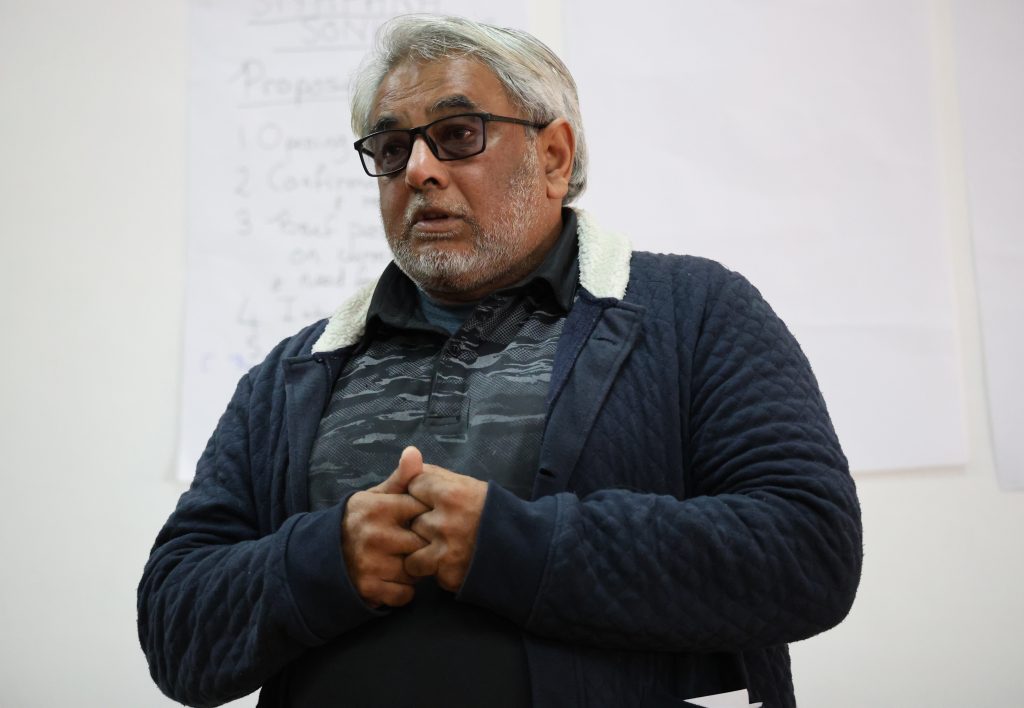
Imraah Mukaddam
From emergency response to organised resistance
The origin of this meeting can be traced directly to the human chain and placard protest held at Salt River Circle on June 30, when Community House and roughly 20 organisations gathered under the banner ‘Workers of Africa Unite – Immigrants Welcome’, a deliberate counter-action to March and March demonstrations taking place simultaneously in the Cape Town CBD.
That same week, interfaith emergency meetings were held at Masjid al-Quds in Gatesville and St George’s Cathedral in Cape Town, bringing Muslim, Christian and other faith leaders together to mandate an Ad Hoc Steering Committee and a Coordinated Emergency Relief Plan for foreign nationals in crisis, many of them Zimbabwean nationals sheltering in undignified conditions at the Department of Home Affairs facility in Epping.
Those responses were, by design, immediate and reactive: humanitarian aid, including food, hygiene products, blankets, pastoral care and a physical presence in the street. What Saturday’s meeting sought to address was a coordinated political strategy. A ‘mass action’ is a very different undertaking from a vigil or a human chain: it implies scale, sustained organisation and a defined campaign rather than a single-day response to a single-day threat.
Imraahn Mukaddam, the representative from Inspire Network, who also spoke at the Al-Quds interfaith meeting, described the horrific conditions under which people are transported to the border.
According to him, ‘Home Affairs is complicit; there’s no way they are not complicit.’ He said: ‘The only relief that we can possibly call relief is to put people on buses like the Nazis put people on trains to the concentration camp.’
He described an outbreak of diarrhoea and, despite this, ‘they put ten buses full of people affected by diarrhoea on the road for 20 hours – mothers, babies and children. How inhumane is that?’ he asked.
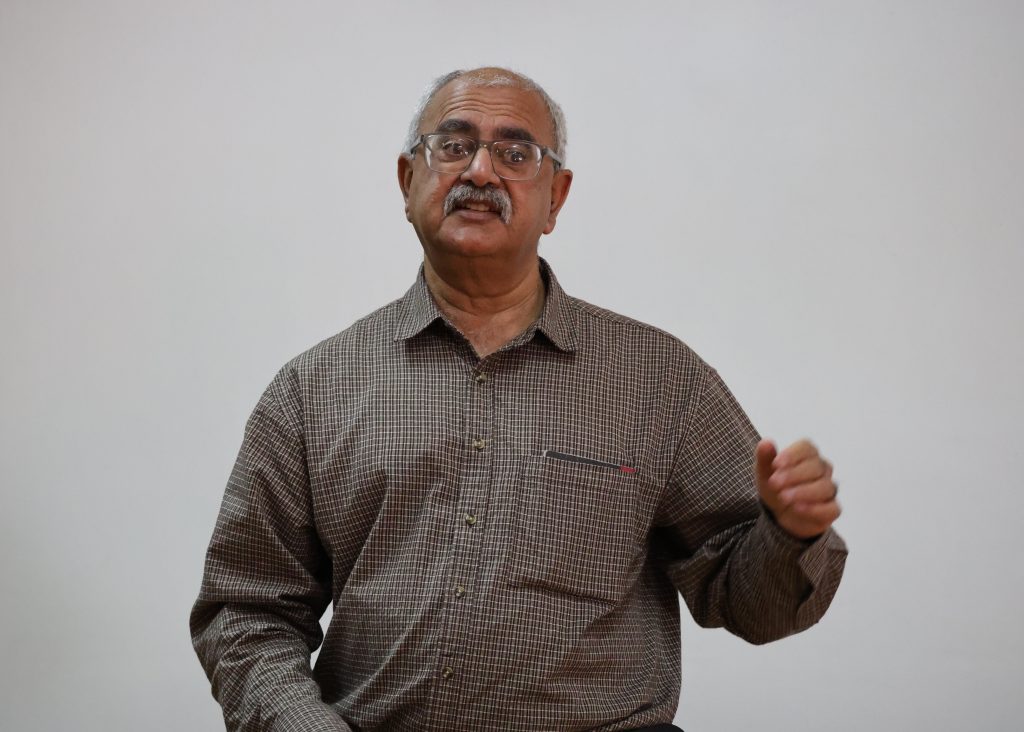
Shaheed Mohamed
The coalition
The 31 organisations present read like a map of Cape Town’s grassroots left and migrant-solidarity network, including the Housing Assembly, Ndifuna Ukwazi, Africa Unite, the Africa Community Assembly (RCG), Voices Against Eviction, the South African Communist Party, Save Our Sacred Lands, the Siyafana Sonke Action Campaign, the Workers and Socialist Party (WASP), the Inspire Network and the African Inclusion Coalition.
This was a notably wider circle than the faith-based coalition that met at Al-Quds and St George’s Cathedral, signalling that the response to March and March is broadening from an interfaith and humanitarian reaction into an explicitly political and labour-movement response, including organisations that convene around structural demands, not just emergency relief.
As speakers at St George’s Cathedral put it in the days after June 30, an unemployed family member is a genuine hardship, but ‘not a licence to trample on the life of another poor person’.
Saturday’s meeting sought to build on that framing, aiming at a mass action that addresses both fronts: solidarity with foreign nationals and pressure on the state to fix administrative failures, including Home Affairs backlogs under sections 22 and 24 of the Refugees Act, that have rendered so many people ‘illegal’ through bureaucratic neglect rather than by choice.
Location of meeting
One sharp criticism raised after the earlier interfaith gatherings concerned the location of these meetings. A participant at St George’s Cathedral noted that the venue sat near embassies, not at ‘the coalface of where people are actually going’, and argued that a credible response needed to convene in the communities most affected.
Saturday’s meeting partially answered that critique through its choice of Community House as the venue, a long-established site of grassroots activism and already the coordinating base for the June 30 human chain, keeping the response rooted in the same working-class geography from which that earlier protest was launched.
Human rights, displacement and the case for naming those directly affected
The day’s central address, delivered by Tauriq Jenkins, representing the Siyafana Sonke Action Campaign, set out both the scale of the unfolding humanitarian emergency and the case for a coordinated mass response.
He described fast-moving and, in places, harrowing testimony gathered directly from affected communities in the weeks since June 30.
Jenkins placed these accounts within a broader international context of ethnic cleansing and genocide. He explained the importance of language.
Drawing a historical parallel to the deliberate delay in naming events in Rwanda and Darfur as genocide, he argued that South African civil society could not afford to hesitate in ‘naming the atrocities’.
He said: ‘We should also understand what is the kind of language that is needed from us now. When there was a genocide happening in Darfur, it took a year and a half before they pronounced on it … In Kigali, rivers were being clogged up with bodies that were floating on those rivers.’
He further urged that individual victims be named and humanised rather than treated as statistics, and raised the need for a longer-term protection and education programme, including outreach to young people once the immediate crisis has stabilised.
His address culminated in a direct call to action: ‘We need to mobilise in the biggest possible way, in the most urgent way … and we need to create a mobilised mass action to Parliament, where we all come together to demonstrate that this is not who we are.’
He said that the moment required ‘humanity to show itself on the street’ in a mass, mobilised protest action – one explicitly described as directed towards Parliament – to demonstrate that the current wave of xenophobic and afrophobic violence ‘does not belong’ to South Africans and that the concept of Ubuntu, while under strain, has not been extinguished.
Shaheed Mohamed asked the question: who benefits from framing the crisis as a matter of ‘documented’ versus ‘undocumented’ status?
Citing OECD migration data and research on capital flight from African mining operations, he argued that the documentation debate functions as a diversion from a deeper, systemic issue: the exploitation of cheap, precarious labour across the region.
He warned against South African trade unions or political actors adopting nationalist ‘border control’ framing in response to it.
‘They have actually inadvertently fed into the xenophobic narrative,’ he said.
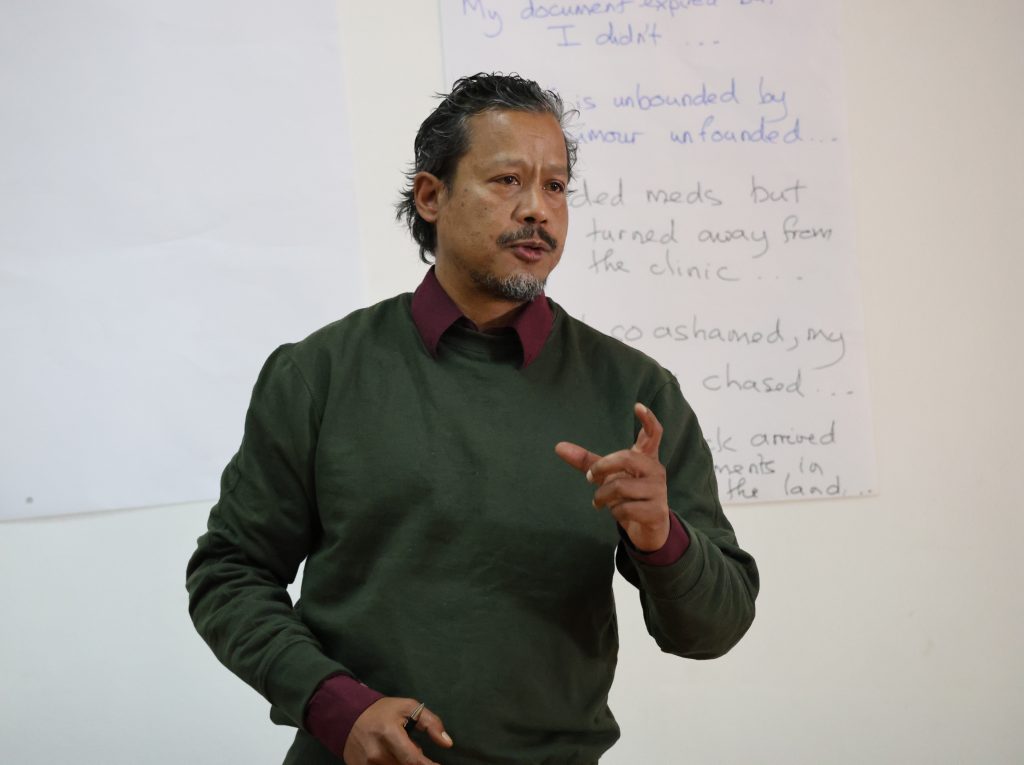
Taurig Jenkins
The outcome of the meeting
The meeting resolved unanimously that a mass protest march must go ahead, provisionally set for August 8, 2026, with participating organisations asked to confirm their commitment by Wednesday, July 15.
The march’s precise scale, route and destination – with Parliament referenced directly from the floor – remain to be finalised.
It was further agreed that the action would be carried out on an Africa-wide basis, extending beyond the continent to progressive entities globally, and that the period leading up to the march and beyond would integrate various smaller and larger community-based initiatives, with the initiative moving towards a broader solidarity movement uniting all struggles.
To prevent the burden of organising from falling on a few individuals, an interim coordinating committee was established, mandated to handle coordination of the march, logistics, messaging, communications and record-keeping.
The decision brings Saturday’s gathering full circle, from Jenkins’s keynote call for ‘humanity to show itself on the street’ to a concrete, dated commitment pending confirmation from the 31 organisations present.
NB: This article first appeared in the Cape Town based Muslim Views publication.