

MAIN PHOTO: HANGWANI MAUMELA
PiE Compiled report — August 2026
The name Maumela has become shorthand in South Africa for a very particular kind of state capture: a family business built almost entirely on public hospital money, protected for years by political proximity and bureaucratic silence, and only now beginning to be unwound in the courts. What started as one whistle-blower’s quiet flagging of suspicious invoices at a single Ekurhuleni hospital has grown into a sprawling saga touching a presidential family connection, a judicial commission investigating criminal infiltration of the state, and now the South African Revenue Service. This report traces the story from its origin to where it stands today.
How it began: a murdered whistle-blower
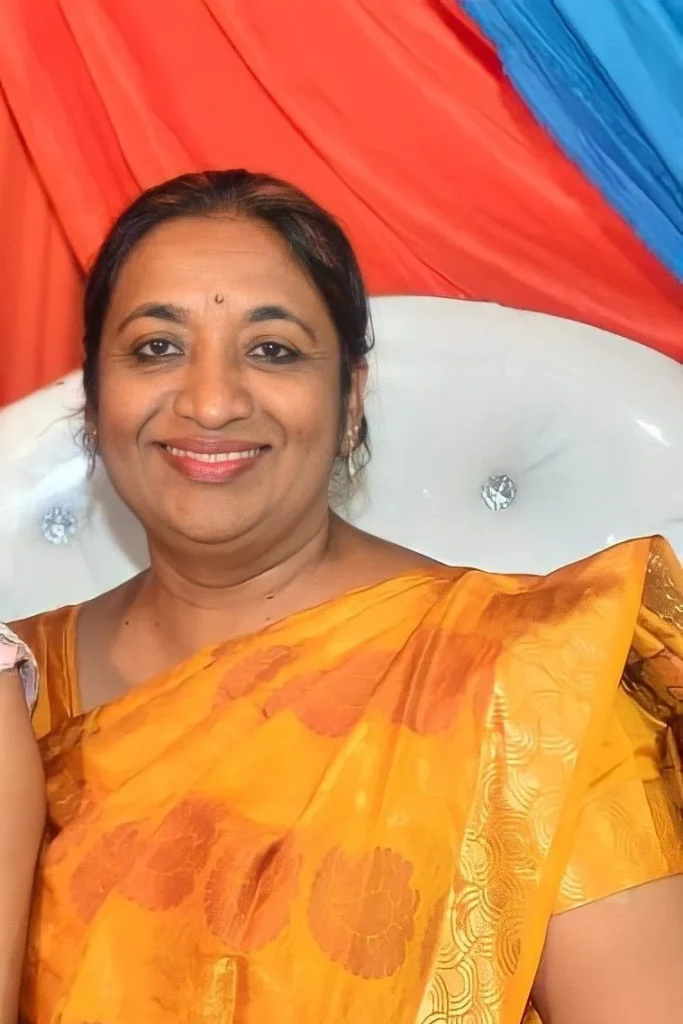
The Maumela story cannot be told without Babita Deokaran, the acting chief director of financial accounting in the Gauteng Department of Health. In mid-2021, Deokaran began raising alarms internally about a pattern of suspicious payments running through Tembisa Hospital’s supply chain — invoices for everyday items such as office chairs and cleaning supplies billed at wildly inflated prices, and hundreds of millions of rand moving to companies with no obvious capacity to deliver what they were being paid for. She pressed for the payments to be halted and for a forensic audit.
She never saw that audit completed. On the morning of 23 August 2021, after dropping her daughter at school, Deokaran was shot dead outside her home in Winchester Hills, Johannesburg. Six men were later convicted of carrying out the killing, but who ordered it has never been established. Her death transformed a routine finance-department dispute into a national scandal and a warning about the risks whistle-blowers face in South Africa.
The paper trail Deokaran left behind eventually pointed investigators toward a cluster of interlinked companies benefiting from Tembisa Hospital’s procurement. At the centre of that cluster was a network of firms connected to a Johannesburg businessman: Hangwani Morgan Maumela.
Who is Hangwani Maumela
Hangwani Morgan Maumela, born in 1972, built a business profile as a well-connected tenderpreneur — a term used in South Africa for entrepreneurs whose fortunes rest heavily on government contracts rather than open-market competition. Investigators allege that, from around 2016, entities he and family members controlled began winning a disproportionate and suspicious share of Tembisa Hospital’s supply and services contracts.
A National Treasury forensic review, carried out by Morar Incorporated on the department’s instruction, examined the hospital’s payment database and supplier records covering January 2019 to August 2022. It concluded that 14 companies linked to the Maumela family had irregularly benefited from contracts worth more than R400 million, and traced the proceeds to property purchases, luxury vehicles, payments to attorneys, transfers between syndicate-linked entities, and distributions to the Maumela Family Trust and relatives that the investigators say funded an extravagant lifestyle.
Maumela’s public profile is inseparable from that of his mother, Mboneni Benedicta Maumela, a former senior official in the Limpopo Department of Health who retired in 2020 and who — as set out below — is now facing her own reckoning with the tax authorities.
CAPTION: BABITA DEOKARAN
The SIU’s R2 billion finding
The scale of the scandal became fully public in September 2025, when the Special Investigating Unit released an interim report on its investigation into Tembisa Hospital procurement. The SIU said it had identified three coordinated syndicates responsible for siphoning more than R2 billion earmarked for public healthcare between 2019 and 2022 — funds the unit’s head, Advocate Andy Mothibi, described as intended for the country’s most vulnerable citizens and instead diverted through a complex web of fraud.
- The Maumela syndicate: the largest of the three, with 1,728 procurement bundles worth roughly R816.5 million under review, and around R520 million in traceable assets — luxury vehicles, properties and trust holdings.
- The Mazibuko syndicate, led by Richard Mazibuko: 651 bundles reviewed, valued at approximately R283.5 million.
- A third syndicate, referred to only as “Syndicate X”: about 1,237 bundles under assessment, valued at roughly R596.4 million.
The SIU also found that at least 15 current and former Gauteng Department of Health and hospital officials had received more than R122 million in what it characterised as corrupt payments to manipulate the supply chain in the syndicates’ favour — evidence, investigators argue, that the scheme could not have operated without inside help.
Into the public spotlight: the October 2025 raids
Maumela moved from investigative reports into national headlines on 9 October 2025, when SIU officials, accompanied by police and metro police, raided his three-storey mansion in Sandhurst, Sandton, under a Special Tribunal order. Removal trucks left the property loaded with three Lamborghinis, designer furniture and artwork; a simultaneous operation targeted a second property in Mpumalanga. Days earlier, the Asset Forfeiture Unit had already moved to preserve roughly R400 million in property and vehicles, including homes in Bantry Bay, Sandhurst, Hurlingham and Ballito, along with a further haul of supercars — among them a Ferrari, two Aston Martins and a Rolls-Royce Cullinan traced to a Mpumalanga dealership. Later reporting detailed an even more extravagant purchase: a R52 million Pagani Huayra Roadster, one of only 100 ever built, part of a car-buying spree investigators say topped R208 million in under two years.
The raids made Maumela a household name almost overnight, and with that fame came a question that would dog the story for months: what, if anything, connected the man at the centre of a R2 billion hospital-looting scandal to the country’s president?
The Ramaphosa connection
Video and photographs surfaced in 2025 showing President Cyril Ramaphosa outside Maumela’s Sandhurst home, prompting speculation about a family tie. Questioned in the National Council of Provinces in October 2025, Ramaphosa confirmed that he had briefly been married to Maumela’s aunt — his first wife, Hope Mudau — some 47 years earlier, a marriage that ended in divorce roughly four years later. He said he had encountered Maumela only twice, both times by chance during his regular neighbourhood walks, including a December 2024 meeting in which Maumela introduced himself and asked the president to greet his mother, whom Ramaphosa recognised as a school acquaintance.
Ramaphosa maintained that he had no personal or business relationship with Maumela and had never discussed the corruption allegations with him. “Am I appalled at the allegations that are being made against him? Yes!” he told the NCOP, while stressing that the family link was distant and coincidental rather than close. The explanation quietened but did not end public scrutiny of the connection, which continued to surface in Parliament and the press as the asset-forfeiture case progressed.
CAPTION: “CAT” MATLALA
The wider web: ‘Cat’ Matlala and the Madlanga Commission
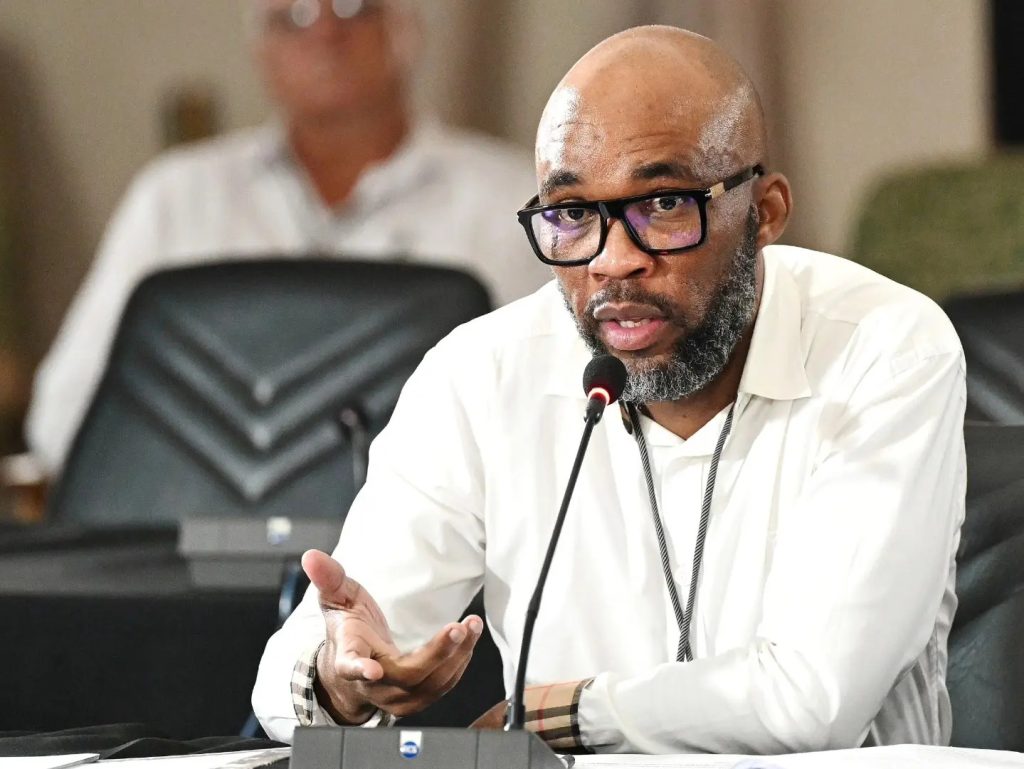
The Maumela matter also intersects with a separate, equally explosive process: the Madlanga Commission of Inquiry, established to probe allegations that criminal syndicates infiltrated the police and other state institutions with the protection of senior officials. Three companies linked to Vusimuzi “Cat” Matlala — the Pretoria-raised tenderpreneur and Madlanga Commission witness accused of bribing police and political figures over a R228 million police wellness tender — were found by the SIU to have secured roughly R13.5 million in Tembisa Hospital contracts within the Maumela syndicate’s orbit.
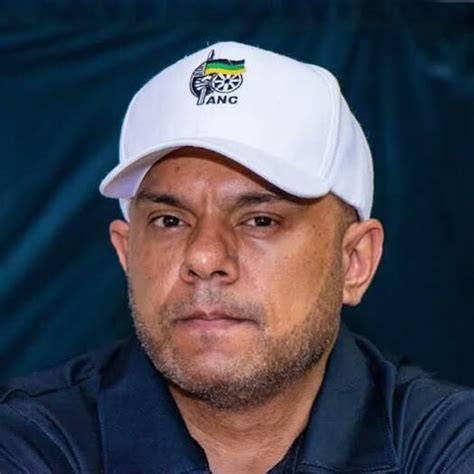
The connective tissue between the two men surfaced through the testimony of North West businessman Suleiman Carrim, an ANC-linked figure who told the commission he had handled multimillion-rand payments to both Matlala and Maumela and said he had been pressured into making them. Under questioning from the commission’s evidence leader, Carrim described being instructed by Matlala to pay Maumela directly rather than have Matlala pay him, and said he complied out of fear of both men. The commission’s chairperson, Justice Mbuyiseli Madlanga, has indicated the inquiry will have to consider whether the payment trail supports a money-laundering referral against any of the parties involved. Matlala’s own testimony before the commission has twice been postponed — most recently to 1 September 2026 — after he cited a parallel criminal trial.
Taken together, the commission testimony suggests the Maumela syndicate was not an isolated hospital-procurement scheme but one node in a broader network of politically connected tenderpreneurs whose dealings the commission is still mapping.
CAPTION: SULEIMAN CARRIM – PHOTO BY MAIL&GUARDIAN
The state moves to seize the empire
Despite the scale of the allegations, Maumela has not been arrested, and law-enforcement officials have said the criminal investigation — running in parallel with the civil asset-recovery process — is not expected to conclude before November 2027. The state’s most decisive action to date has instead come through the civil courts.
On 20 July 2026, the Johannesburg High Court granted the Asset Forfeiture Unit a final forfeiture order over assets worth approximately R326 million linked to the Maumela syndicate, following an August 2025 preservation order. The forfeited property is extensive: homes in Bantry Bay, Sandhurst, Hartbeespoort, Ballito and Three Anchor Bay; a Lamborghini Urus, Huracan STO, Aventador SVJ and Aventador Ultimate; a Bentley Continental GT V8; an Isuzu D-Max bakkie; a luxury boat; and a trailer. NPA head Advocate Andy Mothibi called the Asset Forfeiture Unit an important tool for disrupting syndicates and preventing looted money from being used to fight the state in court. Health Minister Aaron Motsoaledi welcomed the order and pressed for the forfeiture process to be sped up alongside Maumela’s arrest and prosecution.
Civil-society groups have broadly welcomed the forfeiture but continue to press the point that no one has yet been criminally charged, arguing that asset seizure alone is not accountability. That criticism has only sharpened as attention has shifted to a new front: the family’s tax affairs.
Now the taxman: SARS moves on the Maumela matriarch
The most recent development places Mboneni Benedicta Maumela, Hangwani Maumela’s mother, squarely in the spotlight. According to reporting this week, the South African Revenue Service has issued her with new tax assessments totalling R39.9 million, covering the 2017 to 2023 tax years, for unpaid taxes, penalties and interest. SARS reportedly told her it had found prima facie evidence of fraud in her tax affairs, and she has since launched a legal challenge to contest the assessments. SARS itself has declined to comment, citing confidentiality provisions in the Tax Administration Act that prevent it from confirming or denying details of a specific taxpayer’s case.
Mboneni’s own financial profile had already drawn scrutiny before SARS acted. Records show she spent an estimated R30 million on two luxury apartments in Sea Point, Cape Town, and the wider Maumela family property portfolio — spanning Gauteng, the Western Cape and KwaZulu-Natal — has been estimated at R300 million or more, separate from the assets already stripped by the courts. The SARS assessment adds a further, and distinctly personal, dimension to a family facing parallel exposure from the NPA, the SIU and now the tax authorities.
Where things stand
Eighteen months after Babita Deokaran’s exposure of Tembisa Hospital’s finances first pointed investigators toward the family, the Maumela empire is under sustained pressure from almost every direction the South African state can bring to bear: a R2 billion SIU corruption finding, a R326 million final asset forfeiture, an active money-laundering inquiry via the Madlanga Commission, and now a R39.9 million tax assessment against the family matriarch. What remains conspicuously absent is a criminal arrest. Hangwani Maumela has not been charged, and the parallel criminal probe is not expected to conclude for well over a year.
For now, the courts, the tax authority and a judicial commission are doing what the criminal justice system has not: dismantling, piece by piece, the wealth that investigators say was built on money meant for one of Gauteng’s busiest public hospitals.