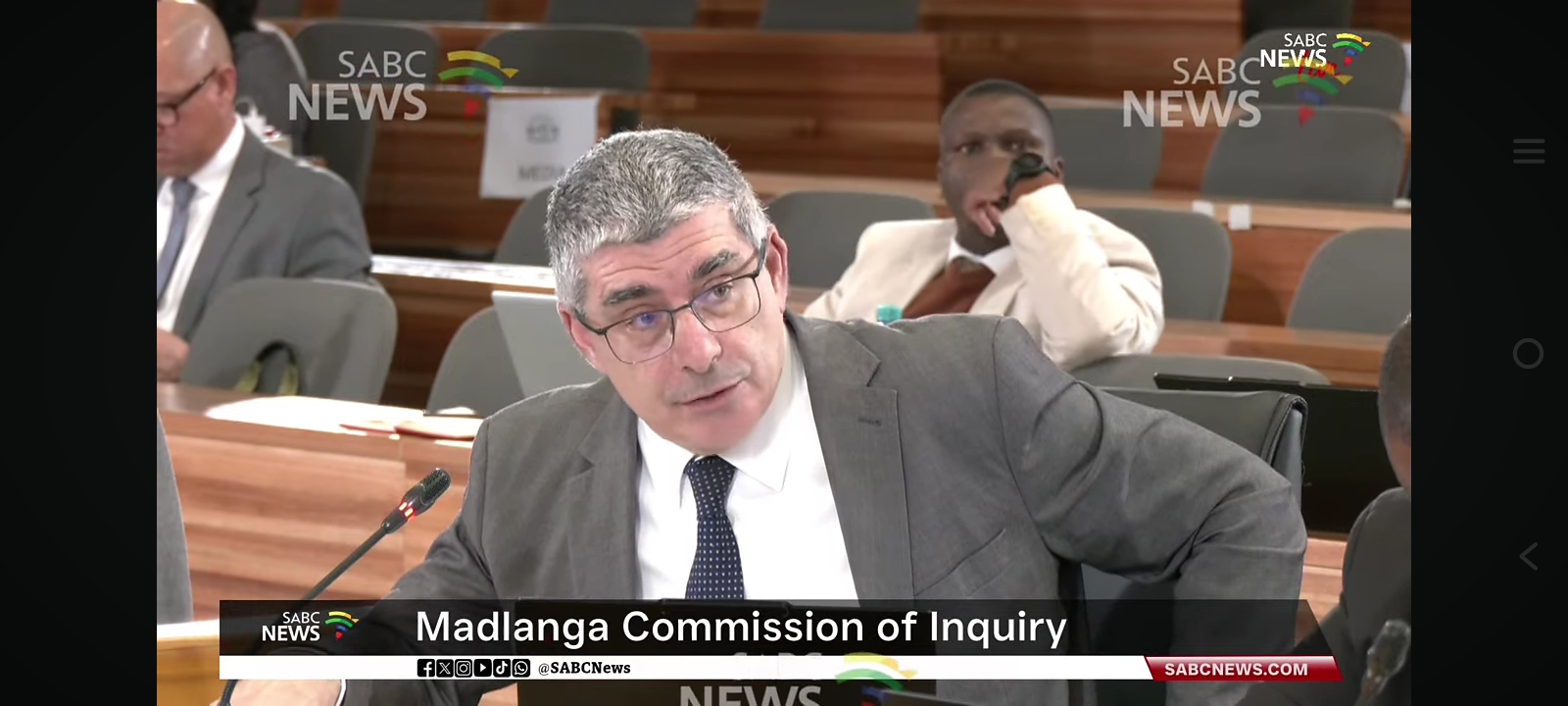

MAIN PHOTO: MADLANGA ADVOCATE MATTHEW CHASKALSON
How a frozen laptop, a disputed prison visit and a commission chair’s raised eyebrow are turning the NCC leader’s credibility into the hottest debate in Cape Town — with the sequel dropping 19 August.
By the Newsroom Desk · 12 August 2026
Every long-running saga needs a running gag, and the Madlanga Commission of Inquiry may just have found its unofficial mascot in Fadiel Adams, the National Coloured Congress leader whose knack for colourful explanations is starting to rival his knack for making headlines. In the space of a few days, Parliament has gone looking for two separate paper trails Adams says exist — an ICT repair log and a letter to the Speaker — and come back both times saying, in effect, there’s nothing here. That should tell you something about where this is headed.
Exhibit A: The Laptop That Cried Wolf
On 11 August, Adams arrived at the commission to explain why it took him roughly ten months to hand over a sworn statement the commission first asked for in October 2025. His answer: a Parliament-issued laptop that had, in his telling, been more or less possessed for eighteen months — freezing constantly, shuttled in and out of repairs, and generally standing between him and his emails. He told commissioners he only sent them the note on Monday night — hours before he was due to testify.
“Parliament can confirm that I have a very problematic laptop. It is either in for repairs or frozen.”
— Fadiel Adams, to the Madlanga Commission
Commission chair Justice Mbuyiseli Madlanga was, in the diplomatic language of judges everywhere, not moved. He told Adams the explanation was “unbelievable,” questioned how an MP could function at all with a laptop in that state, and delivered a warning that doubled as a preview of coming attractions: take this commission seriously, or else.
Parliament then did the thing institutions rarely bother doing — it actually checked. Spokesperson Moloto Mothapo confirmed that a review of the ICT Service Desk logs turned up no record of persistent freezing, hardware failure or repeated repairs. What the logs did show was routine password resets, login hiccups and Wi-Fi gremlins — the digital equivalent of forgetting your PIN, not a device possessed by the machine spirit. Parliament also pointed out, not unhelpfully, that MPs are issued a laptop, a tablet and a smartphone precisely so that one temperamental device doesn’t leave them cut off from the world.
Adams, to his credit, did not blink. He maintained the excuse, invited Parliament’s own technicians to verify his claims directly, and — in a flourish that will delight anyone who enjoys a well-aimed grudge — reminded everyone that this is “the same Parliament that burnt down and the cameras and the irrigation systems weren’t working.” Whether or not the 2023 precinct fire is a valid character witness for a 2026 laptop is, we suspect, exactly the kind of question that keeps newsroom group chats busy.
Exhibit B: The Letter That Apparently Never Left the Building
If the laptop was Round One, Round Two arrived almost immediately after. As part of his account of his dealings with the Political Killings Task Team (PKTT) — the unit central to much of the Madlanga Commission’s work — Adams told the commission he had written to National Assembly Speaker Thoko Didiza on the matter. It was framed as one more thread in his broader story about how he came to be entangled with the commission’s proceedings.
Parliament’s answer was the institutional equivalent of a raised eyebrow: it checked the Speaker’s office and found nothing. No letter. No email. No written communication of any kind from Adams on the subject. As with the laptop, Parliament didn’t simply deny the claim — it says it went looking for the paper trail and came back empty-handed, which is a considerably more pointed rebuttal than a routine “we disagree.”
Taken on its own, a missing letter might be a filing mishap. Taken alongside a laptop Parliament says was never actually broken, it starts to look less like bad luck and more like a pattern — and it’s precisely that pattern, repeated on a subject as serious as political killings, that has commentators asking whether Adams is being economical with the details or simply prone to misremembering his own paperwork.
Exhibit C: The Prison Visit Parliament Never Authorised
The PKTT letter and the laptop aren’t the only items on the list, either. Earlier this year, Police Portfolio Committee chair Ian Cameron submitted an affidavit directly contradicting Adams’ account of a Westville Correctional Centre visit that Adams had described as official parliamentary business. Cameron’s sworn version was blunt: Adams was never tasked, instructed or authorised by Parliament or the committee to be there, and no official report on the visit was ever received afterward. Cameron informed Speaker Didiza of the discrepancy in writing at the time — a separate correspondence trail from the PKTT letter, but part of the same widening gap between what Adams says and what Parliament’s records show. That mismatch now sits inside the fraud and obstruction charges Adams faces over the Westville visit.
Exhibit D: The IDAC Complaint That Changed Its Own Story
It isn’t only Adams whose timeline has needed correcting. Former IDAC head Andrea Johnson told the commission that her directorate’s investigation into Crime Intelligence was in fact triggered by Adams’ Section 27 complaint — after previously telling a parliamentary ad hoc committee the opposite. It’s a useful reminder that the Madlanga Commission isn’t simply auditing one man’s credibility; it’s auditing a whole ecosystem of institutions whose stories don’t quite line up, with Adams sitting at the centre of the Venn diagram.
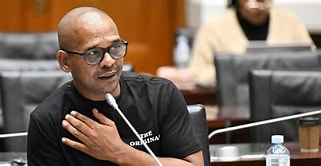
FADIEL ADAMS
A Man of the People, Fashioned in the Streets
None of this should be read as though Adams arrived in Parliament by the usual route, and that’s rather the point of his political brand. By his own account and multiple published profiles, Adams grew up one of six children to a builder and a seamstress, dropped out of school in Grade 11, and spent years entangled with gangs and drug addiction before eventually turning his life — and later his politics — around. It’s a redemption arc he wears openly, and it’s precisely why his approach in institutional settings can look, to borrow the phrase, straight from the streets: combative, unfiltered, allergic to bureaucratic caution, and entirely uninterested in performing polish for people he doesn’t respect.
That same instinct has produced a charge sheet of its own, entirely separate from the Madlanga saga:
- An Equality Court ruling that remarks he made about a City of Cape Town official amounted to hate speech, unfair discrimination and harassment — with an ordered apology attached.
- A Joint Committee on Ethics and Members’ Interests finding, over a Facebook video targeting the Cape Town mayor and a DA member, that cost him a reprimand, a 15-day suspension and docked pay.
- A separate ethics breach — publishing a DA staffer’s personal contact details on Facebook — which Adams himself called “a really stupid mistake,” and which triggered a further 20-day suspension.
- An arrest on 5 May 2026 by the Political Killings Task Team on charges of fraud and defeating or obstructing the course of justice, tied to the Westville Prison visit and his pursuit of a statement from a convicted hitman in the Sindiso Magaqa murder case.
What’s Left to Explain
Adams returns to the commission on 19 August, and the running list of things he’ll need to account for is not getting shorter. Expect questions on how classified Crime Intelligence documents allegedly ended up slipped under his parliamentary office door, what exactly happened at Westville Prison, the mechanics of his Section 27 complaint against senior police officials, a letter to the Speaker that Parliament says it never received, and — inevitably — a laptop that Parliament insists never had the illness Adams diagnosed it with.
Adams has promised the commission should “expect bombs … big ones,” which is either a preview of genuinely explosive testimony or simply the latest example of a man who has never met a low-key sentence he liked. Given the week he’s just had, South Africans could be forgiven for reaching for the popcorn rather than the panic button — but given what’s actually at stake in this inquiry, they’d do well to keep both within reach.
This piece uses a light, satirical tone typical of political sketch-writing. All factual claims are drawn from public reporting and statements by Parliament, the Madlanga Commission and named officials; readers should consult the original sources linked in coverage for full context.
Sources: Business Day · eNCA · EWN · SABC News · Sunday World · Sunday Times · The Citizen · Mail & Guardian · Briefly News · TheSouthAfrican · IOL · Wikipedia (Fadiel Adams)
PKTT letter reporting per Briefly News, “Parliament calls out Fadiel Adams’ PKTT claims, says no letter was received by speaker.”