

Home Affairs Minister Leon Schreiber used a Thursday morning at Constitution Hill to move the department’s digital overhaul from promise to timetable. Here is everything he announced, what each innovation does for you, and what still has to be proved.
PiE TECH TEAM
The most telling moment of Thursday’s presentation lasted less than a minute. On a stage at Constitution Hill in Johannesburg, Minister Schreiber opened an app called MyMzansi on his smartphone and confirmed his identity with his thumbprint. His real photograph from the population register appeared on the big screens. Home Affairs Director-General Tommy Makhode, playing a border or bank official, scanned a QR code on the minister’s phone and asked for his details.
Before approving, Schreiber switched off his ID number and shared everything else, including his nationality. The details reached Makhode’s phone within seconds. When Makhode asked a second time, the minister declined, and the verifier was refused. No paper, no photocopy, no clerk, and no one holding more of his data than he chose to hand over.
That small demonstration captured the argument behind what the department calls “Home Affairs @ home”, the thread running through the “Quantum Leap: A Vision for the Future of Government” event, which marked the halfway point of the Government of National Unity’s term. It is a simple idea with large consequences: instead of South Africans travelling to Home Affairs, secure Home Affairs services travel to them, through bank branches, smartphones, couriers, hospitals and, eventually, a prepared form that arrives before you know you need it.
| 14.7m people still rely only on a green ID book | 515 bank branches already offering Smart ID | 822,000+ Smart IDs issued through banks since March | 53 countries covered by the new e-visa (ETA) |
The big idea: Home Affairs as the operating system of government
Schreiber told the audience that the bank-branch rollout, the electronic travel authorisation (ETA) and Digital ID are not stand-alone projects but parts of a more fundamental transformation. In his framing, Home Affairs is in many ways the operating system of government, because almost every other service, from banking to social grants to travel, depends on knowing reliably who a person is.
That is also why the department leans so heavily on the South African Revenue Service. Schreiber credited the partnership with much of the progress, noting that Digital ID’s hosting infrastructure is being built inside SARS’s IT environment, and described the two institutions as twins. He added that Home Affairs is ready to make the relationship a two-way street.
The groundwork was laid over two years. In September 2024 the minister set out a vision of a digital-first department in which applications, adjudications and communication all run on one end-to-end platform. In his February 2026 State of the Nation address he reported that turnaround times for Smart ID and passport applications had been cut by 66.7%, and named Digital ID as the year’s showpiece reform. Thursday was the moment he laid out the destination in full, and said the department is ahead of schedule.
The end of the green ID book
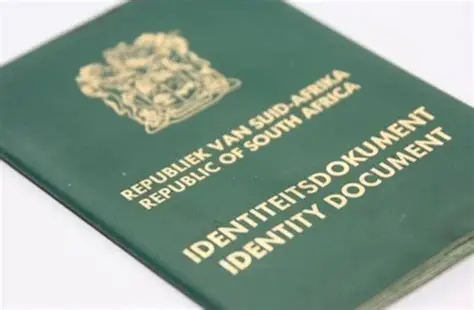
The headline announcement was a hard date. Production of the green barcoded ID book will stop on 31 March 2027, when the machines that make it will be permanently switched off and retired. A further 12 months follow as a transition window, and from 31 March 2028 the green ID book will no longer be recognised as valid identification.
| WHAT THE DATES MEAN Strictly speaking, the book is not “eradicated” in March 2027. It stops being made then, but remains valid until 31 March 2028. Anyone who still holds only a green ID book at that point will need to have switched to a Smart ID card. |
Why scrap it?
Schreiber described the paper book, with its manually affixed photograph, as one of the most defrauded documents on the continent, and a pull factor for identity theft, financial fraud and illegal immigration. In his view, a modern society cannot keep running on it. The Smart ID card carries biometric data and is far harder to forge, which is the security argument behind the new deadline.
Who benefits, and how
- Every eligible person gets a secure card. Before the deadline, Smart IDs will be extended to the groups historically left out: naturalised citizens, permanent residents and South Africans living abroad.
- Cost stays low for those who need it most. First-time applicants and people over 60 continue to pay no application fee.
- Fewer victims of fraud. A biometric card makes identity theft and fraudulent borrowing harder, protecting ordinary people as much as the state.
- A date, not a drift. The earlier target for ending the book was 2029. The 2027/2028 deadlines follow President Cyril Ramaphosa’s June commitment to set a cut-off, and Home Affairs will run a national communications campaign ahead of it.
The minister’s message to the 14.7 million people who still hold only the green book (down from about 16 million, a drop he attributes to the bank partnership) was blunt: switch now at a participating branch rather than waiting for the deadline.
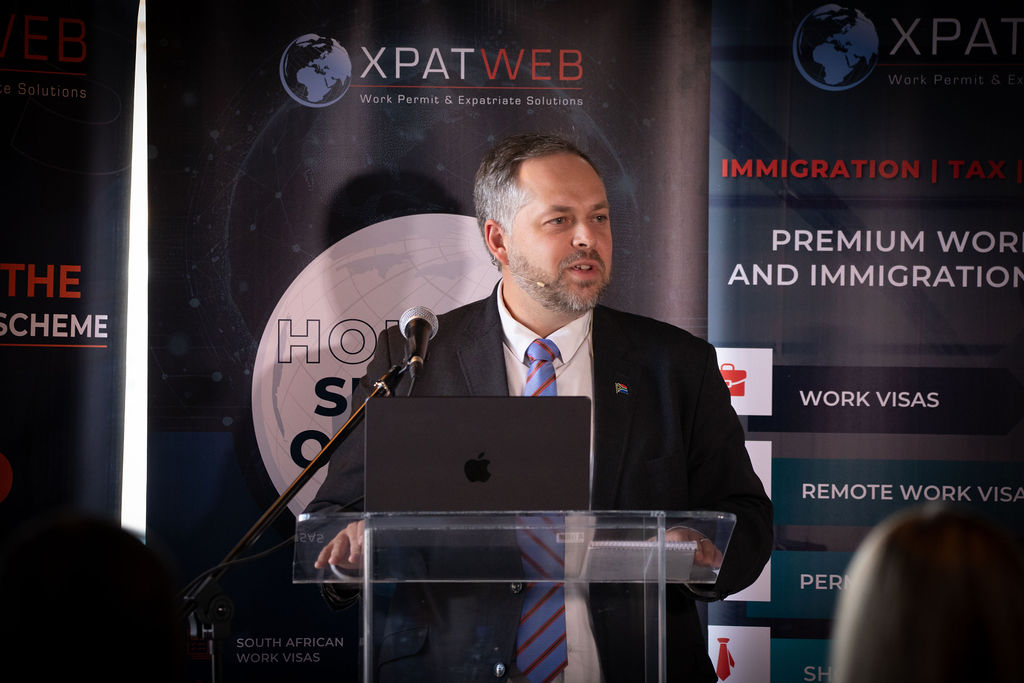
Image source: Xpatweb.com of Leon Schreiber
. Smart ID in five minutes: the bank-branch revolution
The engine behind that switch is the digital partnership with the banks. Until recently, a South African wanting a replacement Smart ID could do so at only 214 Home Affairs offices. The minister reported that 515 bank branches now offer walk-in Smart ID replacements with no appointment, in as little as five minutes, and that more than 822,000 people have used the service since it launched in March. By the end of 2026 he expects more than a thousand service points, close to a five-fold increase on the 214 offices that existed before the GNU.
Capitec, which reported interim results on Wednesday, said it had processed more than 594,000 Smart ID applications since March across 248 branches, which suggests it accounts for the bulk of the uptake so far.
What is coming next at the bank counter
- Passport applications and first-time Smart ID applications will be added “shortly”. In August, the minister had said this would happen by the end of the year.
- Courier delivery. For the first time, IDs and passports will be able to be delivered directly to a home address.
- Birth, marriage and death certificates are to be added before 2029, also through more than a thousand bank branches.
The benefit in plain terms
Queues move to places that already have seating, security and longer opening hours. Digital capture replaces paperwork, and every step leaves an electronic trail, which the minister argues is the most effective way of cutting out the manual discretion that breeds corruption.
3. Digital ID: your identity in your pocket
The demonstration at Constitution Hill was billed as the first working South African Digital ID: a credential formally issued through the population register and bound to the secure chip of the minister’s own smartphone. It runs on the MyMzansi app, verified by thumbprint, and shared by QR code.
How it works
- You choose what to share. The user can hide fields such as the ID number while sharing others, such as nationality, and approve or refuse each request.
- You can say no, and see who looked. Users can revoke a verifier’s access in real time and will be able to see every time their data is accessed.
- It is not a photo of your ID card. Schreiber stressed that it is a remote verification tool tied to the owner’s biometrics, so nobody can impersonate or interfere with the holder.
- It is a wallet. The app will also hold other Home Affairs credentials, including birth and marriage certificates. A mock-up of the wallet was shown on stage.
- It is voluntary. The physical Smart ID card remains available to anyone who prefers it. The minister compared the arrangement to the digital bank card many people carry on their phones alongside the plastic one.
The minister’s pitch flips the usual power balance: rather than the state monitoring the citizen, the citizen gets to monitor who is using their data.
The renewal that fills itself in
Perhaps the most striking promise was about what Digital ID can do over time. A citizen who has opted in would be contacted six months before their passport expires, with a renewal application already prepared. You verify it with your face, pay, and the new passport is couriered to you. In the minister’s description, skipping the queue, the form and even the application itself. No new information would be required, only an expiry date the department already holds, put to work through what he called the latest agentic technology.
| WHEN CAN YOU GET IT? Not yet. The minister gave no public launch date. Home Affairs’ annual performance plan, tabled in March, targets completion of the hosting infrastructure by 31 March 2027, with citizens receiving credentials through a mobile wallet in the 2027/2028 financial year. Draft regulations were published in May and public comments are still being processed. Final rules, Schreiber said, will set hard limits on what people’s data can be used for. |
4. Passports: a chip, a face match and a longer list of visa-free countries
Passport reform was announced on three fronts:
- Photo-swap protection. Home Affairs has already introduced technology that biometrically verifies the photograph that ends up in a passport, which Schreiber called a direct blow against photo-swapping fraud.
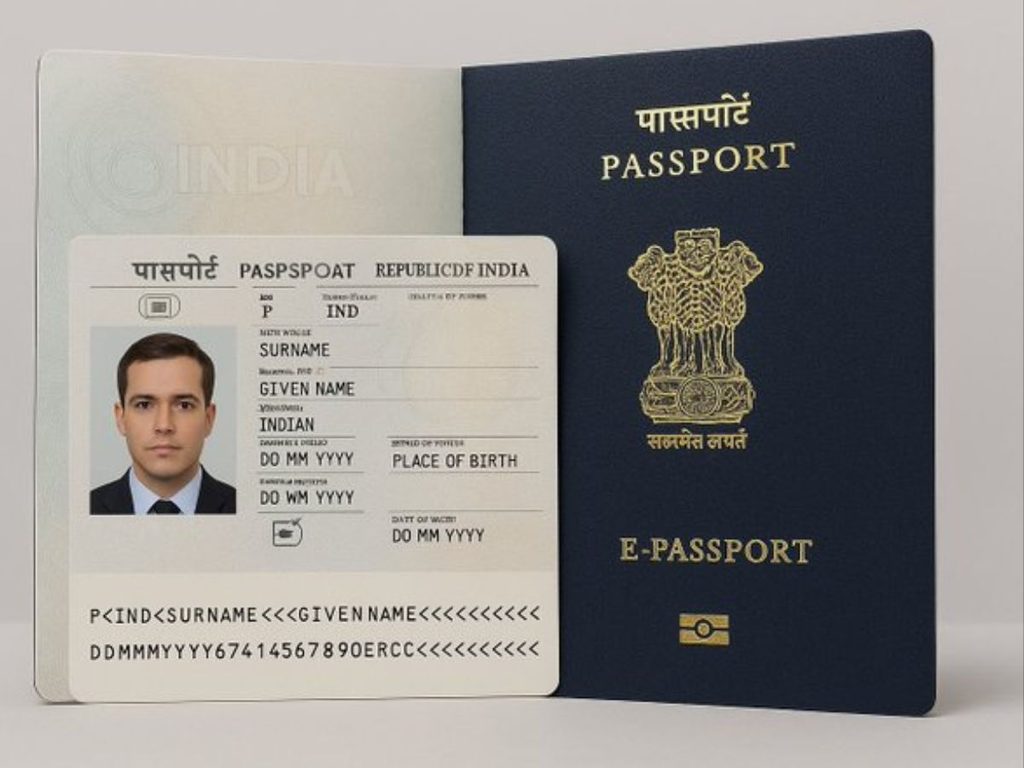
- A biometric e-passport. Working with the Government Printing Works, the department is developing a passport with a chip holding the holder’s biometrics. Once application processing is fully automated, Home Affairs will take a proposal to Cabinet.
- Passports that open airport gates. An e-passport would for the first time be readable by electronic gates at airports around the world. With the systems and hardware in place, government will then seek visa-free access to more countries for holders of the new passport.
For travellers, the combined effect is applying at a bank branch or from home, receiving the passport by courier, and eventually clearing foreign immigration faster, with fewer visa applications to file. For the state, it makes South African passports harder to counterfeit and more trusted abroad.
5. Visas and borders: from weeks to 24 hours
The electronic travel authorisation (ETA)
The ETA, launched by President Ramaphosa on 12 August, is live for short-stay visa applications from 53 countries, with more being added weekly. Visa processing that used to take weeks is being cut to about 24 hours. For tourists and business visitors that means applying online instead of queuing at a mission; for the economy, the minister argues, it unlocks tourism, investment and legitimate travel while making visa fraud far harder.
- Coming in early 2027: study and work visas, as part of a plan to move all visa processing online.
- Wider reach: the system will extend from the four international airports it covers today to all ports of entry.
Automated gates that cannot be bribed
Once the ETA is fully rolled out, the Border Management Authority will pursue automated gates at all ports of entry that open only when a foreign traveller’s biometrics match those on their ETA. Schreiber’s summary: “You cannot bribe a computer.”
No-stop border posts
A R12.5-billion public-private partnership will rebuild the country’s six busiest land ports of entry as no-stop border posts, with the aim of having at least one fully operational by the end of this administration. For truckers and cross-border traders, that is aimed at shortening some of the continent’s most notorious delays.
6. Births, marriages and deaths: registering life without the form
Before the term ends in 2029, Home Affairs plans to automate applications for birth, marriage and death certificates and make them available at more than a thousand bank branches. In the new year, it will turn to automating the registration itself.
The most human part of this is birth registration. Working with public and private healthcare providers, the department wants to use the same biometric technology behind the bank partnership so that every parent can securely register a child’s birth without filling in a form or standing in a queue. The minister said he had bitterly complained when he recently had to register a birth himself. For new parents, it would mean the child’s first official record is created where the child is born.
LUCKY PLACE VIDEO OF MINISTER HERE (TALKING AT CONSTITUTIONAL HILL ON THURSDAY!!!!!!!!
7. The capstone: documenting every citizen by 2029
Schreiber called his final announcement the capstone of the reforms: a national campaign in the 2028/2029 financial year to document every undocumented South African citizen, three decades into democracy. It will include a review of late birth registration requirements and processes, and will use mobile biometric technology, with officials freed up by digital self-service sent out into communities. The pledge is that by the end of the administration in 2029, every citizen will be formally documented for the first time in the country’s history.
The logic is that digital self-service for those who can use it frees capacity to reach those who cannot, such as people in rural and underserved areas for whom the nearest office has always been too far.
8. Integrity: technology plus consequences
The presentation was not only about software. The minister cited 144 dismissals, 73 arrests and 10 convictions across Home Affairs and the Border Management Authority since July 2024 as evidence of a culture that punishes delinquency. His case is that automation removes the opportunity for corruption and enforcement deals with those who still try.
What it means for you
| If you are… | What changes | Key date |
| A green ID book holder | Switch to a Smart ID at a participating bank branch or Home Affairs office. The book stops being valid after the deadline. | Production ends 31 Mar 2027; invalid 31 Mar 2028 |
| A naturalised citizen, permanent resident or citizen abroad | You will be able to obtain a Smart ID for the first time. | Before 31 Mar 2027 |
| First-time applicant or over 60 | No application fee. First-time applications are coming to bank branches. | Banks: “shortly” |
| A passport holder or applicant | Bank-branch applications, courier delivery, biometric photo checks and, later, an e-passport and pre-filled renewals for Digital ID users. | Banks: “shortly”; e-passport: Cabinet proposal to follow |
| Expecting a baby | Hospital-based biometric registration with no form or queue, once rolled out. | Automation of registration from 2027 |
| A tourist or business visitor | Apply online for short-stay travel authorisation, with decisions in about 24 hours. | Live now (53 countries) |
| A student or skilled worker | Study and work visas move onto the ETA platform. | Early 2027 |
| Undocumented | Mobile biometric teams and a review of late birth registration rules. | Campaign in 2028/29 |
The roadmap at a glance
| When | Milestone |
| March 2026 | Bank-branch Smart ID replacement service launches. |
| 12 August 2026 | ETA launched by President Ramaphosa. |
| 1 October 2026 | Quantum Leap presentation: green ID cut-off, Digital ID demonstration. |
| By end of 2026 | Smart ID service points pass 1,000; passports, first-time IDs and courier delivery expected at banks. |
| Early 2027 | Study and work visas join the ETA; automation of birth, marriage and death registration begins. |
| Before 31 March 2027 | Smart IDs extended to naturalised citizens, permanent residents and citizens abroad. |
| 31 March 2027 | Green ID book production ends. Target for Digital ID hosting infrastructure. |
| 2027/2028 | Target year for citizens to receive Digital ID credentials in a mobile wallet. |
| 31 March 2028 | Green ID book ceases to be valid. |
| 2028/2029 | National campaign to document every undocumented citizen. |
| By 2029 | Civil certificates at 1,000+ bank branches; every citizen documented; at least one no-stop land border post operational. |
The global scorecard: where will South Africa stand when it is all delivered?
The natural question after Thursday is whether this makes South Africa a leader. We tested the assumption that it would simply lead Africa against what is on the record, and the honest answer is more interesting than a yes. Today, South Africa is not the continent’s digital-identity leader. Several African states are further ahead on the core building blocks. But South Africa is attempting something none of them has combined in one programme, and if the 2029 targets are met it would belong in the top tier of the continent and be recognisably comparable to the European Union.
On the continent: peers that are already moving
| Country | What it has built | Scale | How SA compares |
| Nigeria | National Identification Number run by NIMC, now moving to an open-source MOSIP platform. A new NIMC Act signed on 27 June 2026 makes the agency the national root certification authority and formally recognises digital ID credentials. | Roughly 126 to 130 million enrolled, depending on the source | Far larger in enrolment and ahead on legal backing for digital credentials. SA’s bank-branch delivery model is distinctive. |
| Ethiopia | Fayda national ID, mandatory for banking in Addis Ababa, with a physical card, a telebirr soft copy and the FaydaPass wallet app. | More than 15 million registered toward a 90 million target | Ahead on a live wallet. Behind on coverage. SA’s population register is long established, but its wallet is still a prototype. |
| Rwanda | Biometric national ID integrated into banking, health and government services, and accepted for travel within the East African Community. | Over 90% of adults | Rwanda leads on integration and coverage. SA’s plan to link IDs to hospitals and banks is an attempt to catch up. |
| Ghana | Ghana Card, mandatory for tax, SIM registration and social services, designed to survive changes of government and donor exits. | More than 20 million cards; over 90% of adults | Ahead on mandatory single-ID use across sectors. SA’s digital ID will be voluntary by design. |
| Namibia and Zambia | Both switched on state-owned root certification authorities within a fortnight of each other in September, the cryptographic foundation for issuing digital IDs that others can verify. | Smaller populations | Both are ahead of SA on sovereign trust infrastructure. SA relies on three accredited private providers, and its own plan has not yet said who would hold the keys. |
Where South Africa could genuinely lead Africa
- Service delivery through banks. In our research we found no African, or indeed global, equivalent of walk-in biometric Smart ID issuance across hundreds of commercial bank branches, with the plan to add passports, home courier delivery and civil certificates. It is a distinctly South African model, and the Capitec figures show it can move volume.
- One programme across identity, visas, borders and civil registration. Most peers have built the identity layer first. South Africa is trying to run digital ID, an e-visa, biometric border gates and automated birth, marriage and death registration on the same population register, with the tax authority’s infrastructure underneath.
- A modern privacy design. Selective disclosure, real-time revocation and a visible access log place the prototype alongside the design thinking behind the best systems in the world. We did not find another African system publicly demonstrated with all of those features.
- Border automation at scale. The plan for biometric gates tied to the ETA and a R12.5-billion rebuild of six land ports is more ambitious than anything we found on the continent.
Where South Africa is behind, and the plan is to catch up
- Issuing the credential. Nigeria, Ethiopia, Ghana and Rwanda already issue and use national digital credentials at scale. South Africa’s will reach the public in the 2027/28 financial year at the earliest.
- Sovereign trust infrastructure. Namibia, Zambia and now Nigeria hold state root keys. South Africa’s certificate authority is still a 2027 target, and the supporting legislation is not expected in Parliament until 2027/28.
- A chip passport. Thursday’s e-passport announcement is a catch-up measure. Chip-based passports readable by automated gates became standard in most countries years ago, and the minister himself framed SA’s version as making its passports gate-readable abroad for the first time.
- The verifier ecosystem. A digital ID is only as useful as the banks, hospitals and officials who can check it. Nothing is deployed commercially yet.
Globally: who South Africa will be measured against
| Benchmark | What it shows | The South African parallel |
| Estonia | The reference case. Mandatory electronic ID since 2002 and the X-Road data exchange since 2001 mean about 99% of public services are online around the clock, with the “once-only” principle: the state never asks twice for data it already holds. Marriage and divorce (and in some accounts property deals) remain offline. Population: 1.3 million. | SA’s “document you without a form” ambition shares the once-only logic, such as pre-filled passport renewals. The gap is the cross-government data plumbing and 25 years of operating experience. At 63 million people with deep inequality, SA’s challenge is of a different order. |
| India (Aadhaar) | Scale and face authentication. More than 150 billion authentications since inception, about 2 billion by face by August 2025, and a phone app with selective sharing, a biometric lock and an authentication history. | The MyMzansi demonstration is strikingly close in features: selective sharing, biometric binding, an access log. India proves the model works at billion-person scale. SA’s volumes will be orders of magnitude smaller. |
| European Union | Under eIDAS 2.0 every member state must offer at least one EU Digital Identity Wallet by 24 December 2026. Germany plans to open on 2 January 2027, and analysts expect only a first wave of roughly 8 to 12 states to be fully functional on the date. | This is the fairest comparison. SA’s architecture (wallet, verifiable credentials, selective disclosure) is the same family, and its 2027/28 target puts it roughly 12 to 18 months behind Europe’s starting line, but level with the slower EU states. |
| UK, US, EU, Canada (travel authorisation) | The UK ETA has been enforced for 85 nationalities since February 2026. The US ESTA is long established. The EU’s ETIAS was scheduled to start in the last quarter of 2026. All pre-screen visa-exempt travellers. | SA’s ETA, as reported, processes short-stay visa applications from 53 countries in about 24 hours, so it is closer to an e-visa than to those systems. It is live, and it is ahead of Europe’s ETIAS on timing, but the other systems have years of data behind them. |
The scorecard
Our own assessment, on a simple scale, of where South Africa stands on each dimension today and where it would stand if the 2029 plan is delivered in full.
| Dimension | Reference point | SA today | SA if plan delivered |
| Digital ID on a phone | Estonia, India, Ethiopia (live); EU wallets from Dec 2026 | Behind: prototype only | Competitive: level with the EU’s second wave |
| Trust infrastructure (PKI) | Namibia, Zambia, Nigeria hold state root keys | Behind: delegated to private providers | Competitive, if SA sets up a state-controlled root |
| Access points | No direct equivalent found | Distinctive: 515 bank branches, heading to 1,000+ | Ahead: strongest delivery network in our comparison |
| Civil registration automation | Estonia’s “invisible services” | Behind: manual, office-based | Competitive: hospital-linked registration would be advanced |
| Travel authorisation / visas | UK ETA, US ESTA, ETIAS (all for visa-exempt travellers) | Competitive: live since August | Ahead among visa-issuing countries, if work and study visas go online on schedule |
| Biometric e-passport | Standard in most countries | Behind | Level with peers, and visa-free gains depend on diplomacy |
| Border automation | EU Entry/Exit System, major airports | Early stage | Competitive, though rebuilt land borders are a continental first |
| Population coverage | Rwanda, Ghana above 90% of adults | Mixed: 14.7m still on green books | Competitive: universal Smart ID and a campaign to reach the undocumented |
| THE HONEST VERDICT South Africa is not yet Africa’s digital-identity leader, and Nigeria, Ethiopia, Ghana and Rwanda are ahead on issuing and using credentials. But on how services reach people (banks, couriers, hospitals, border gates), it is already doing something unmatched in our comparison. If the 2027 to 2029 milestones are met, South Africa would rank in the top tier on the continent, level with the European Union’s second wave and still well short of Estonia’s two decades of compounding. The test is execution, because every country on this page also announced ambitious targets, and the leaders are the ones that issued the credentials. |
The reality check: what still has to be proved
A reference article should be honest about gaps as well as ambitions. Four questions will decide whether the Quantum Leap lives up to its name.
- Can the system process 14.7 million people in time? From now to the 31 March 2028 cut-off is about 18 months. By our arithmetic, moving 14.7 million people in that window needs around 800,000 conversions a month. The bank programme has so far averaged roughly 120,000 a month since March. Roughly doubling bank service points by year-end will help, but the gap is large and the pace will need to accelerate sharply.
- When will Digital ID actually arrive? The demonstration was real, but the public launch has no date, and the department’s own plan points to the 2027/2028 financial year.
- Will the rules match the rhetoric? Identity specialists criticised the May draft regulations, among other things for relying on 2D selfies for liveness checks. The promise of hard limits on data use and a visible access log will be judged by the final text of the regulations.
- Will the people hardest to reach be reached? Bank branches and smartphones do not serve everyone. The physical Smart ID remains the fallback, and the 2028/2029 documentation drive is meant to reach those outside the system. How well it does so will be the true test of the project’s promise of dignity for all.
| THE BOTTOM LINE If delivered, the Quantum Leap would change what it means to deal with the state: fewer journeys, fewer forms, fewer people with discretion over your documents, and a clearer view of who is using your data. The first test is close at hand. By March, the green ID machines go quiet. The question is whether the rest of the system is ready. |
Sources and notes
Compiled from coverage of the 1 October 2026 Quantum Leap event by TechCentral (two reports), The Citizen, SABC News, The Bulrushes, Stuff South Africa and Jacaranda FM, with background from the minister’s earlier addresses (State of the Nation, 17 February 2026; Xpatweb conference, 21 July 2026; ETA launch, 12 August 2026) as published on Polity. The comparative section draws on TechCentral’s 11 September 2026 analysis of regional digital-ID infrastructure, Biometric Update’s coverage of African ID programmes (May and August 2026), the Persona Atlas register of national digital IDs, UIDAI and Indian government releases, e-Estonia and Estonian government materials, EU eIDAS 2.0 implementation analyses, and published guidance on the UK ETA, US ESTA and ETIAS. Peer-country figures vary by source and date, and the scorecard ratings are the desk’s own judgement.