
SANDILE MEMELA
South Africa has become a crime scene. Not a country with crime, but a crime scene that happens to be a country. That is the uncomfortable diagnosis that author and criminologist Jackie Phamotse forces us to confront.
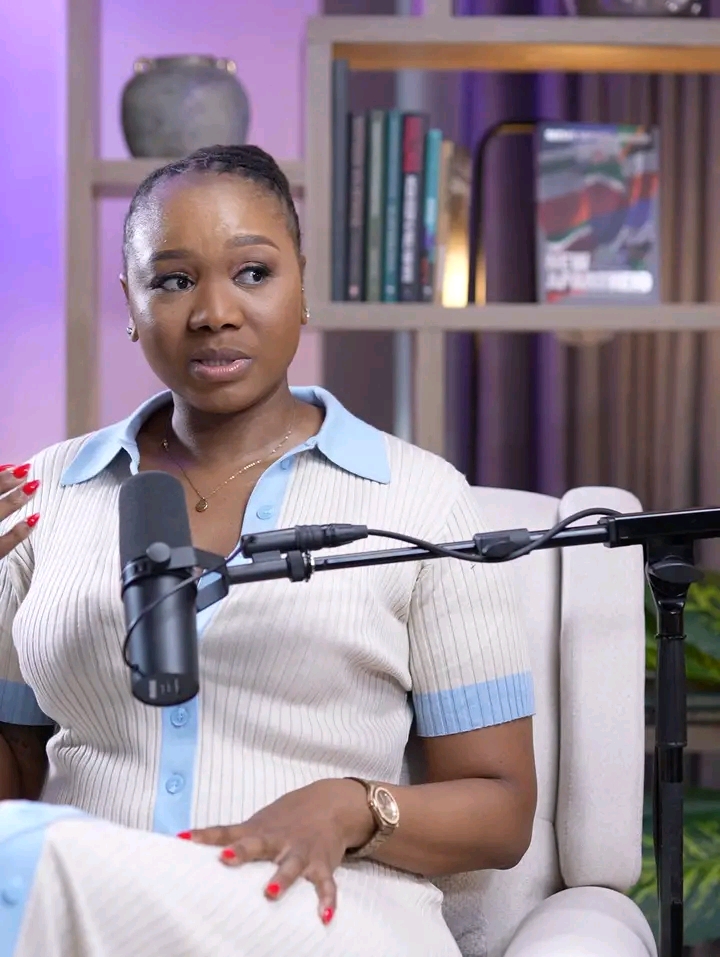
In a recent no-holds-barred confessional interview on SMWX, the political podcast hosted by Dr Sizwe Mpofu-Walsh, Phamotse appeared to discuss her book The Big 5 Cartel. The interview immediately attracted thousands of viewers, not because it was sensational, but because it was truthful in a way South Africa rarely allows itself to be.
After the interview, Mpofu-Walsh admitted what many viewers felt: the book is “enlightening but scares.” It enlightens because it explains; it scares because it tells the truth.
THE WRITER WHO WAS FORGED IN VIOLENCE
Jackie Phamotse is one of South Africa’s most prolific and provocative authors. She is also a criminologist, a researcher of the very darkness she writes about.
She begins her story not with her books, but with her own body. At 17 years of age, she tells SMWX, she was sucked into the vortex of a gang rape, human trafficking and violent abuse. It was the loss of innocence in the most brutal way.
She was a township girl with dreams who met a man who promised love and delivered hell. What followed was to be a relationship that brought her to the heart of the whore. She was an unwitting witness to a trafficking chain – drugs, sexual exploitation, abuse that broke her spirit before she could become an adult.
She experienced girls that were drug over dosed, made to disappear and later confirmed dead.
It is important to understand this origin because it explains her writing. It was the loss of innocence that later unleashed her writing talent, something she never imagined she had. Writing became survival, a tool to regain her sanity, then testimony, then criminology.
Phamotse may be a household name. But she did not become a writer to be famous. She became a writer to stay alive, and then to make sure other girls and society would understand the web that was trapping them.
She is the author of the bestselling Bare series, and The Big 5 Cartel is part of a 6-part series of novels that look at power. These are stories that certainly look at the content of our character as a society, especially men – how we raise them, what we reward them for, what we allow them to become.
She uses her creative energies to raise awareness and educate to understand the web of power and corruption. Her books are not just fiction. They are case studies in novel form.
THE BIG 5 CARTEL: THE ROTTEN SOUL OF CORRUPTION
What is The Big 5 Cartel about? On the surface, it is about five criminal kingpins who control Johannesburg. Five men, different backgrounds, different industries – tenderpreneurship, mining, human trafficking, drug cartels, and the nightclub industry – who operate like a board of directors for crime.
But Phamotse’s genius is that she does not write them as monsters from another planet. She traces the character of criminal kingpins, showing how they are made. They are not born. They are produced by a post-struggle society that has lost its soul.
The book looks at the rotten soul of corruption and crime. It shows how the line between legal and illegal has disappeared. How a tender baron and a drug lord use the same lawyers, the same politicians, the same bodyguards. How the state and the underworld are not opposite sides, but business partners.
She documents in a series of novels what has gone wrong with post-struggle society. In 1994 we thought we were building a new South Africa. What we built, Phamotse argues, was a marketplace where everything is for sale – tenders, bodies, police dockets, souls.
The cartel in her book is not just five men. It is a metaphor for South Africa: a small group of men who meet behind closed doors and divide a country that belongs to more than 60 million people.
THE HEART OF THE WHORE
Phamotse’s writing explains and simplifies what is meant when some describe rhetoric of the New South Africa as the heart of the whore.
It is a harsh phrase, first used by author and filmmaker, but Phamotse gives it flesh. A whore, in her analytical sense, is not a woman who sells sex. It is a society that sells everything. That has no values except money. That will sleep with anyone who pays.
The country has degenerated into a violent crime scene because we have commodified everything. A girl’s virginity can be priced. A police officer’s loyalty can be priced. A murder can be ordered for R2500. A degree can be bought. A tender can be bought. Even justice can be bought, if you can afford the right advocate.
In The Big 5 Cartel, a woman is never just a woman. She is currency. She is used to seal a deal between two kingpins. A young girl from Limpopo is trafficked to Sandton to entertain investors. This is not fiction. The Hawks and multiple investigative reports have shown that human trafficking in South Africa is run by syndicates that overlap with mining and construction mafias.

CAPTION: PODCASTER SIZWE MPOFU-WALSH
WHY SMWX MATTERS
That Phamotse agreed to the SMWX interview is significant. SMWX is watched by young, black, educated South Africans who are disillusioned with both the ANC and the DA, who are looking for language for their disillusionment. They found it in Phamotse.
She did not speak like a politician. She did not speak like a victim asking for pity. She spoke like a criminologist who has lived inside the crime she studies. She spoke about how at 17 she thought she was in love, and how by 18 she understood she was inventory.
Her bravery is that she names the gendered nature of crime. These are stories that look at the content of our character as a society, especially men. South African men, she argues, have been taught that power is about control and domination, that money is about control of women, that success is about how many women you can buy and discard.
The kingpins in her books are not poor. They are rich, suited, respected, invited to gala dinners. They are the patriotic bourgeoisie of the criminal world.
A NATION THAT NEEDS TO LOOK IN THE MIRROR
Jackie Phamotse’s work is not comfortable reading. It is not meant to be. It is a dissection.
South Africa likes to think of itself as a good country with a crime problem. Phamotse argues we are a crime economy with a good public relations problem.
The soul of the nation is not wounded; it is ridden – ridden with greed, with misogyny, with a post-struggle elite that decided that freedom meant freedom to loot.
The author, through her own scars, holds up a mirror. And as Sizwe said, it “enlightens but it is scary.”
Because once you understand the web of power and corruption, you can no longer pretend you did not know.