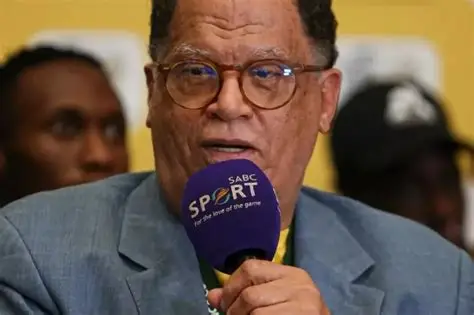

MAIN PHOTO: DANNY JORDAAN
PiE SPORTS DESK
The Result
Danny Jordaan has been re-elected president of the South African Football Association (SAFA), defeating businessman and AmaZulu FC owner Sandile Zungu by 157 votes to 82 at the association’s elective congress at Vodacom World in Midrand on Saturday, 12 September 2026. The margin, just over 65 percent of the vote, hands Jordaan a fourth consecutive term and keeps him at the helm of South African football until 2030, thirteen years after he first took office in 2013.
| Candidate | Votes | Share |
| Danny Jordaan | 157 | 65.7% |
| Sandile Zungu | 82 | 34.3% |
The vote was cast by delegates from SAFA’s 52 regions, its associate member associations, and the Premier Soccer League sitting as a special member. Only 48 of the 52 regions ultimately took part after four — Harry Gwala, Amajuba, Sarah Baartman and Pixley ka Seme — were disqualified by the National Executive Committee the night before the congress, one of several flashpoints in a process that was, by most accounts, tense and at times chaotic. Reports of threats to disrupt proceedings prompted SAFA to tighten security for delegates and media alike.
A Familiar Script, a Different Opponent
This was billed as Jordaan’s toughest test yet, and on paper it was. In the 2022 election he saw off Ria Ledwaba, who remains the only woman to have contested the SAFA presidency; this time Ledwaba chose not to stand again, leaving the field to Zungu as the sole credible challenger in what became a genuine two-horse race. Zungu was widely regarded beforehand as the more dangerous opponent of the two — better resourced, more vocal in the media, and carrying endorsements that Ledwaba never had. Yet the final margin was, if anything, just as emphatic as Jordaan’s past victories, underlining how difficult it remains for anyone to unseat him from outside his own political network.
Jordaan came into the congress fresh off the relative success of South Africa’s involvement around the 2026 FIFA World Cup cycle and a newly appointed Bafana Bafana coaching setup, both of which his campaign leaned on as evidence of stability and momentum. His supporters, organised through the Football Transformation Forum, campaigned on continuity and the argument that changing leadership now would disrupt gains already made. Zungu, by contrast, campaigned on governance reform, grassroots and school-level investment, and a bigger role for women’s football — a platform aimed squarely at voters uneasy with Jordaan’s long tenure, but one that in the end did not translate into regional votes.
The Machine Behind Jordaan
To understand why Jordaan keeps winning by such wide margins, it helps to look at the scale of his footprint in football administration. He first became SAFA president in 2013 after unseating Kirsten Nematandani, stood unopposed in 2018 when his only rival withdrew, and has now beaten two separate challengers — Ledwaba in 2022 and Zungu in 2026 — since then. Before all of that, he built his name as chief executive of the Local Organising Committee for the 2010 FIFA World Cup, the tournament that brought the first World Cup to African soil, a legacy he and his supporters invoke constantly on the campaign trail.
That CV extends well beyond SAFA’s own borders. Jordaan has served on the FIFA Council and held positions within African football’s governing structures, giving him relationships across the continent’s football politics that a first-time candidate simply cannot match. Former mayor of Nelson Mandela Bay and a one-time member of the ANC’s structures, he has spent decades building the kind of network — regional football bosses, provincial politicians, sponsors, and international federation contacts — that translates directly into votes at a congress like this one. Political figures aligned to the ANC, including NEC member Andile Lungisa, publicly threw their weight behind Jordaan in the days before the vote, framing Zungu as an outsider who should rather focus on running his football club.
Observers who covered the campaign described Jordaan’s approach as quiet and methodical: working the regions directly, courting the local leaders who actually mark the ballot papers, and largely avoiding the media battles that played out in public between his supporters and Zungu’s. That ground game, built up over more than a decade, is widely credited as the difference-maker — while Zungu’s campaign generated more visible buzz, Jordaan’s Football Transformation Forum had reportedly locked down the backing of most of SAFA’s regional structures before a single vote was cast.
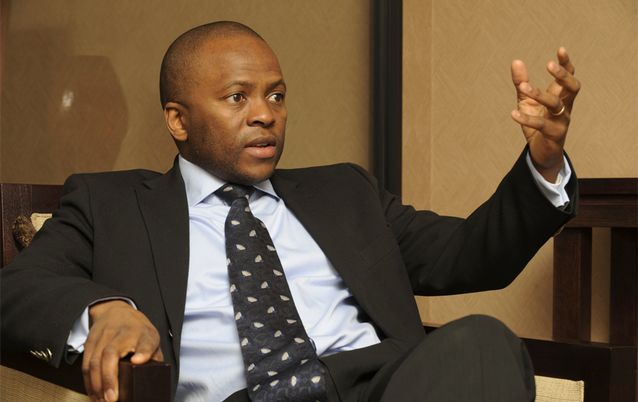
CAPTION: SANDILE ZUNGU
Sandile Zungu’s Route Into Football
Zungu’s profile could hardly be more different. Born in Umlazi, Durban, in 1967, he trained as a mechanical engineer at the University of Cape Town, added an MBA from the same university’s business school, and later completed a leadership programme at Harvard Business School. He built his fortune through Zungu Investments Company (Zico), a diversified group with interests spanning mining, energy, manufacturing, property and gaming, and he has chaired the Black Business Council and sat on bodies such as the BRICS Business Council — credentials that mark him as a serious figure in South African commerce rather than football administration.
His entry into football ownership came relatively late: in October 2020 Zico acquired full ownership of AmaZulu FC from long-time owner Patrick Sokhela, with Zungu taking over as the Durban club’s president. Under his ownership AmaZulu enjoyed an immediate high point, finishing runners-up in the league in his first season in charge and qualifying for the CAF Champions League, and he has since set out a long-term plan to establish the club among the country’s biggest brands by its centenary in 2032. It is a genuine achievement in club football, but it is also precisely why some in SAFA’s older guard view him as a newcomer to the corridors of football politics — a successful businessman and club owner rather than someone steeped in association administration.
That framing — outsider energy versus insider machinery — became the defining contrast of the campaign, and arguably explains the result as much as any policy difference between the two men.
The Veterans’ Gambit
One of the more notable subplots of the campaign was the intervention of retired players. The South African Masters and Legends Football Association endorsed Zungu in the days before the congress, with representatives from Soweto, Sedibeng, North West, Tshwane and Ekurhuleni structures publicly backing his bid at a media briefing in Diepkloof. Their grievance was specific: they accused Jordaan’s administration of failing to meaningfully integrate former players into SAFA’s development structures, arguing that decades of playing experience were being wasted rather than passed on to the next generation. Zungu, for his part, promised legends a formal role in rolling out schools football programmes should he win.
On the surface, that endorsement looked like it could reshape the numbers — legends carry sentimental weight in South African football, and their public break with Jordaan was framed by some commentators as a serious blow to the incumbent. In practice, it illustrated the limits of visible support: sentiment and media coverage do not automatically convert into the votes of regional delegates, who ultimately decide these elections. Zungu also picked up backing from KwaZulu-Natal’s football regions and from political figures outside the ANC mainstream, including the African Transformation Movement and MK Party voices calling for a change in direction. None of it was enough to close a gap that had far more to do with organisational depth than public sentiment.
The Shadow of Controversy
Jordaan’s tenure has not been without serious controversy, and his critics point to this as the strongest argument against a fourth term. He remains linked to the unresolved matter of a 10 million US dollar payment made around South Africa’s successful 2010 World Cup bid, which United States prosecutors described in a 2015 indictment as a bribe to FIFA executives, including the disgraced Jack Warner; Jordaan has consistently denied paying or taking any bribe, maintaining the payment was a legitimate development contribution, but the episode has continued to surface in investigative reporting and has never fully gone away. He also faced a corruption case that was still working its way through South African courts around the time of this election, on which he has continued to appear as a sitting president. Separately, in 2017 a South African singer accused Jordaan of rape dating back to 1993, an allegation he has denied and which has not resulted in a conviction.
None of this appears to have dented his standing with the regional delegates who actually cast ballots. Reporting from the congress noted, somewhat bluntly, that ongoing court proceedings and SAFA’s own financial strain did not stop the regions from backing their man. That disconnect — between the controversies attached to Jordaan personally and his continued dominance of the ballot box — is precisely what fuels the argument, made by critics inside and outside football, that his long reign has become entrenched in a way that is no longer healthy for the sport’s governance in South Africa.
What It Means Going Forward
Jordaan’s fourth term, running to 2030, means he will oversee South African football through at least one more World Cup cycle and whatever comes of the current Bafana Bafana coaching appointment. His supporters will point to continuity, experience and a functioning international network as reasons for confidence. His critics will continue to ask whether thirteen years — soon to be seventeen — in one office is compatible with the kind of change SAFA’s harshest observers believe the game needs, particularly around transparency, finances, and the treatment of the players and legends who built the sport’s popularity in the first place.
For Zungu, the defeat does not necessarily end his involvement in football politics. He remains a significant figure through his ownership of AmaZulu and his business networks, and a 34 percent vote share against a deeply entrenched incumbent is, by the standards of past challengers, a relatively strong showing. Whether that translates into another run at the presidency, or a shift back toward club football and business, will likely depend on how the next four years of Jordaan’s tenure unfold — and on whether the coalition of veterans, KwaZulu-Natal regions and reform-minded voices that backed him this time can be organised into something more durable before SAFA next goes to the polls.
Compiled from South African news coverage of the SAFA elective congress, 12 September 2026.