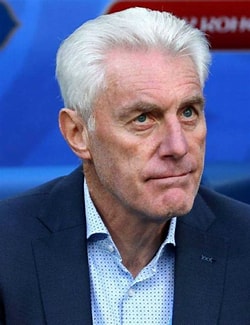

MAIN PHOTO: HUGO BROOS
LEN KALANE
There is a particular kind of silence that falls over a room when a hard man cries. At Safa House last Friday afternoon, that silence belonged to Hugo Broos. This was the day he bowed out.
The 74-year-old Belgian, a man who built his reputation on blunt talk and an almost allergic reaction to sentiment, stood before South African football one last time and could not get through it without his voice catching.
“What I take away is that in South Africa there are many wonderful people, and I get emotional when I think about that,” he said, crediting what he called the humility of Africans — a people, he explained, whose patience and warmth had disarmed him in ways forty years in European dressing rooms never had.
He told the story of his very first staff meeting in Cameroon, an appointment set for 10am that only got underway at 11:15, and how he had walked in shouting — only to learn, over the years, that this was never disrespect. It was simply a different rhythm of life, one he grew, in the end, to love.
It was a startling image: the disciplinarian, the man they called “very stubborn,” the coach who picked fights with club chairmen and federation bosses alike, undone by gratitude. But then, nothing about Hugo Broos’s five years in South Africa followed the expected script.
The malls, the selfies, and the loneliness
Broos leaves South Africa having become, by his own admission, something he never anticipated — a genuinely adored public figure. He spoke of being mobbed for selfies on ordinary trips to buy groceries, of a warmth from strangers he had encountered nowhere else in a coaching career spanning nearly four decades. And yet the very thing that made him popular in public — his visibility, his accessibility, his willingness to live among the people he coached rather than behind a wall of officialdom — could not fill the hours he spent alone in his Johannesburg apartment, thousands of kilometres from his wife and family in Belgium.
In the end, it was that loneliness, not failure, not the boardroom politics, not even the pull of retirement, that brought the curtain down. In a farewell message shared with players and staff on WhatsApp, Broos was unambiguous about why: “With pain in my heart, I will not extend my contract as coach for Bafana Bafana. My long absence from my family and the many lonely moments in South Africa have led me to make this difficult decision.”
He went further, framing the five years as something close to a mission rather than a job: “We started five years ago a near-mission impossible. Through hard work, discipline, mentality, and quality, our results kept getting better with a historical second round on World Cup 2026 a month ago.”
And to the players who had walked that mission with him, something warmer still: “I want to thank you for believing in me as a coach, for the fantastic atmosphere you created in the team. Our relationship was more than a coach-player relationship. I will never forget you.”
At his final press conference, he turned his thoughts to the man who inherits his seat: “I hope things will go well for Bafana, and the necessary steps will be taken to make sure that players become even better.”
SAFA will announce that successor this coming Saturday — a decision that now carries the full weight of the standard Broos leaves behind.
Forty years, one stadium, one impossible coincidence
If Hollywood had written the Hugo Broos story, an editor would have cut the ending for being too neat. On June 3, 1986, a 34-year-old Belgian central-back named Hugo Broos walked out at the Estadio Azteca in Mexico City in front of 110,000 people for the opening match of that year’s World Cup, as Belgium fell 2-1 to the host nation. It was his last World Cup as a player. Belgium would go on to reach the semi-finals, eventually finishing fourth, with Broos — then the oldest man in that squad — playing his part in a run that included stirring penalty-shootout wins over the Soviet Union and Spain before Diego Maradona ended the dream in the last four.
Forty years later, almost to the day, Broos returned to that same Estadio Azteca — not as a player, but as a head coach, leading South Africa out for their opening match of the 2026 World Cup against co-hosts Mexico.
“No-one in Hollywood could have scripted it better — I played in a World Cup opener and now, four decades later, I will be one of the coaches in a World Cup opener,” he told AFP before the match. It was, by any measure, one of the most poetic full-circle moments world football had produced in years — a Belgian defender’s youthful battle scars becoming, four decades on, the wisdom of the elder statesman guiding African football’s underdogs onto the same hallowed turf.
It is worth sitting with the scale of that career arc. Between 1974 and 1986, Broos won 24 caps for Belgium, built the bulk of his playing reputation across a long stint at Anderlecht and five seasons at Club Brugge, and retired from playing in 1988 having lifted the Belgian Cup five times. He then spent the 1990s and 2000s coaching in Belgium, winning back-to-back titles with Club Brugge before guiding Anderlecht into the Champions League and to a league title of their own in 2003–04. It was a solid, respected, but hardly spectacular European CV — nothing to suggest the second, more astonishing act still to come, thousands of kilometres south, on a continent he had never coached in before he took the reins of Cameroon.
From Yaoundé to Nasrec: the coach nobody wanted
To understand what Broos built in South Africa, you have to understand how unwanted he was on arrival. When SAFA unveiled him as Bafana Bafana coach on May 12, 2021, the reaction ranged from lukewarm to outright hostile. He did not have the box-office name of a Hervé Renard. He did not carry the homegrown mystique of a Benni McCarthy. He did not have the glittering continental CV of a Carlos Queiroz. What he had, at 69 years old, was a résumé built largely in Belgian club football and one remarkable, against-the-odds triumph: guiding an unfancied Cameroon side to the 2017 Africa Cup of Nations title in Gabon, a win nobody outside the Cameroonian camp had predicted.
South Africans, largely unmoved, questioned why a man in his late sixties, with only one prior national team job, had been entrusted with reviving a Bafana side that had become, in his own later words, something of a national joke — a team so starved of public faith that one home friendly drew fewer than 200 spectators into a stadium built for 93,000.
Broos did not attempt to charm his way into anyone’s good books. Asked at his unveiling whether the job was essentially a retirement cheque, he answered with the same bluntness that would define his tenure: he had not come to collect a pension and go home empty-handed; his CV, he said flatly, was one built on success. It was a preview of everything to come.
He tore into the culture around South African football almost immediately, criticising the domestic Premier Soccer League’s structures and its refusal to accommodate the national team’s needs around major tournaments. He picked fights with PSL chairman Irvin Khoza over scheduling breaks for AFCON preparation — a battle he lost in 2023 but eventually won ahead of the 2025 tournament. He pushed SAFA itself to invest more seriously in junior national teams, a demand that would later pay direct dividends. And most controversially of all, he dismantled the ageing, sentimental core of the senior Bafana squad, stripping out long-serving favourites in favour of youth many felt was unproven and unready.
The criticism was fierce. He was branded arrogant, disrespectful of local structures, “very stubborn.” He would not be moved. As one long-time observer of South African football summarised it: Broos was, unlike almost anyone else considered for the job, entirely unbothered by needing to be liked.
The stubbornness that became the method
What looked like obstinacy in year one revealed itself, over five years, as method. Broos’s core conviction — that South African football’s talent pipeline was being wasted on sentiment, seniority and club politics rather than being built with discipline and genuine merit — became the philosophy on which everything else was constructed.
The results arrived in a steady, deliberate climb rather than overnight transformation, which is itself instructive: excellence, in Broos’s story, was never a single moment of magic but the compounding return on five years of unglamorous, repeated insistence on standards.
- 2023 AFCON, Ivory Coast: Bafana reached the semi-finals for the first time since 2000, eventually claiming a bronze medal — a result nobody outside the camp had forecast, and one built, fittingly, on a route Broos himself compared to his 2017 Cameroon triumph: an unconvincing group stage followed by gritty penalty-shootout progression.
- 2025 AFCON qualification and a second successive tournament run, this time in Morocco, cementing Bafana as a team that could no longer be dismissed as African football’s perennial underachievers.
- World Cup 2026 qualification — South Africa’s first appearance at the tournament since 2002, when Carlos Queiroz last managed the feat.
- A historic run to the Round of 32 at the 2026 World Cup in North America, the first time in the country’s history that Bafana Bafana had progressed beyond a World Cup group stage, before a heartbreaking stoppage-time exit to co-hosts Canada ended the dream.
Along the way, Broos became the first Bafana coach in the professional era to see out his entire contract — five years, to the day — a statistic that says as much about the chaos of the jobs before him as it does about his own staying power.
The Madala who built a golden generation
Perhaps Broos’s most enduring legacy will not be measured in results at all, but in the players he uncovered, trusted and stubbornly protected against the very sentiment he had been hired to dismantle. His squads increasingly leaned on a cluster of fearless young talents affectionately nicknamed him “Madala” — “old man” — a term of real affection from players he had elevated from relative obscurity onto the world’s biggest stage.
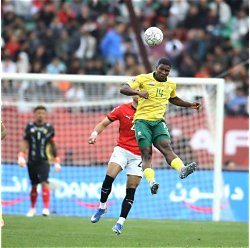
Mbokazi in Bafana Bafana action
Central among them: Mbekezeli Mbokazi, the young Orlando Pirates defender Broos handed his senior debut and then, extraordinarily, publicly criticised when the 20-year-old signed for MLS side Chicago Fire — insisting a European move would have served his development better. It made headlines and drew Broos a complaint to the Human Rights Commission for the manner of his remarks, which he later apologised for. But typical of the man, principle outlasted controversy: Mbokazi silenced every doubter with a composed, headline-making World Cup at the back for Bafana, earning MLS All-Star selection and, by the time Broos was saying his goodbyes, serious transfer interest from clubs across Europe.
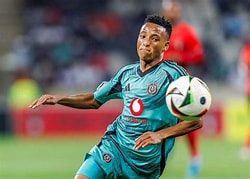
PHOTO: RELEBOHILE MOFOKENG
Then there is Relebohile Mofokeng, the player many in South Africa already call the “crown prince” of the national game. Within 72 hours of Bafana’s World Cup exit, Mofokeng completed a South African transfer record, joining Belgian champions Royale Union Saint-Gilloise in a deal worth more than R70 million — the fastest and most decisive vote of confidence European football has given a young South African player in a generation.
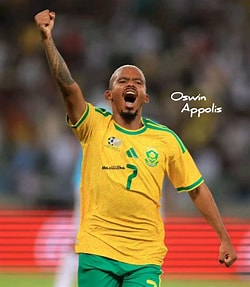
PHOTO: OSWIN APPOLLIS
Around them stood others Broos gave a stage to when few others would: Oswin Appollis, a winger who once nearly walked away from football altogether before becoming one of Bafana’s most influential attacking players; the late Jayden Adams and Thapelo Maseko, both handed senior World Cup debuts still in their early twenties. It is a nucleus assembled not by accident, but by the very policy that caused Broos so much grief in year one — his insistence on youth over sentiment, merit over seniority.
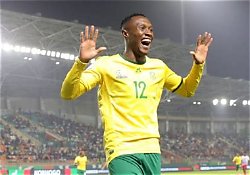
PHOTO: THAPELO MASEKO
The Rassie parallel
It has become almost irresistible, in South African sporting conversation, to draw a line between Hugo Broos and Rassie Erasmus, the Springbok rugby mastermind who took a wounded, directionless national team and rebuilt it into world champions through sheer bloody-mindedness, unconventional thinking and total disregard for public opinion when he believed he was right.
The parallels are not accidental. Both men arrived at their respective national teams amid scepticism about their credentials. Both were accused, early on, of being too stubborn, too willing to alienate powerful stakeholders — Erasmus with World Rugby and match officials, Broos with the PSL and sections of the football media. Both dismantled comfortable, sentimental squad selections in favour of a younger, hungrier core built around specific values — discipline, humility, hard running — rather than reputation. Both proved allergic to public relations softness, preferring blunt honesty even when it cost them short-term popularity. And both, ultimately, delivered results that silenced the doubters so completely that their once-contested appointments now read, in hindsight, as inspired.
Where the comparison bends is in the ending. Erasmus remains embedded in South African rugby’s structure. Broos leaves entirely — not chased out by results, not undone by boardroom politics, but beaten by something far more human: distance from the people he loves most. It is, in its way, a more poignant departure than any dismissal could have been.
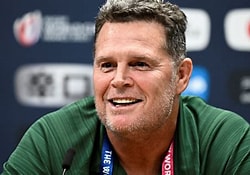
PHOTO: SPRINGBOKS RUGBY COACH RASSIE ERASMUS
A case study in what makes a man successful
Strip away the football, and the Hugo Broos story becomes something closer to a leadership case study — a blueprint for anyone inheriting a broken institution and being asked to fix it without the tools of popularity or instant credibility.
He led with conviction, not consensus. Broos never sought to be liked before he was proven right. He absorbed criticism for reshaping the squad, for confronting the PSL, for benching senior favourites — trusting that results, not applause, would eventually vindicate the method.
He treated discipline as a form of respect, not punishment. The same bluntness that offended some players and administrators was, to those who stayed the course with him, evidence that he took them seriously enough to demand more.
He measured success in years, not headlines. Nothing about Bafana’s rise was instant. Broos built patiently across five full seasons — arguably the single rarest achievement of his tenure, given that he became the only Bafana coach in the professional era to complete a contract without being pushed out early.
He never let sentiment override judgement — including his own. He was willing to make himself unpopular for a young player’s long-term good, as with Mbokazi, and willing to apologise when he overstepped, without abandoning the underlying principle.
And, in the end, he knew when to walk away. Perhaps the most instructive lesson of all: Broos leaves not chased out by failure, but at the very peak of his standing in the country, choosing family and honesty over another contract extension he could easily have taken. Even greatness, his final act suggests, must eventually make room for home.
The torch, and the weight it now carries
SAFA’s announcement of Broos’s successor this Saturday will close one chapter and open another far harder one. Whoever takes the job inherits something no Bafana coach has handed down before: a genuine golden generation, a nation that has fallen back in love with its national team, and a historical marker — a World Cup knockout stage appearance — against which every future campaign will now be measured.
That is the real weight of Hugo Broos’s five years in South Africa. He arrived a coach nobody particularly wanted, distrusted for his age, his bluntness, his unfamiliarity with African football. He leaves as the most successful coach in Bafana Bafana’s history, the only one to complete his full term, and — by his own tearful admission on Friday — a man who found, in a foreign country and a culture entirely unlike his own, some of the warmest people he has ever known.
He walked into the Estadio Azteca forty years apart as a young player and an old coach, and both times he was chasing the same impossible dream on foreign soil. In South Africa, unlike in Mexico in 1986, he finally got to see the improbable dream through — not to a trophy, but to something arguably more lasting: a country that believes in its football team again, and a golden generation ready, in his own words, to carry the torch.
Hola, Madala. Baie dankie. Siyabonga.